


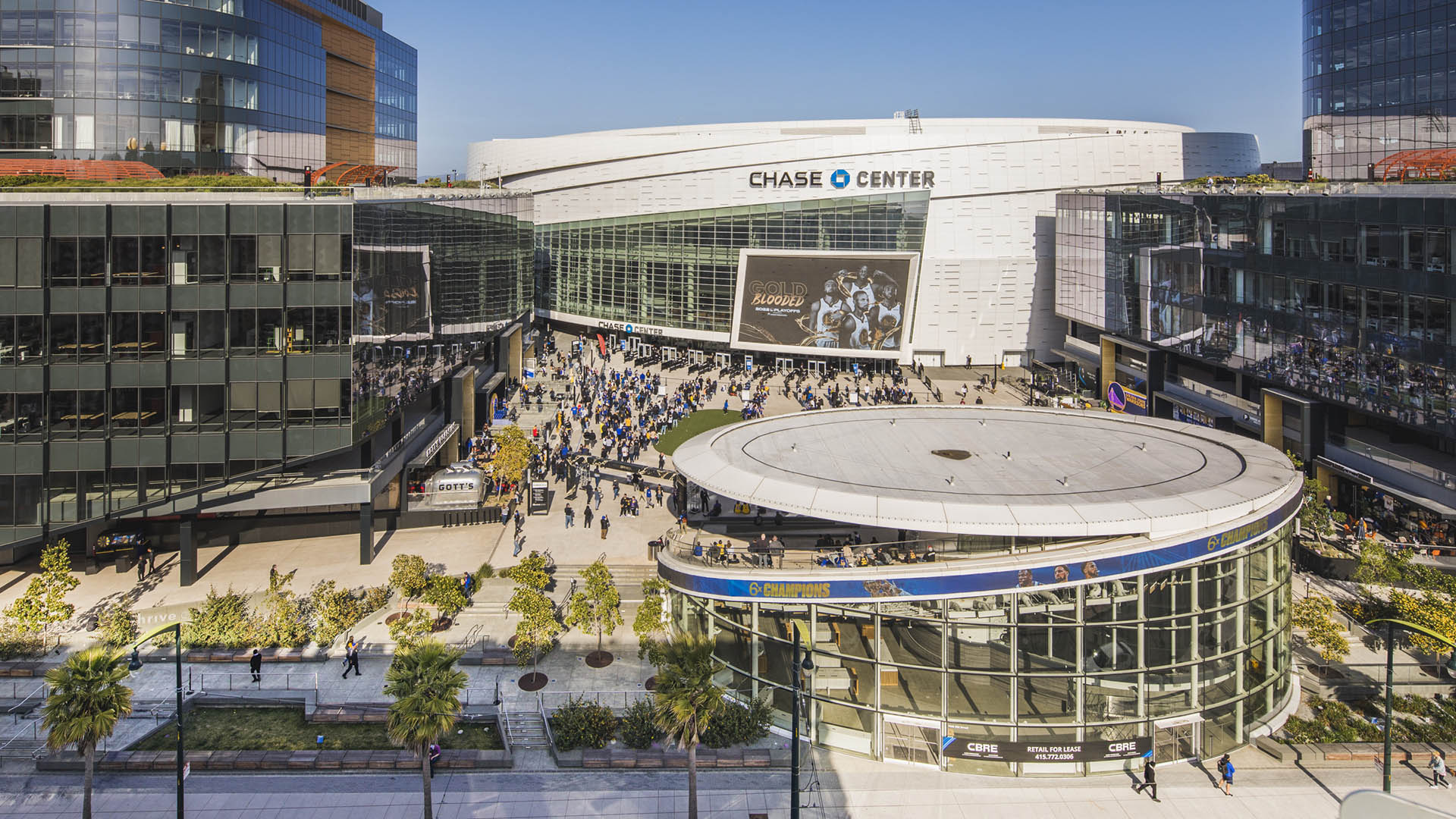
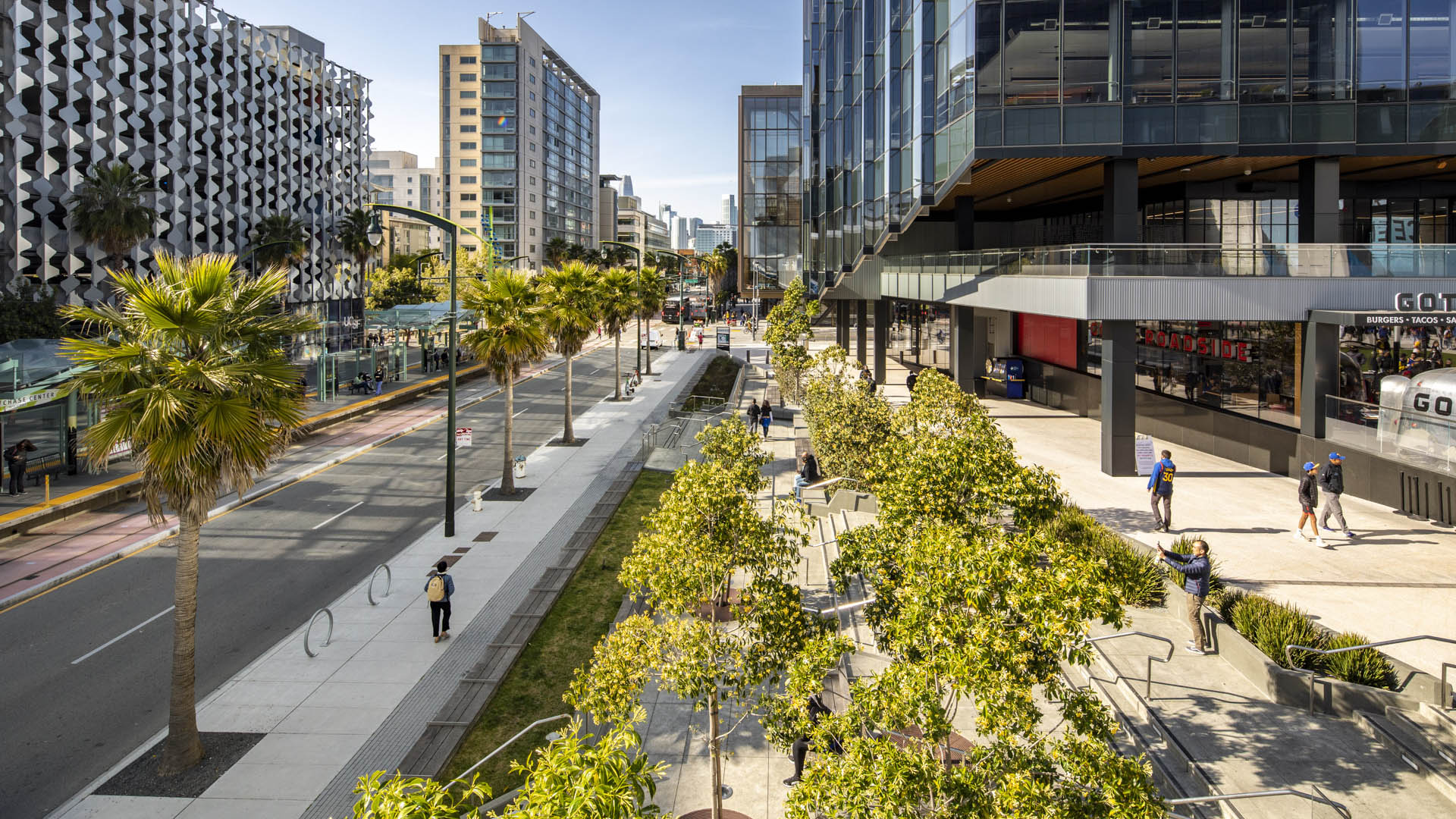

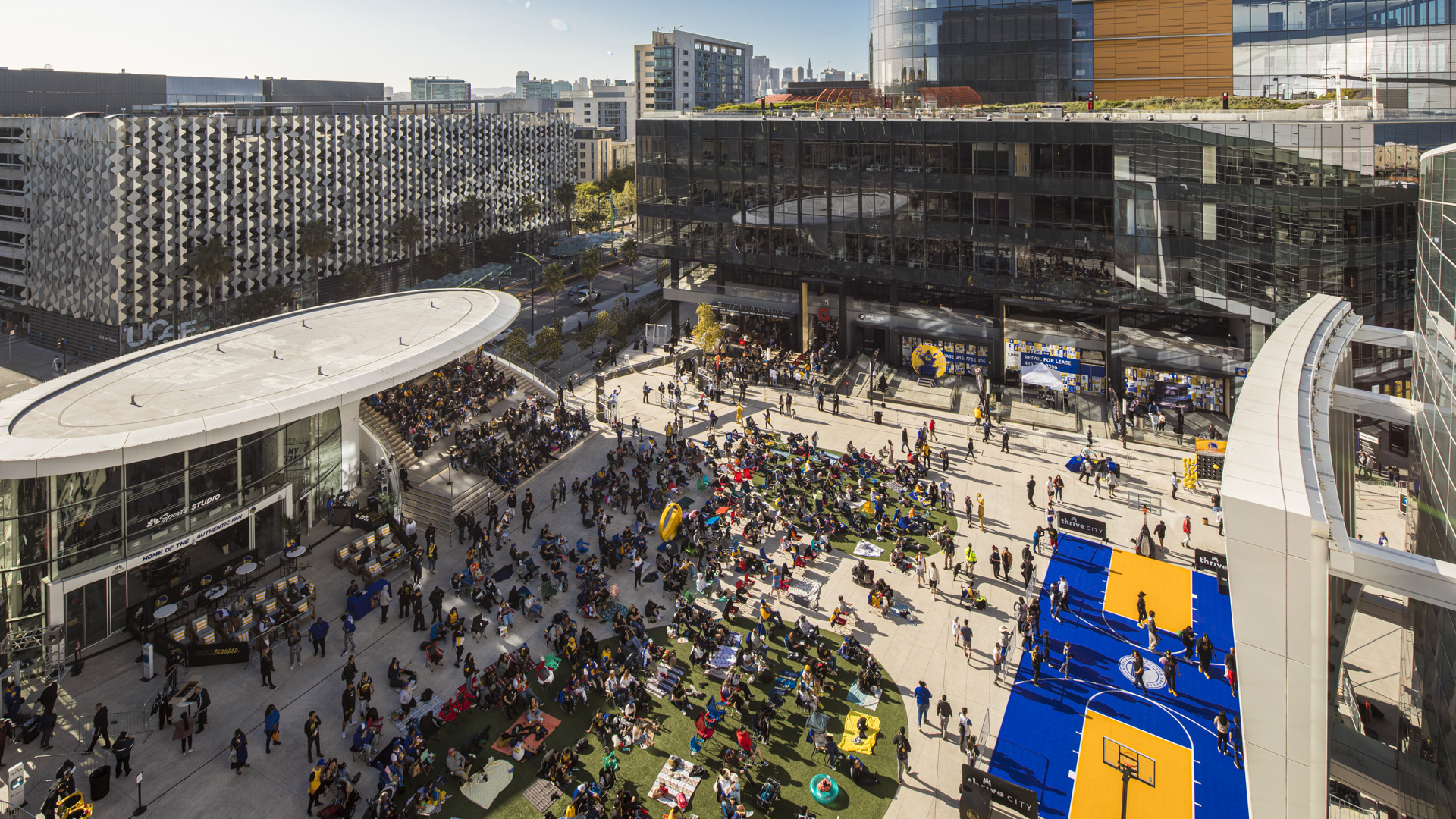
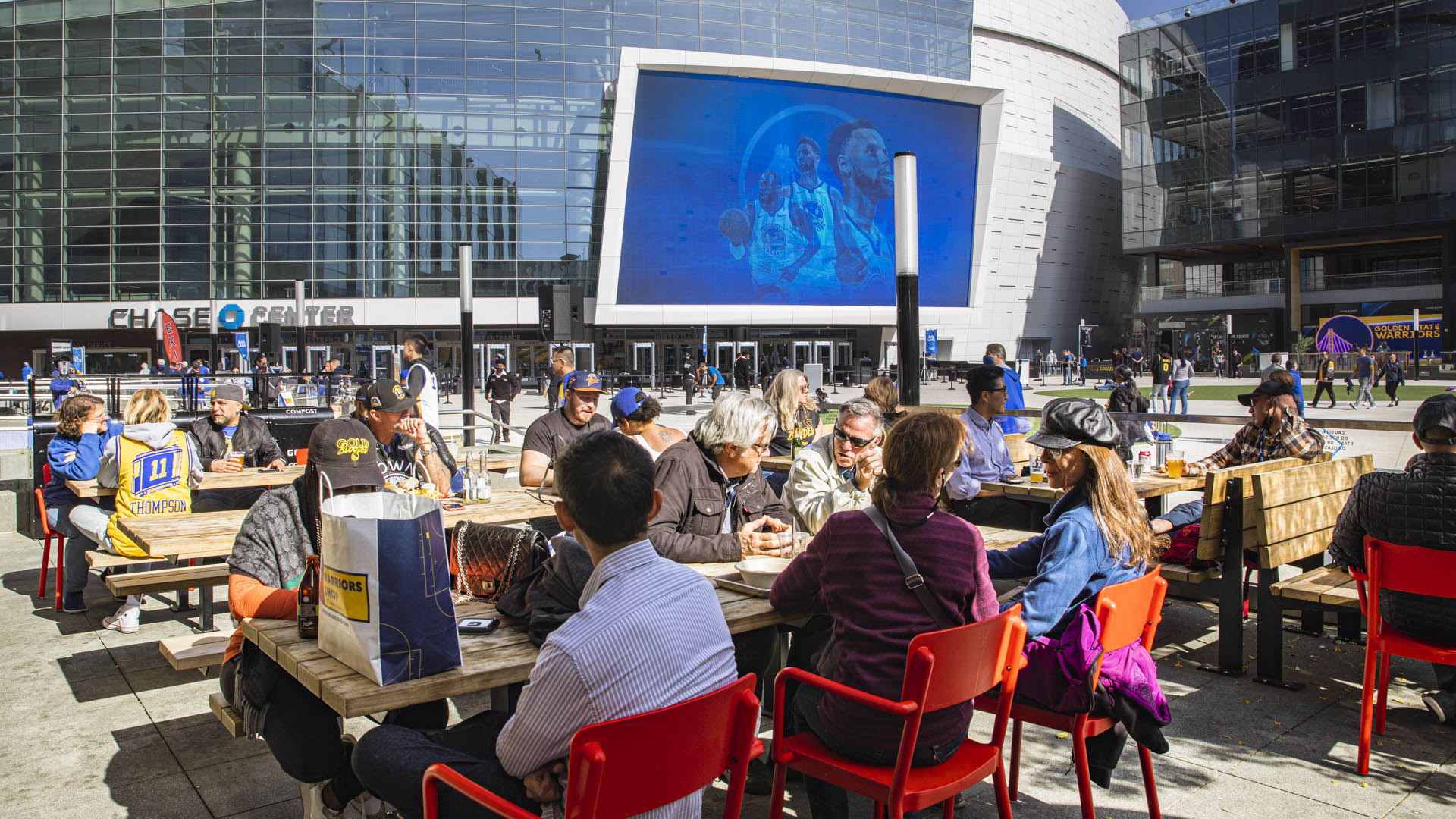
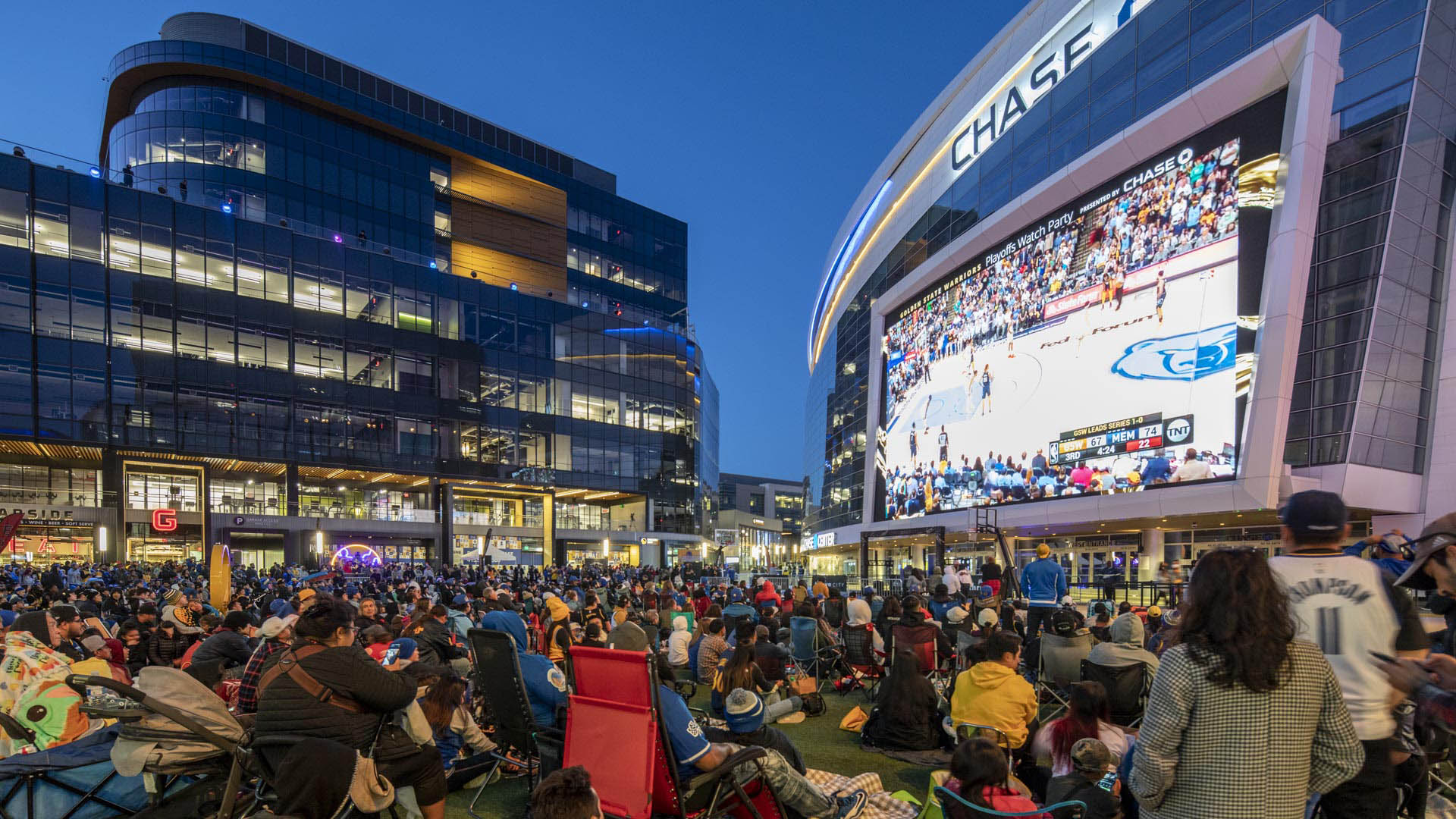
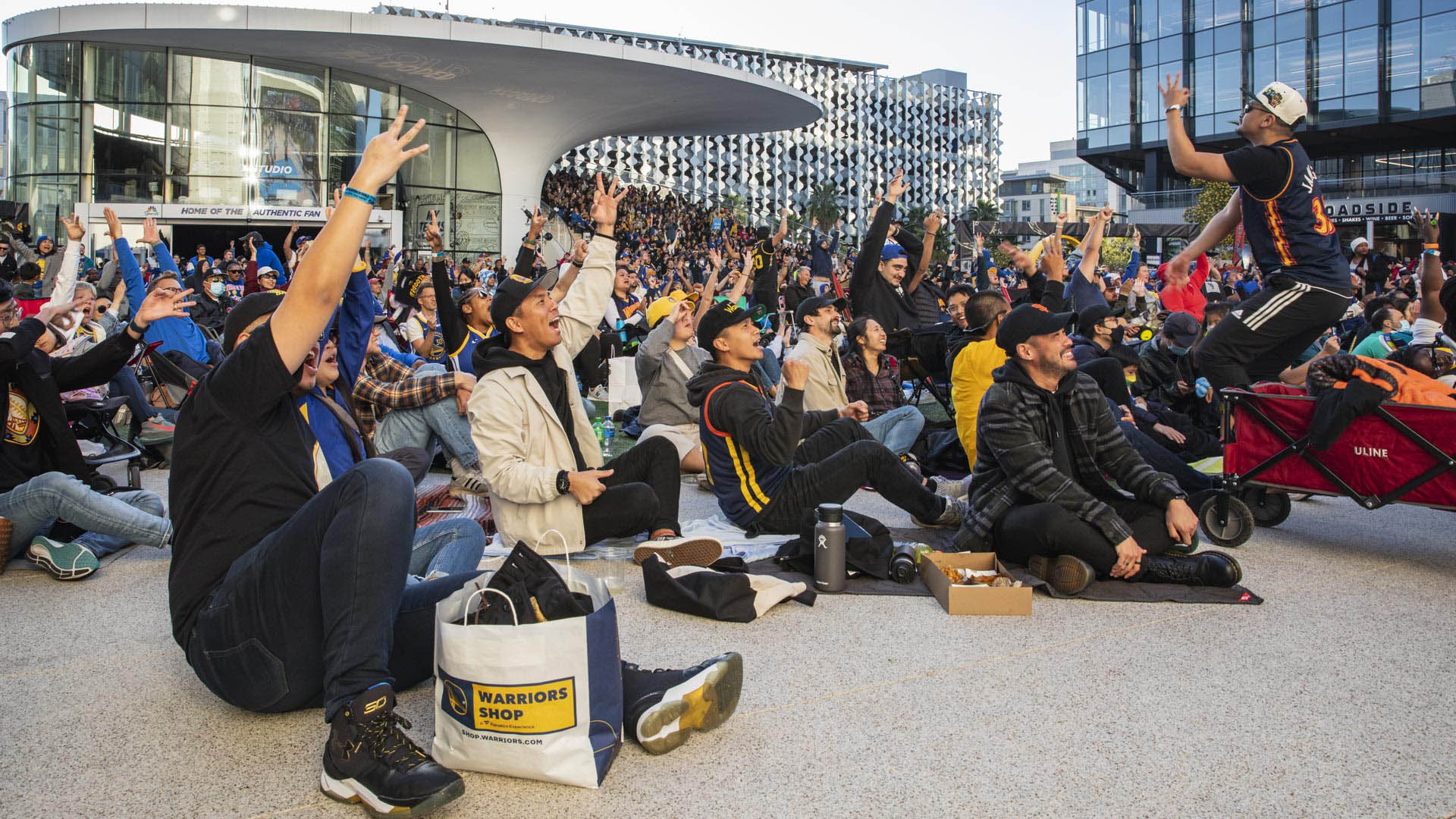


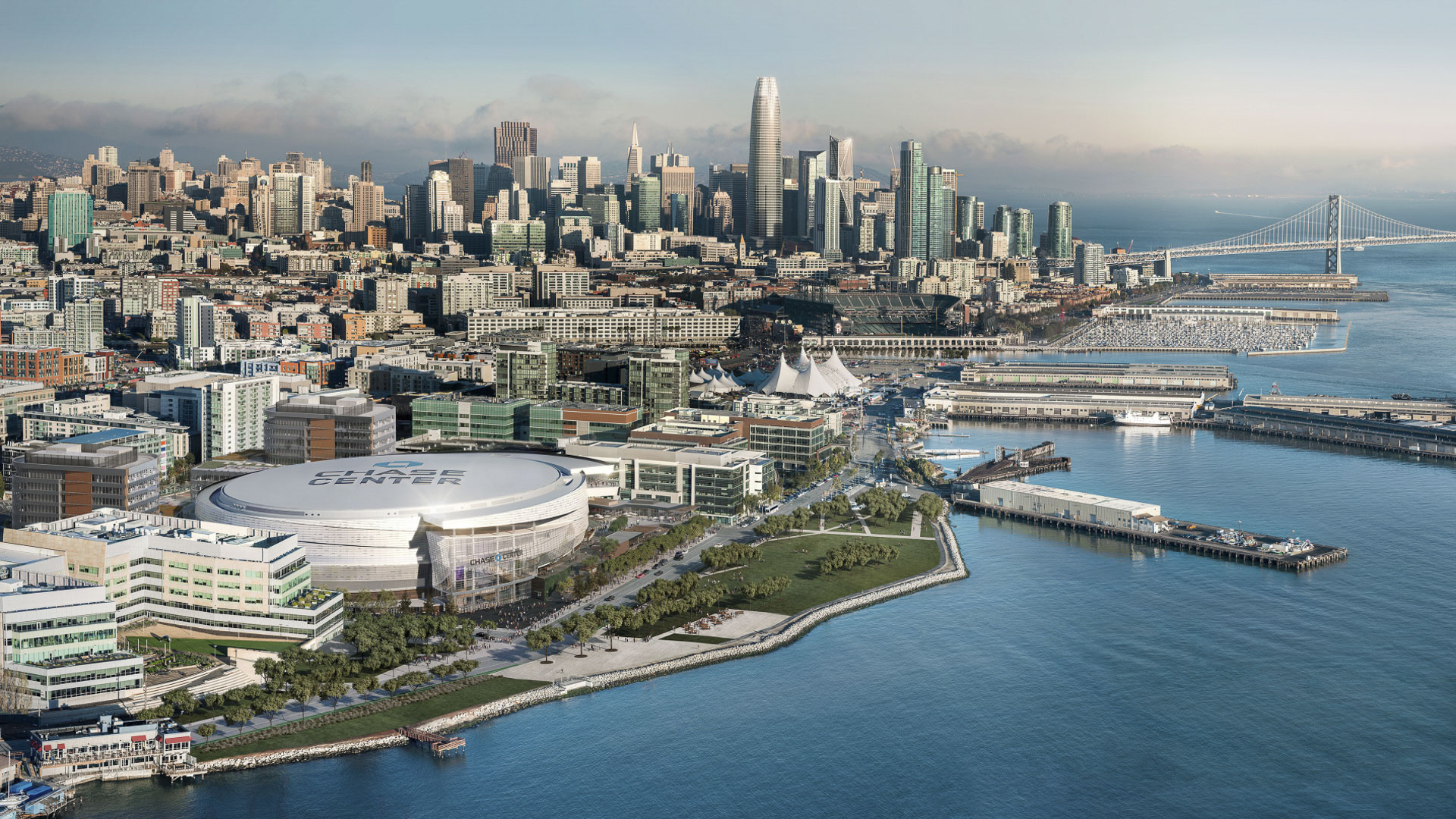

Chase Center, the new Golden State Warriors’ arena, anchors and enlivens San Francisco’s emerging Sports and Entertainment District. Integrated along a transit corridor within a formerly industrial part of the city, this new 24/7 facility offers a venue for events of many scales as well as a central public open space that doubles as the neighborhood’s outdoor living room.
To create an inviting destination, landscape designers at SWA created a series of plazas that are at once distinctive and flexible. These public outdoor spaces are tucked and wrapped around the arena building at varying levels, offering discrete nooks or view platforms of different sizes and perspectives. A large, publicly accessible central plaza comfortably accommodates crowds during large events, and can be configured to meet different programmatic needs. Custom-designed planters/seating modules can be deployed throughout to frame different events or uses, such as ice skating, farmers’ markets, an instant micro-garden, or a car show, and can also aid pedestrian flow during large events at the arena.
Whether they have game tickets or not, visitors are invited to stroll up a grand staircase to take in spectacular views of the Bay, enjoy a picnic lunch, visit the retail and dining outlets, or meet friends for a movie alfresco.
Landscape design unifies and supports those activities with an environment that is strategic and sensible, attractive and sustainable. In fulfilling San Francisco’s strict codes for water runoff, designers created a special terraced garden along 3rd Street that defines both defines the new space and reveals the bio-filtration process by which plants help to cleanse all water on site. Native California planting throughout the ten-acre parcel of land conserves water, provides a shade canopy, and unifies the area’s character.
St. Louis Ballpark Village District Landscape Master Plan
Downtown St. Louis is currently undergoing an urban renaissance: seeking to enrich experience of place and to attract a growing population of urban residents, employeers, and tourists. SWA/Balsley was engaged for district-wide landscape services for a new urban redevelopment, Ball Park Village, located directly across the street from Busch Stadium, home of the...
East Quarter Mixed-Use
Two neighborhoods that abut the Downtown Dallas Central Business District have been disconnected for years by derelict blocks and buildings. The East Quarter Mixed-Use development establishes a walkable retail, dining, and entertainment connection between the thriving Deep Ellum Farmer’s Market and highly programmed Arts District. The project included the pres...
Riyadh East Sub-Center
SWA provided comprehensive planning for a new 300-hectare commercial, mixed-use center in northeast Riyadh abutting the KKI Airport. This area is part of an urban management framework being developed to guide the future growth of the city. SWA developed a plan and implementation strategy to establish an urban center comprising residential neighborhoods, corpor...
MKT Mixed-Use Development
The MKT mixed-use development is a truly Houstonian take on adaptive reuse, with a tilt wall industrial office park. Located in the chic and rapidly upscaling neighborhood of Houston Heights, this industrial, 1970s-era industrial remnant is being transformed: the buildings’ concrete shells remain, but are bisected by pathways that seem to surgically remove the...