


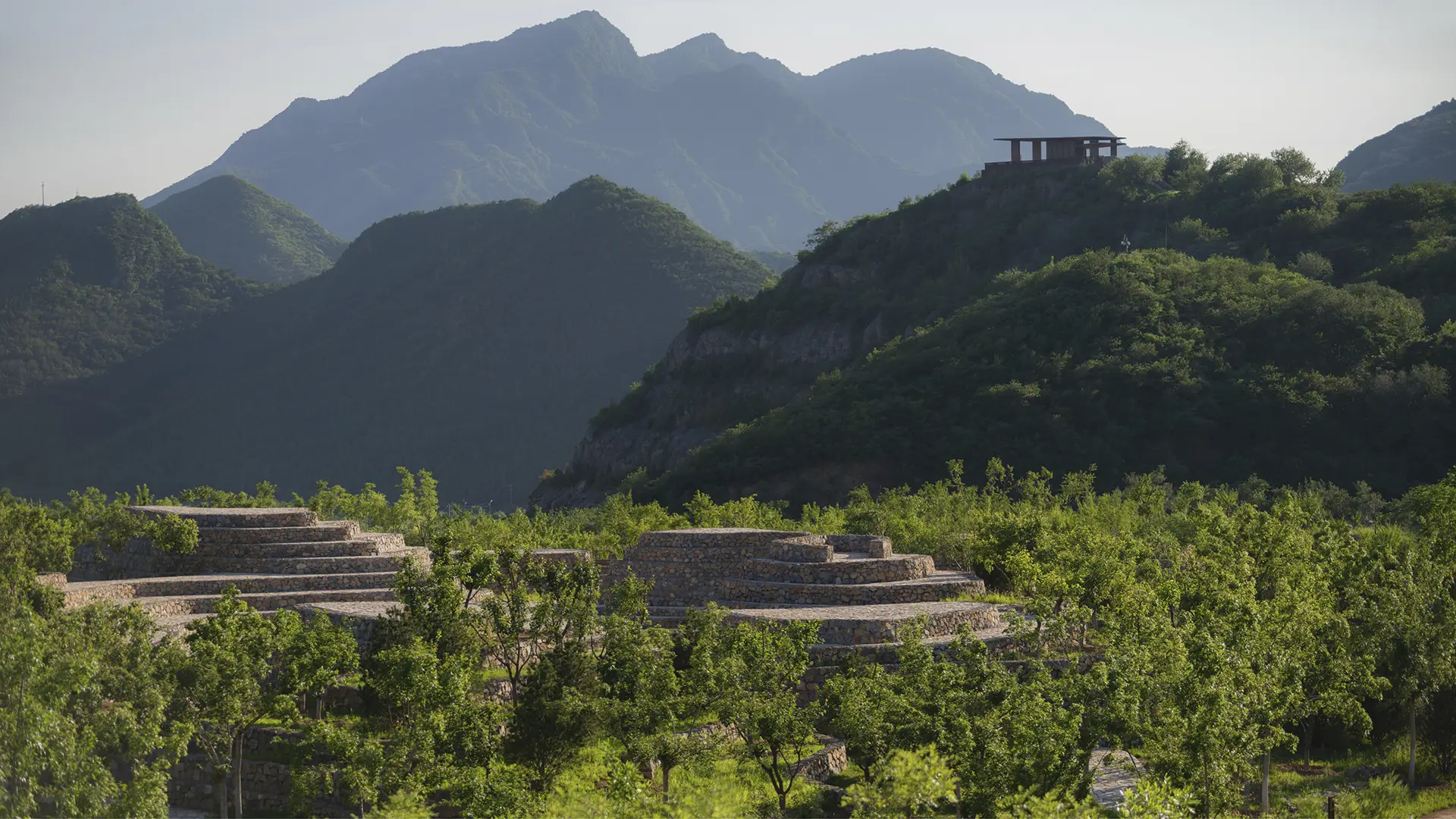
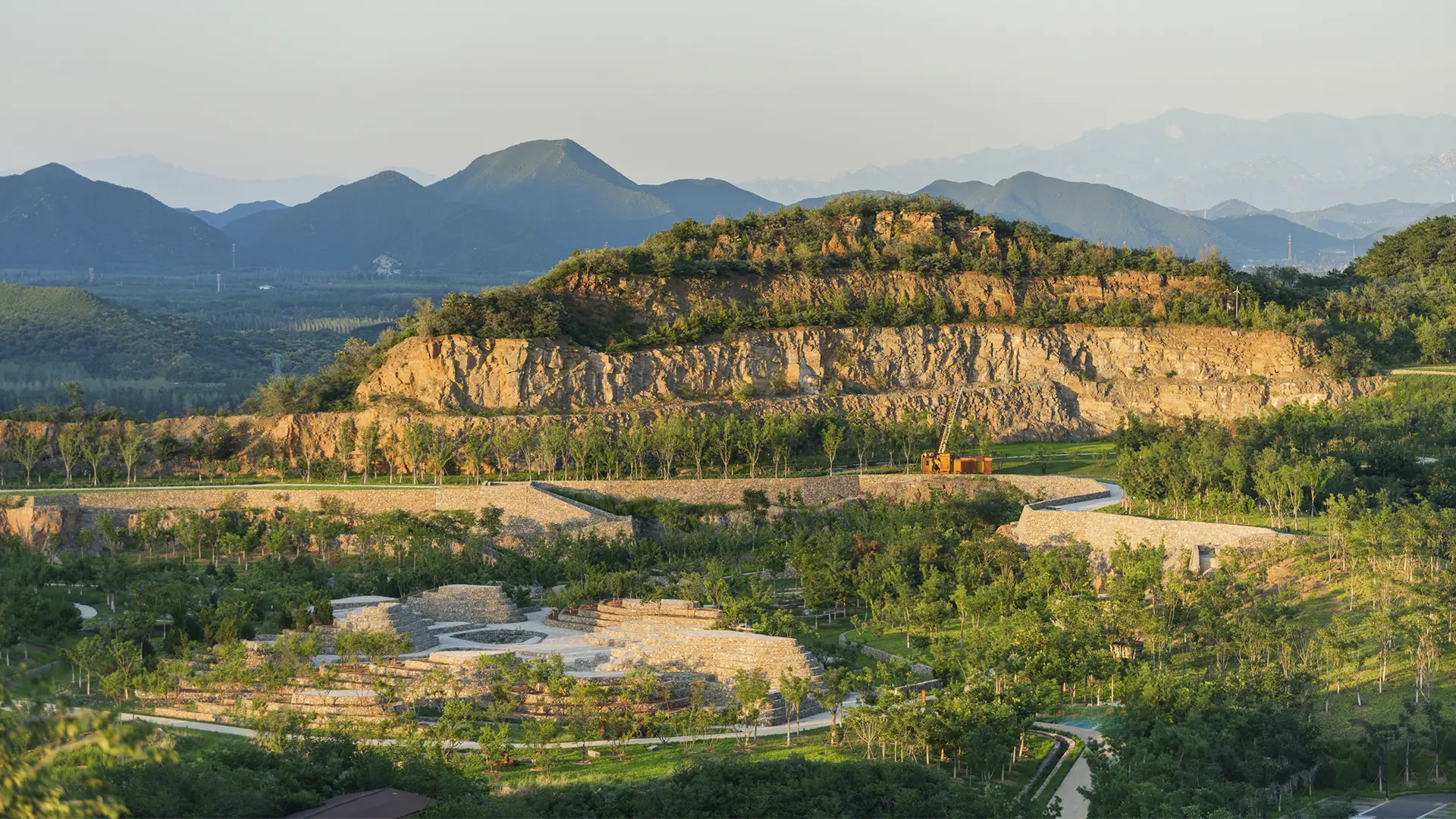
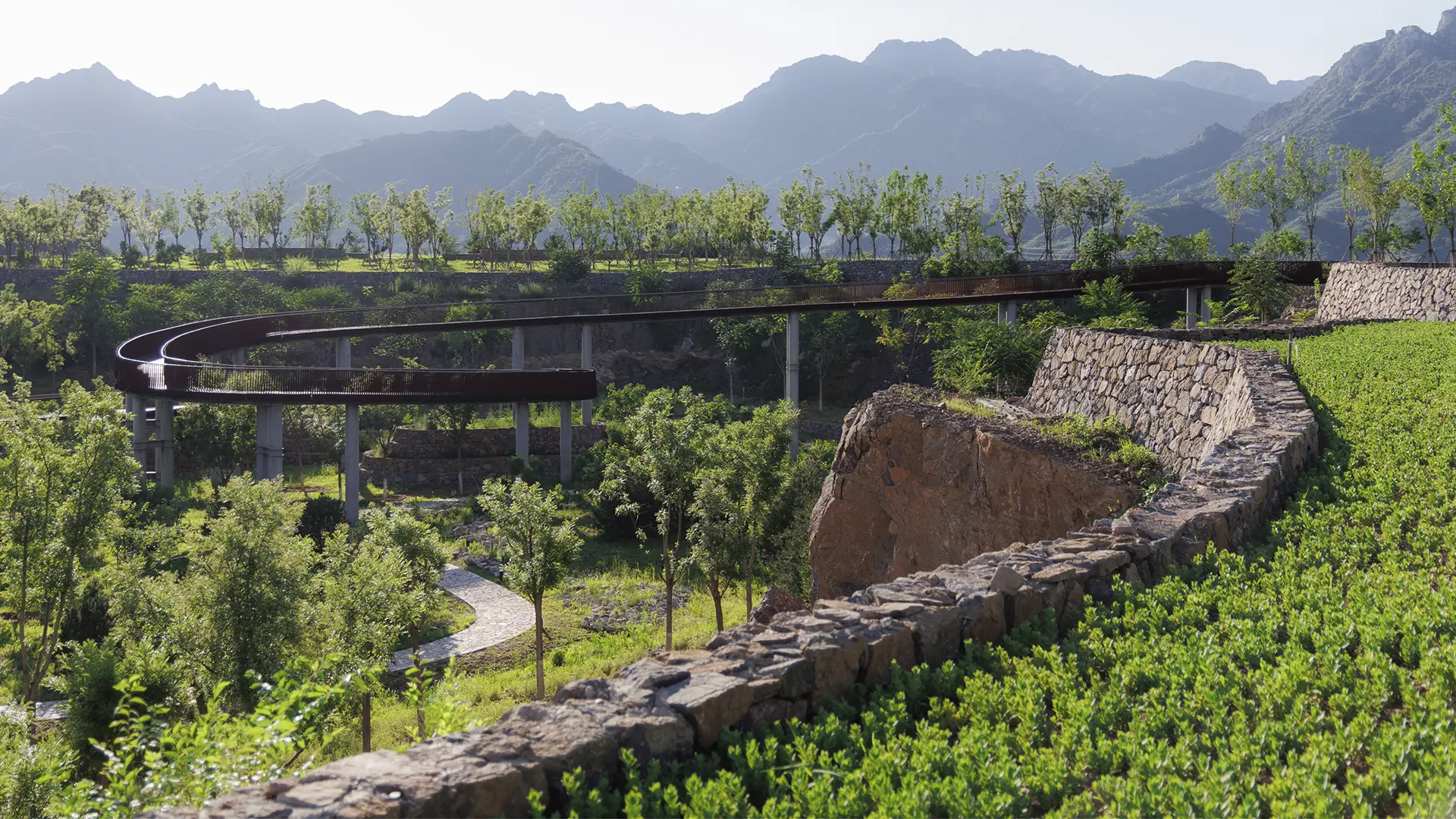


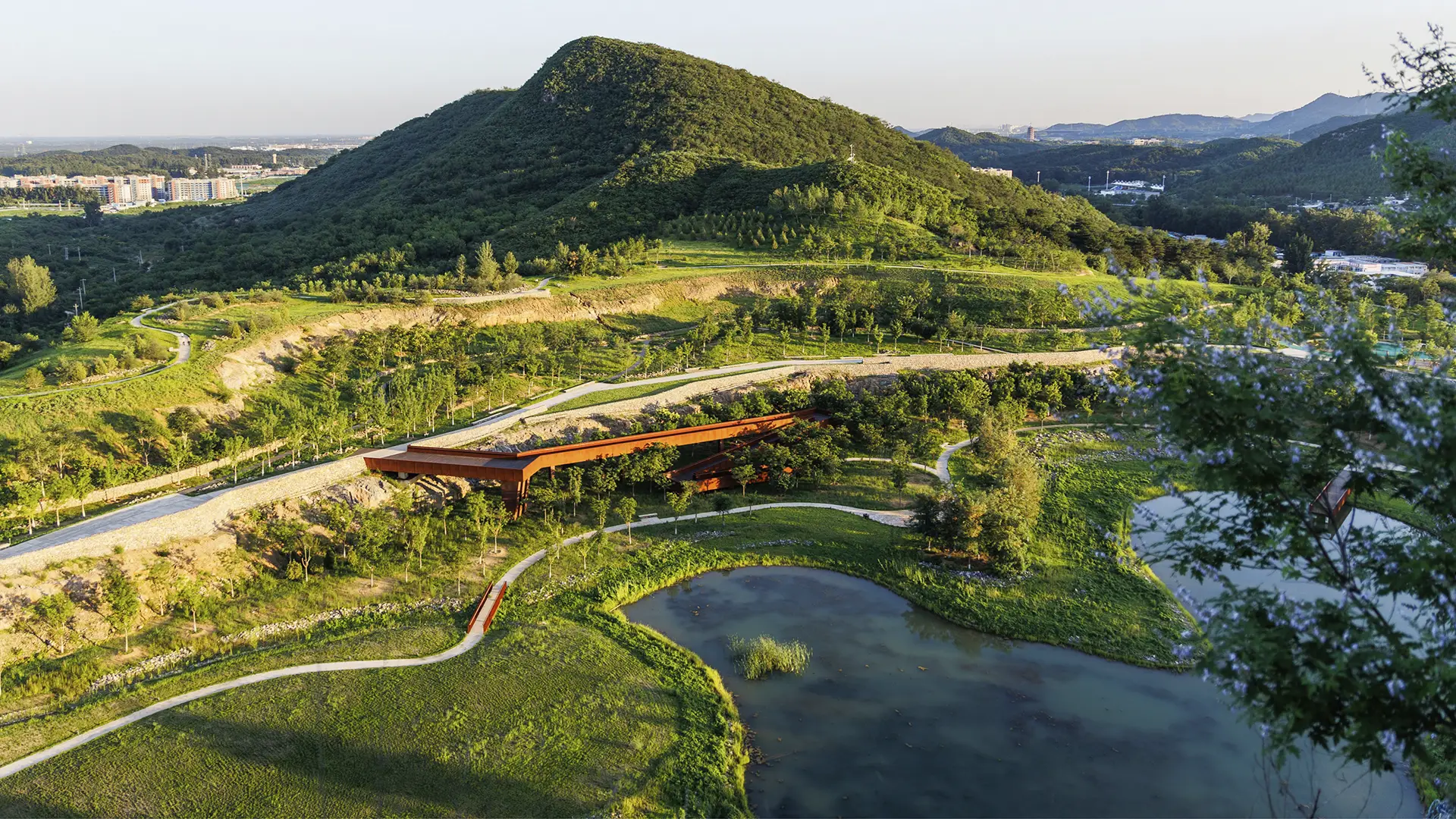


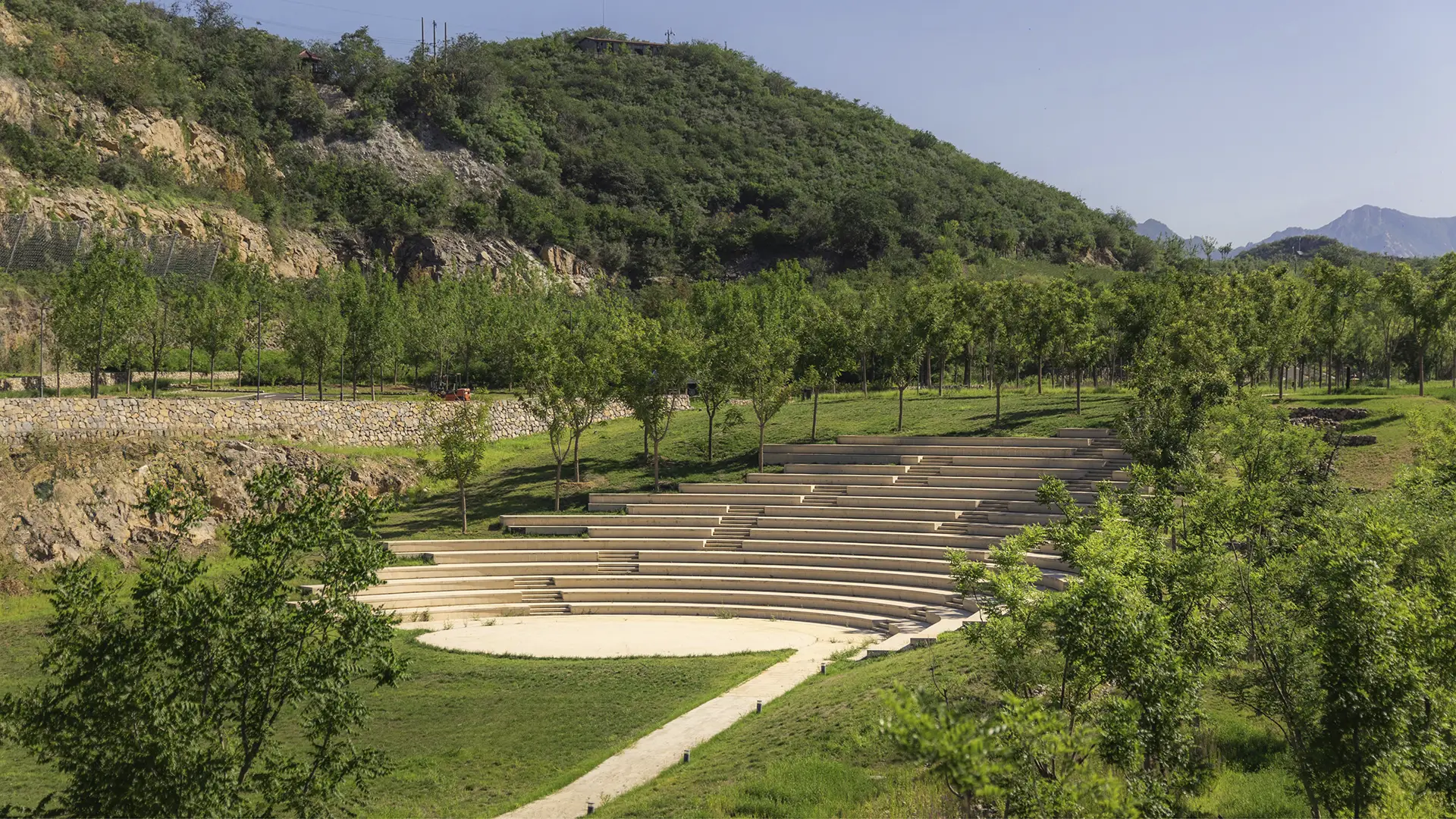
Just north of Beijing, between the Great Wall and Yanqi Lake, the Xingfa Cement Plant once fueled China’s construction boom, operating for over two decades before its 2015 closure under the National Air Quality Action Plan. Today, an adjacent quarry that once provided raw materials has been remediated as a 107.5-hectare terraced park that anchors an accompanying 17-acre research campus on the site of the plant.
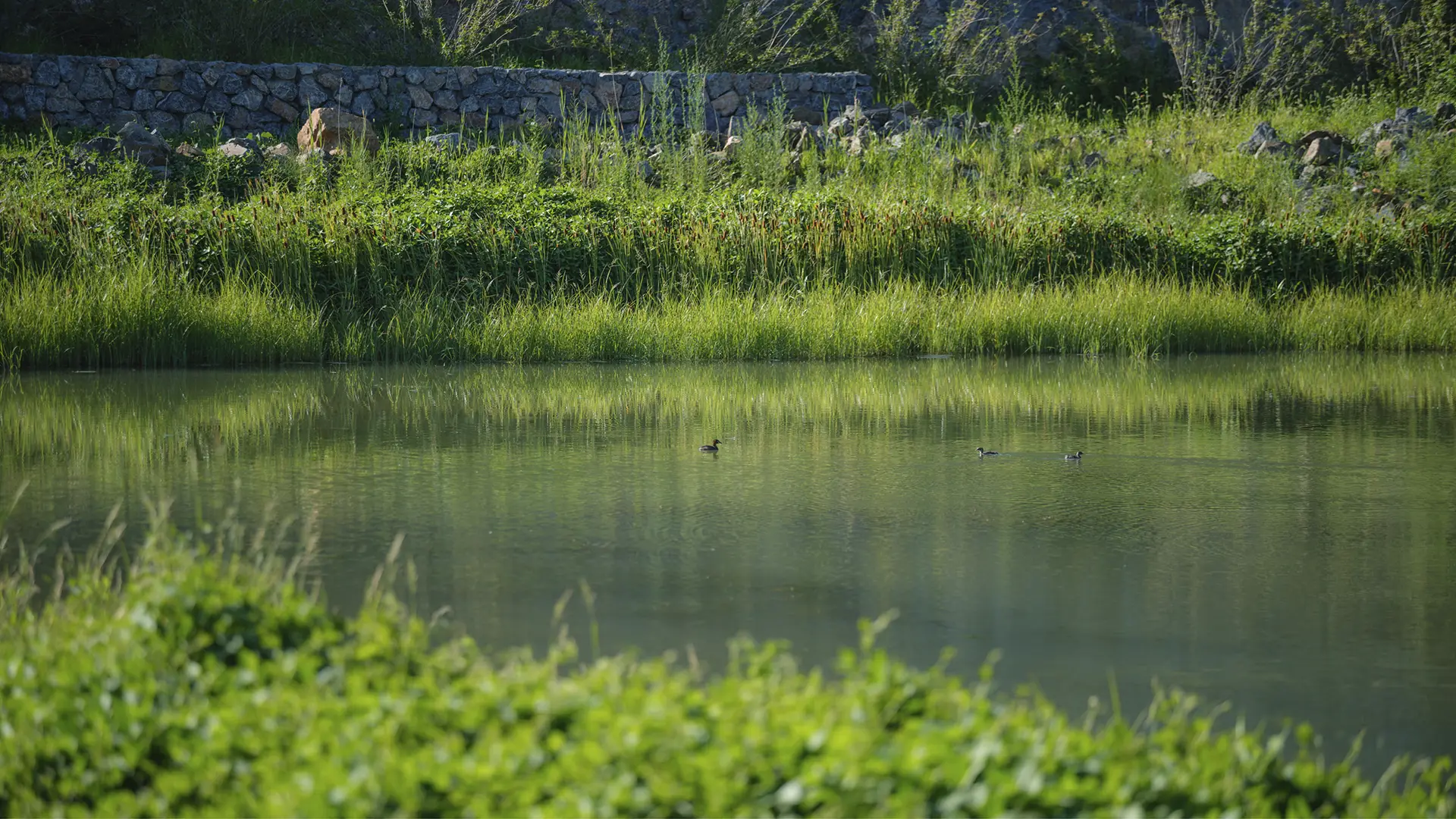
Where a single willow tree once stood, the valley now supports a vast, layered network of emergent plant communities selected to adapt in rocky, alkaline soils. Native arborvitae stabilize slopes and retain moisture through summer droughts. Legume-producing species enrich the thin soil, while seasonal stands of smoke tree, mulberry, and elm provide canopy and seasonal color. Invasive plants introduced during the site’s industrial era have been cleared and replaced with species that restore soil conditions. On the southwestern end of the site, a seasonal pond has been added to retain stormwater runoff and reduce erosion across the exposed quarry floor.
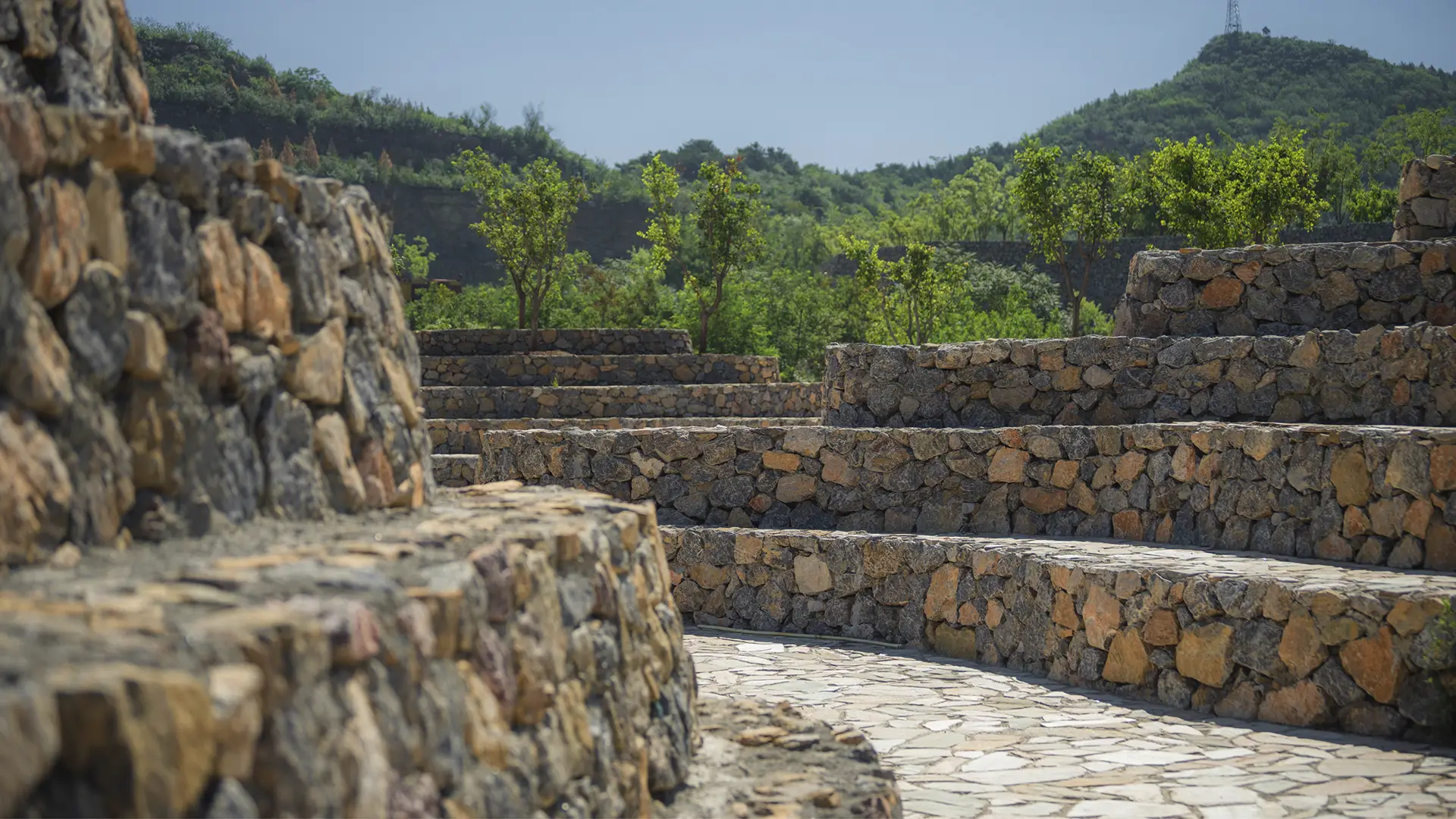
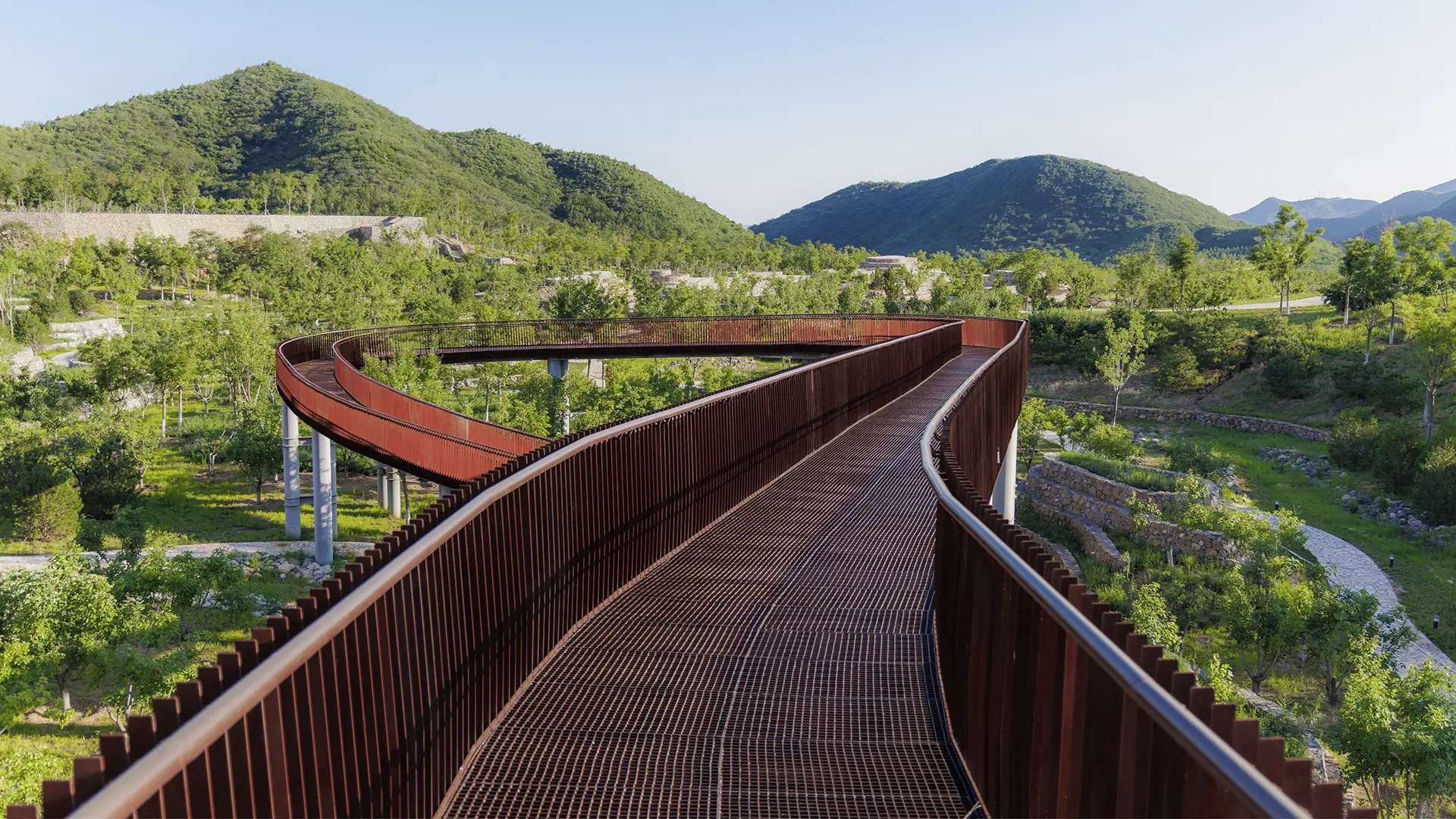
Paving, walls, and trail edging were constructed using recycled stone and shale. Salvaged conveyor housings and other industrial remnants were embedded into the landscape along the “Trail of Memory,” a pedestrian spine linking the two quarry pits that pays homage to the site’s industrial past. Climbing up a nearby hilltop to an overlook pavilion, a 1.2-kilometer hiking trail provides panoramic views of the surrounding Yan Mountains.
Pellier Park
In the heart of downtown San Jose, the first of three new SWA-designed parks celebrates the plum tree and agricultural origins of Silicon Valley. The site is a registered California Historic Landmark and the original nursery of Louis Pellier, known as “ The Prune King’ who introduced the French Prune to the Valley in 1856 and sparked the orchard boom in Calif...
Resonant Memory: One October Memorial
Inspired by the shared love of country music that brought people from all over the world together for the Route 91 Music Festival, Resonant Memory is based on the shape of an acoustic guitar. The design makes particular use of the instrument’s sound hole as a recurring motif to represent absence, honoring the lives lost on October 1, 2017, in Las Vegas, Nevada...
Metcalfe Playfield
Metcalfe Park, a resilient community in north Milwaukee, has long grappled with challenges tied to structural racism, disinvestment, and environmental injustice. Milwaukee Recreation is working to change the city’s public spaces through an effort to revitalize all 52 of its playfields, and Metcalfe Playfield is the 15th completed renovation. The park was selec...
Naftzger Park
Naftzger Park offers a contemporary and communal gathering space in downtown Wichita with enough variety to appeal to everyone. Designed to activate an area of town between Old Town and a burgeoning new entertainment district, the park is at once an urban foyer and outdoor recreation room. A contemporary pavilion can accommodate picnic tables by day and perf...