


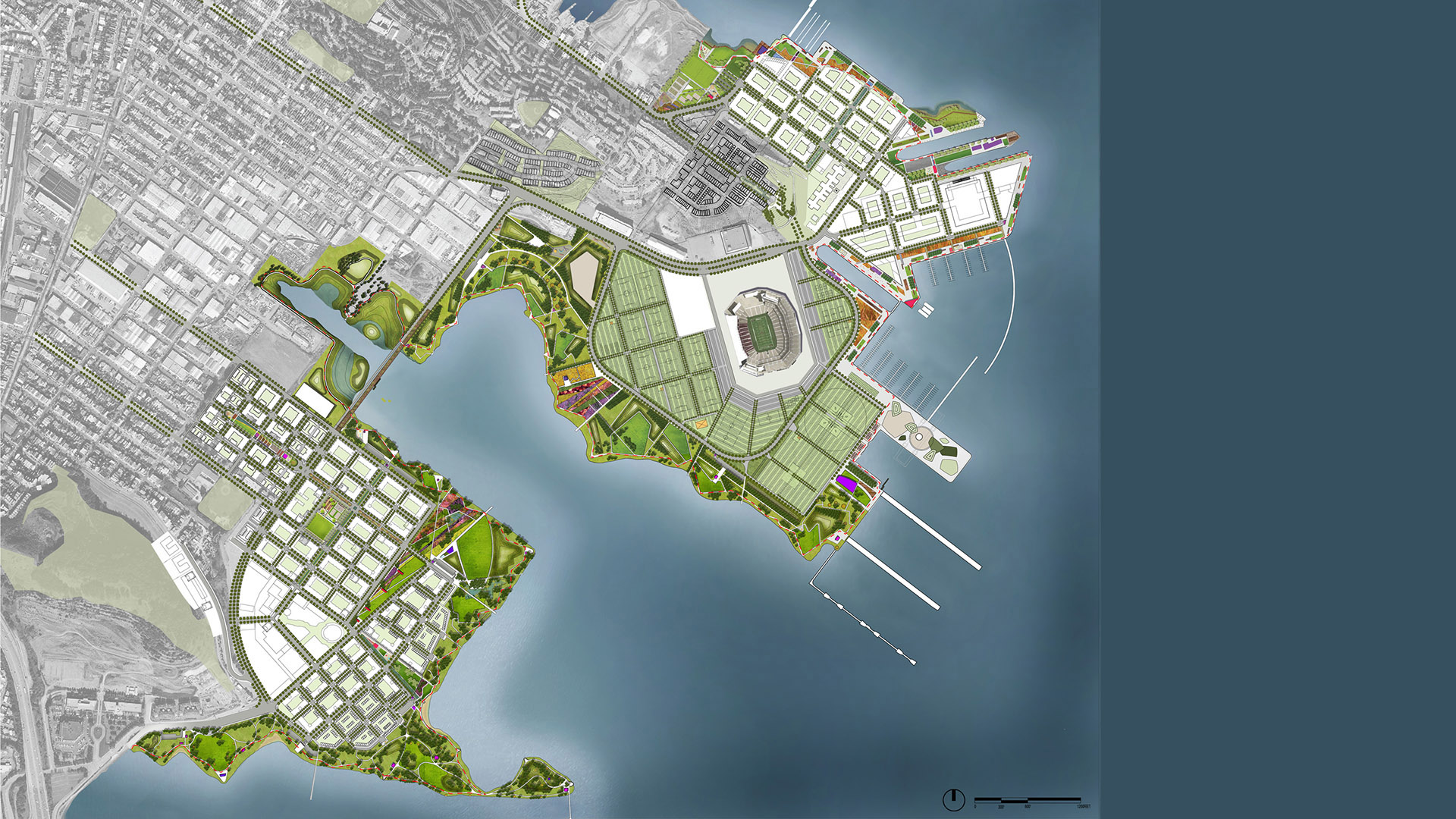
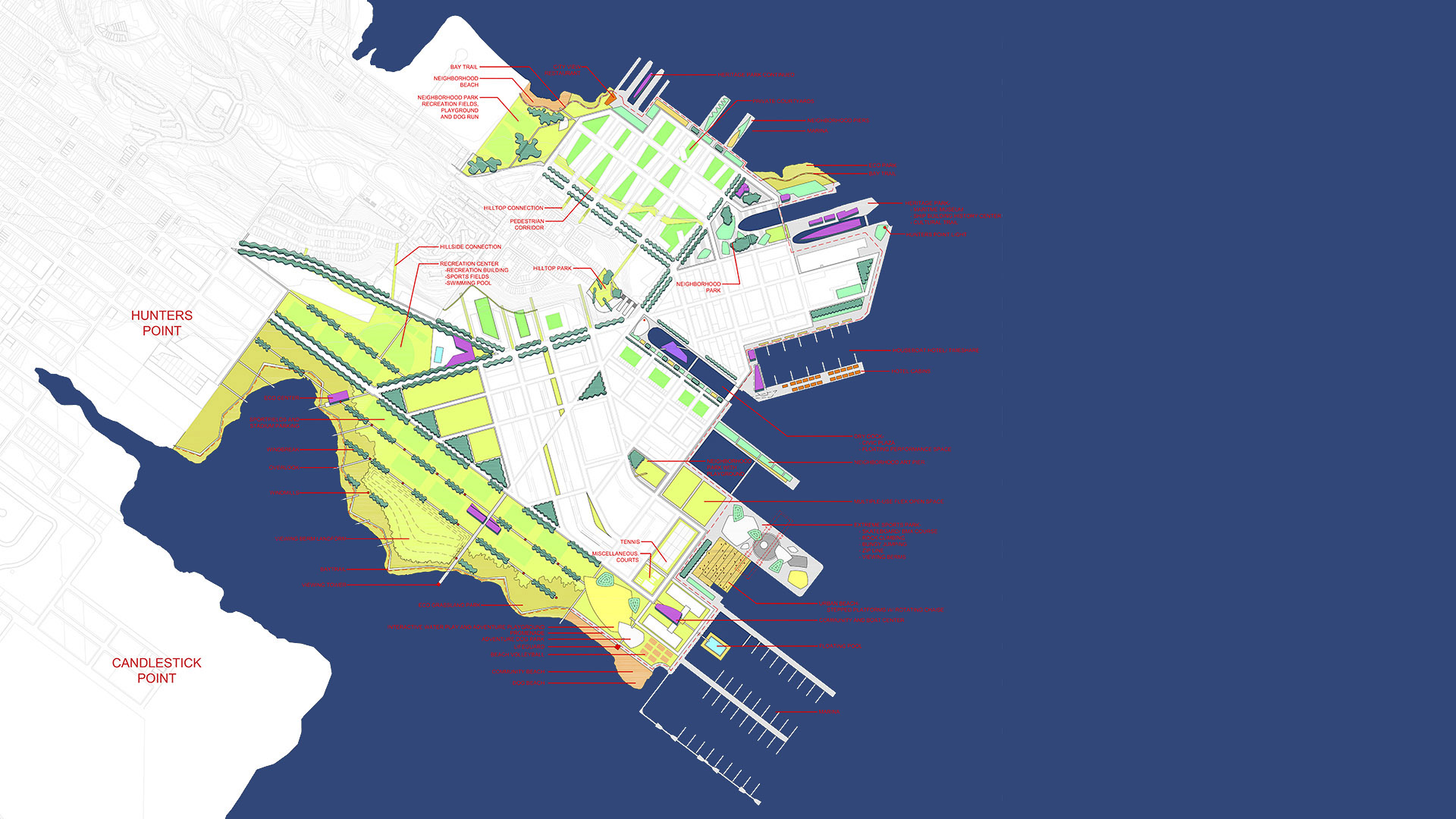
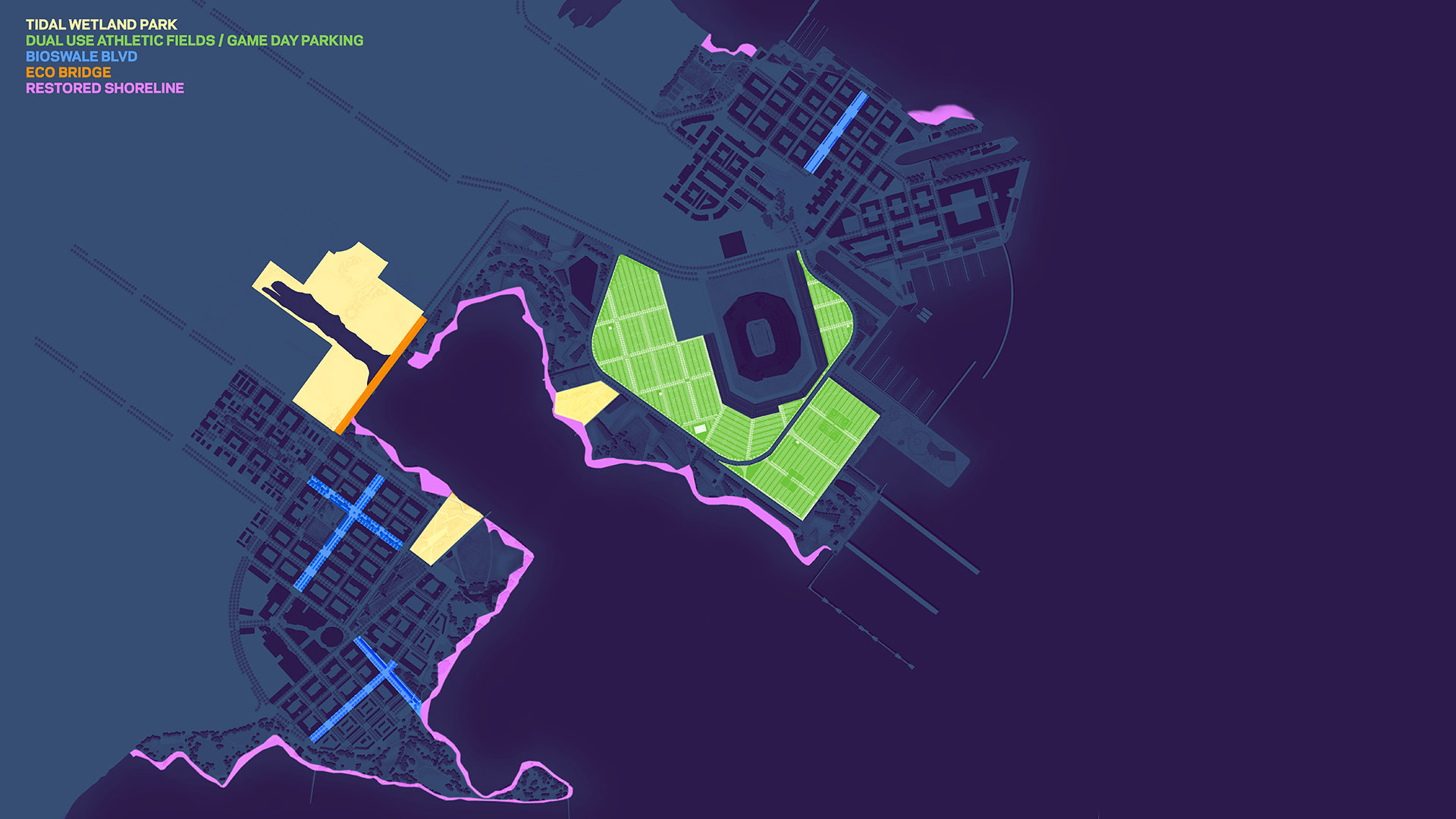

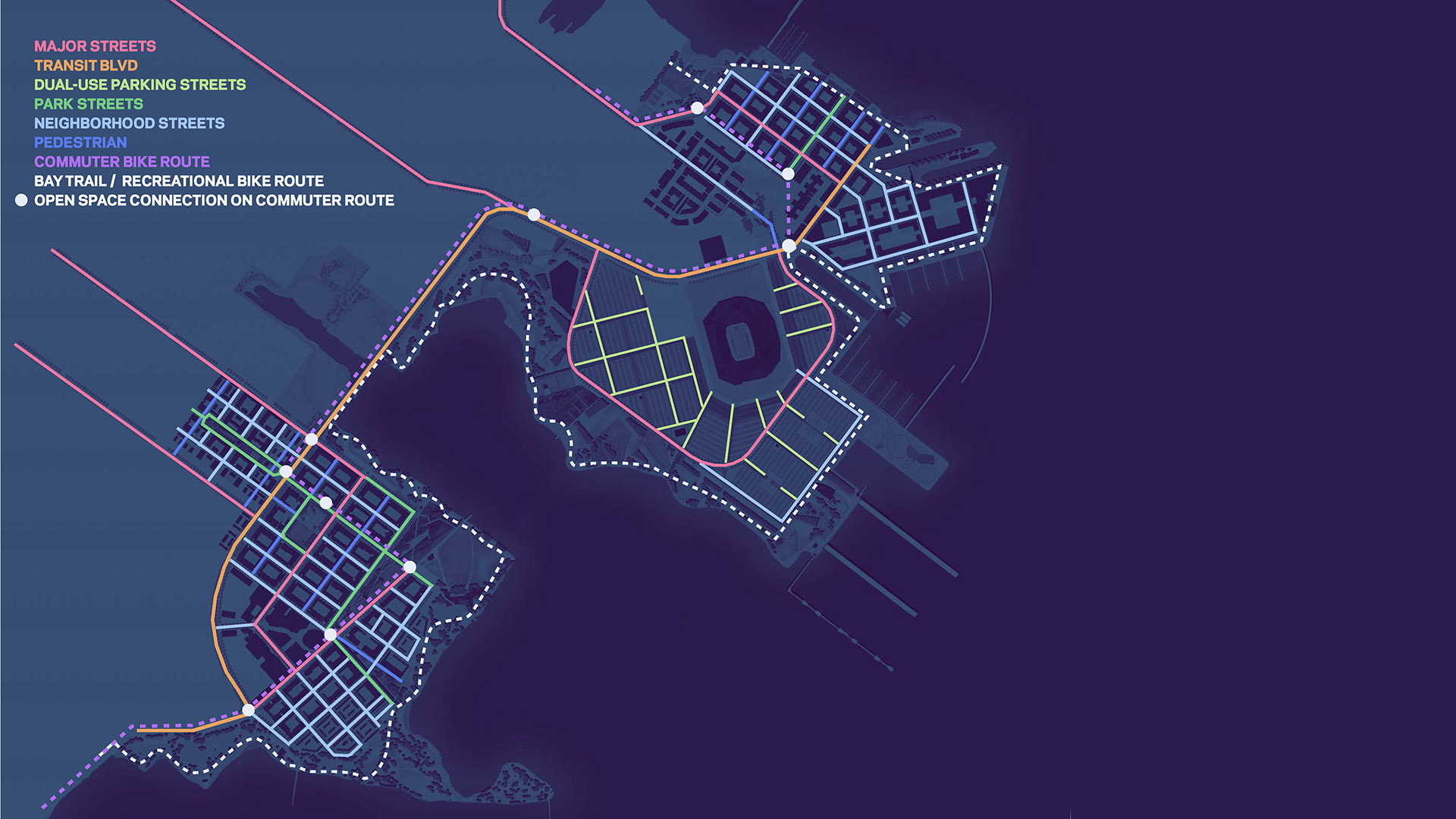
Perched on the edge of San Francisco Bay, the Hunters Point Shipyard was an important naval manufacturing center for the WWI and WWII war efforts. The abandoned shipyard and Candlestick Point were combined into a new, mixed-use residential, retail and light industry development—the largest in San Francisco since WWII. Thomas Balsley Associates collaborated with urban planners IBI Group in developing an innovative urban plan whose parks and open spaces exploit the site’s extraordinarily diverse waterfront and views as well as its rich maritime heritage. The plan combines the proposed Forty-Niners football stadium within the new mixed-use community with a sustainable system of smart streets, bikeways and diverse parks, including California’s first urban state park, redesigned to function as the front lawn to San Francisco’s Bayview and Hunters Point Community. A lively network of neighborhood parks, plazas, linear boulevard parks, roof deck recreation areas, and a continuous waterfront park trail and bikeway system knits the spaces together and connects the upland community to its new shipyard neighbors and the extraordinary bay environment. The state park’s grassland and natural shoreline has been retooled into a landscape of the highest standards of environmental and social sustainability.
Lin'an High Tech Park
Lin’an Qingshan Lake Forest Technology Park offers a premier destination for high-tech and green-tech businesses. Designed in harmony with nature, this mixed-use community will foster productivity and connections to its physical and cultural setting, providing a vibrant mix of uses and a business culture appealing to a wide range of international enterprises. ...
Suzhou Center
The Suzhou Center is a landmark urban space within the Suzhou Central Business District that embodies the spirit of the city of Suzhou as a gateway for intersecting old and new cultural and historic heritage. The successful combination of high-density development and ecological conservation will allow for Suzhou to transition to a garden city where state-of-th...
Hensley Field Master Plan
Building upon a winning competition entry, SWA is developing a master plan to transform a former Naval Air Station into a premier mixed-use district in southern Dallas. Tasked with crafting an implementable plan that achieves environmental sustainability, economic recovery, and social equity objectives, SWA is working to address the unique challenges of a form...
Riyadh East Sub-Center
SWA provided comprehensive planning for a new 300-hectare commercial, mixed-use center in northeast Riyadh abutting the KKI Airport. This area is part of an urban management framework being developed to guide the future growth of the city. SWA developed a plan and implementation strategy to establish an urban center comprising residential neighborhoods, corpor...