


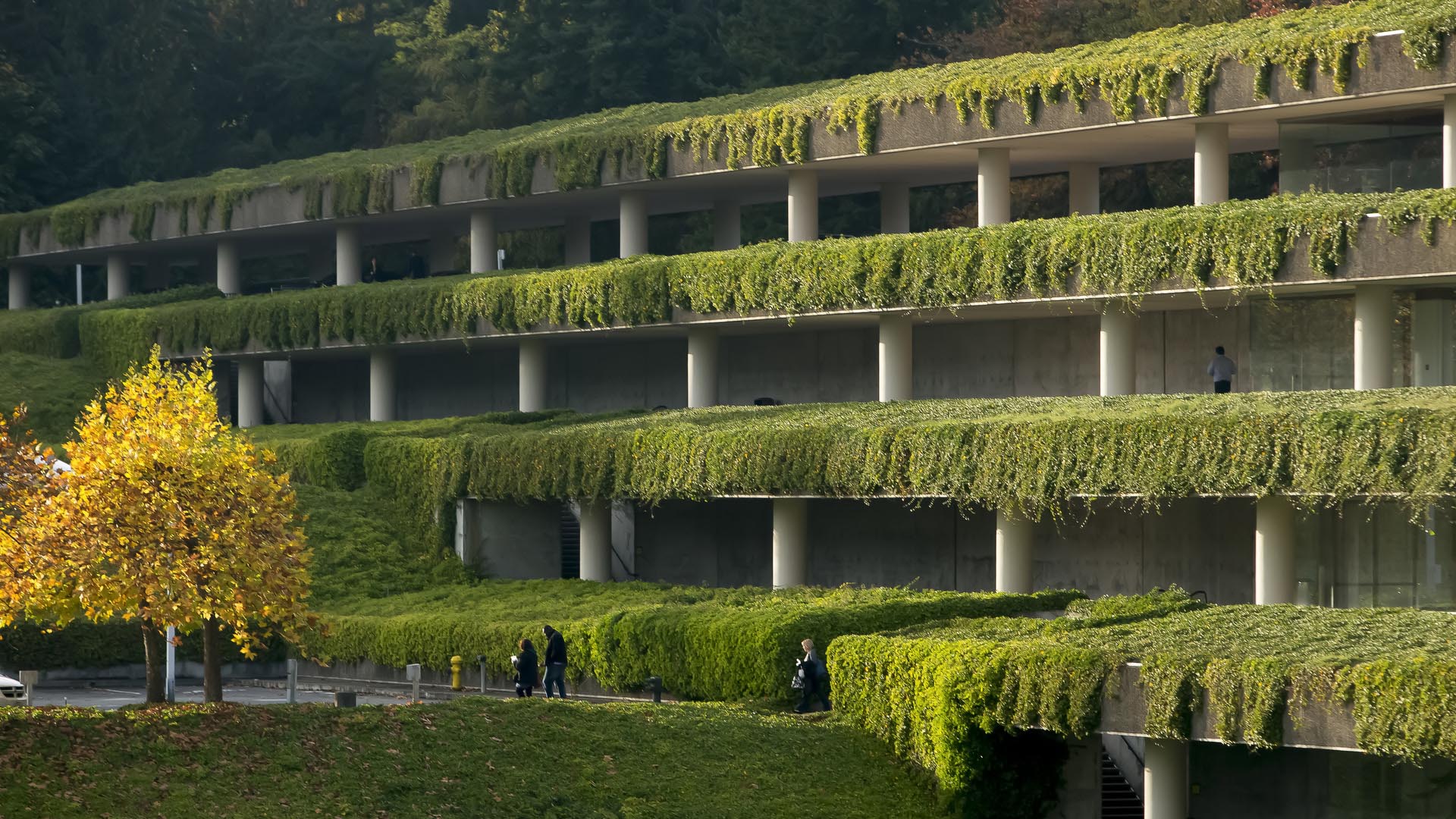
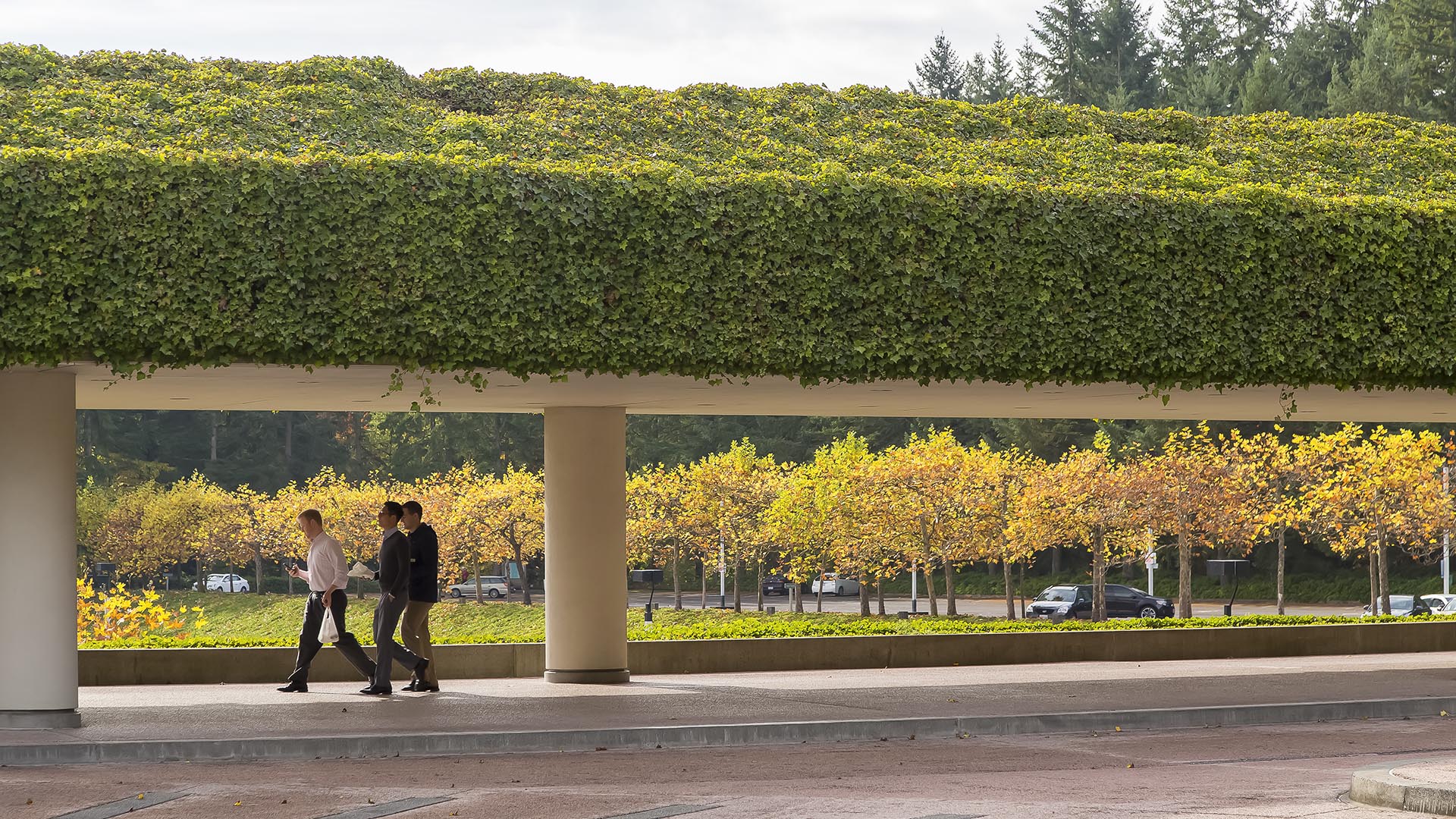
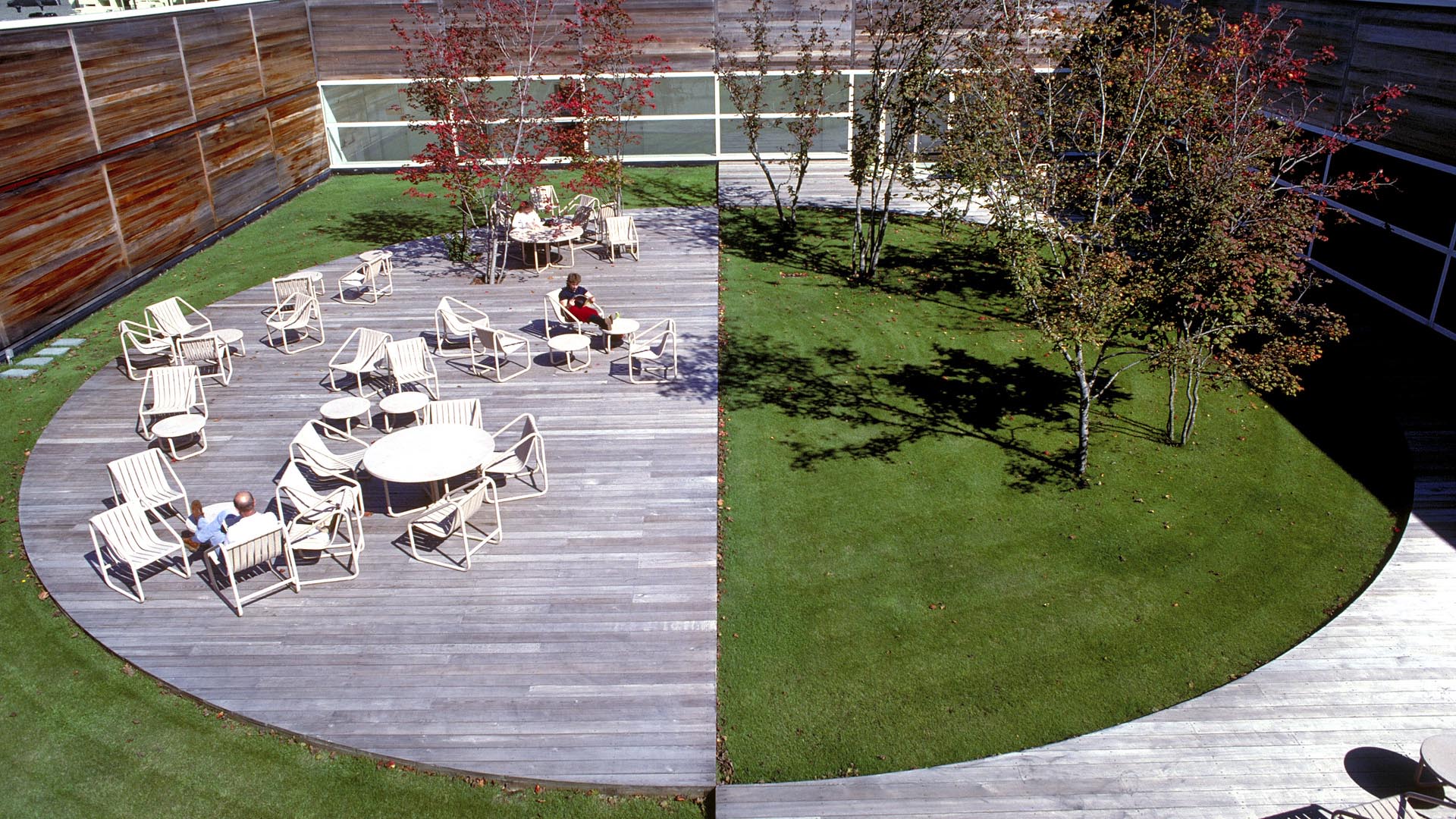
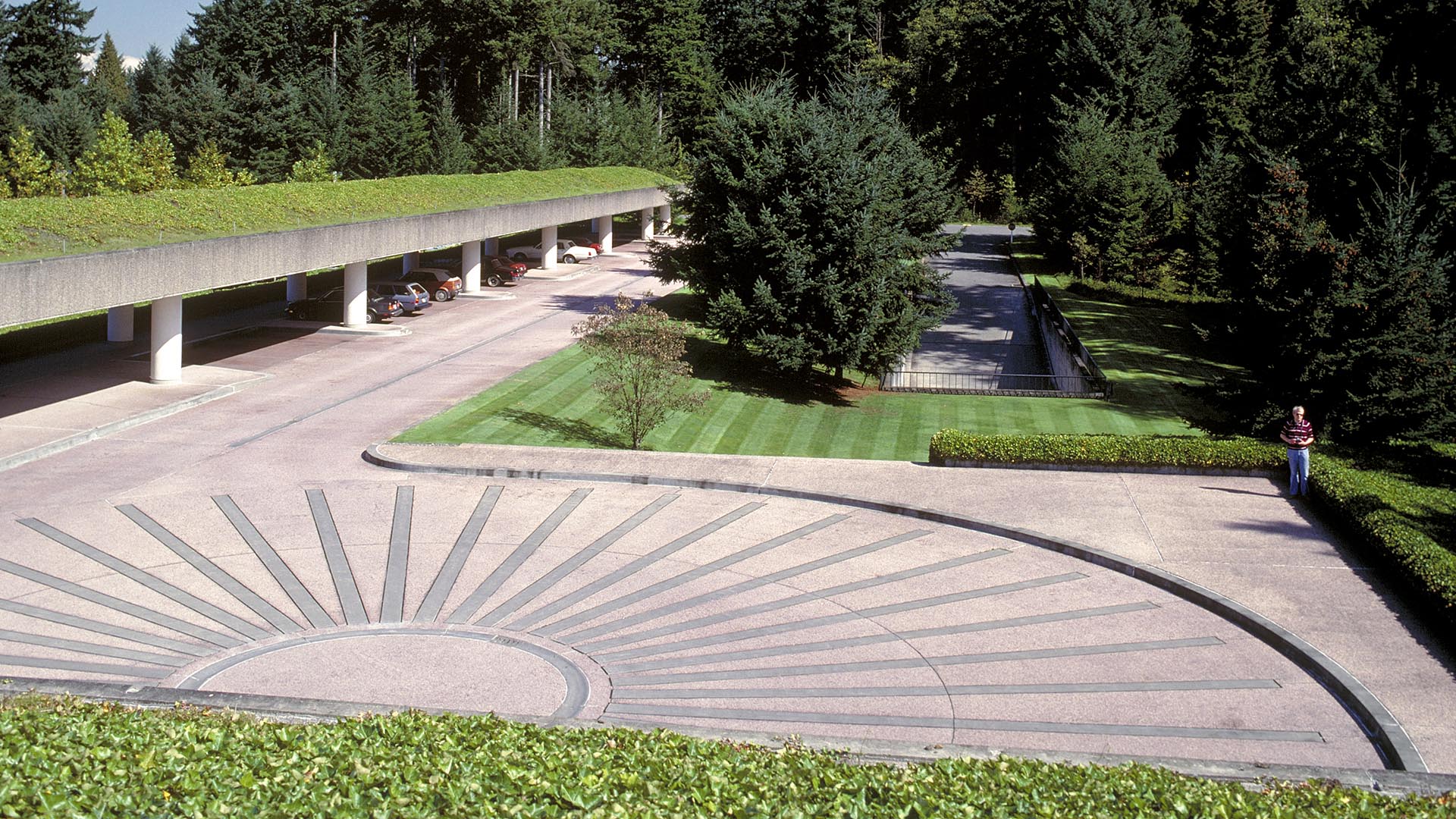
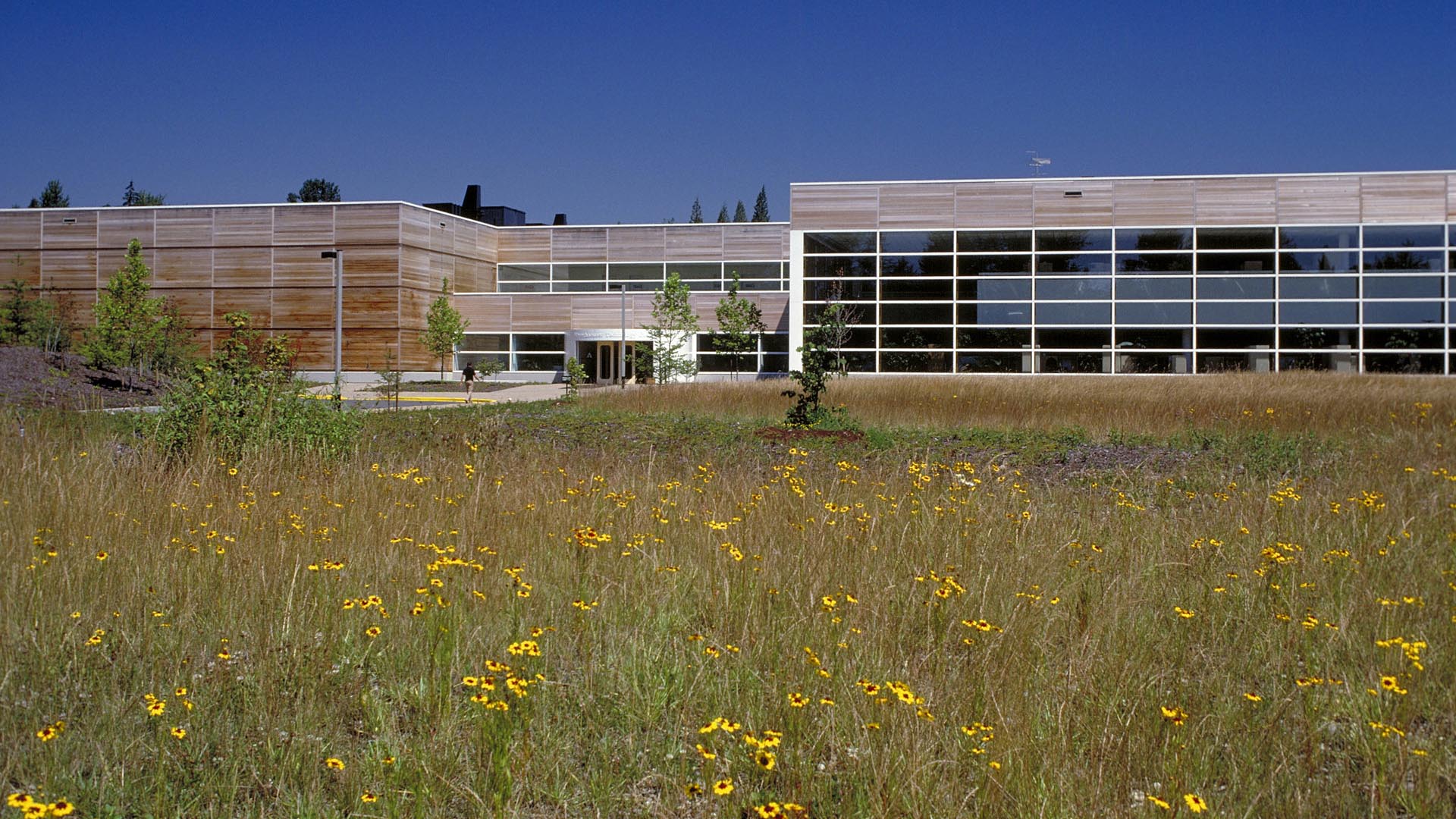
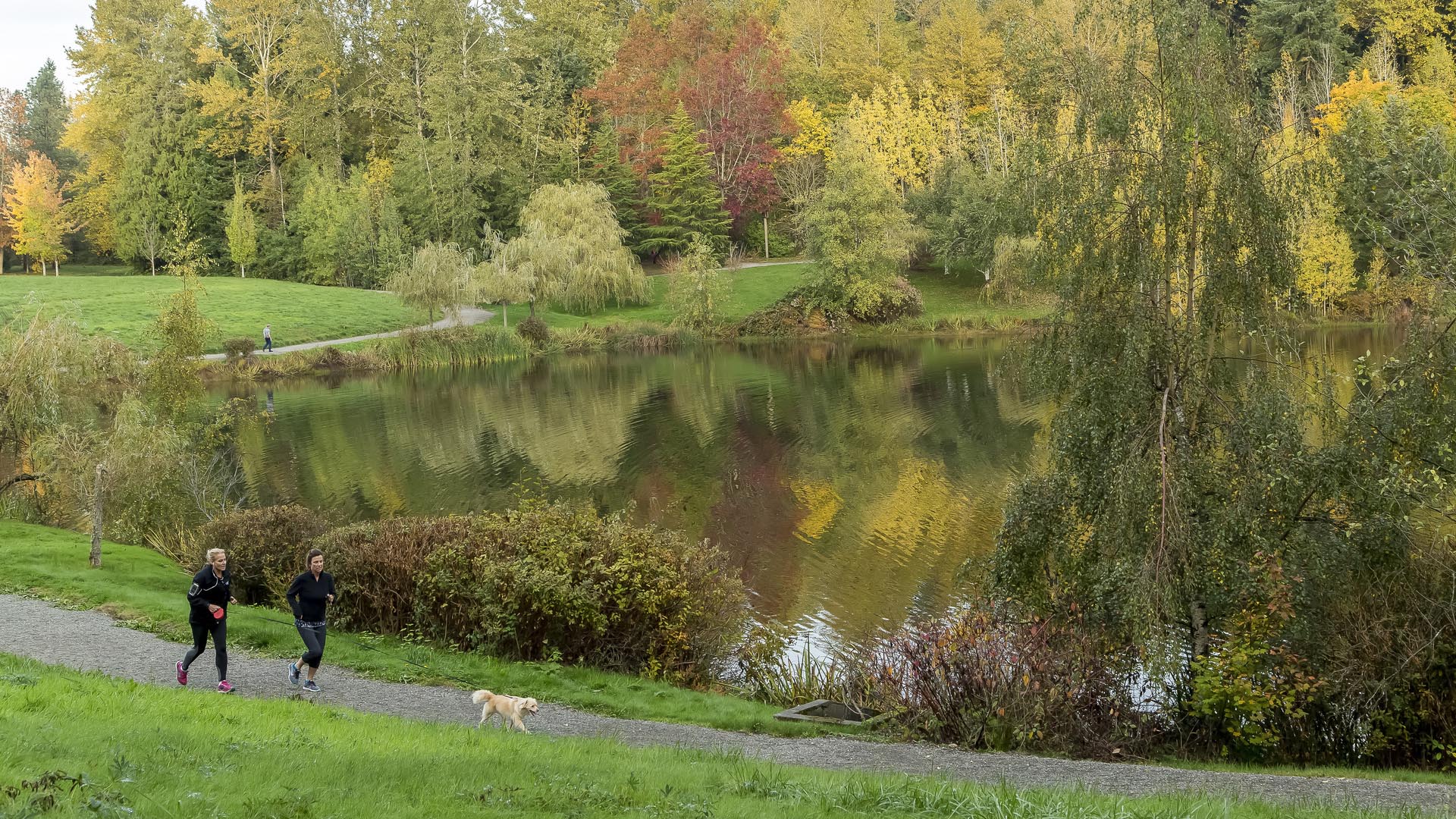

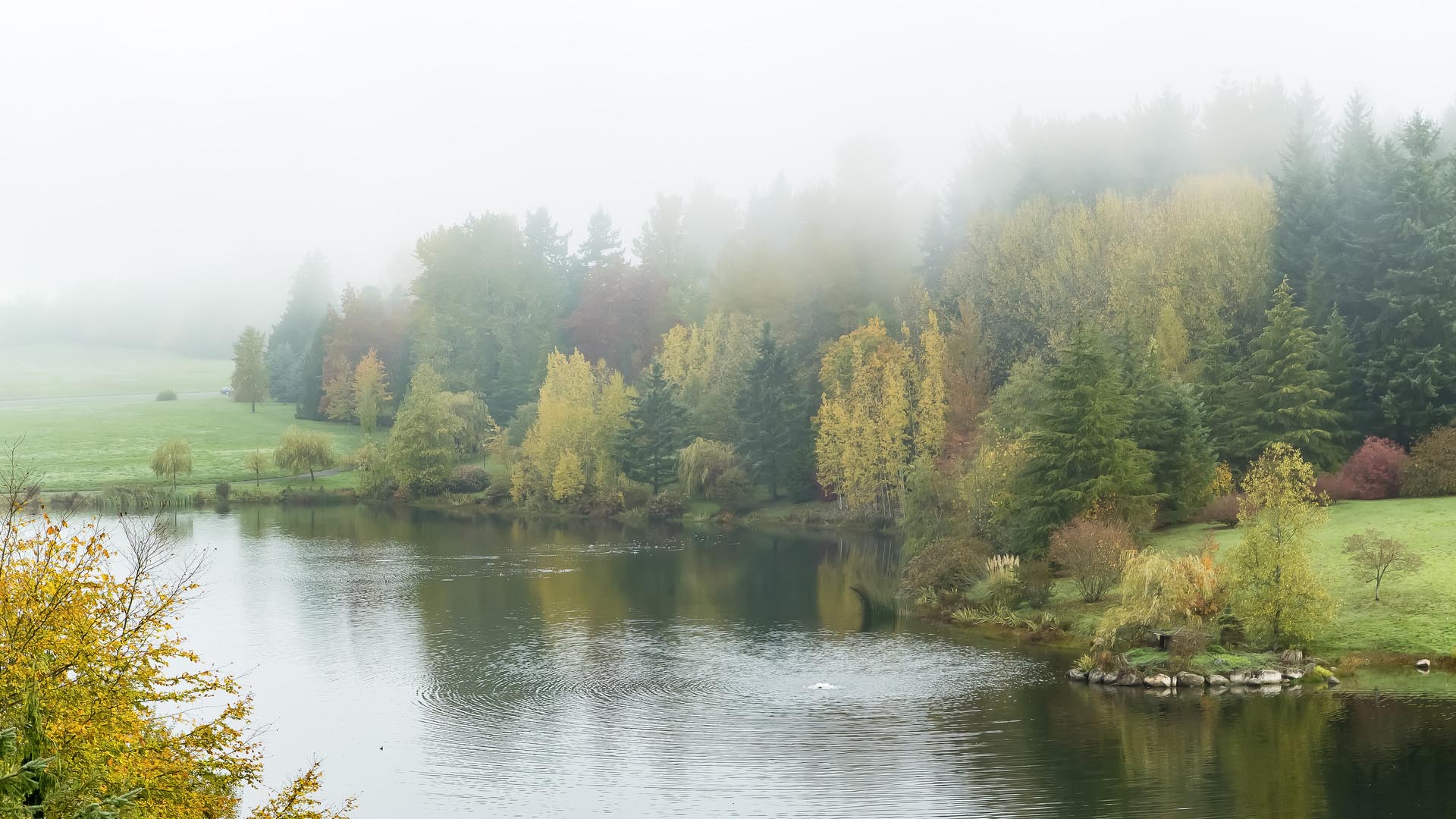
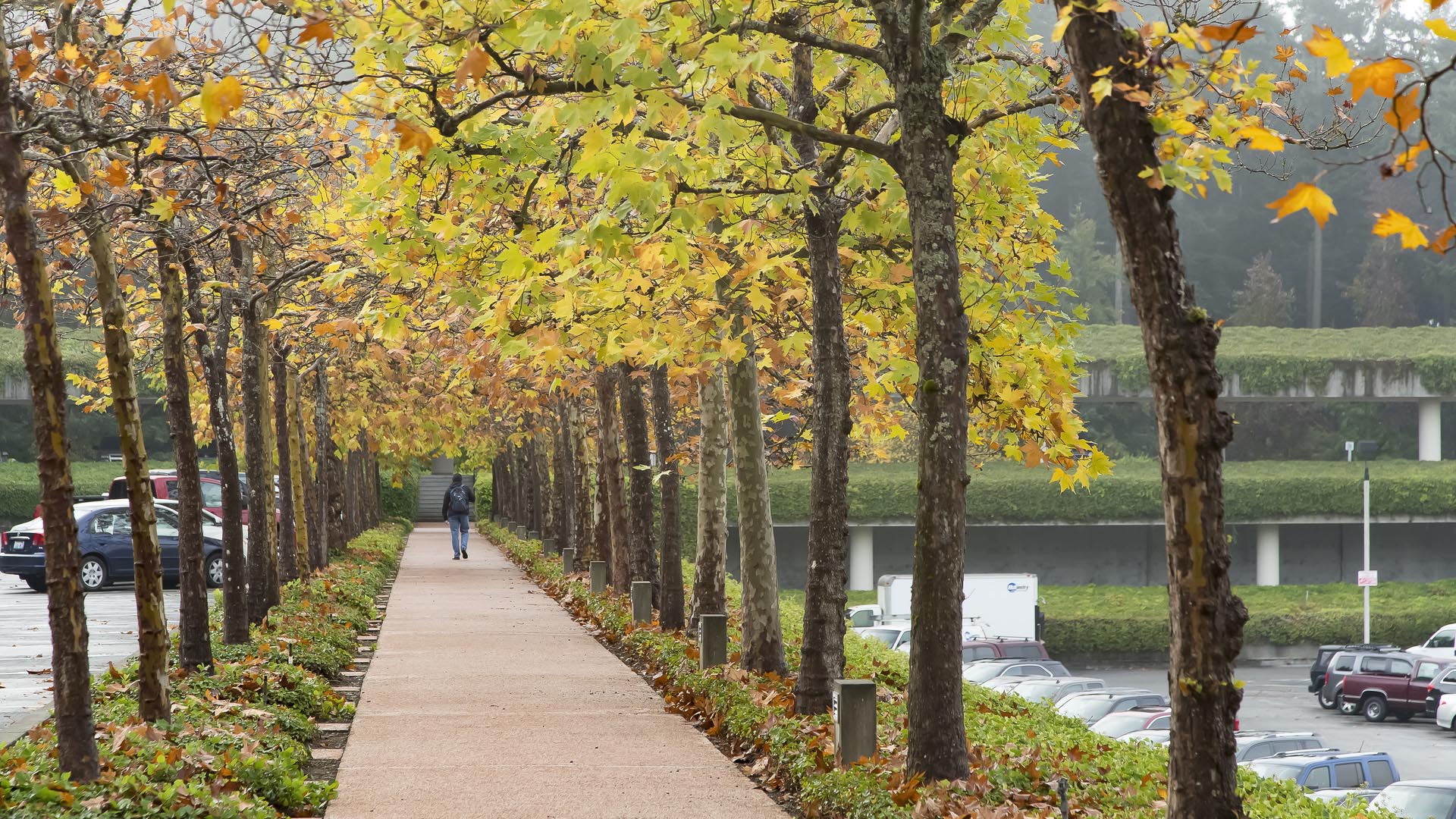


Founding SWA partner Peter Walker collaborated with architects SOM on site analysis, planning, and landscape development for this hugely influential corporate headquarters, which remains notable for its unique integration of landscape, architecture, and environmental stewardship. The 425-acre site was chosen by the design team with George Weyerhaeuser for its remarkable characteristics – the headquarters building occupies a small valley between heavily wooded hills, bifurcated by a small stream. The large headquarters building for 1,000 employees was integrated into the site by tipping the “high rise” concept on its side in a gentle swale to minimize its height and create the effect of a dam on one end of a man-made lake. The steep banks and building tiers are planted with English ivy. Clipped beds of ivy and highly maintained lawns transition to plantings of ferns and rhododendrons and then to dogwoods and vine maples. The forest surrounding the headquarters was been treated by removing underbrush and creating woodland trails for the enjoyment of employees and the surrounding community.
The building’s placement provides striking views north and south, and its landscape and conservation efforts have been recognized and honored throughout the world by numerous awards. According to Peter Walker, who designates the project as one of the standouts of his career, “The landscape and the architecture have been joined into a composition, each inseparable from the other… The existing evergreen forest is symbolic of a company that not only harvests trees, but also replants and farms them: an important example of environmental husbandry at the very beginning of the environmental movement in America.”
In early 2021, new owners Industrial Realty Group, LCC (IRG) announced plans to redevelop a significant portion of the Weyerhaeuser campus to build additional warehouse space. The effort, which would require deforestation, has come under fire from a wide coalition of architects, landscape architects, and historians. The Cultural Landscape Foundation (TCLF) has organized a letter-writing campaign entreating IRG to reconsider, citing considerations in the original SWA landscape master plan that would more sensitively accommodate new development.
Xingfa Cement Plant Renovation
Located next to a reclaimed quarry park, Xingfa Cement Plant is a former factory transformed into a national advanced science research facility, contributing to the establishment of Huairou Science City. The team of landscape architects and architects worked in close...
Poly International Plaza
Poly International Plaza is an innovative office, retail, and exhibition center development located in the Guangzhou trade district. Sited along the Pearl River and adjacent to historic Pazhou Temple Park, the project presents a precedent toward integrating development with its site and context, embracing the place of garden and sustainability in the society’s...
North Texas Corporate Campus
Facing arduous competition to attract and retain top employee talent, companies are distinguishing themselves through the design of their workplaces. SWA worked with the client to reimagine and reinvigorate an outdated campus into a stimulating and rewarding work environment with quality amenities. To undertake the challenge of this campus transformation, the ...
Samsung Headquarters
The new headquarters for Samsung in San Jose is a bold vision for a campus and a workplace that put interaction and synergy at the center – building a culture and brand that is powered by the best ideas and talent. The building is carefully crafted to encourage communication and interaction, leading to a synergistic working environment that will help fur...