

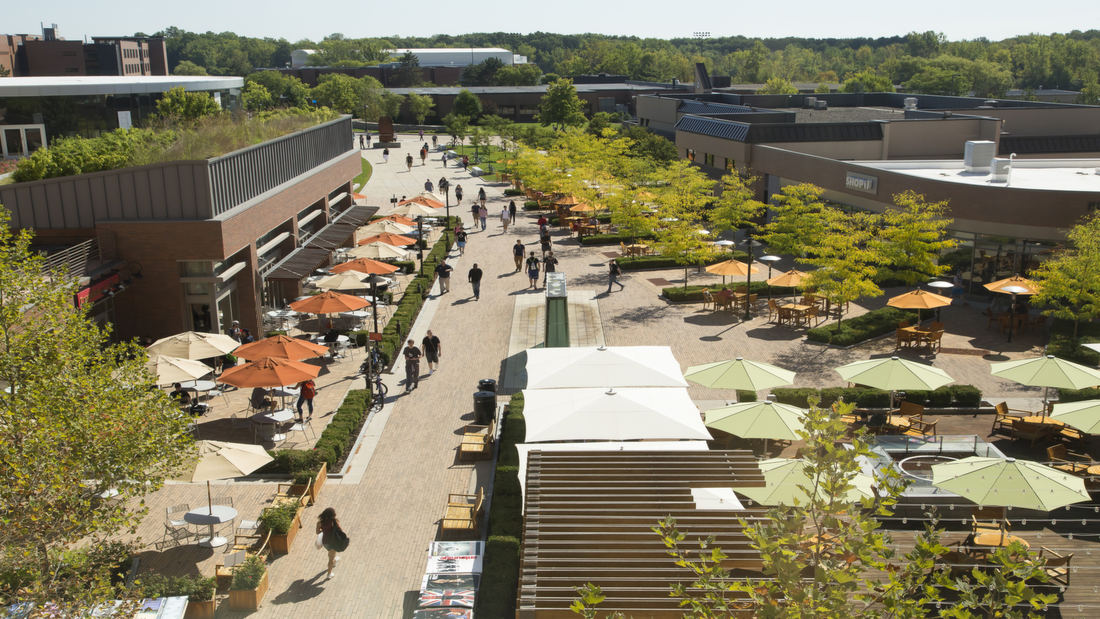
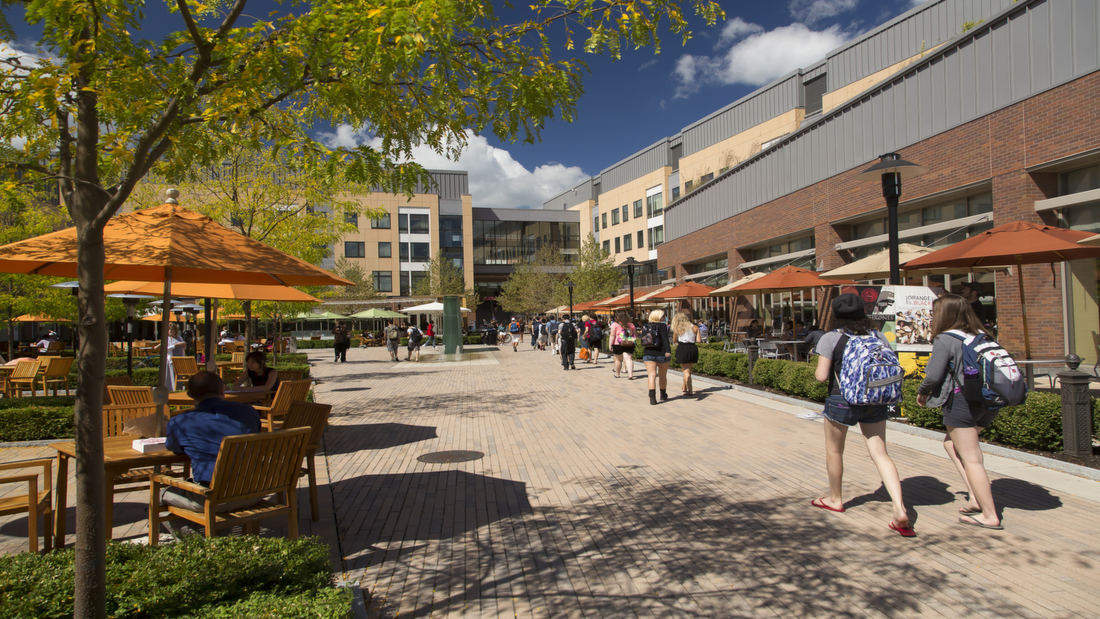
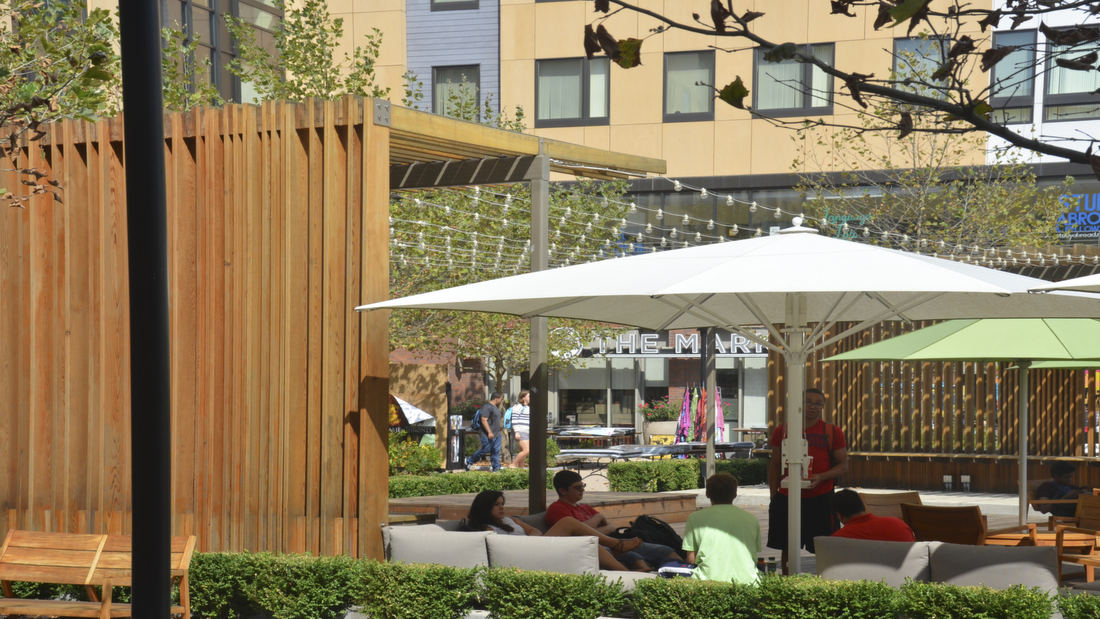
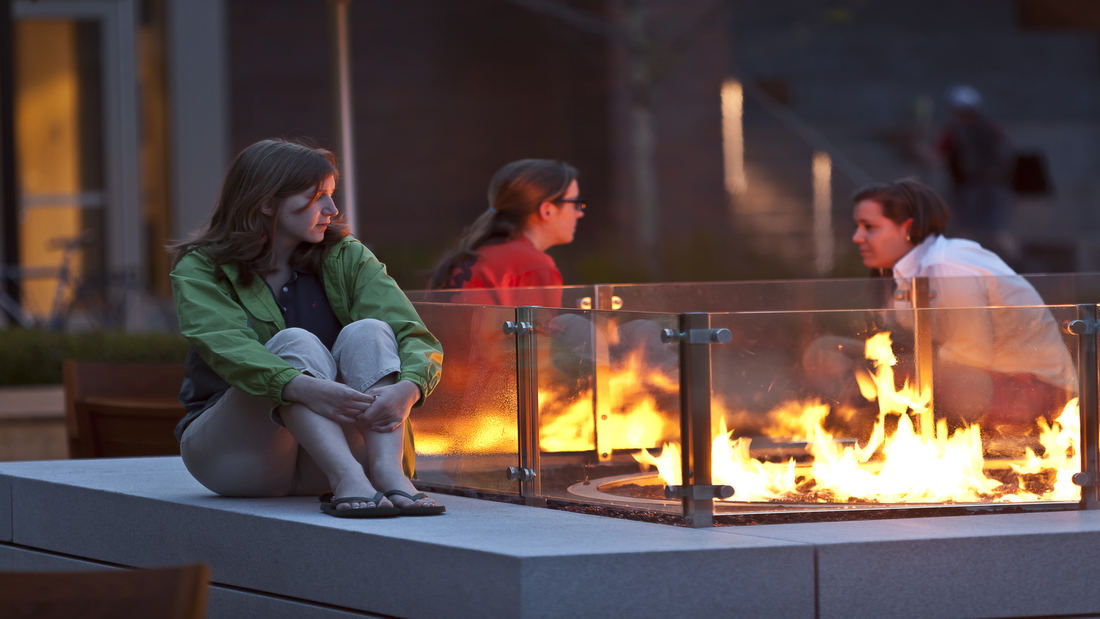
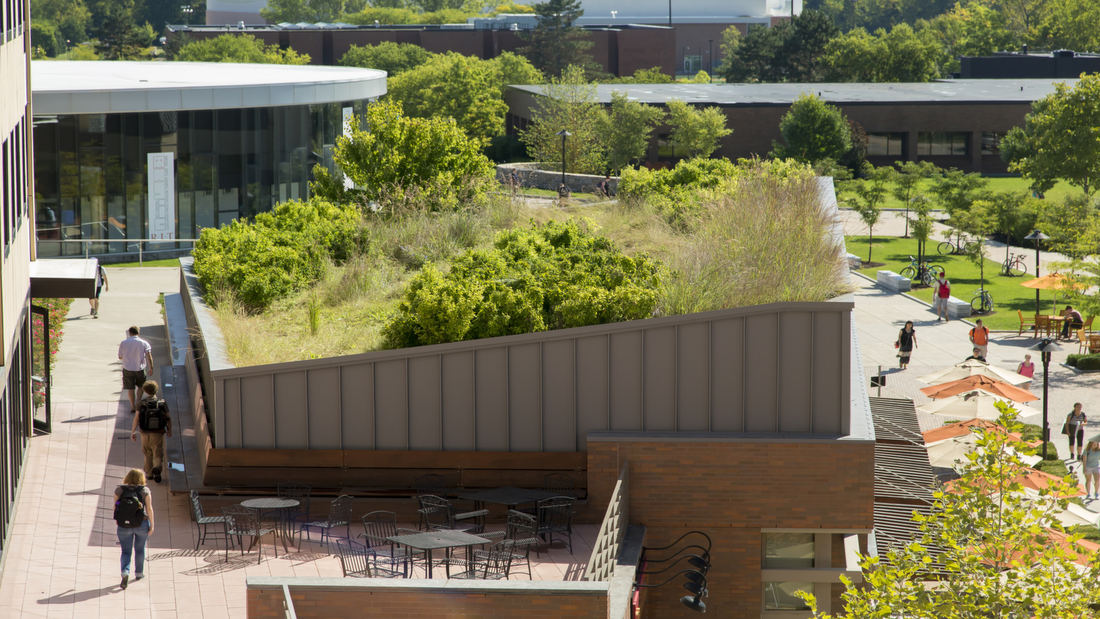
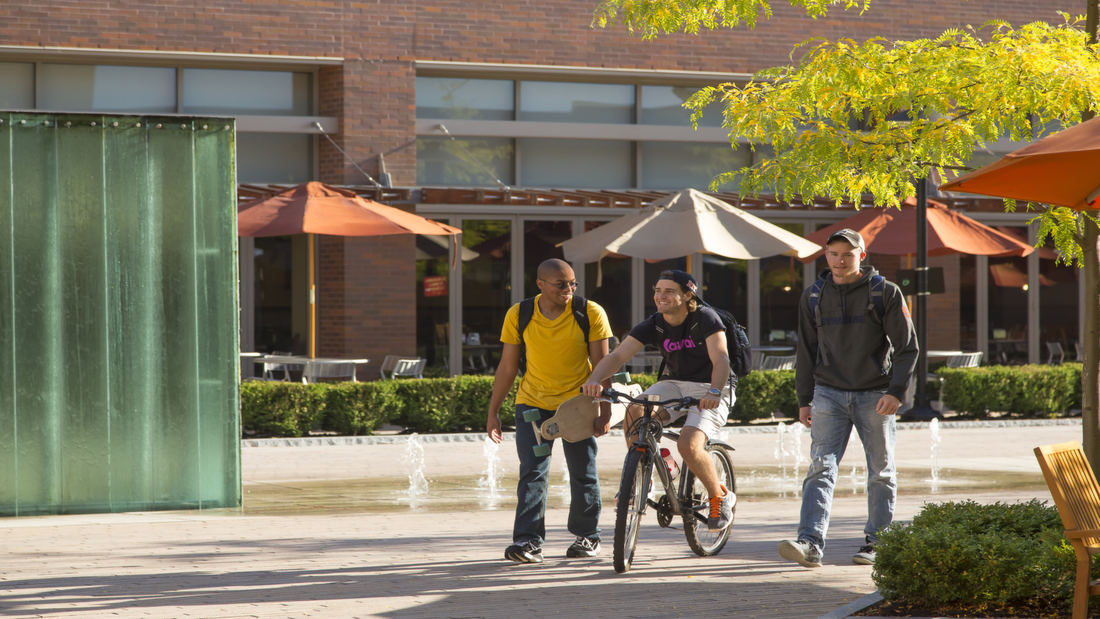
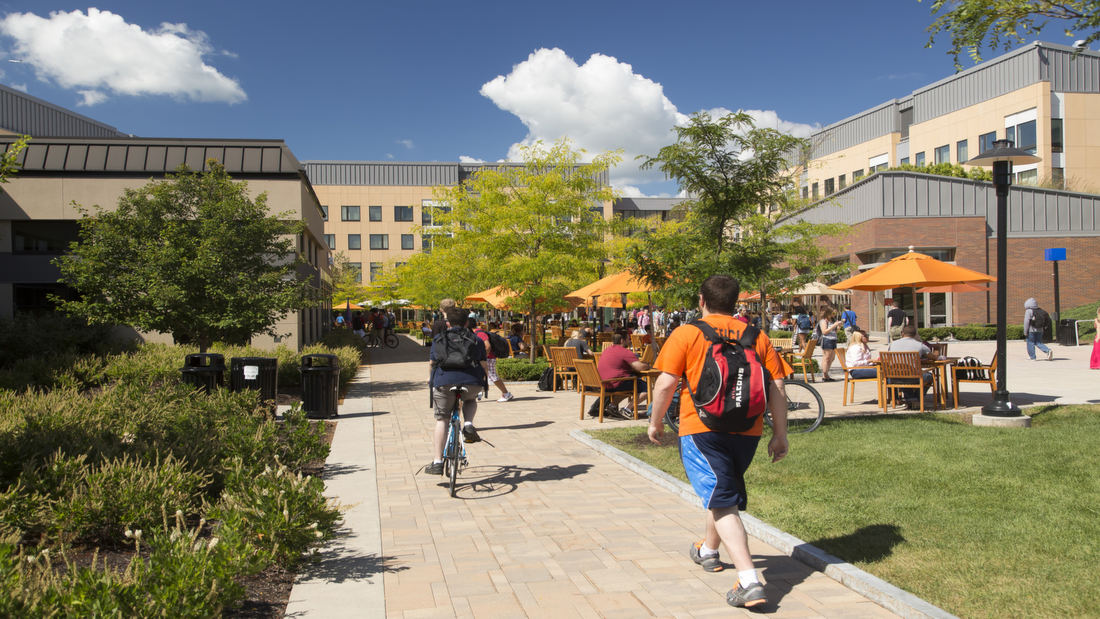
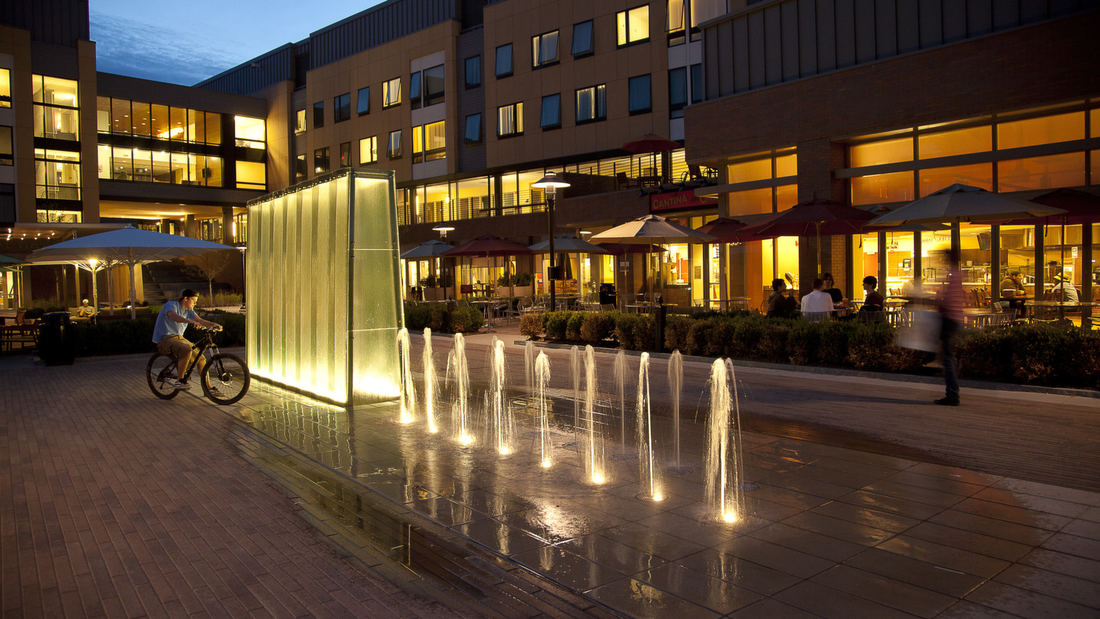
Global Village, a pedestrian-only infill neighborhood adjacent to Rochester Institute of Technology’s academic core, and its mixed-use centerpiece, Global Plaza, create a social heart for 17,200 students and 3,600 faculty and staff. The landscape architects and architects collaborated on an urban design that establishes multiple “crossroads” to foster walking between classes and previously isolated campus buildings and parking. Also integrated are earlier “floating” buildings, including a one-story campus café/cafeteria, a cluster of Greek houses, and the new glass Innovation Center. Multiple portals and entrances, two grand stairs—popular for people watching—and an outdoor space network on two levels enmesh the neighborhood into the campus’ hilliest area and make walking there enjoyable. In all, Global Village provides housing for over 400 students in the initial phase and is planned for 800-1200 additional students, tripling the number that can live amidst a sophisticated, active zone. Global Plaza provides a mosaic of dining, studying, and socializing spaces, including a permeable café region and restaurant terrace with seating for over 300, a central outdoor lounge with resort-style deep seating, fire pit and trellis-framed performance area, and a south-facing, conical lawn “beach.” An internally-lit, faceted, patterned glass fountain located at the intersection of the plaza’s pedestrian flows serves as a meeting place year round.
The plaza remains in use during Rochester’s cool weather thanks to user-operated timed gas heaters in the café seating zone, umbrellas for hot or drizzling days, and a fire pit in the central lounge. In the coldest months, the lounge may be cleared, lined, and flooded to transform into a small skating rink. During warmer months, the University programs the plaza with almost daily events including performances, festivals, and other student gatherings. Large canopy tree species, generally absent on campus, will over time reinforce Global Plaza as a landmark for RIT. The project’s compact layout, pedestrian orientation, bicycle facilities, planted roof, distributed rain gardens and provision for summer shade contributed to the project’s LEED Gold rating. Sustainable materials include ungrouted pavers, mostly manufactured within 500 miles, and plantation-grown 2x lumber for the trellises and bike parking canopies. Global Plaza instantly became the campus social hub and Global Village its most popular housing when completed in Fall 2010. “It’s been a great gathering place, the kind of common square you see in great cities” noted Mary-Beth Cooper, RIT’s Senior Vice President for Student Affairs. Dr James Watters, RIT’s Senior Vice President for Finance & Administration, says, “The plaza is a huge success. We had kids sitting out deep into the fall, which, given our weather, is exceptional.”
Rodeo 39
As larger big-box companies continue to close their brick-and-mortar stores, each leaves behind a sizable void within the communities these centers once served. Rodeo 39, seeks to break the models of traditional retail that are founded on convenience and visibility and shift the focus to community aspirations and user experience.
The 31,000-square-foot ...
Qingdao SIIC International Financial Center
Qingdao is the birthplace of Tsingtao Beer and, for over 20 years, the Tsingtao International Beer Festival was held on this site. SWA played a crucial role in preserving the community’s cultural landmark status as the land surrounding the festival site was transformed into a new urban campus and transit hub. Recently completed, the Qingdao SIIC International ...
CSU Long Beach Peterson Hall
CSU Long Beach is in the process of a series of major renovations as its mid-century buildings fall short in terms of capacity and technology. The Peterson Hall project extends the classroom experience to the outdoors, while also adding much-needed sustainability updates to the landscape. Terraced seating of composite wood invites students to lounge while awai...
Stanford University Terman Park
The removal of an existing building adjacent to the center of Stanford’s campus provided a unique opportunity to fashion an interim park space. The project emphasizes reuse and seeks to utilize salvaged materials as well as the existing grading and fountain as key features of the park. As a multifunctional performance and recreational space, the project ...