


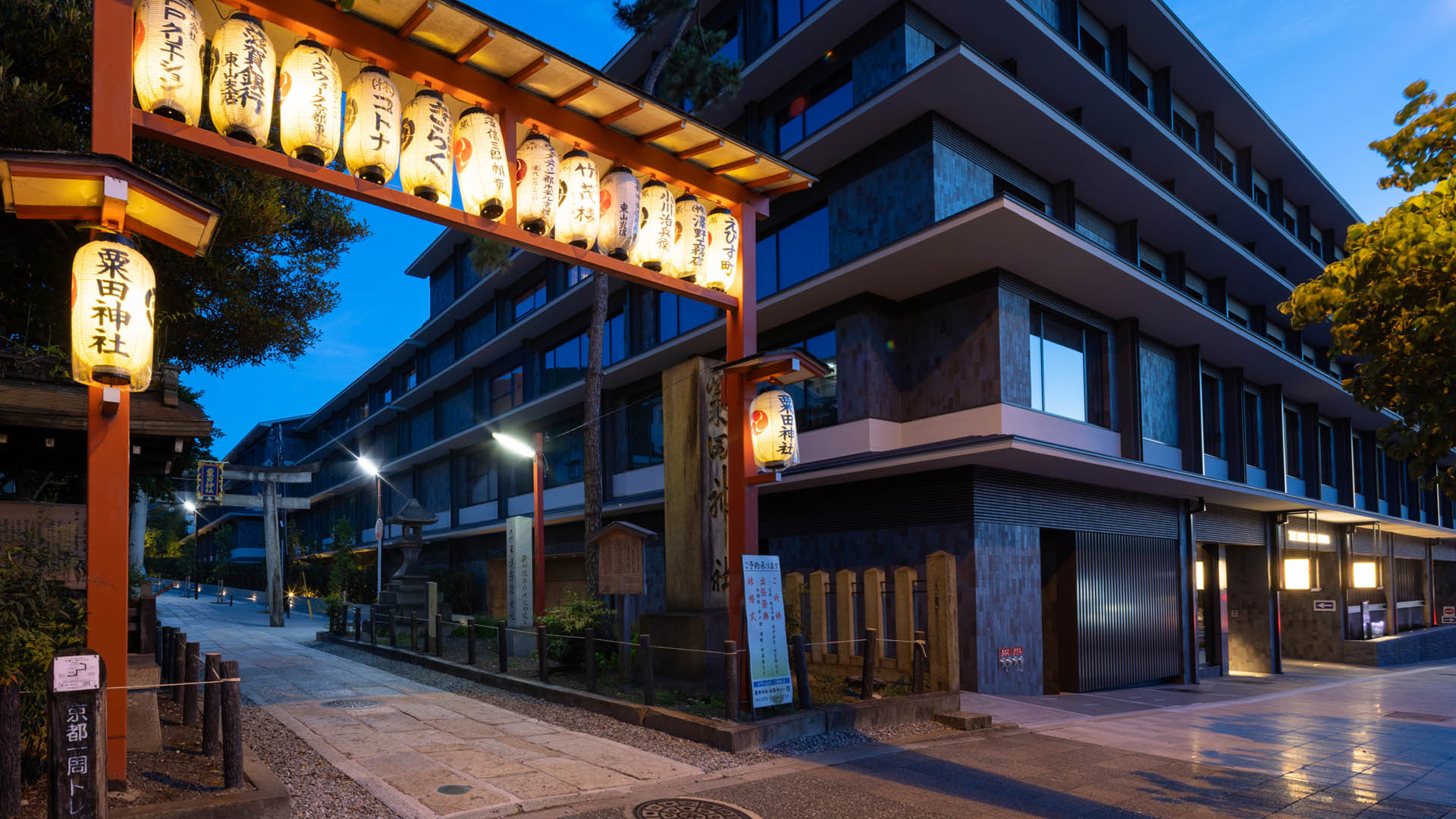
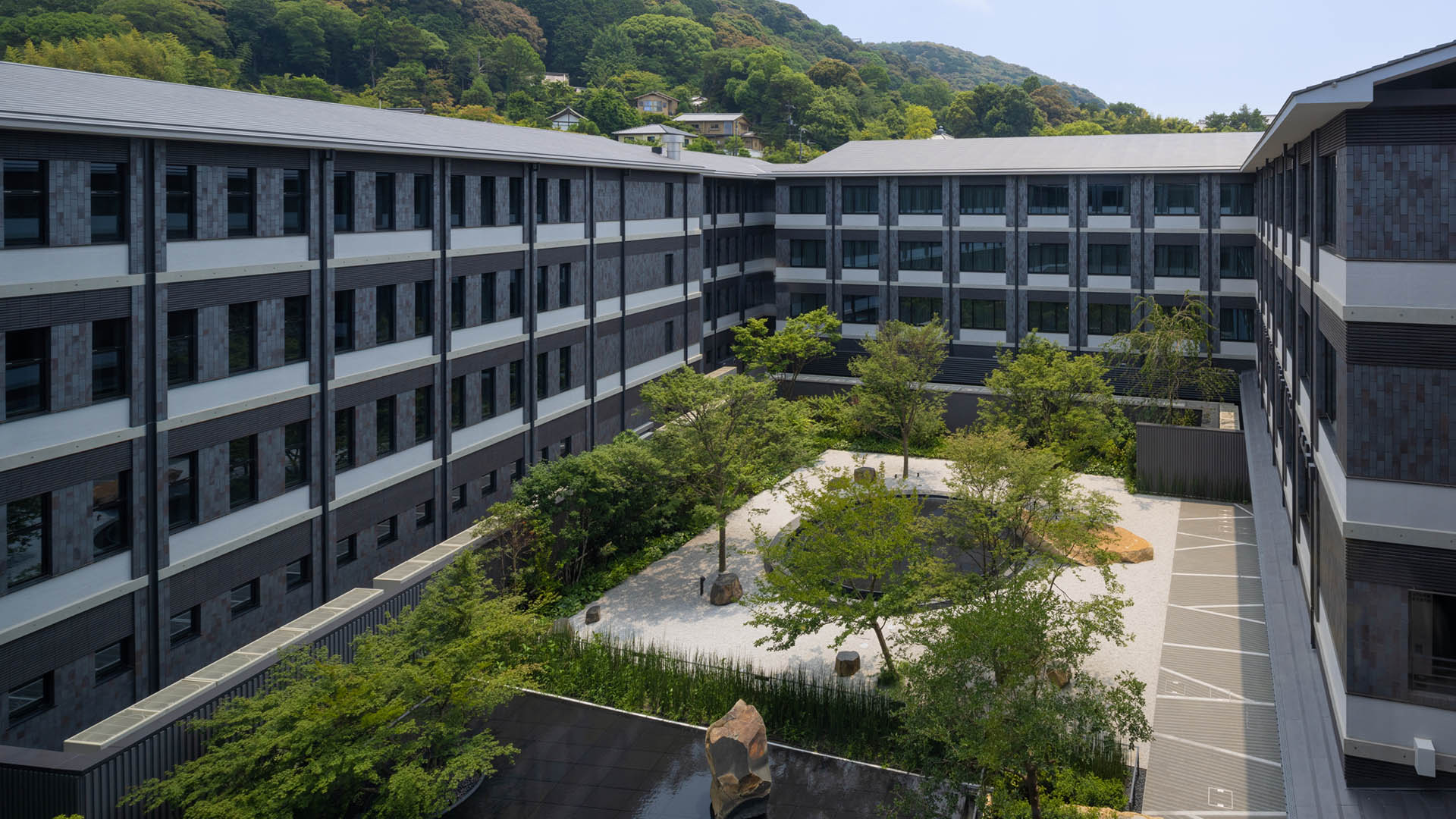
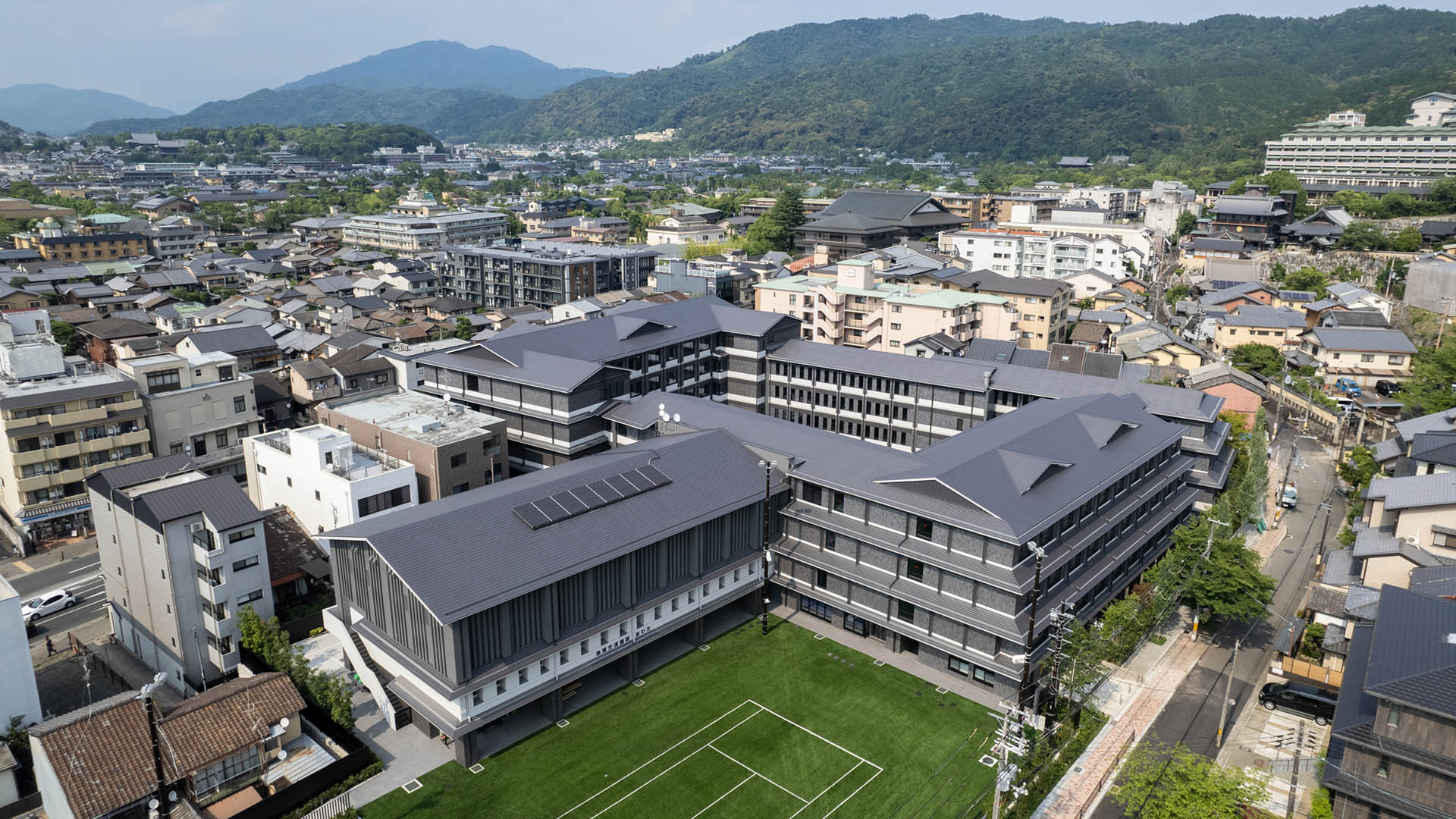

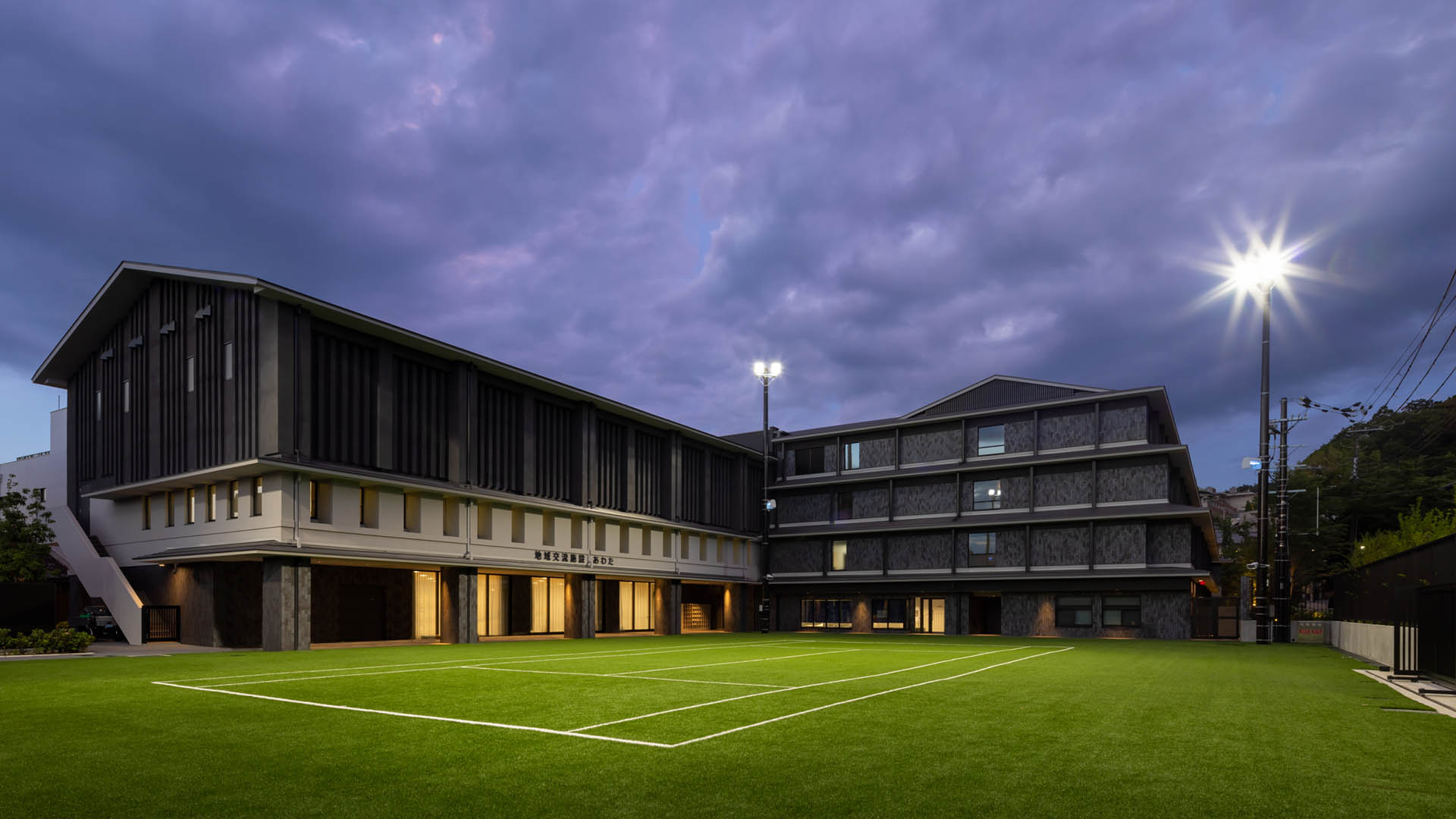
At the Northern end of Kyoto, Japan’s cultural capital, a 100-year-old elementary school sat vacant for years at one of the city’s three Edo-era entrances—in feudal times, a rest stop for weary travelers. Vacant for years, the school was transformed into a dual-purpose property, its central building functioning as a boutique hotel with sweeping views of the Higashiyama Mountains and an adjacent wing preserved as a community-oriented space with a soccer field and public courtyard hosting seasonal activites for events like the Aoi (spring), Gion (summer), and Jidai (fall) Matsuri festivals.
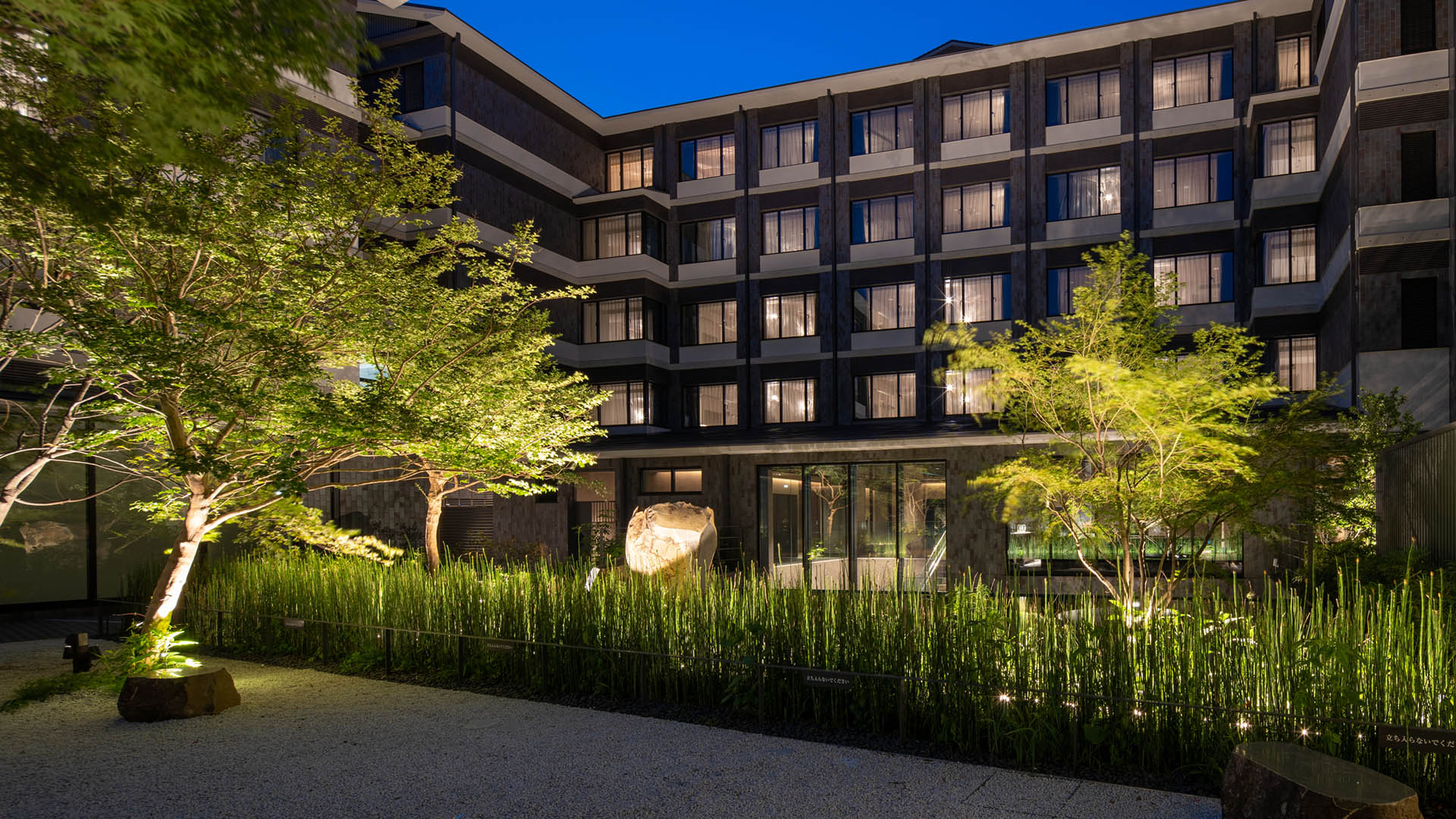
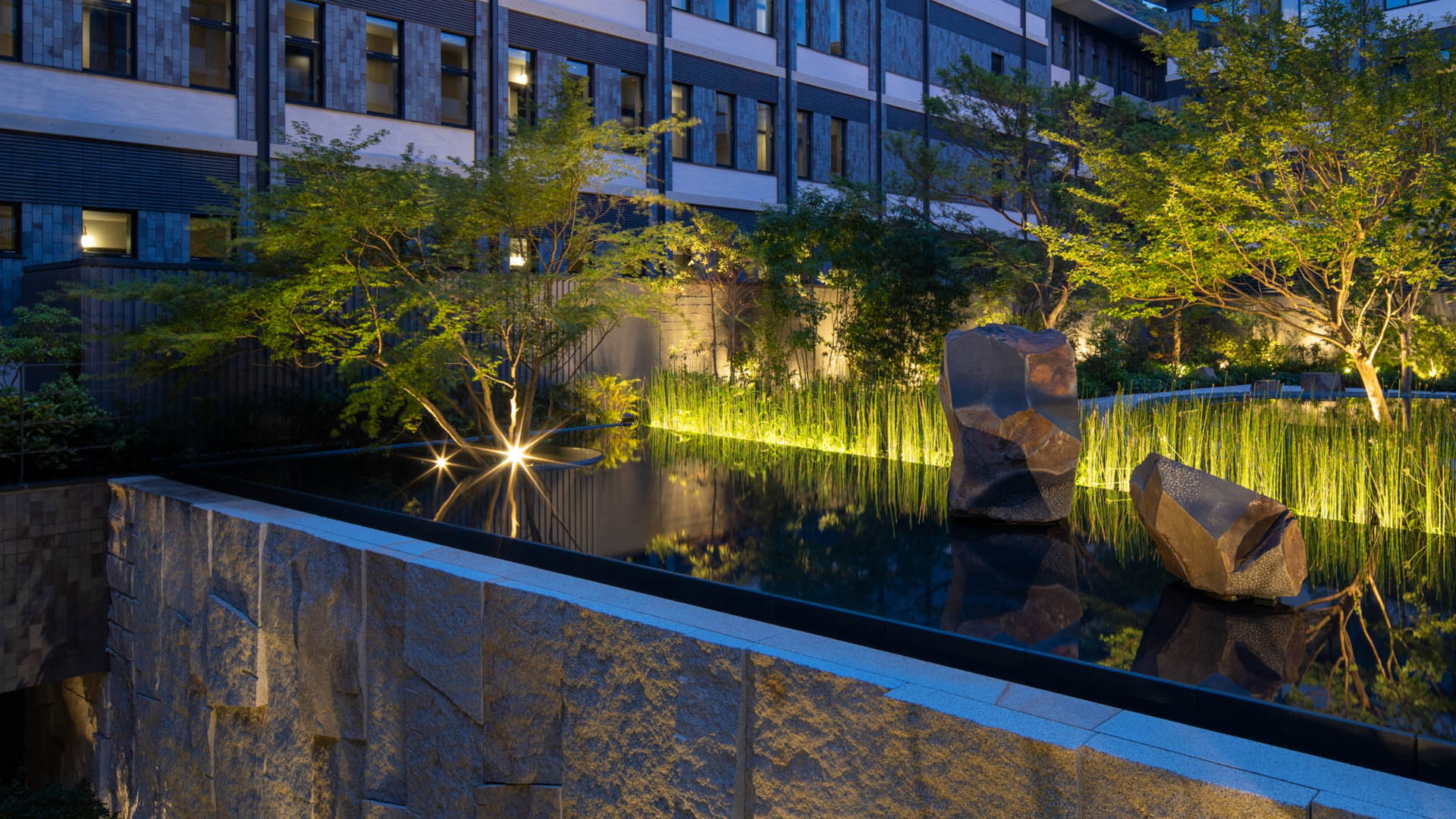
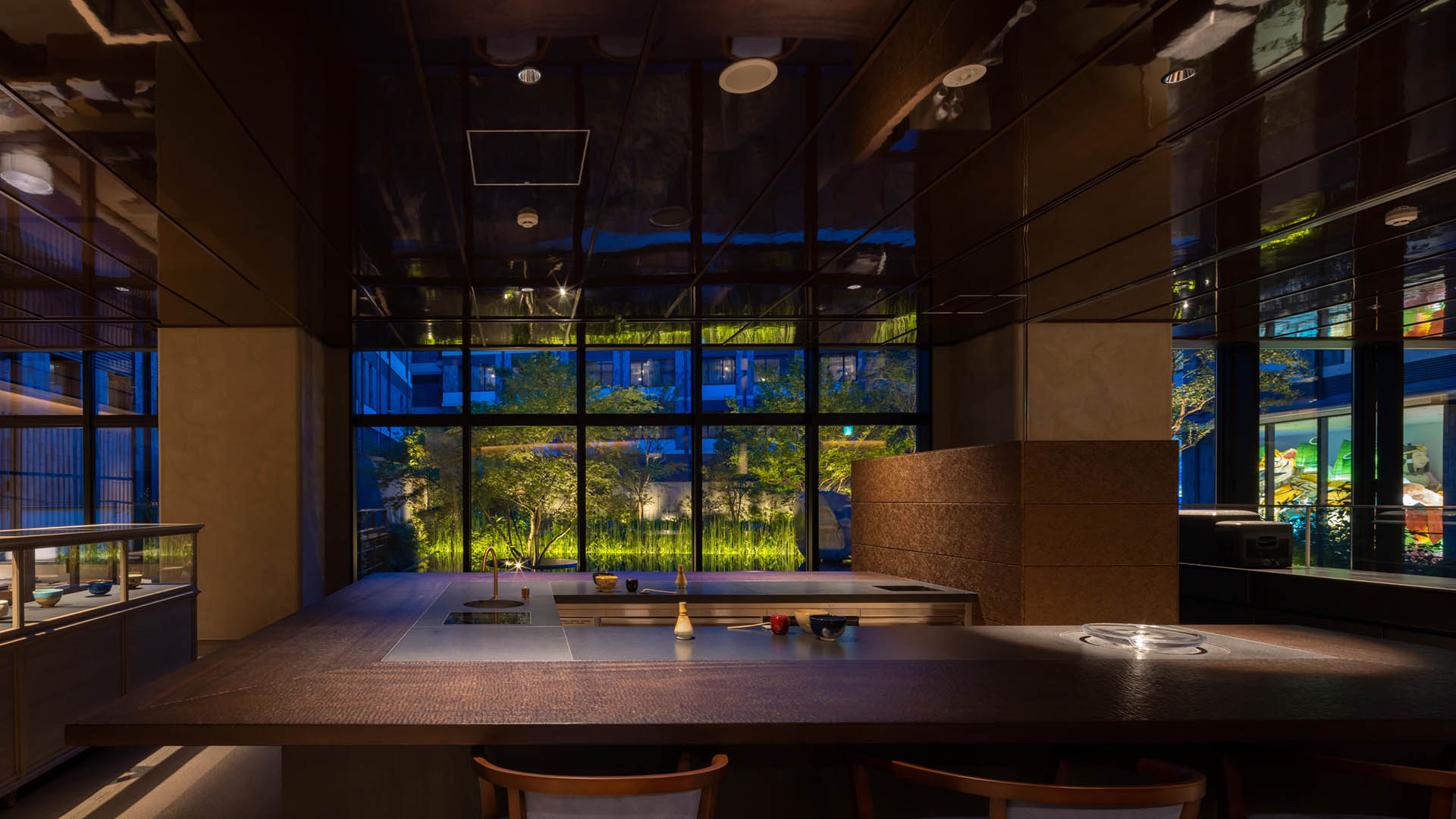
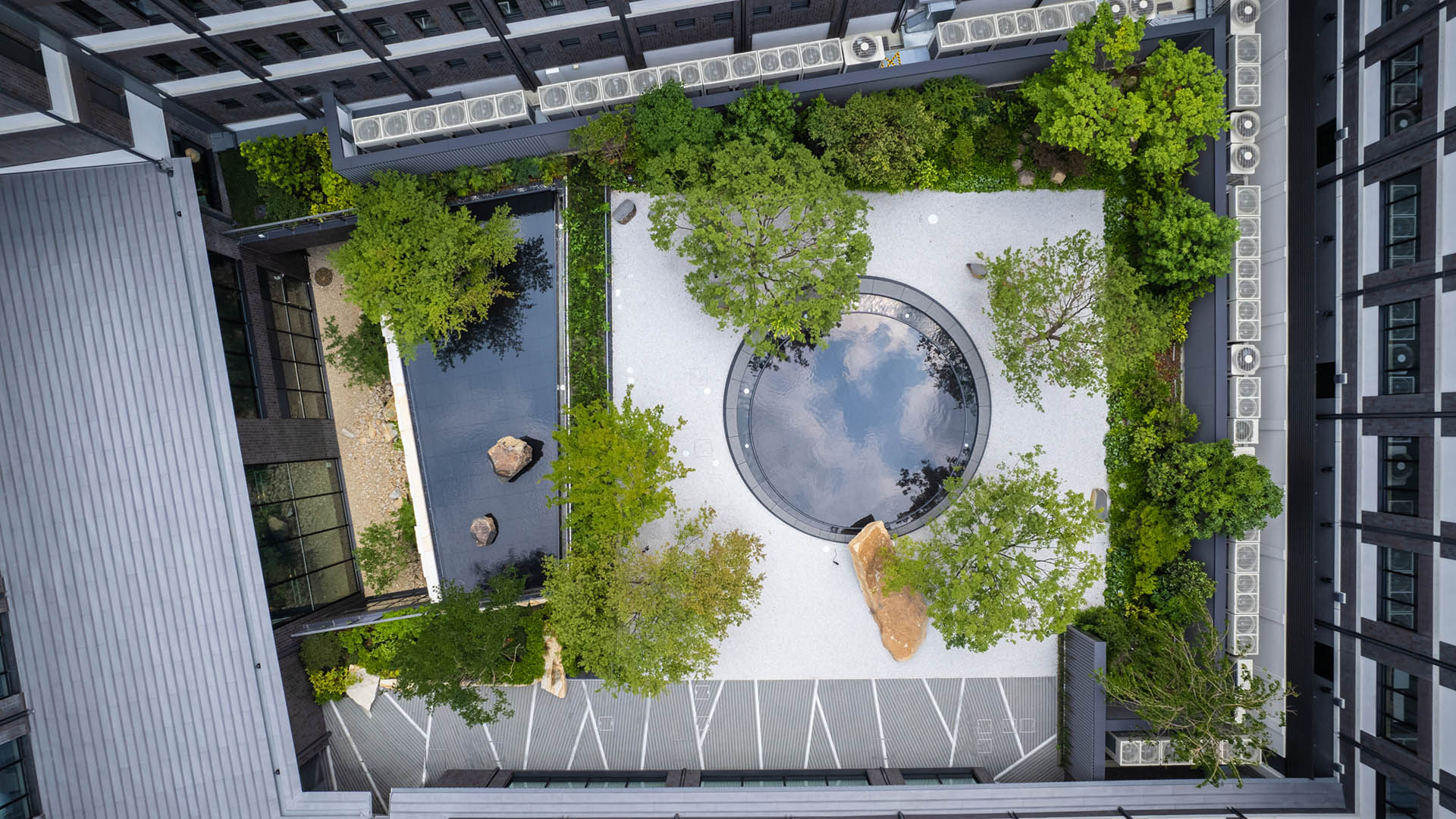
Nestled within the heart of Higashiyama District just minutes away from the National Museum of Modern Art and dozens of UNESCO World Heritage sites like Kiyomizu-dera Temple, the hotel features a fusion restaurant, onsen-style spa, and traditional craft shop. Drawing inspiration from the area’s layered cultural history, stone roads, and ita-kura wood-frame architecture, the courtyard radiates out from a perfectly round pond. Underlaid with black stone, the pond is designed as a “moon mirror” referencing lunar cycles and eclipses, emphasized by an offset crescent of nested lighting in the evening. Visitors can bathe their feet in a sunken pool within the crescent, its clean lines contrasting with rough-hewn boulders placed carefully throughout the yard. An adjacent reflecting pond conceals a traditional Japanese tea house operated by Gion Tsujiri, a local establishment founded in 1860.
Rosewood Sand Hill Hotel
SWA provided full landscape architectural services for this mixed-use development, which includes a 120-room luxury hotel, five villa residences, a supporting office complex, fitness center, spa and multi-use space. The Sand Hill Hotel and associated offices are nestled onto a dramatic hillside that slopes toward the Santa Cruz Mountains immediately beyond I-2...
Sanya Edition
This Ian Schrager-helmed Haitang Bay resort off the coast of Southern China was conceived as a “dream of aqua,” where sky and water converge. SWA’s competition-winning landscape design emulates a river delta and its convergence with the sea. Gently curved forms define the boundaries for 40 private villas, and are echoed throughout the terraced resort in ...
Hyatt Gainey Ranch
The 28-acre site is part of an existing master planned resort community. The golf course and lake were existing. The owner wanted water gardens and had in mind tropical gardens with artificial rocks and rope bridges. The designers convinced the owner that a concept that recalled ancient South American themes was more appropriate for the desert. Lines of date p...
The Ritz-Carlton, Suzhou
Blending Suzhou’s traditional artistry and craftsmanship with contemporary luxury, The Ritz-Carlton opened its first location in the city in early 2025 at the heart of the Suzhou Huamao Center Mixed-Use Development. At ground level, the landscape design strikes a balance between refine...