

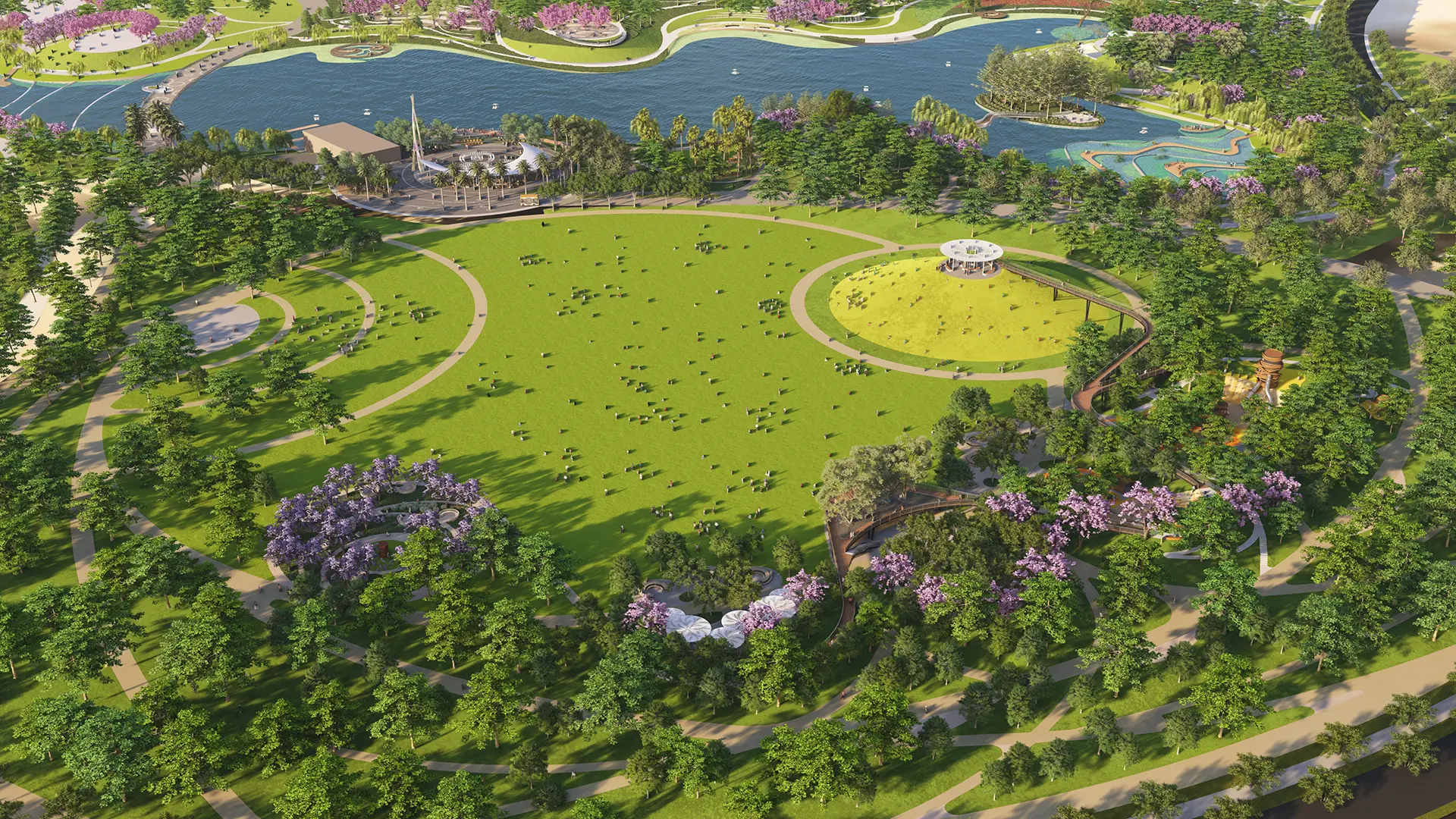
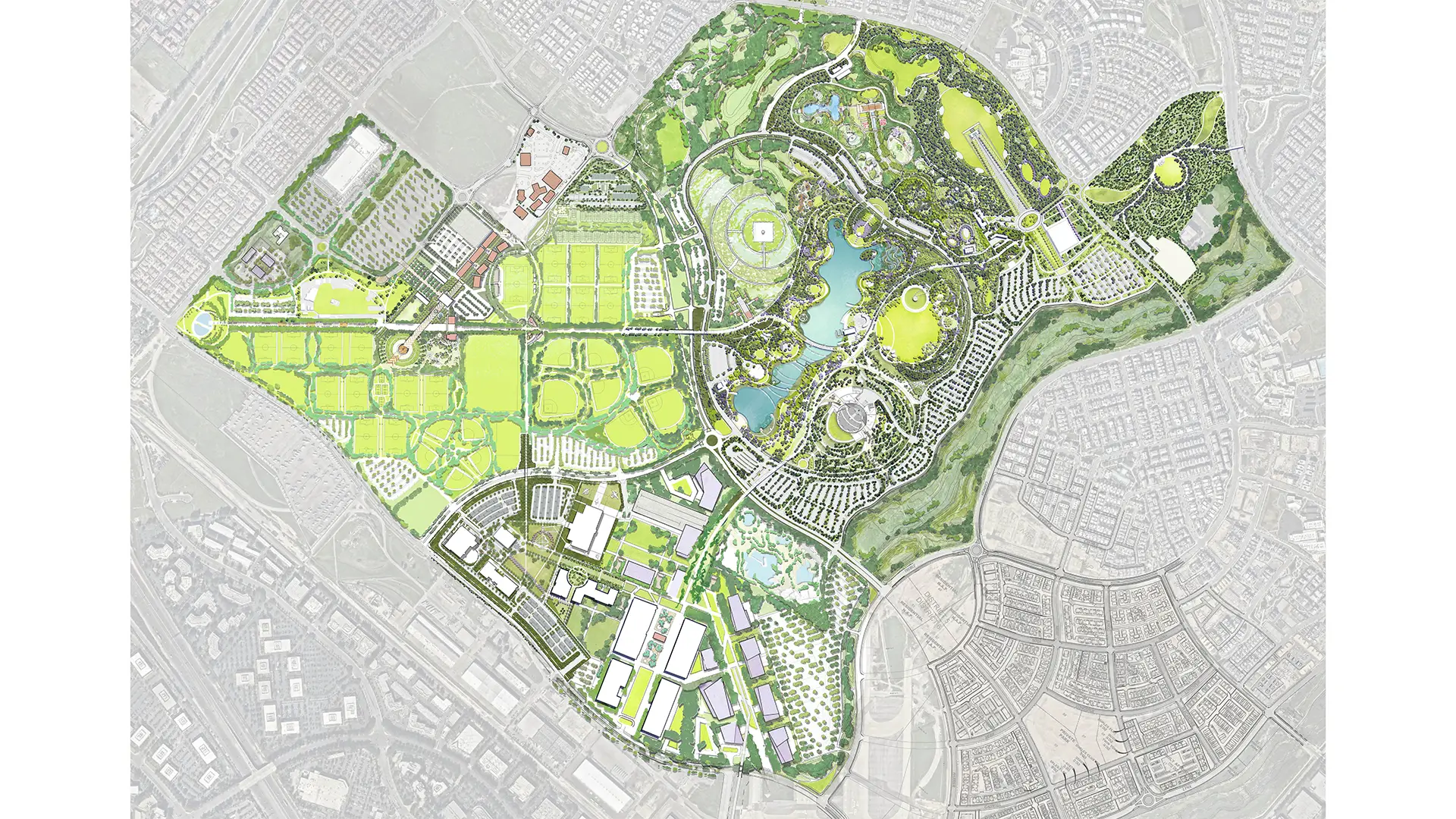
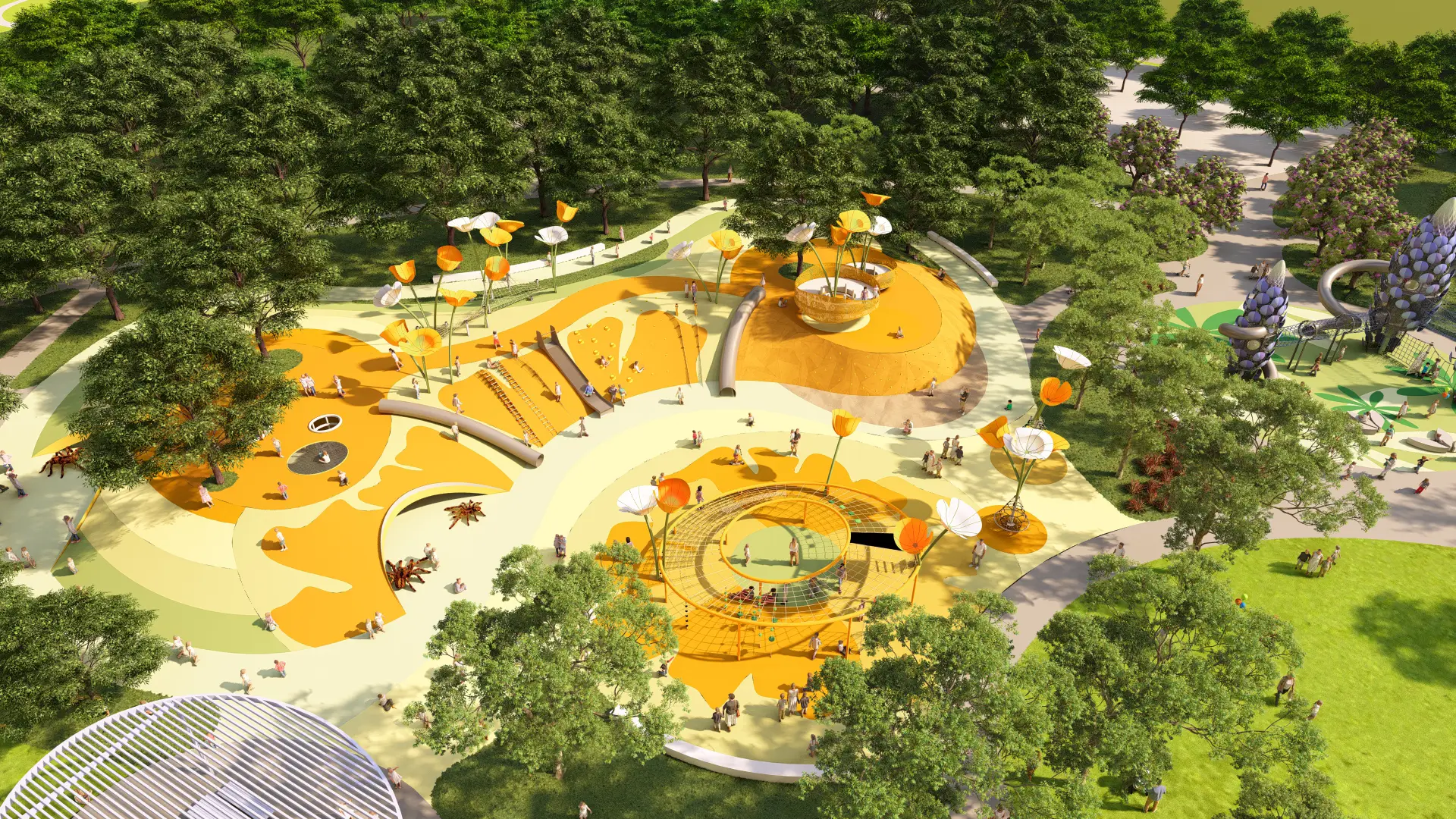
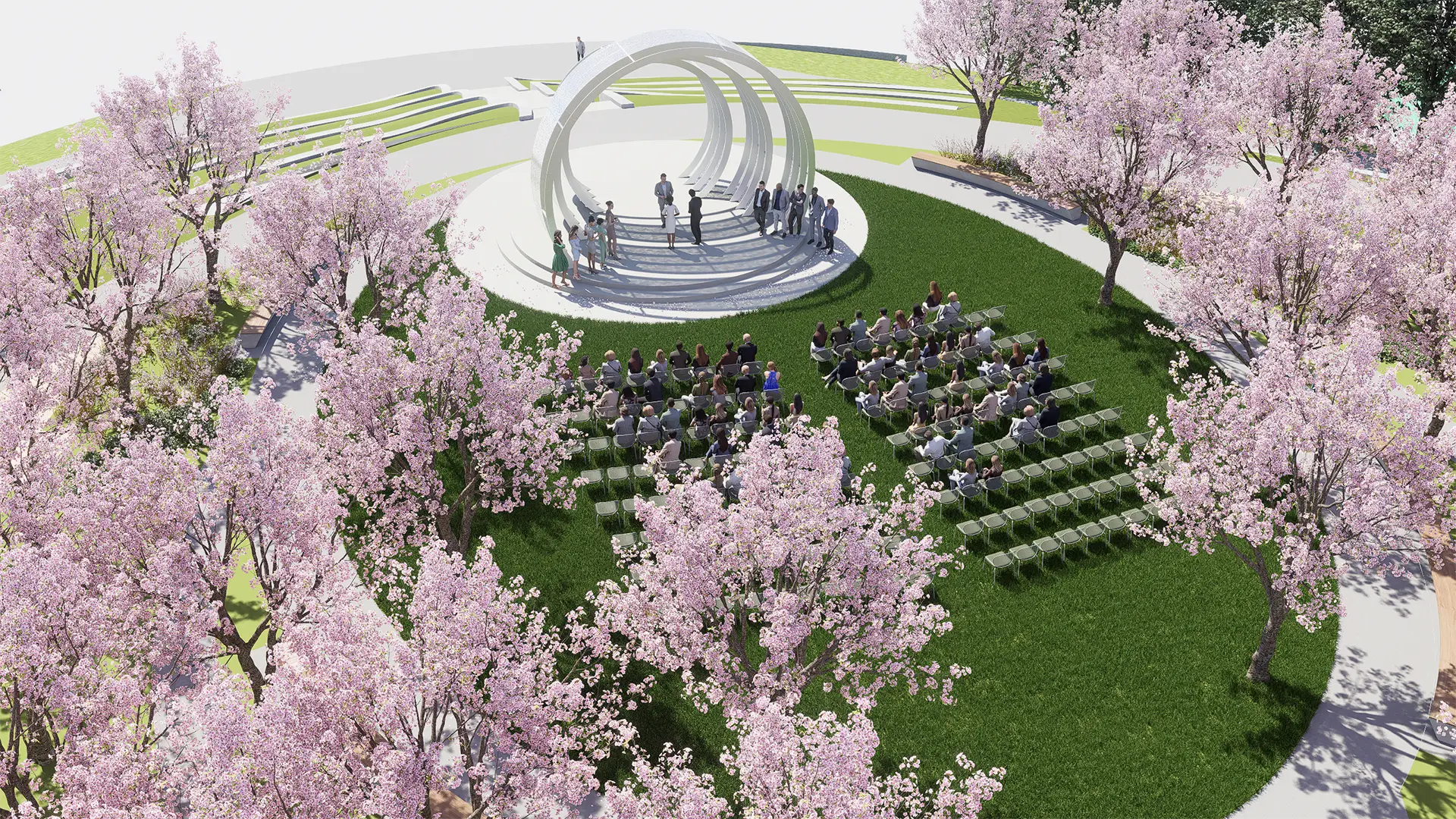
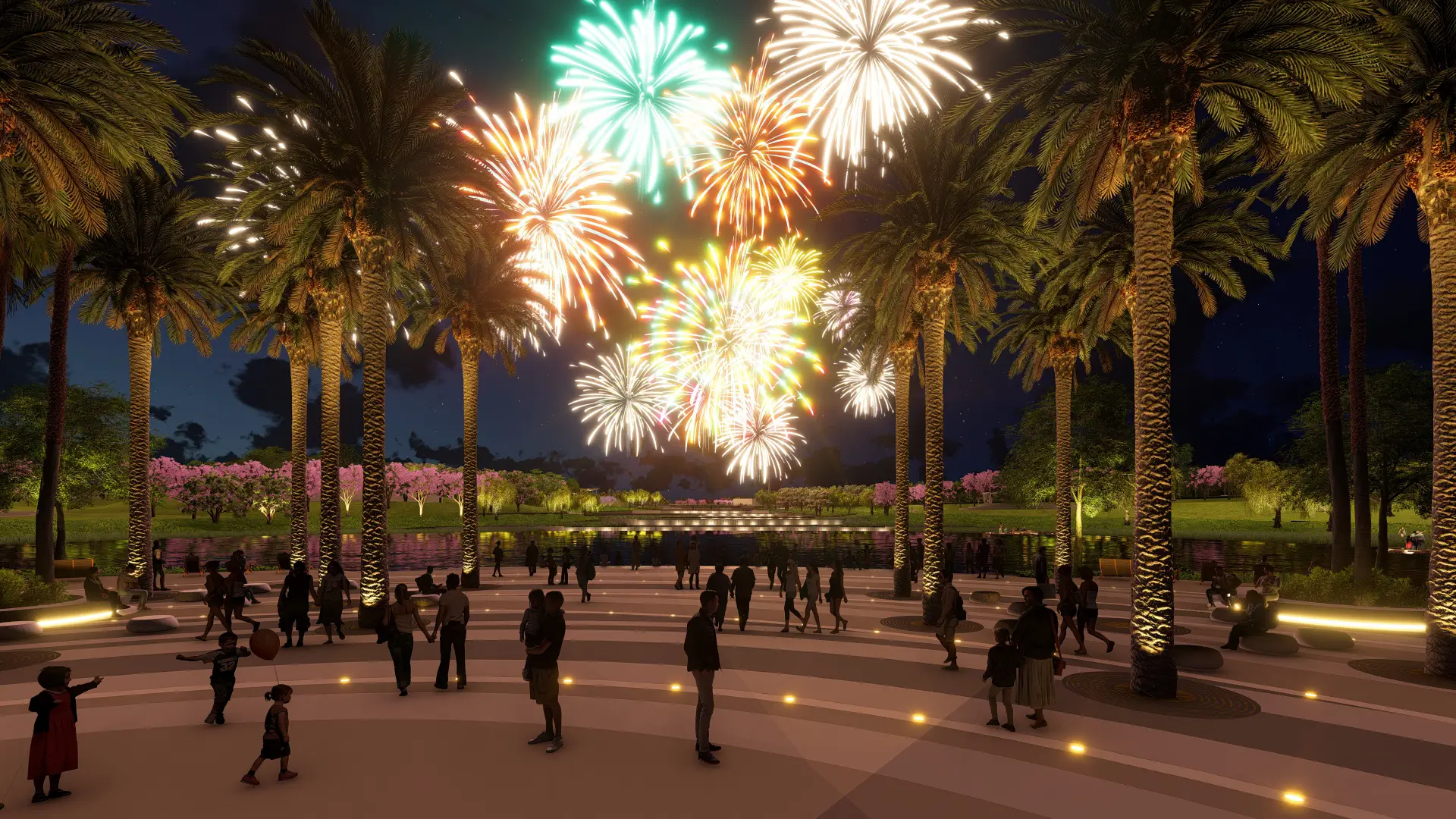
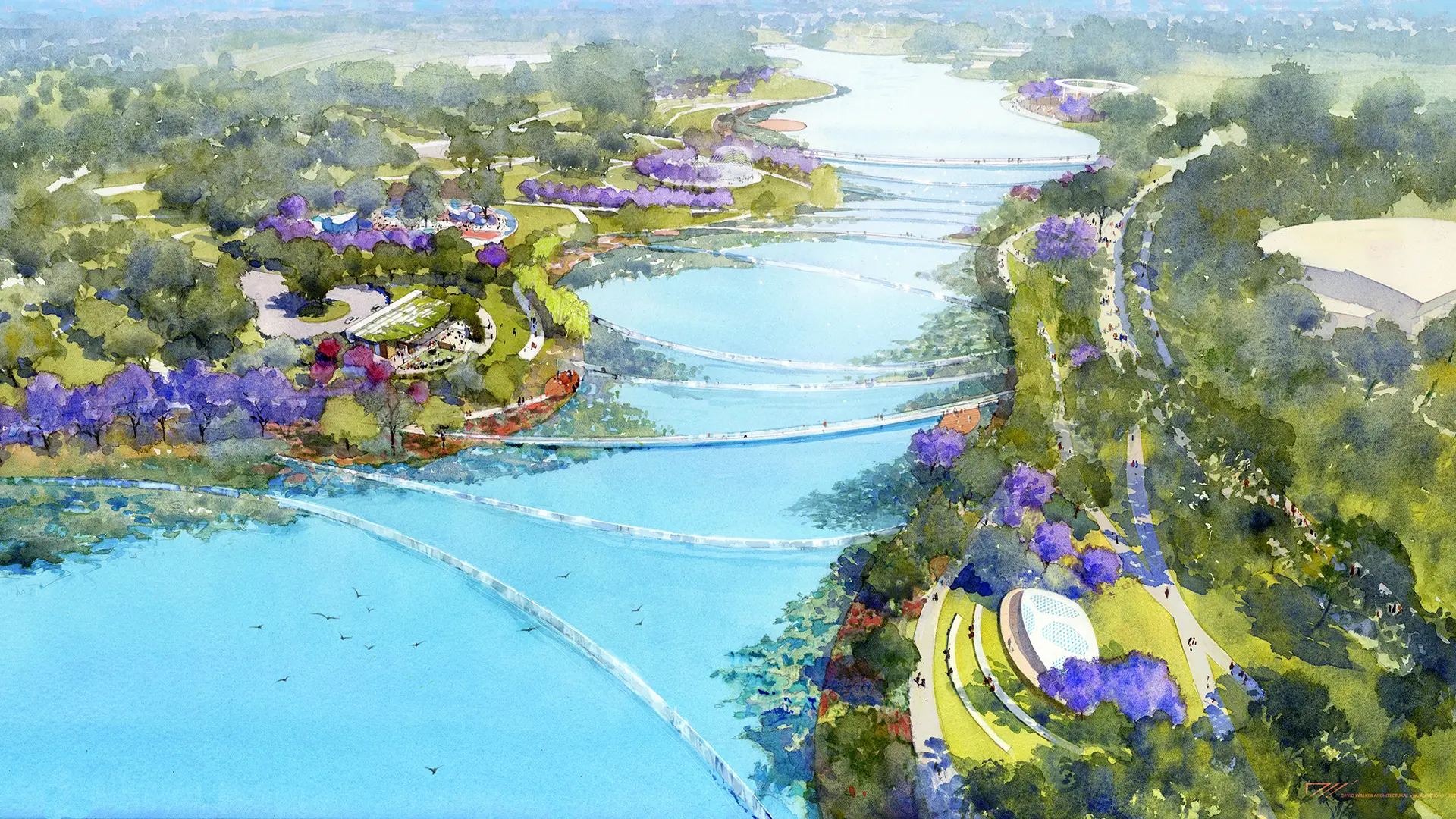
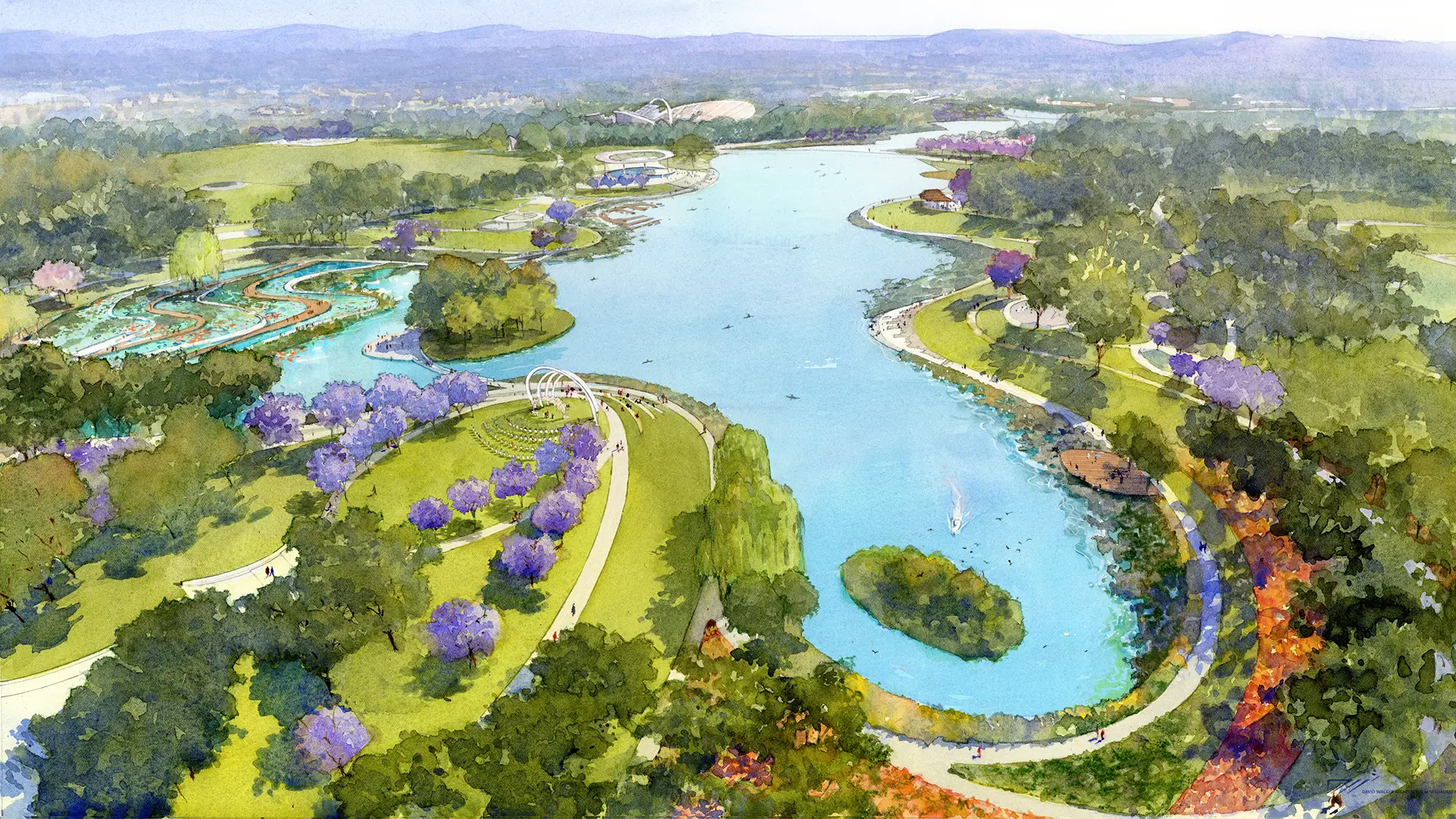
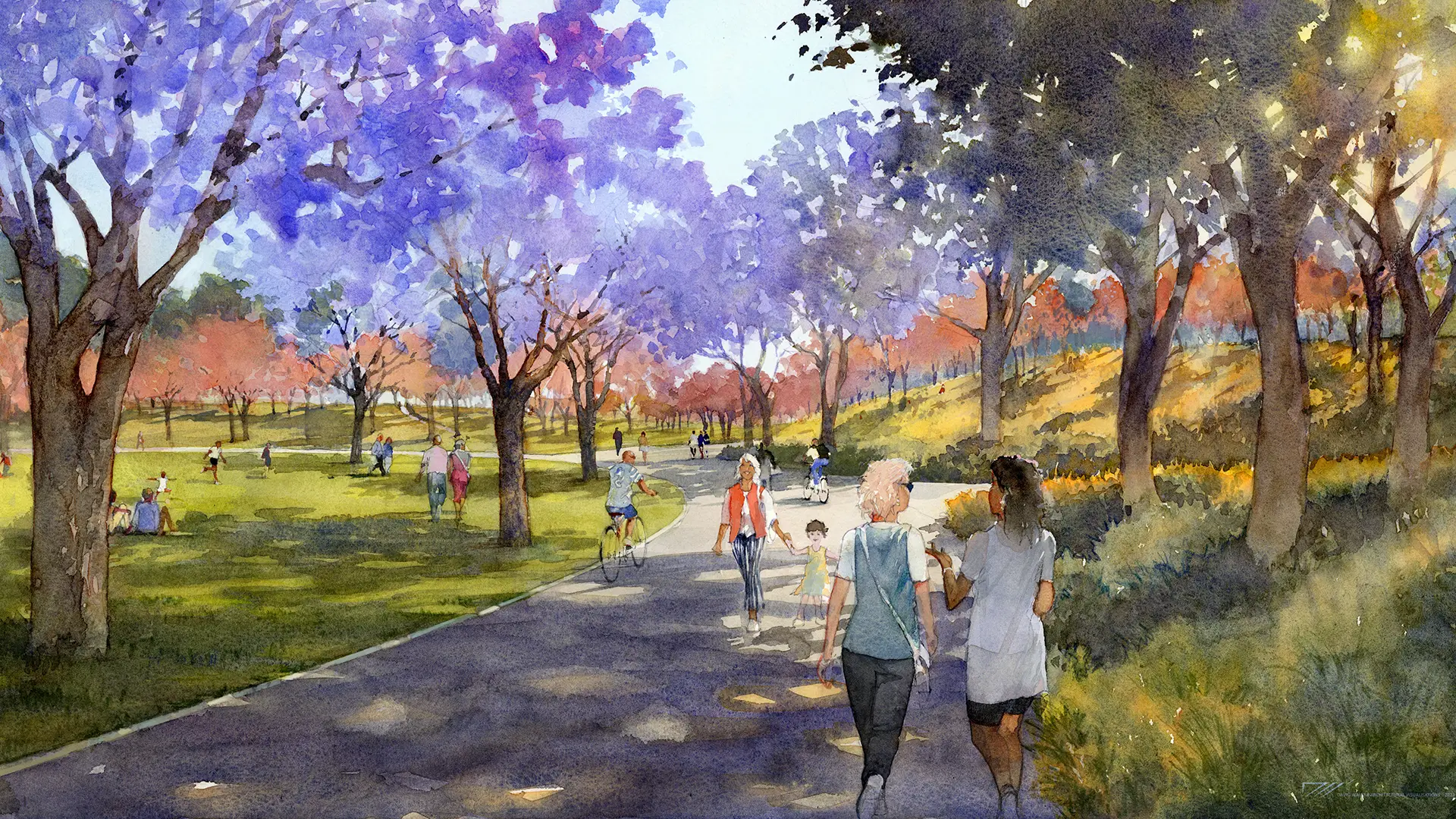
One of the world’s largest municipal parks, the 1,300-acre Great Park in Irvine, California, is currently under construction with phased openings continuing through 2029. The conceptual framework encompasses redesign and implementation of near- and longer-term uses, with the intent to “put the park back into the park.” The vast site, which was once the Marine Corps’ El Toro Air Station, was first reimagined as public open space with a focus on sports and agriculture in the early 2000s, and included a farmers’ market, multiple sports fields, and a permanent aviation heritage exhibition, among other features. Building upon this early work, the new SWA and Kellenberg Studio framework provides overall planning principles and design direction.
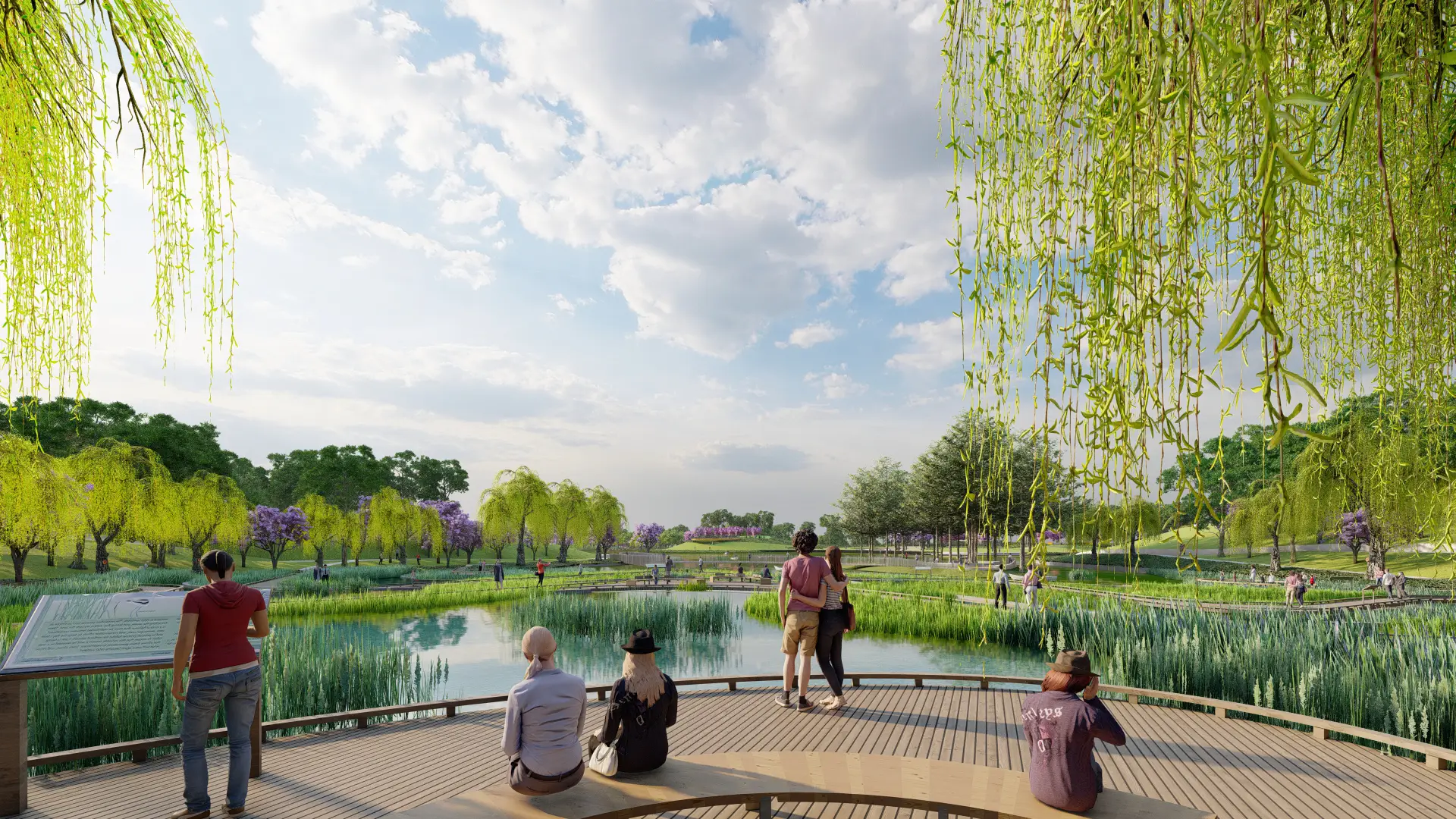
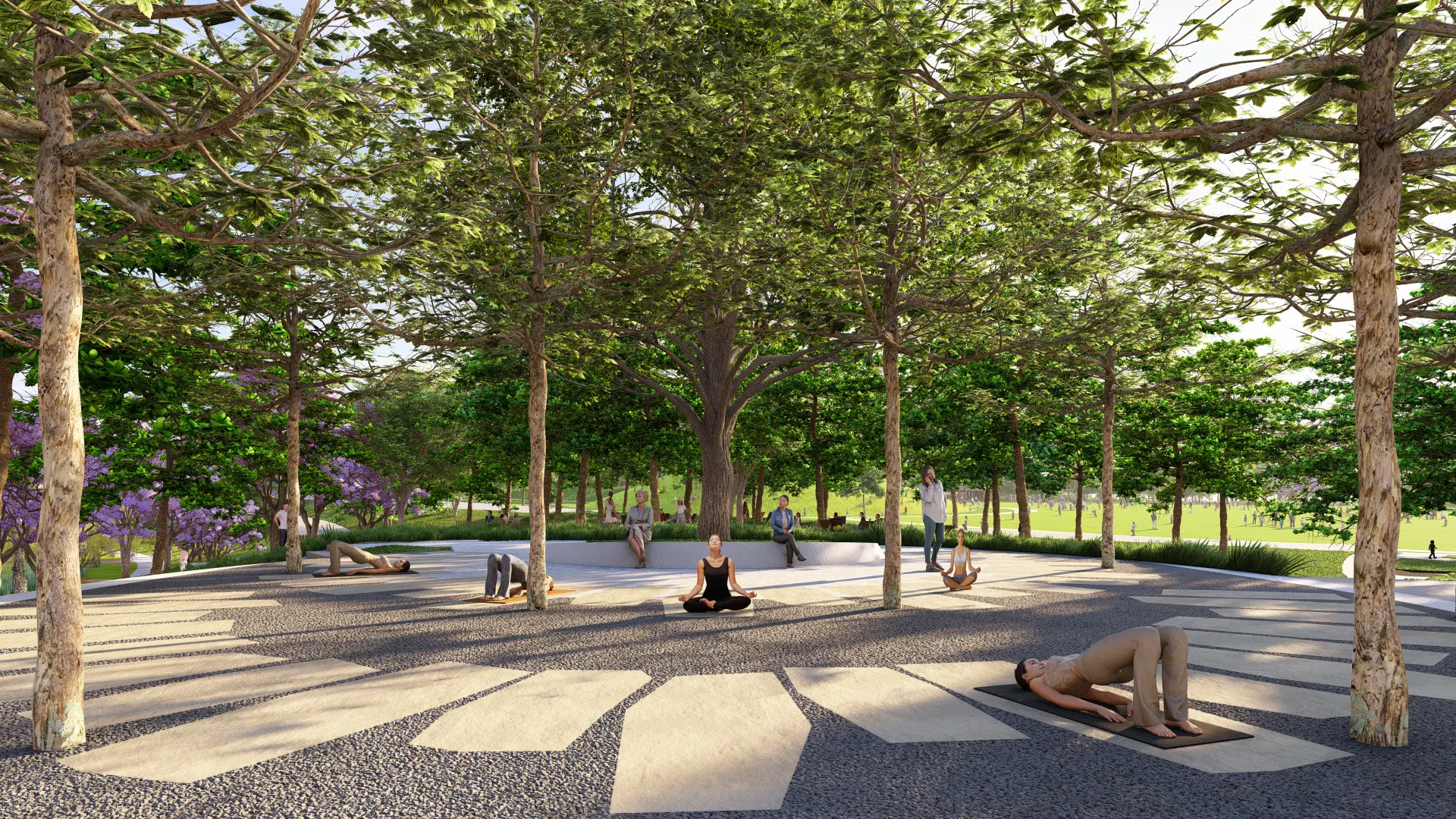
Grounded in the California landscape and inspired by Central Park traditions, Great Park serves multiple uses, incorporating a major regional sports park as well as a cultural terrace of repurposed military hangars adapted into a museum mall and interactive discovery exhibit. Its features include a landscape wildlife corridor, riparian arroyos, and a California native tree palette carefully planned for species succession over time. The design establishes a premier 60-acre botanical garden, 40-acre forest reserve, and a research library that rivals any other in California, promotes active lifestyles via the incorporation of a major regional sports park, and celebrates the spirit of music with a new 10,000- to 12,000-seat amphitheater. It also honors the site’s Marine Corps history and veterans’ service through a memorial garden and aviation museum featuring more than 40 aircraft, with interactive elements. The redevelopment will consolidate and enhance existing uses while also addressing urban forestry needs in the warm, arid climate, providing ample shade for approximately 40 percent of the park’s entire acreage while maintaining a sparse understory to support security needs.
The design limits parking to the park’s perimeter, the entirety of which is navigable via a loop road. Within the park itself, a multimodal grand promenade will connect the five major zones, complete with tram stops, bike cabins, and important regional connections via a MetroLink stop on its southwest side. Envisioned as one of the United States’ signature urban parks, similar to NYC’s Central Park, the vast new public open space will provide equity in access and activity, and create a destination that can evolve over the decades — if not centuries — into what the residents of Irvine and Orange County desire in meeting their recreational, sports, and community gathering needs.
Martin Luther King Jr. Square Water Quality Demonstration Park
The City of Conway received local and federal grants to create a water quality demonstration park in a flood-prone, one-block area of its downtown to educate the public about Low Impact Development (LID) and Green Infrastructure (GI) methods and how they can enhance water quality. The project transformed a remediated brownfield site, ...
Buffalo Bend Park
Houston’s East End is a bifurcated community, with heavy industry brushing up against a vibrant and culturally diverse residential area. Answering residents’ call for more park space, SWA created Buffalo Bayou Bend Nature Park by converting a formerly neglected industrial site into a wetland ecosystem and public green space.
Three interconnected ponds, ...
Palisades Park
Santa Monica’s famous pier area draws visitors who often disregard pavement boundaries and compact the landscape soil. Palisades Park, adjacent to the iconic pier, is a particularly active site for cyclists and tourists that has long been in need of a planting strategy to discourage pedestrian overflow into the landscape. SWA’s defensive planting strategy tack...
Regus Crest Grand
The Regus Crest Grand course is a private membership course designed for tournament play with a single story clubhouse. The clubhouse is sited to maximize views of the course and its surrounding hills. The heavily forested site is preserved and is enhanced and supplemented with new landscape. Water features are used to accentuate the hills beyond the course wh...