

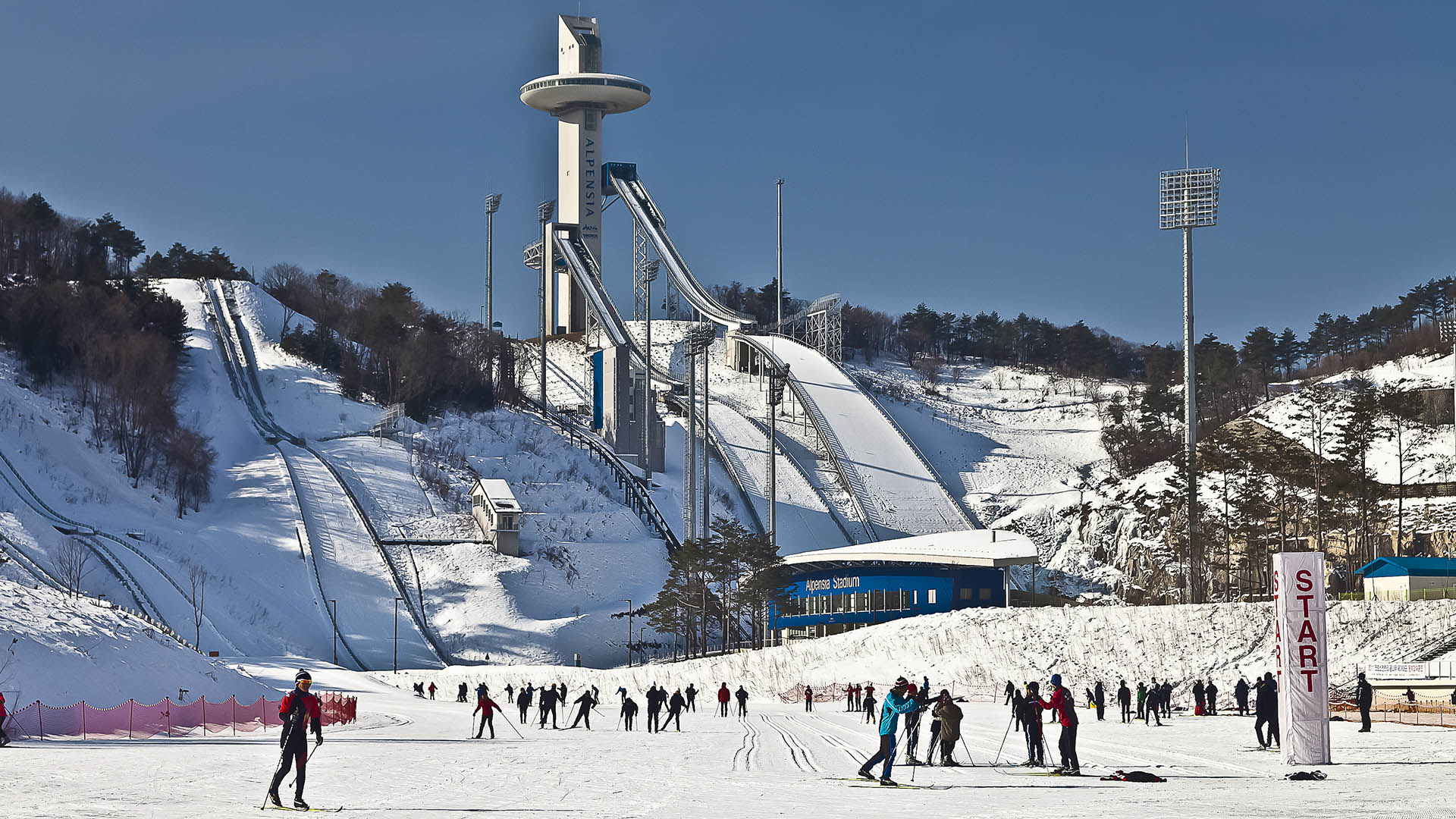
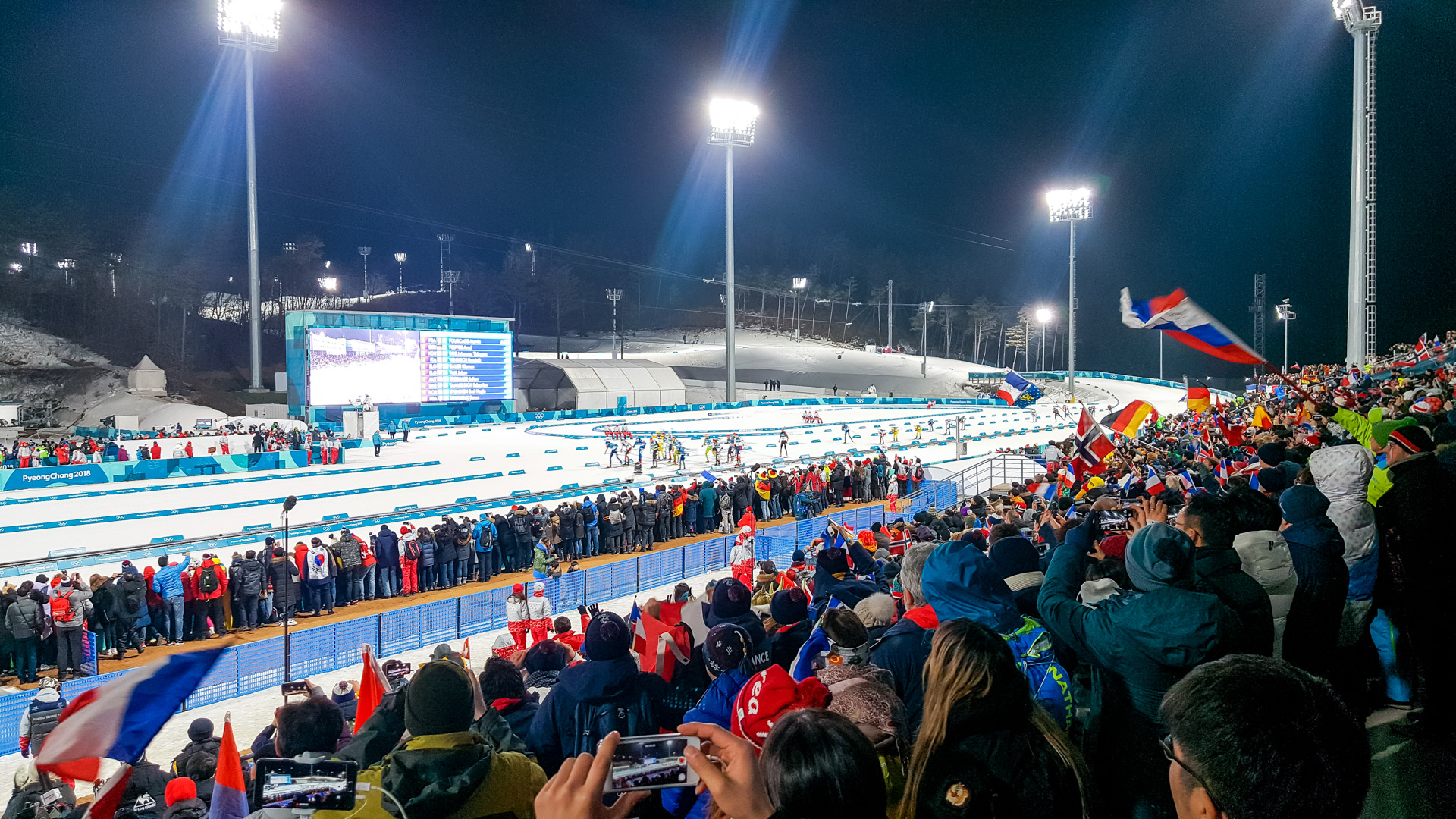
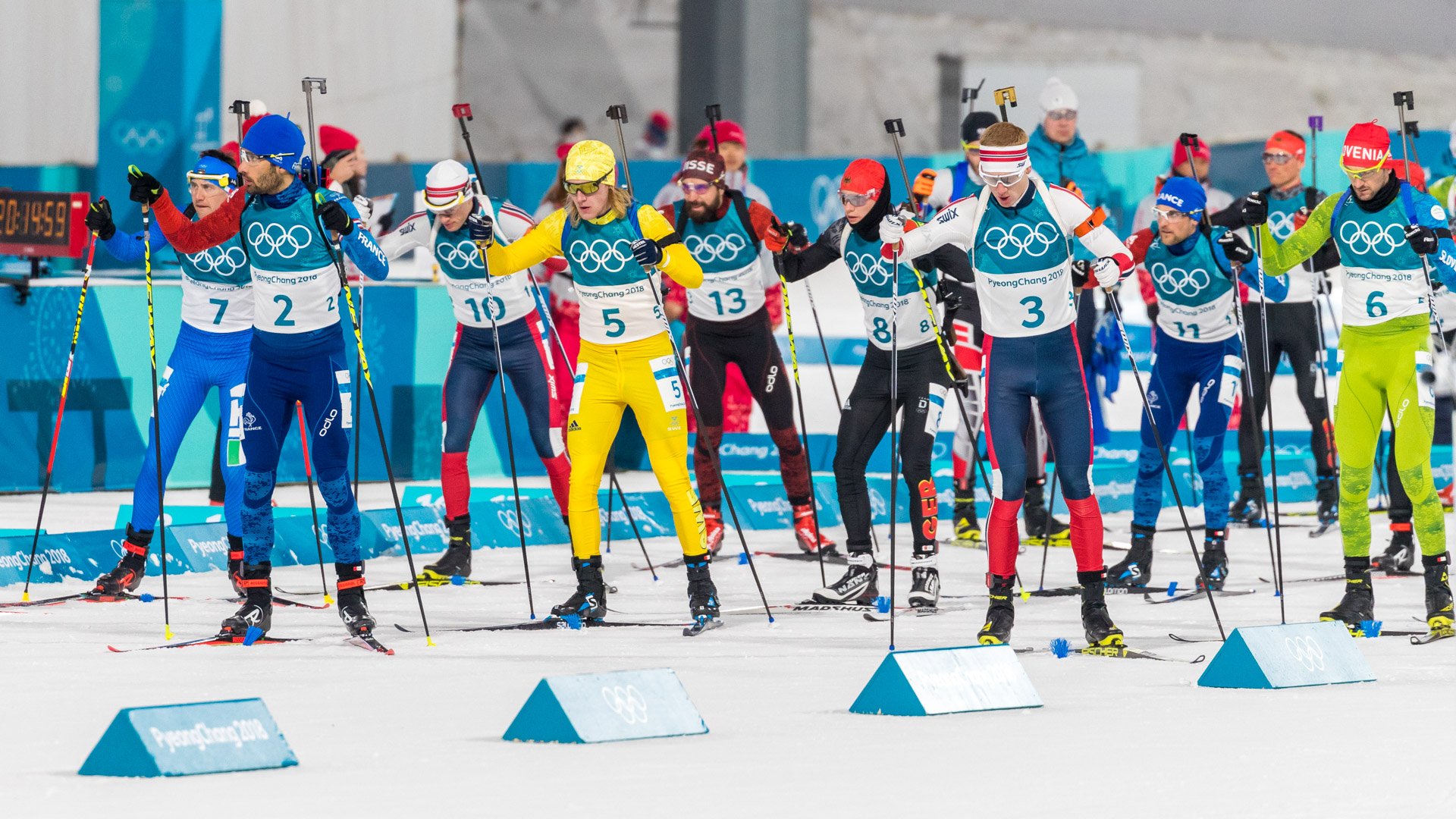
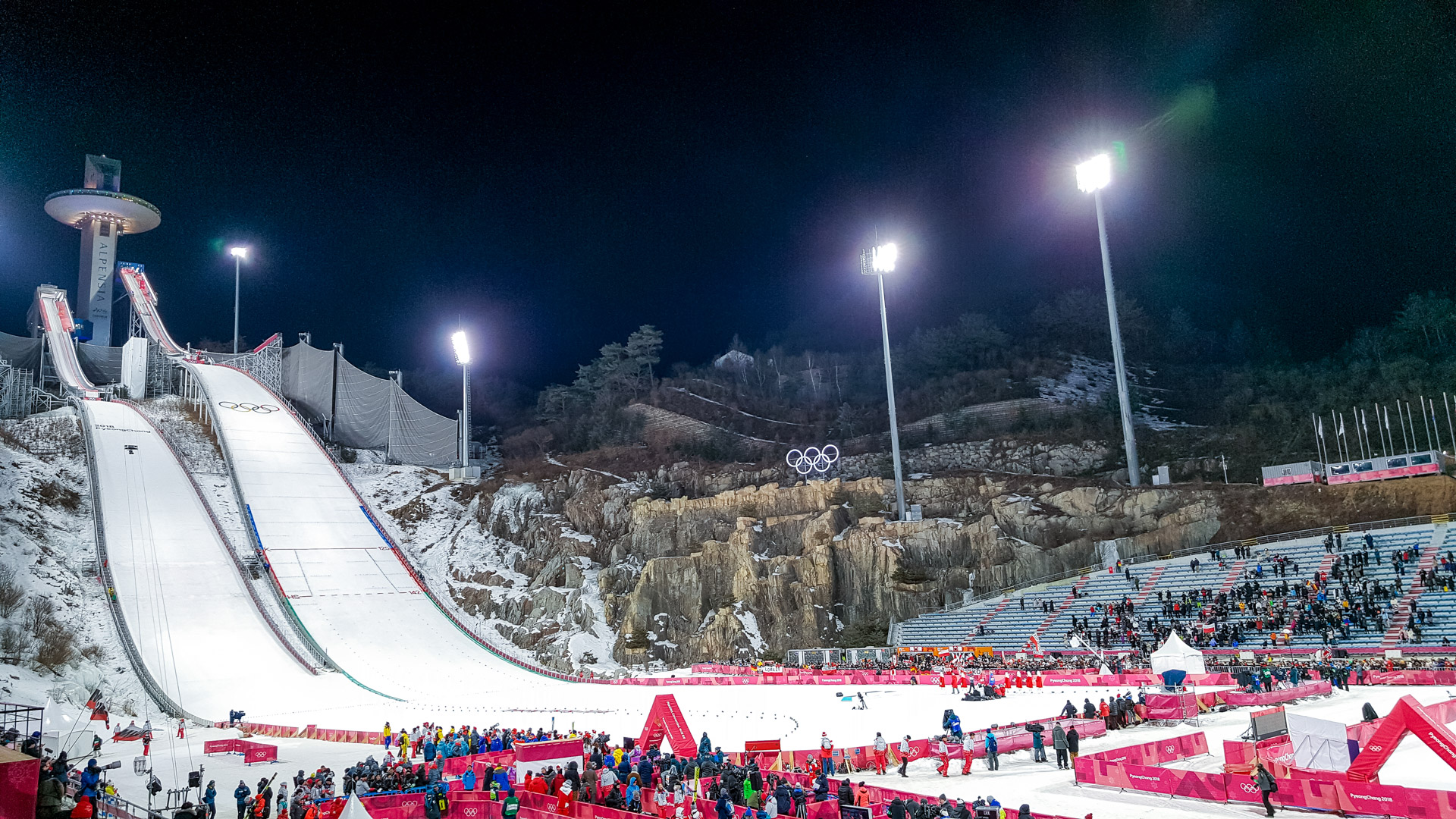
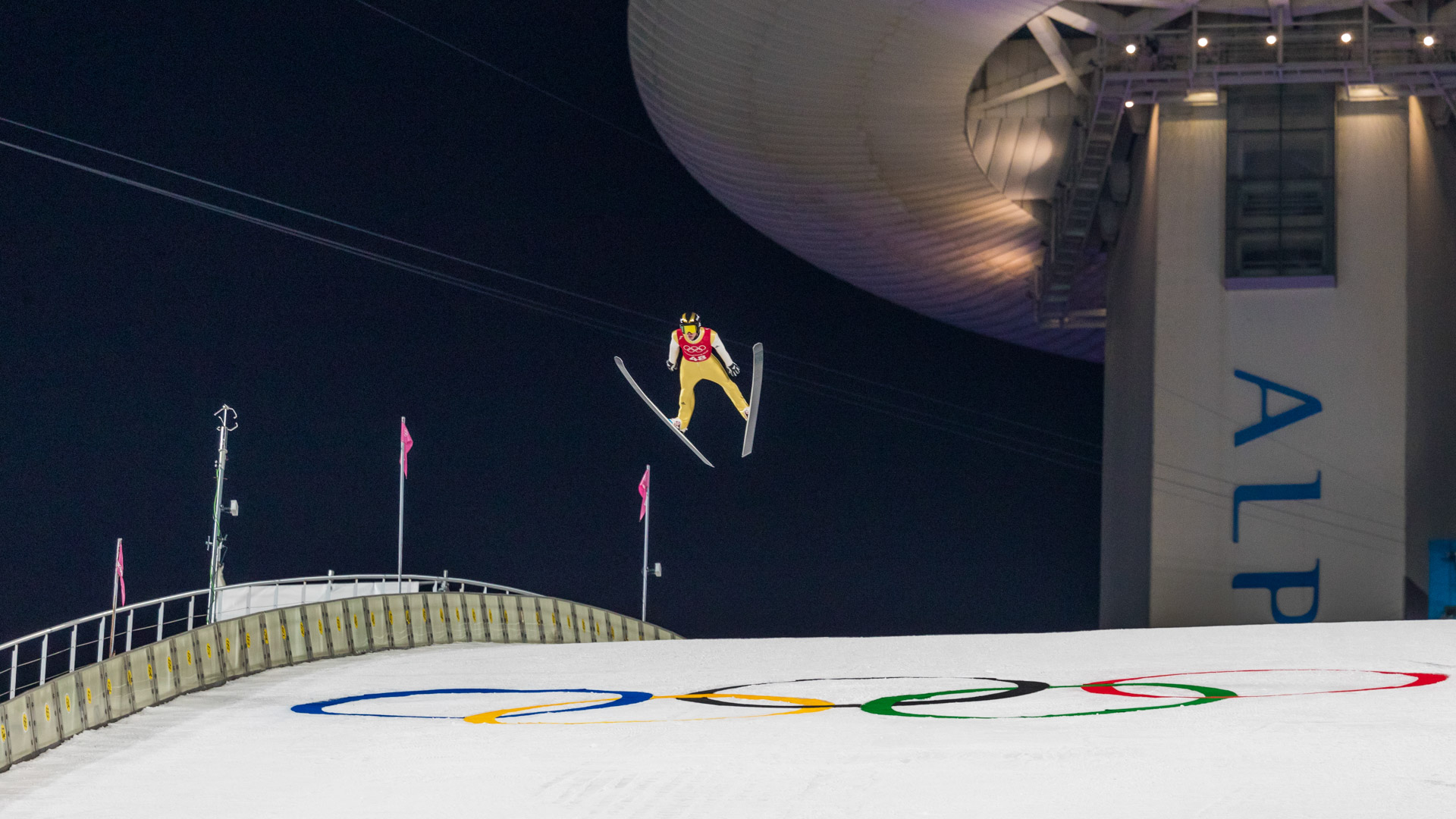
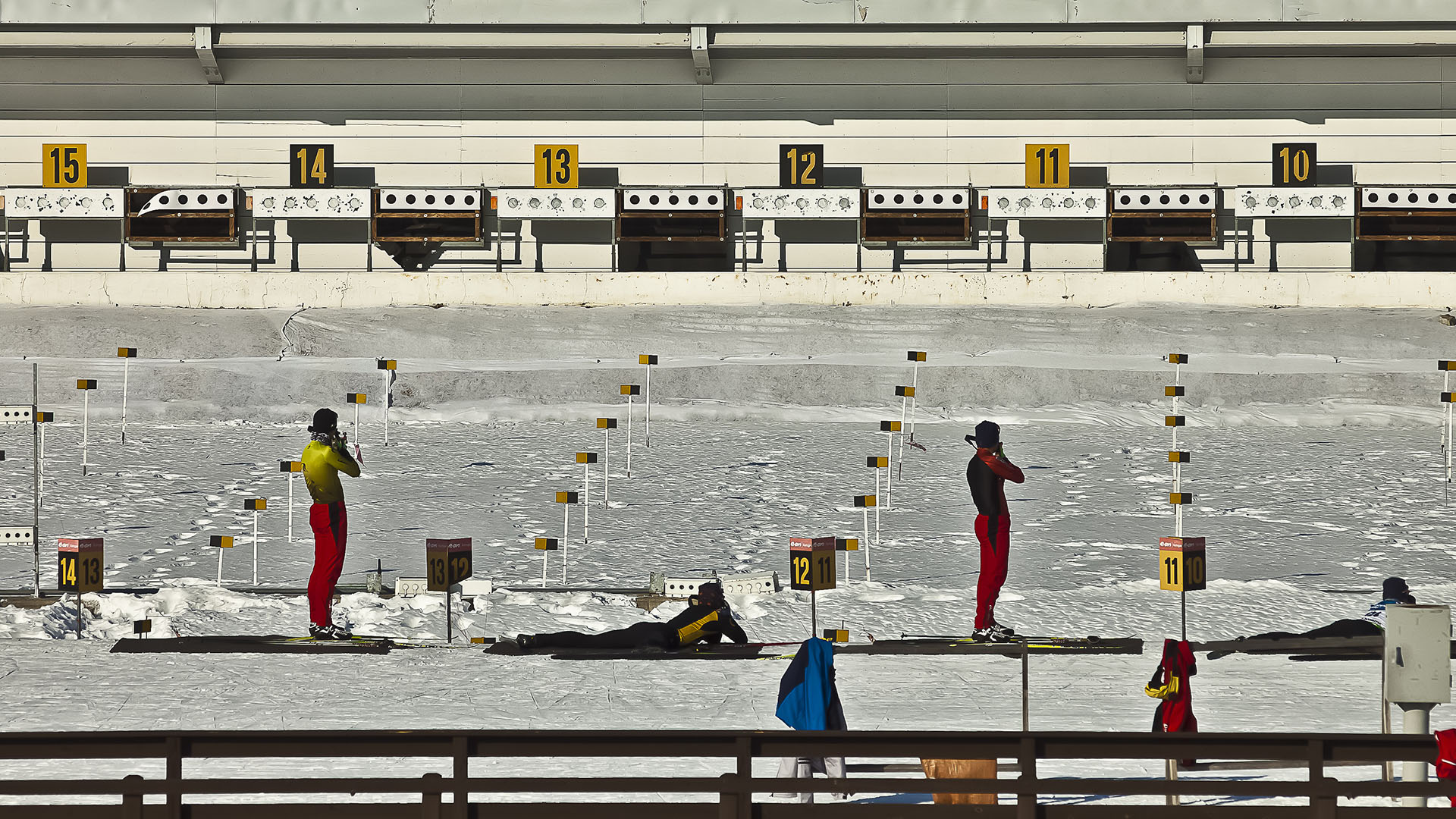
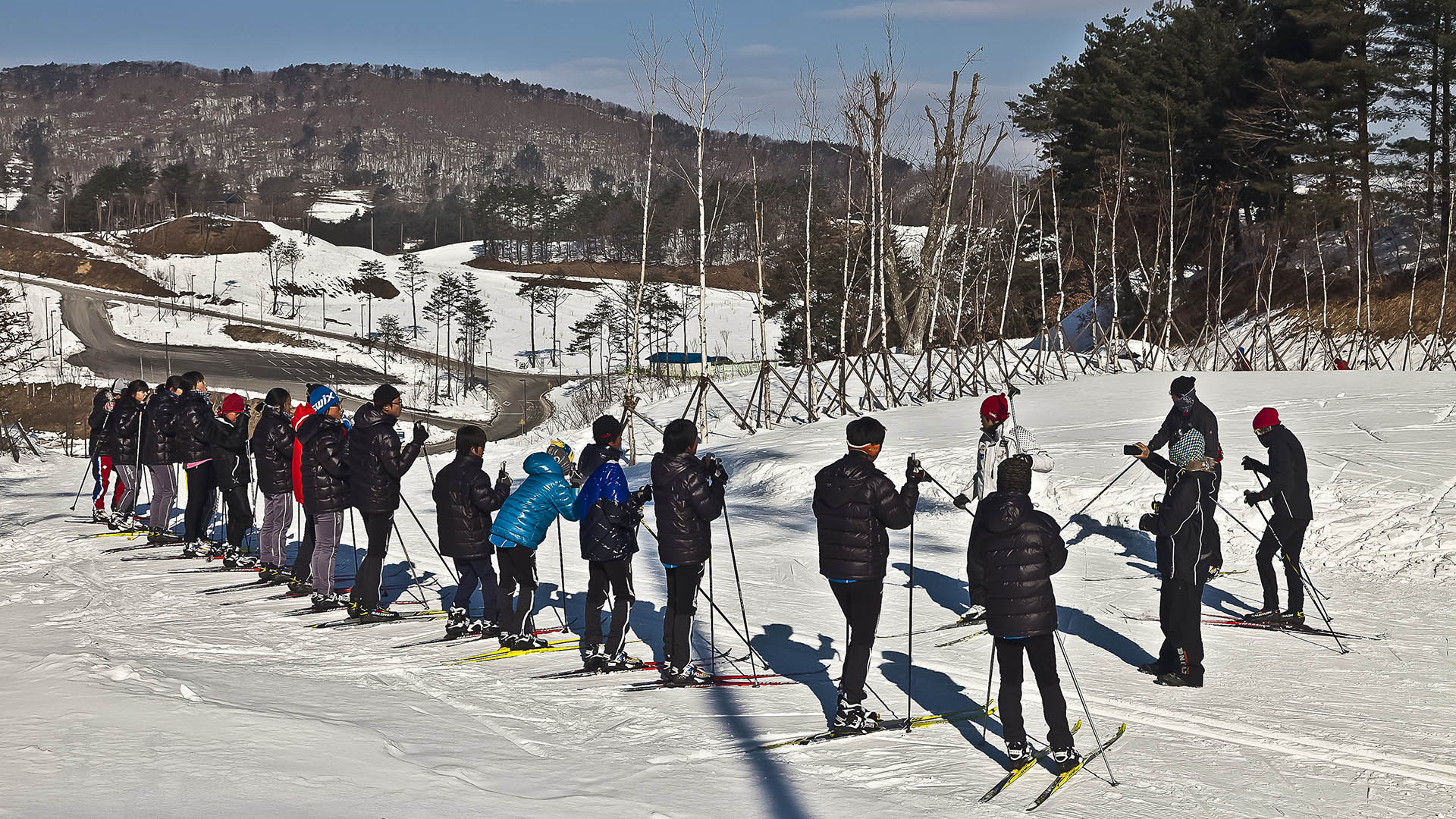
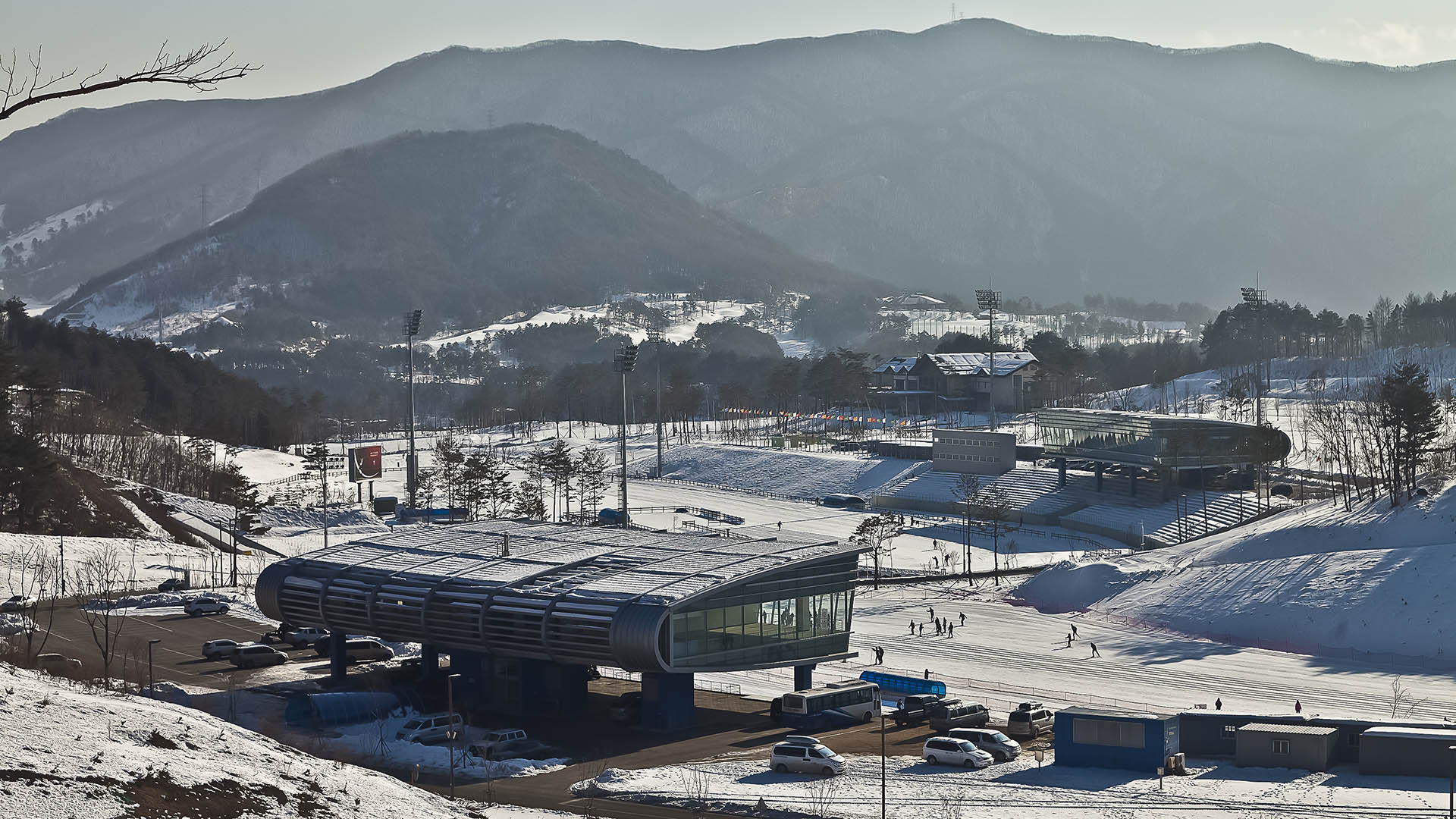
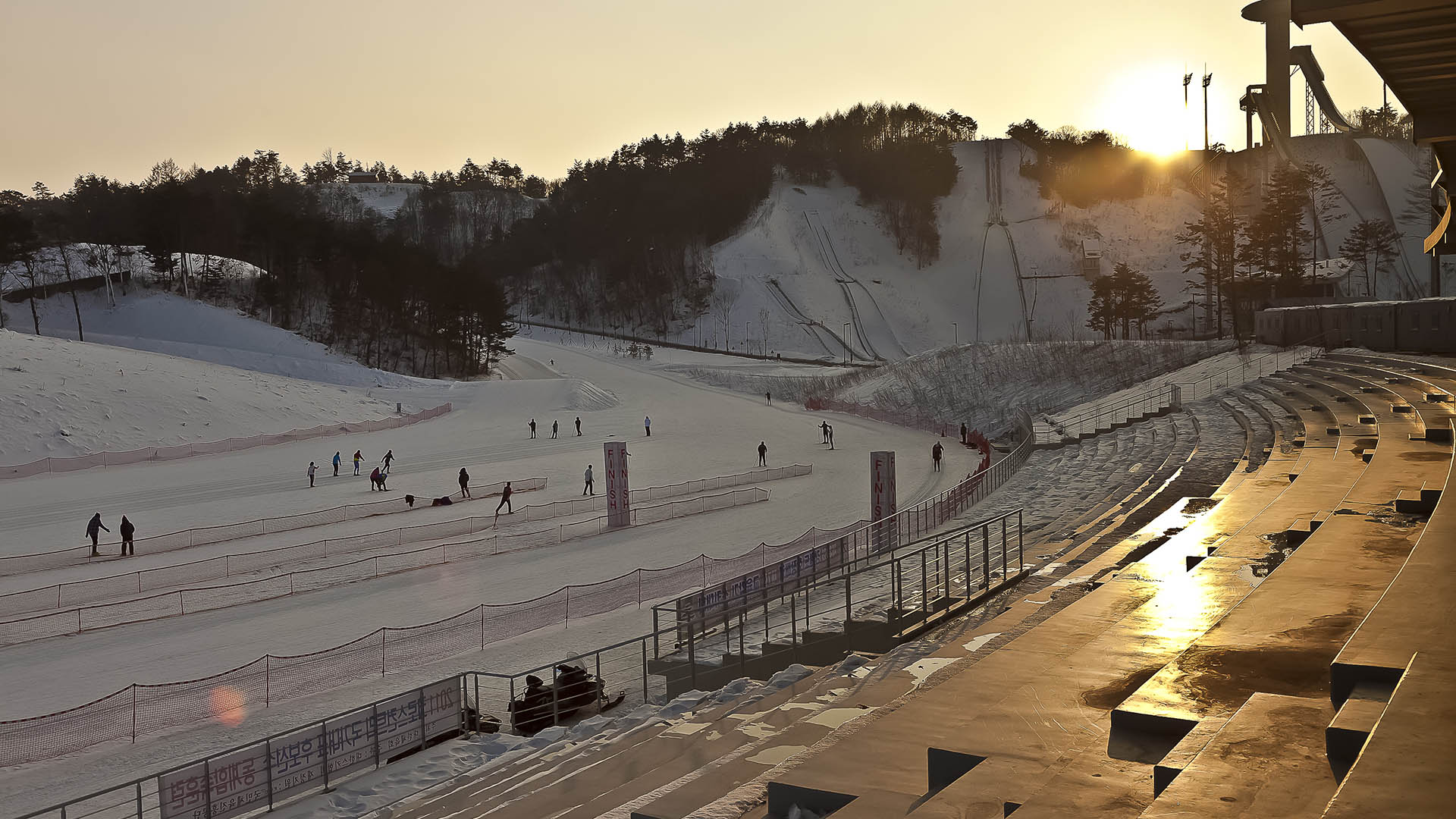
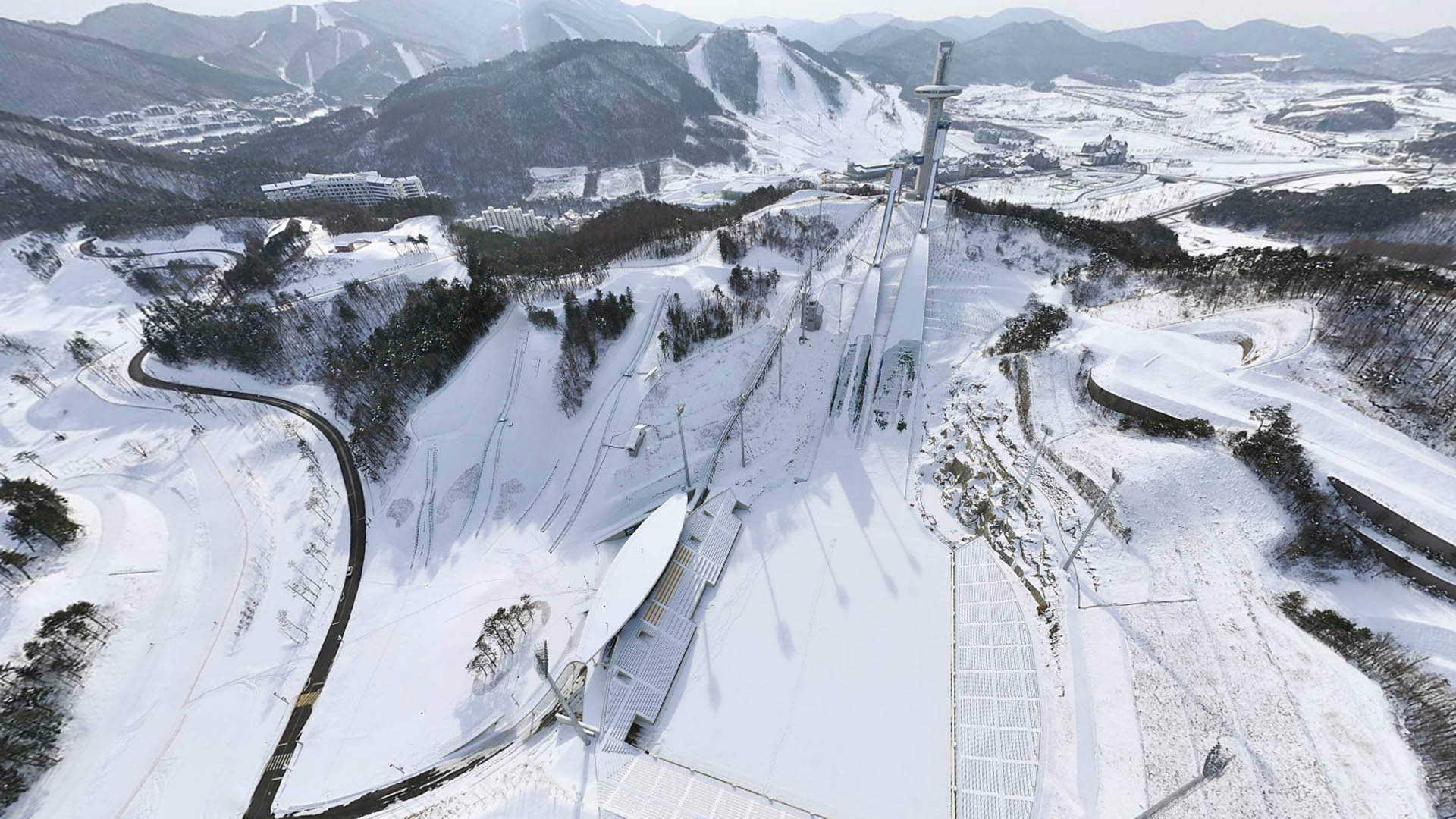
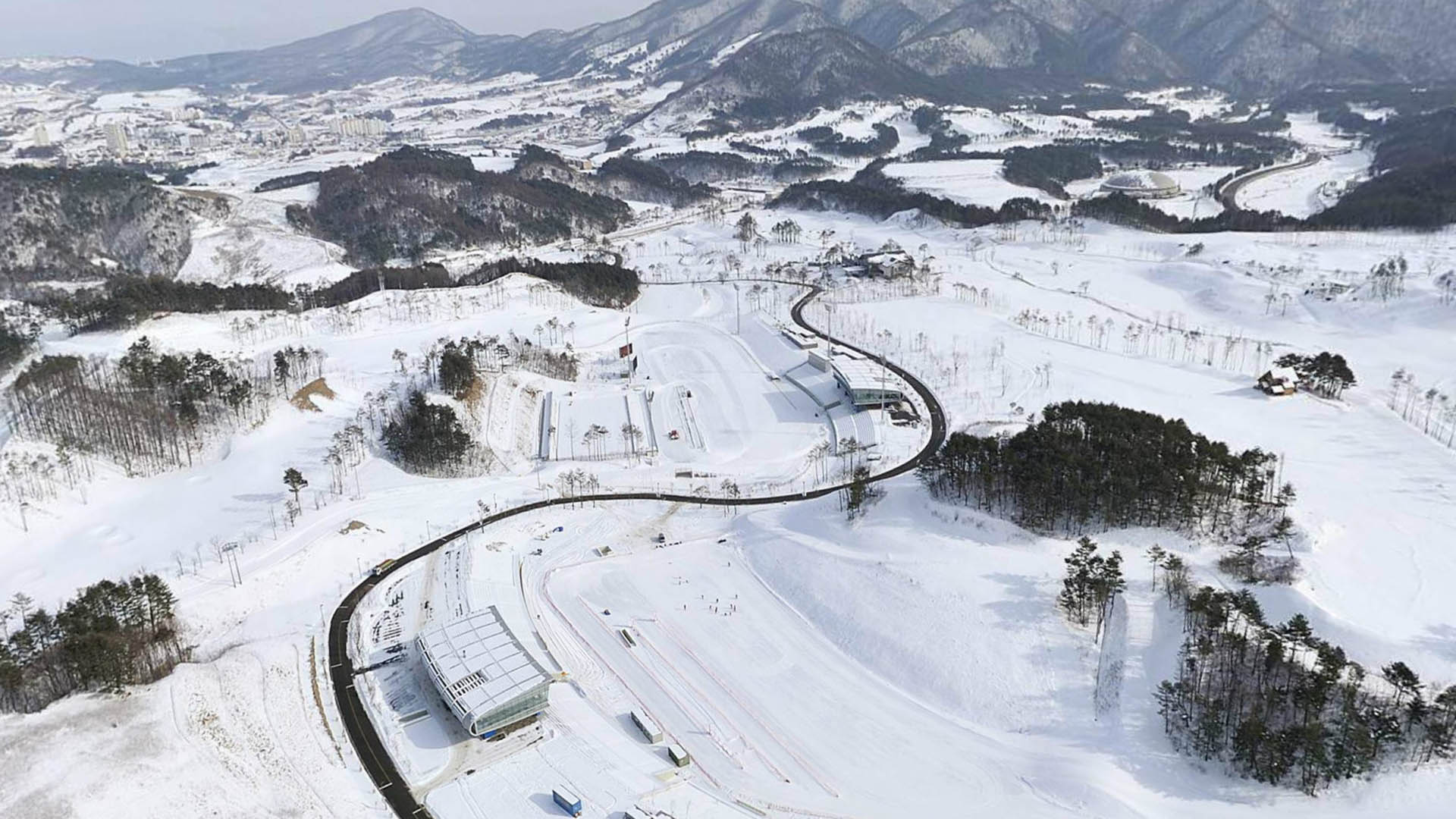
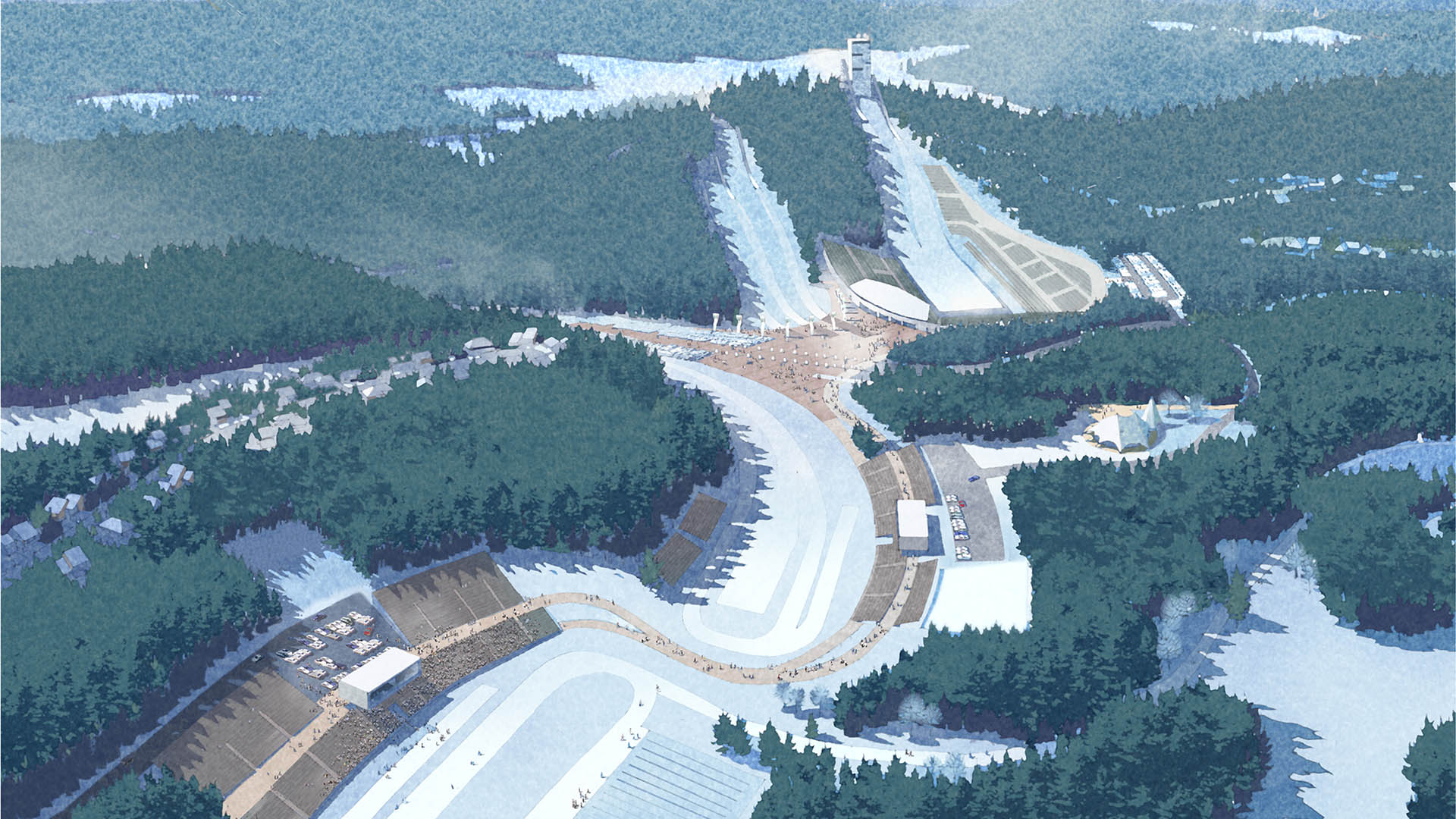
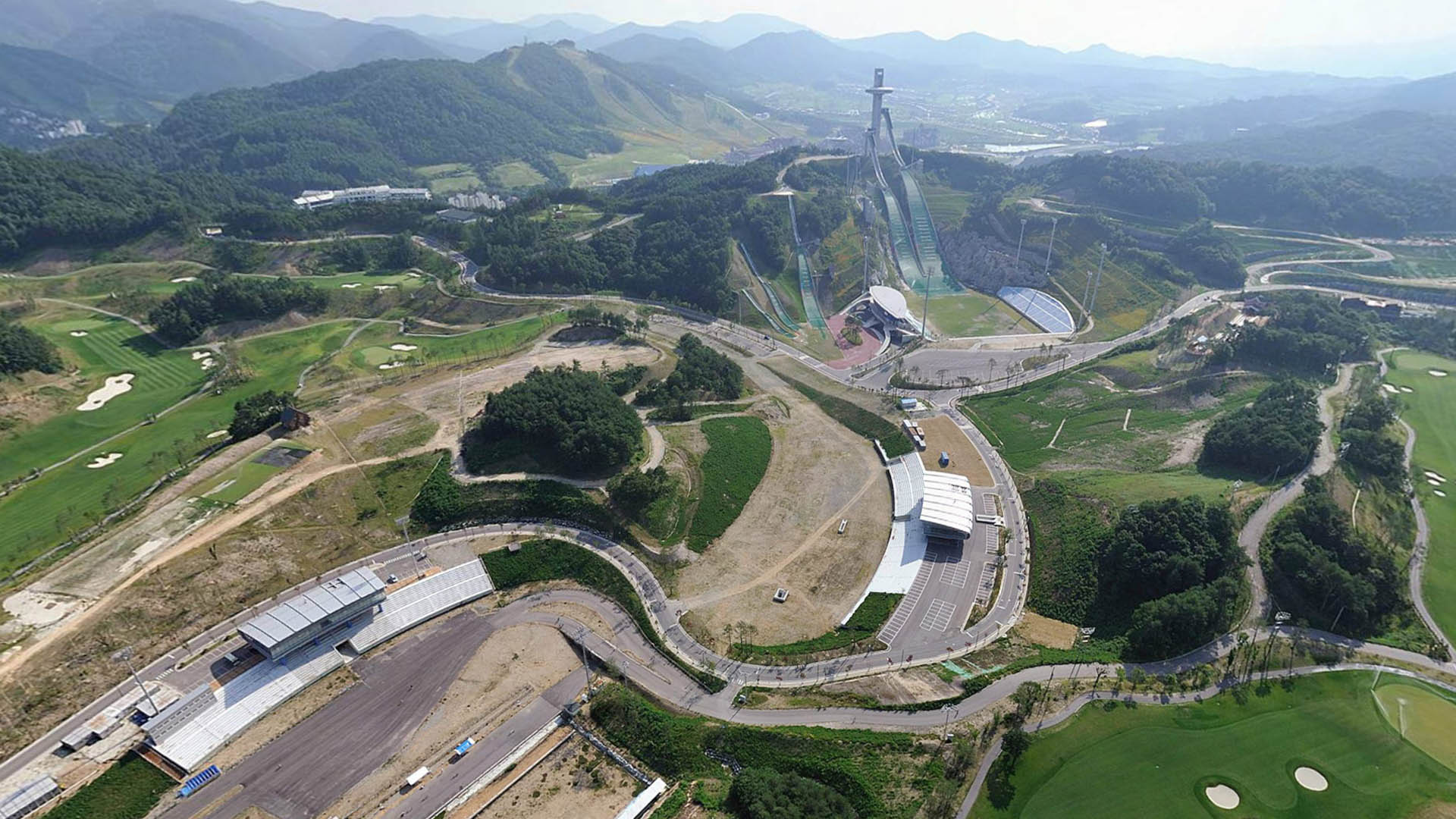
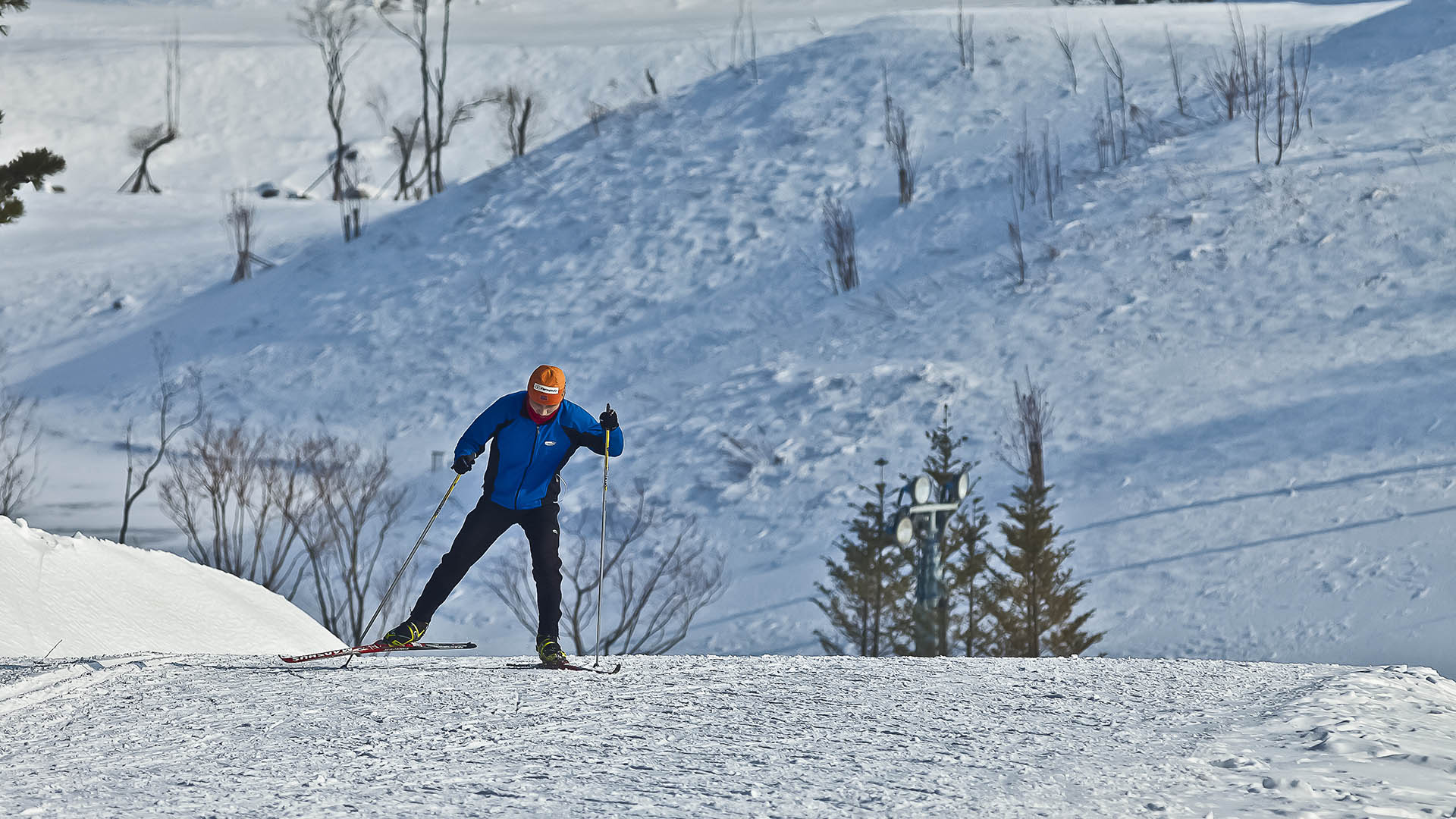
SWA’s master plan for the three Nordic Events venues—the Ski Jumping, Cross Country Skiing, and Biathlon stadia and courses—honors the natural beauty of a spectacular Olympic Winter Games landscape as never before. The venues were originally slated to be located in separate valleys, requiring athletes and spectators to travel between sites. But in PyeongChang, SWA departed from that logic and instead took their cues from the landscape itself, resulting in the most compact design in Olympic Winter Games history. Locating all events in one valley achieved two goals: creating the most efficient and exciting experience for athletes and visitors to the Games, and minimizing disruption of the region’s steep terrain and pristine pine forests. In PyeongChang, pedestrians flowed along a continuous promenade between these venues, saving hours of shuttle bus time while also being immersed in a high-octane sports experience. The arrival sequence to the Ski Jumping Stadium is choreographed to build viewer excitement, beginning with a plaza flanked by three practice jumps, the monorail station—which transports athletes, coaches, and officials to the tower and Large Hill and Normal Hill in-runs—and culminating in the Ski Jumping Stadium itself. The design was created for the 2014 Olympic Winter Games bid and ultimately built to bolster Korea’s successful 2018 bid. The venue remains active in summer with an 18-hole golf course, roller-blade training, and a soccer pitch, replacing the snow sports.
Minute Maid Park
The much-anticipated ballpark for the Houston Astros, which opened in 2000, includes approximately 42,000 seats, a retractable roof, an attached micro-brewery, and tour bus drop off. SWA, along with Rey de la Reza Architects, designed the entire ballpark site from the building to the curb, including the remodeling of historic Union Station, now part of the sta...
Texas A&M Kyle Field Renovation
Completed in 2015, Kyle Field represents the most extensive redevelopment of a collegiate athletic facility ever. Inspired by the theme “The Home of the 12th Man,” this project embodies the belief that at Texas A&M, fans don’t just watch the game, they affect the game. SWA worked closely with Populous to create the best college football experie...
St. Louis Ballpark Village District Landscape Master Plan
Downtown St. Louis is currently undergoing an urban renaissance: seeking to enrich experience of place and to attract a growing population of urban residents, employeers, and tourists. SWA/Balsley was engaged for district-wide landscape services for a new urban redevelopment, Ball Park Village, located directly across the street from Busch Stadium, home of the...
Four Seasons Sharm el Sheikh
Along Egypt’s Sinai Peninsula, a region known for its mountain ranges and canyon-like wadis, the Four Seasons Sharm El-Sheikh bridges steep topography through layered landscapes recalling ancient Egyptian geometry and organic coastal forms. The resort’s defining feature is the monumental stone wall that separates the 90-key hotel from the conference cent...