


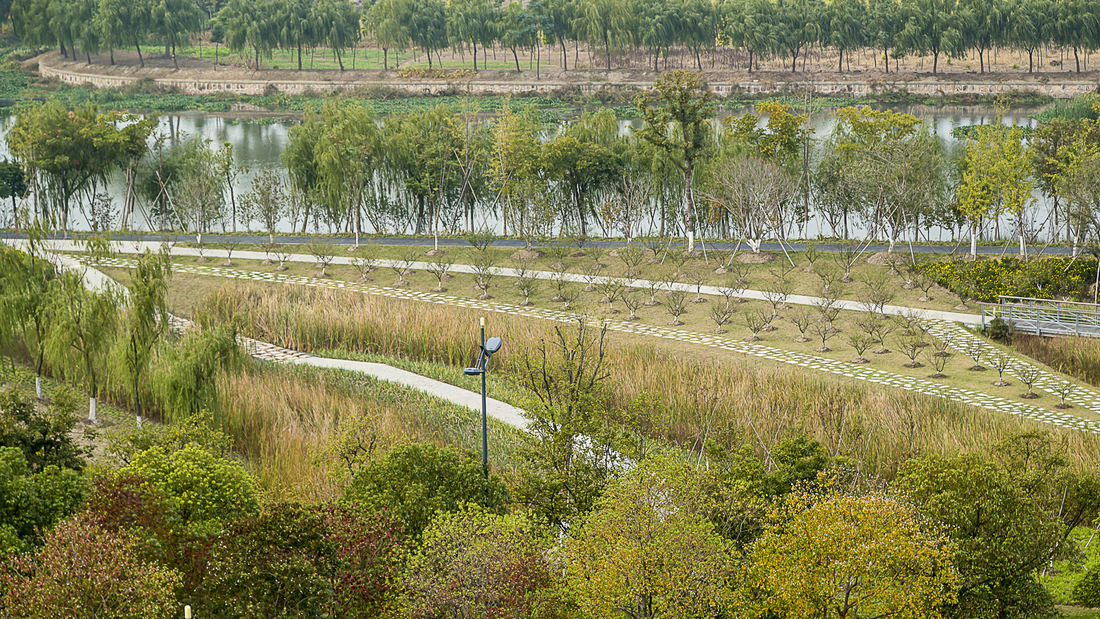
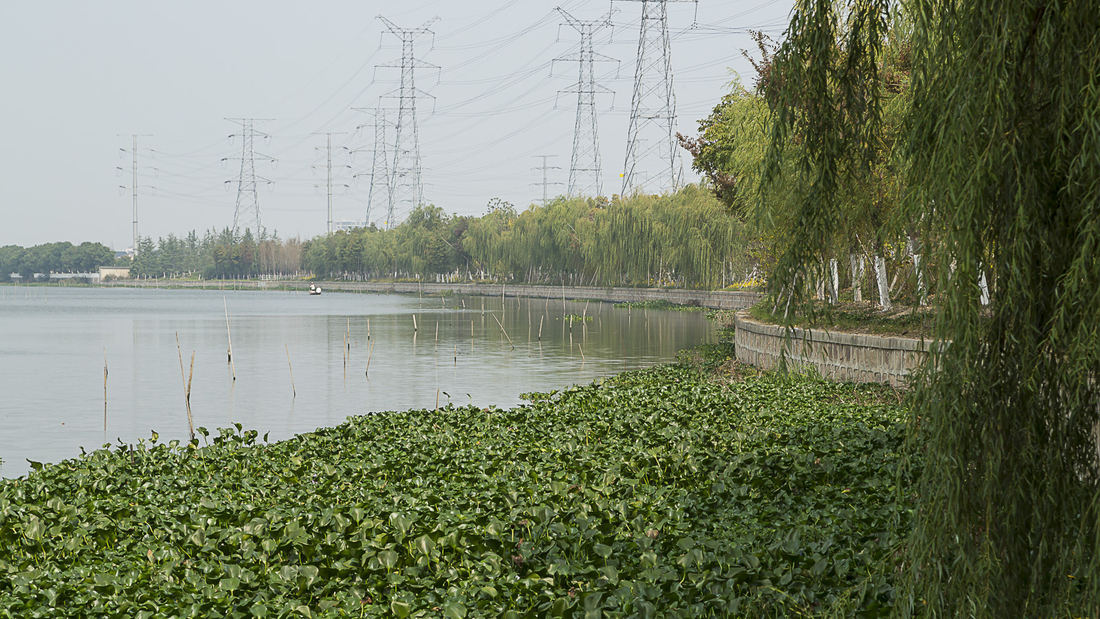
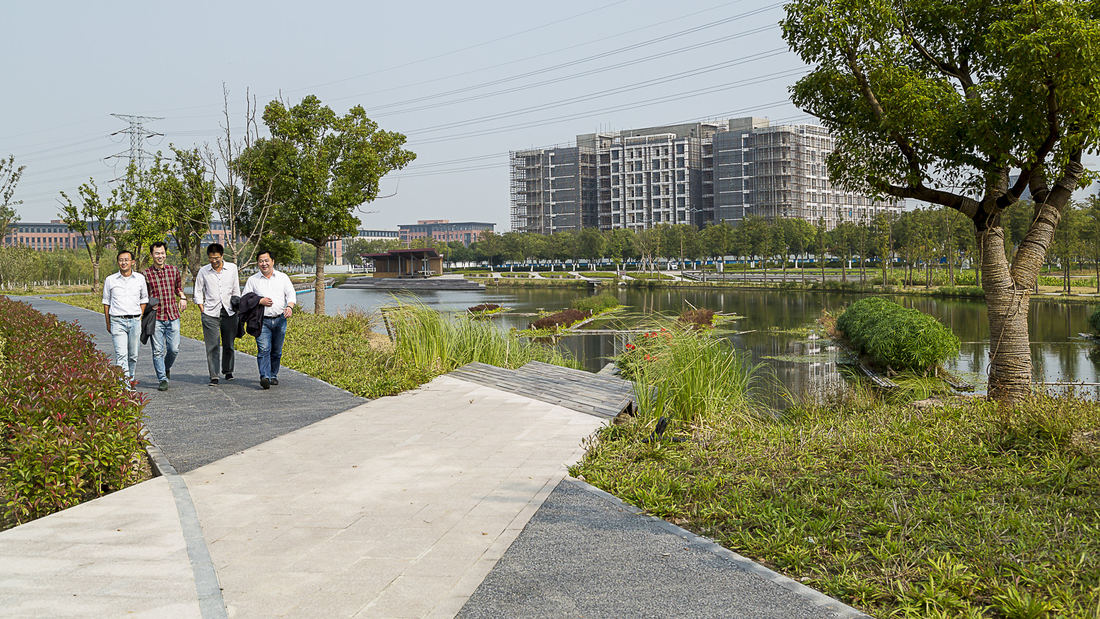
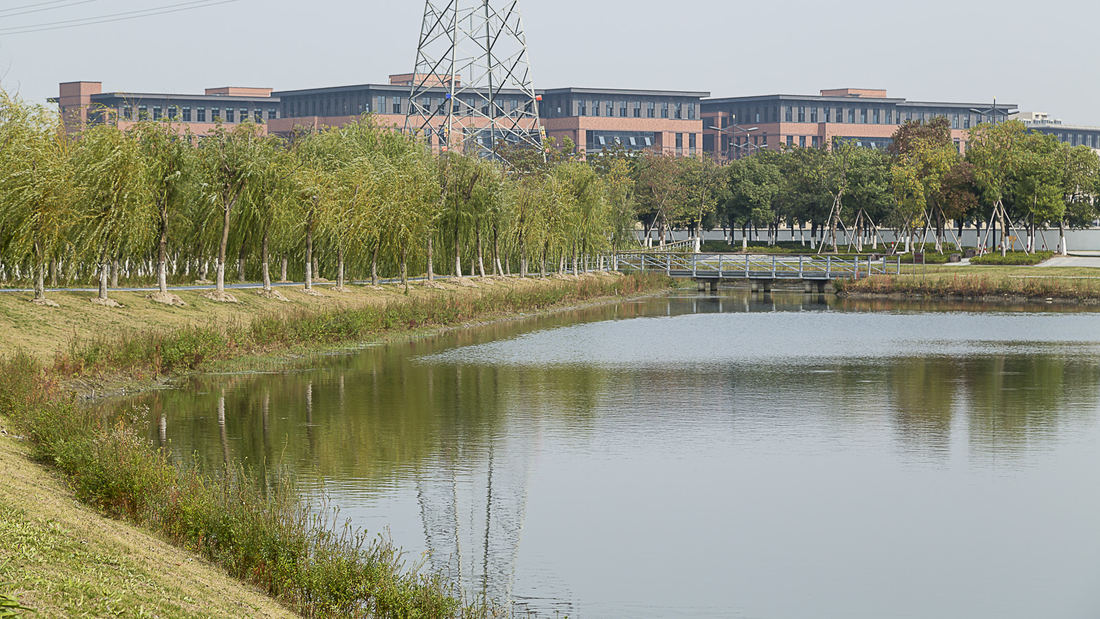
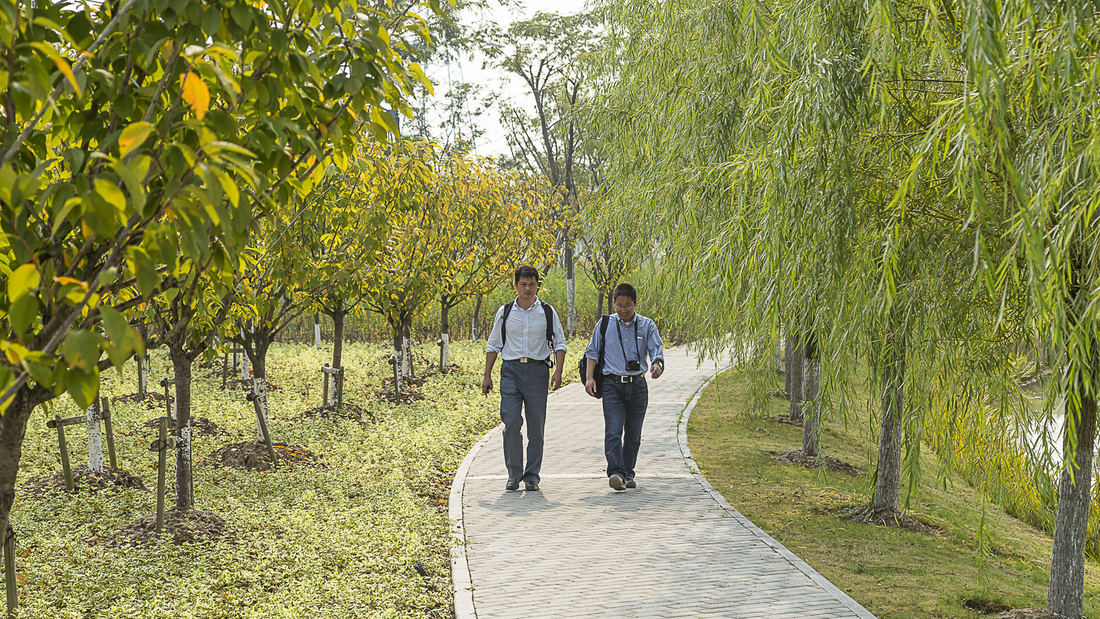
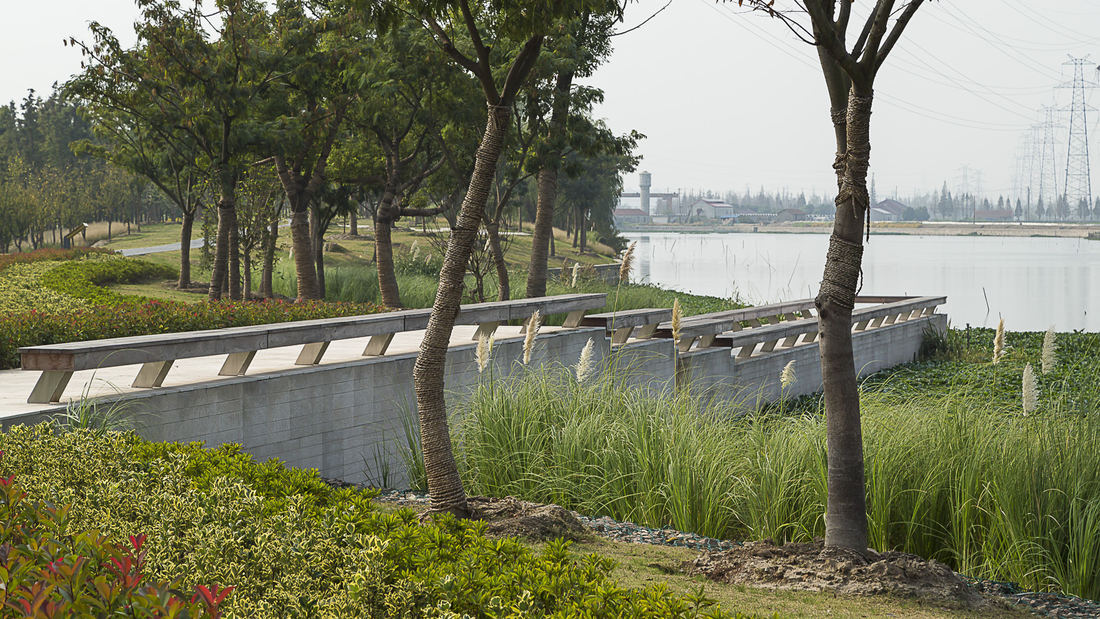
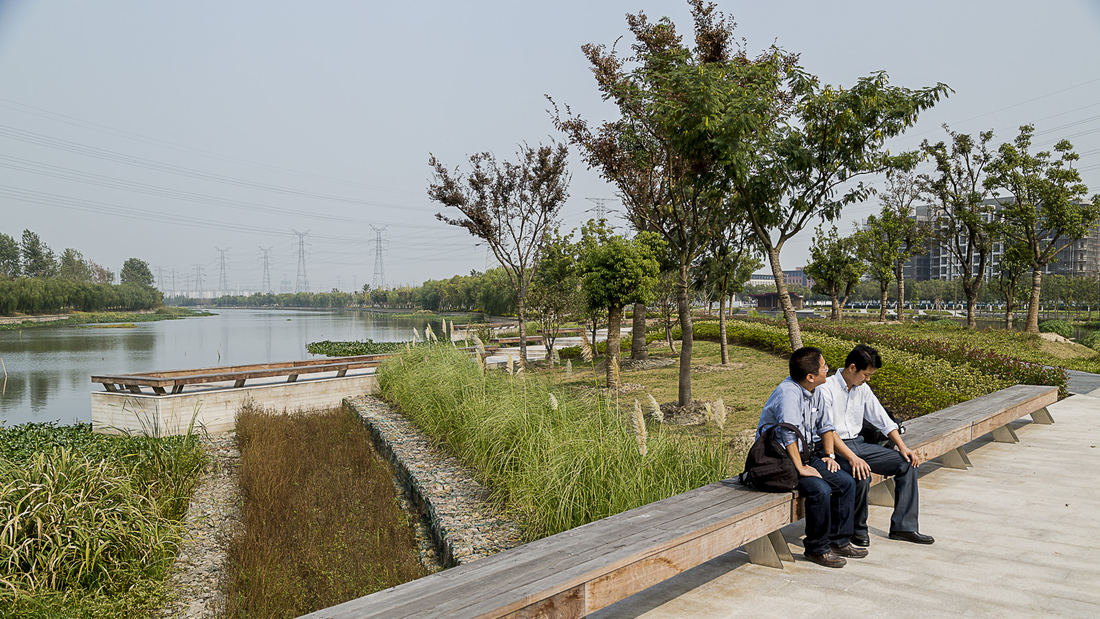
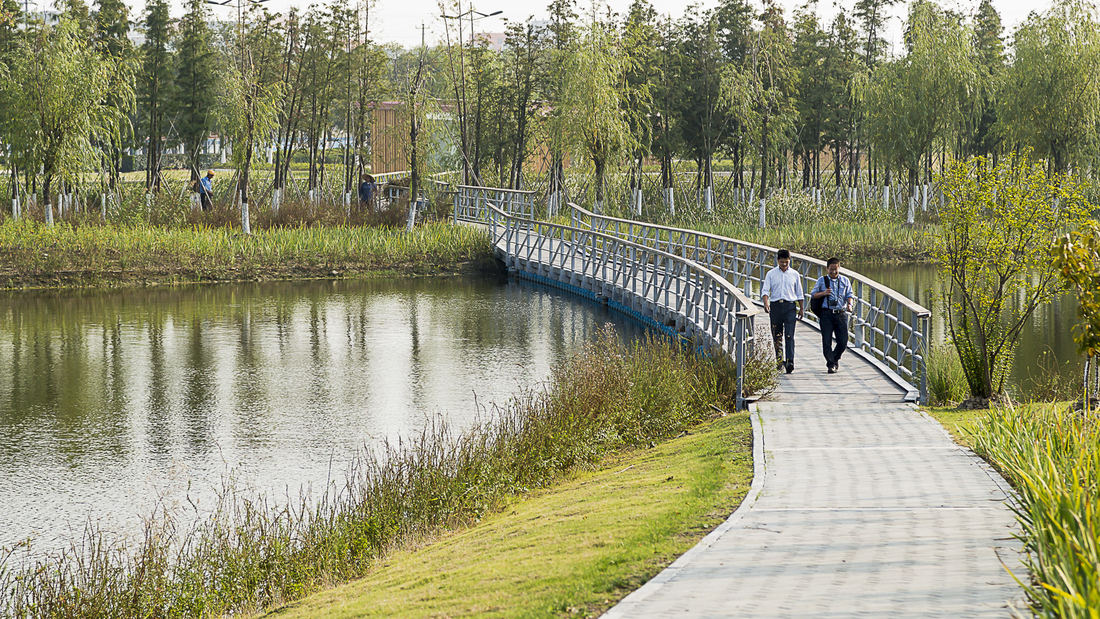
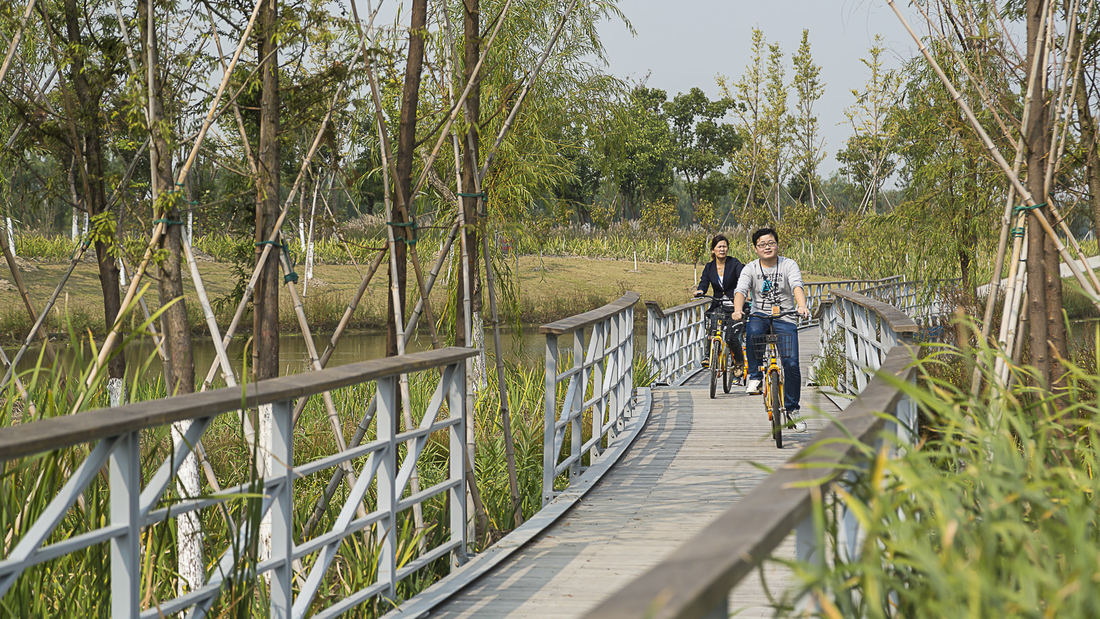
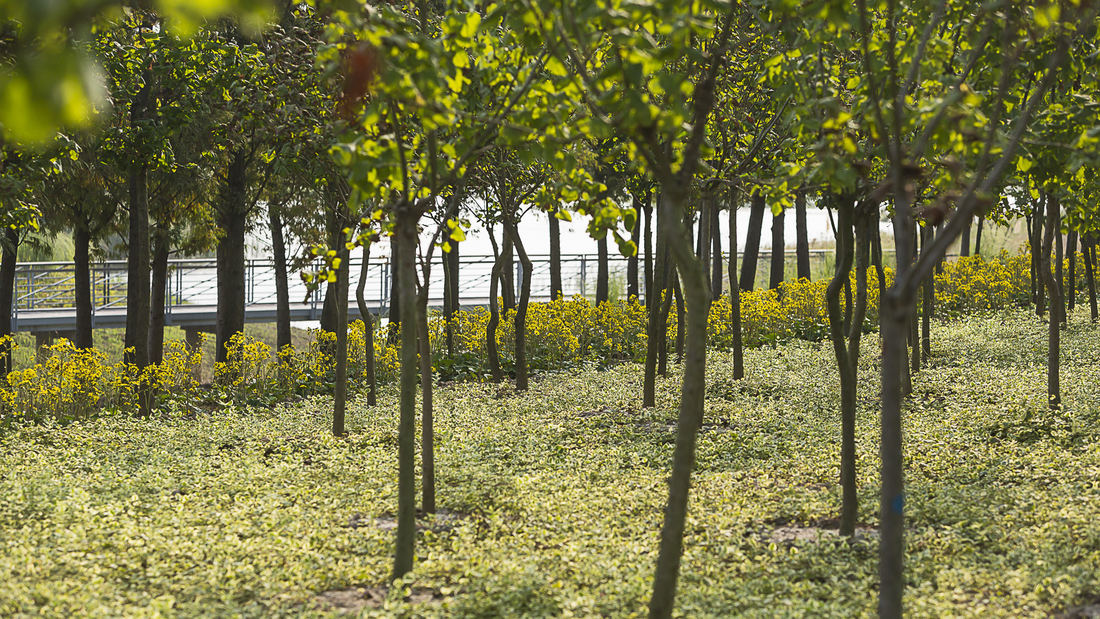
Kunshan, China, located near Shanghai, has experienced unprecedented population and business growth in recent years which has resulted in environmental degradation and the need for the city to reshape its identity. SWA’s proposal aims to create a new waterfront district providing businesses as well as residents with public amenities and viable open space. The master plan balances development and environmental conservation on the Wusong Riverfront by employing highly detailed infrastructural systems that integrate cutting-edge hydrological design and land planning. The water treatment system acts as the central organizing structure of the site by introducing a sequence of several pools and channels that remove targeted pollutants by settling, filtration, aeration, and bio-processing in alternating oxic and anoxic environments. Existing storm pipe outlets that previously discharged directly into the inner bay are retrofitted, allowing water to pond onsite and flow over land in bio-swales before entering the treatment system or inner bay. SWA’s design also seeks to reconnect the population and river by maximizing the waterfront edge for varying scales and layers of experience. The perimeter of the bay is designed as an open space system with interconnected bicycle and pedestrian paths. Sustainable systems created by the compact master plan create a comfortable outdoor microclimate, encouraging people to use alternative, eco-friendly means of transportation. By designing a comprehensive sustainable network of water-cleansing and climate improving systems, the project exceeds development objectives while creating a new riverfront park for the residents of Kunshan.
Dubai Creek Harbor
Dubai Creek Harbor is a progressive and innovative new neighborhood that aims to respond to environmental concerns with professional, best-practice measures that will ensure an environment that is healthy, accessible, and environmentally responsible.
The storied history, culture, and nature of Dubai Creek serves as the inspiration for the design of Duba...
Kaohsiung Waterfront Renovation
SWA, in association with Morphosis Architecture and CHNW, developed a vision for the future of Kaohsiung Harbor Wharfs, which includes 114 hectares of prime waterfront property formerly used for cargo shipping. The site, located in the shipping heart of Kaohsiung, Taiwan, was historically subjected to environmental neglect and rampant uncontrolled development....
Shunde Guipan River Waterfront
SWA participated in a competition reimagining 19-kilometers of the Guipan River waterfront in Shunde, China. While the Pearl River Delta is one of the fastest growing regions of Southern China, one of the many casualties of this growth was the delta itself. Presently, Shunde has a growing flooding problem enhanced by channelizing, condensing, and containing th...
Guangzhou Shipyard Waterfront Park
On the west bank of the Pearl River, the historic Guangzhou Shipyard has been transformed into a waterfront park that reconnects residents with the water while honoring over a century of industrial heritage. Once a Qing Dynasty fortress, the site became a shipyard in 1914 and grew into an almost 50-hectare complex—one of the earliest and most renowned in China...