


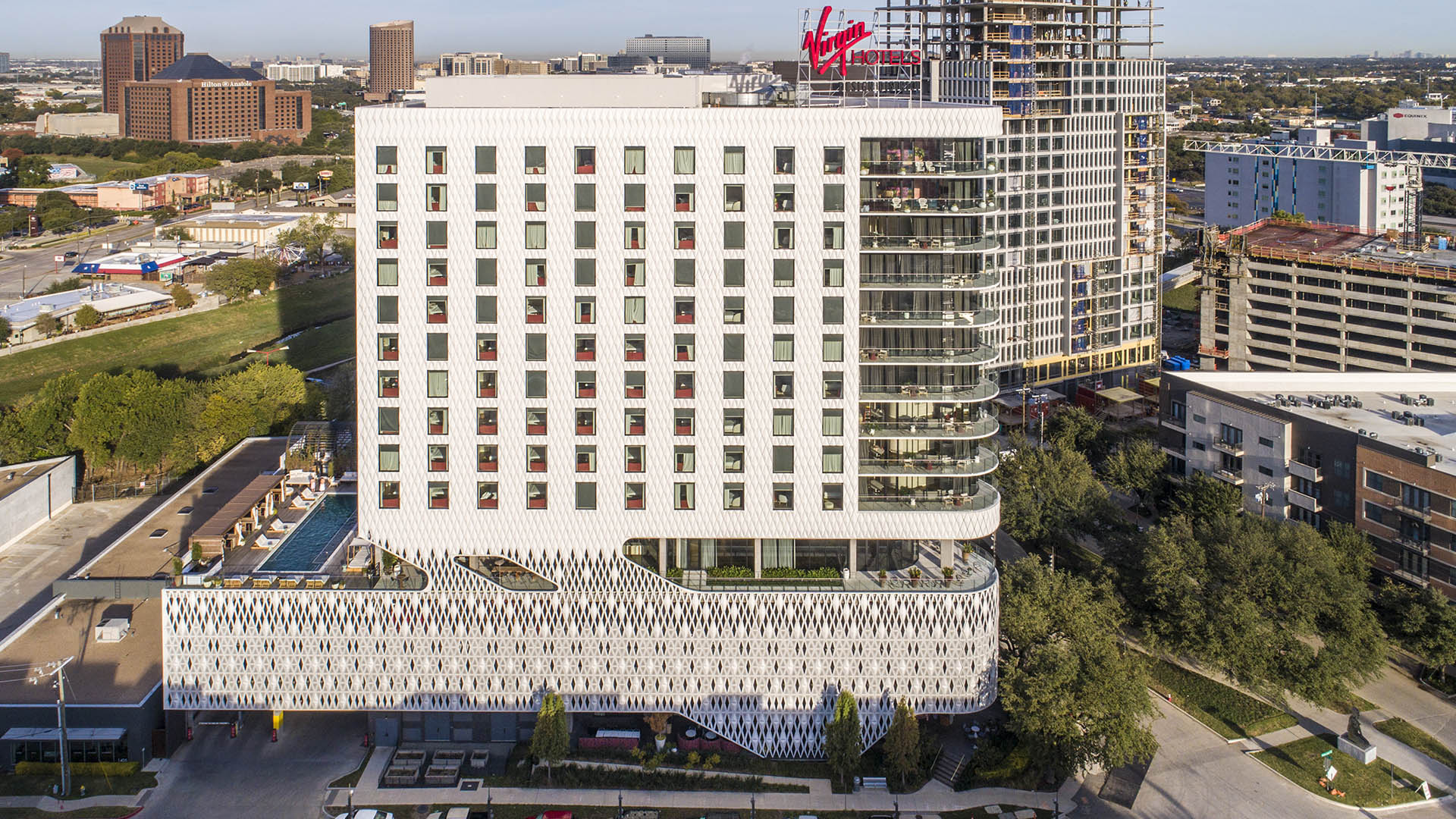
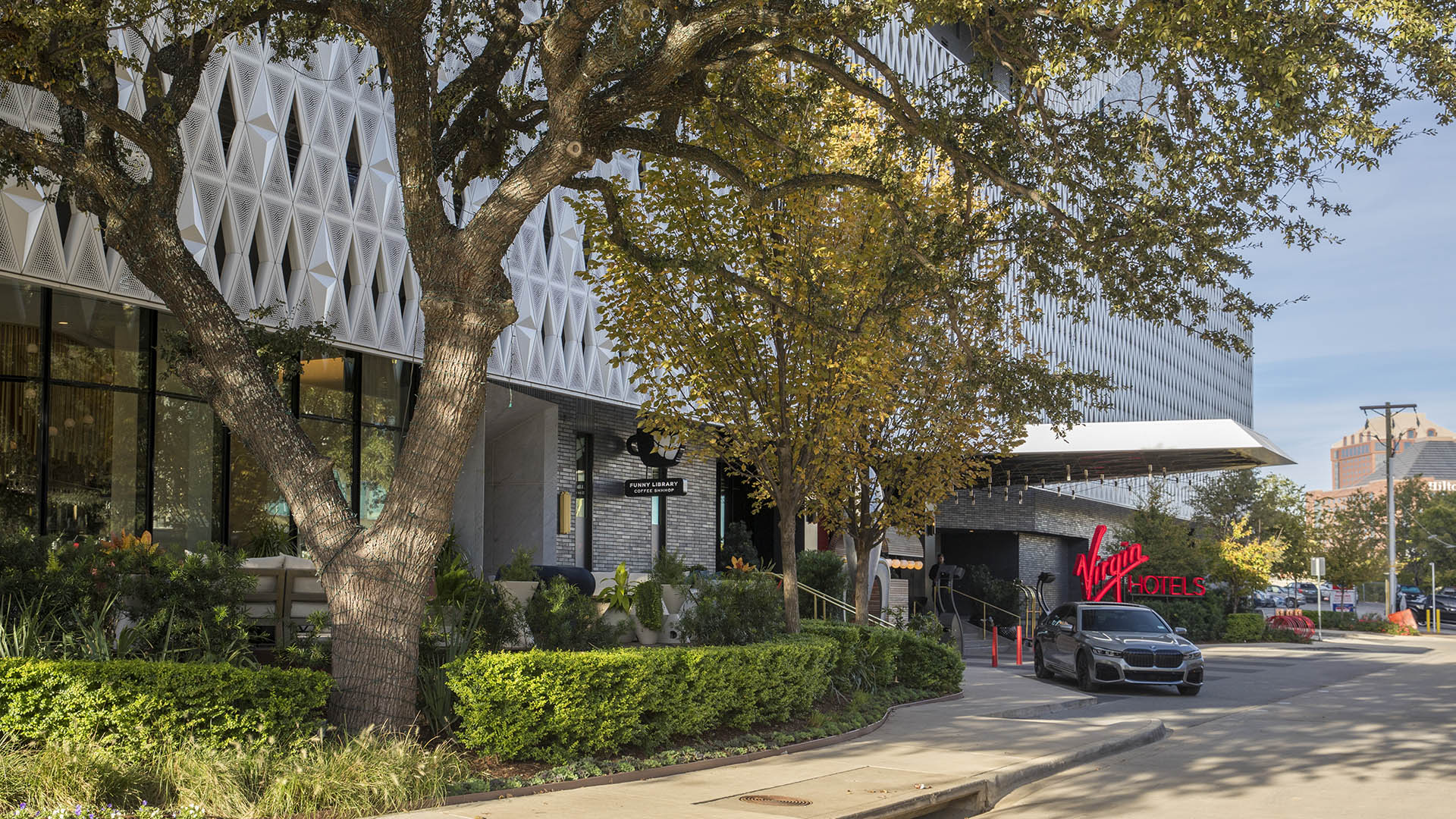

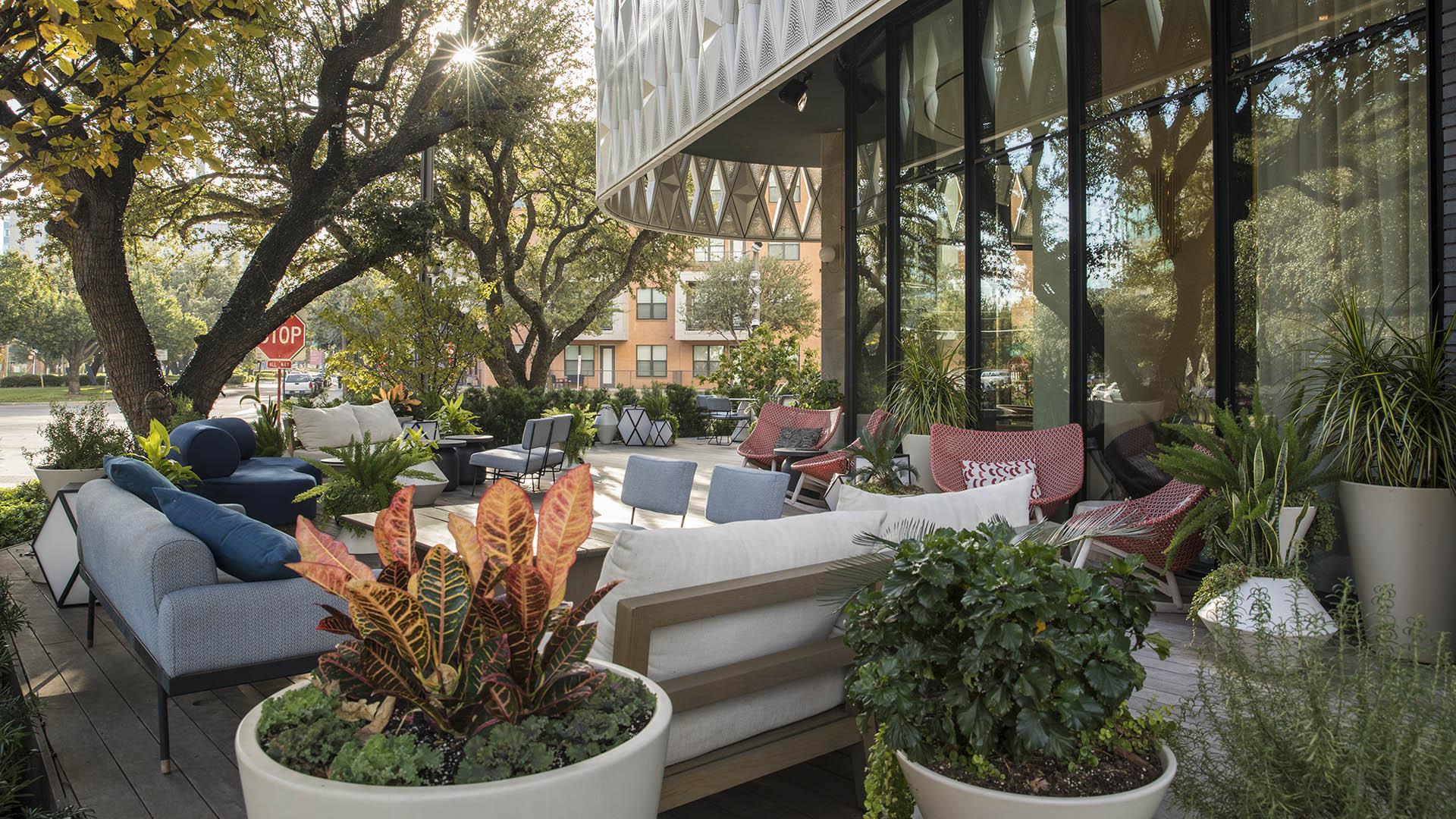
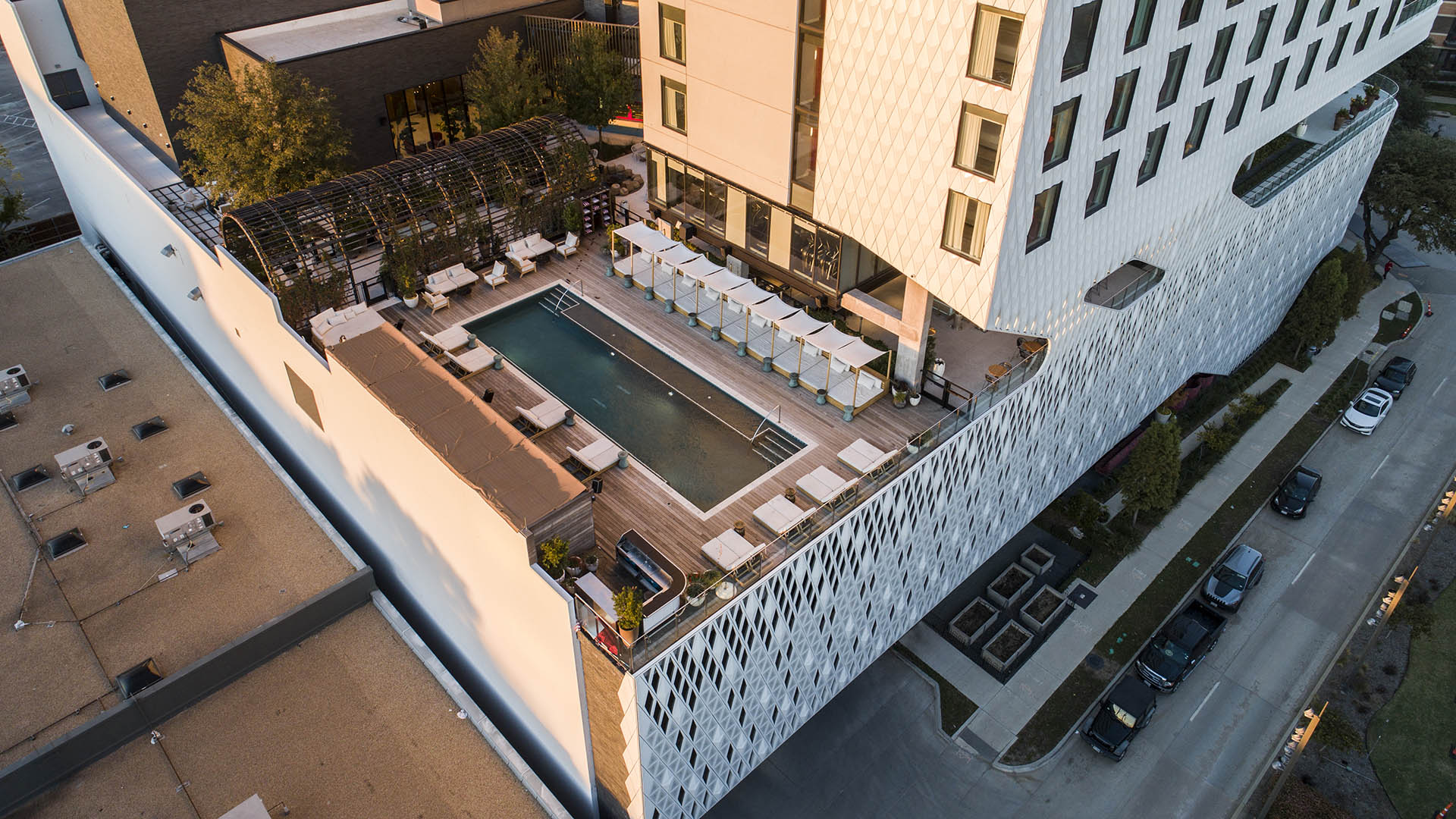
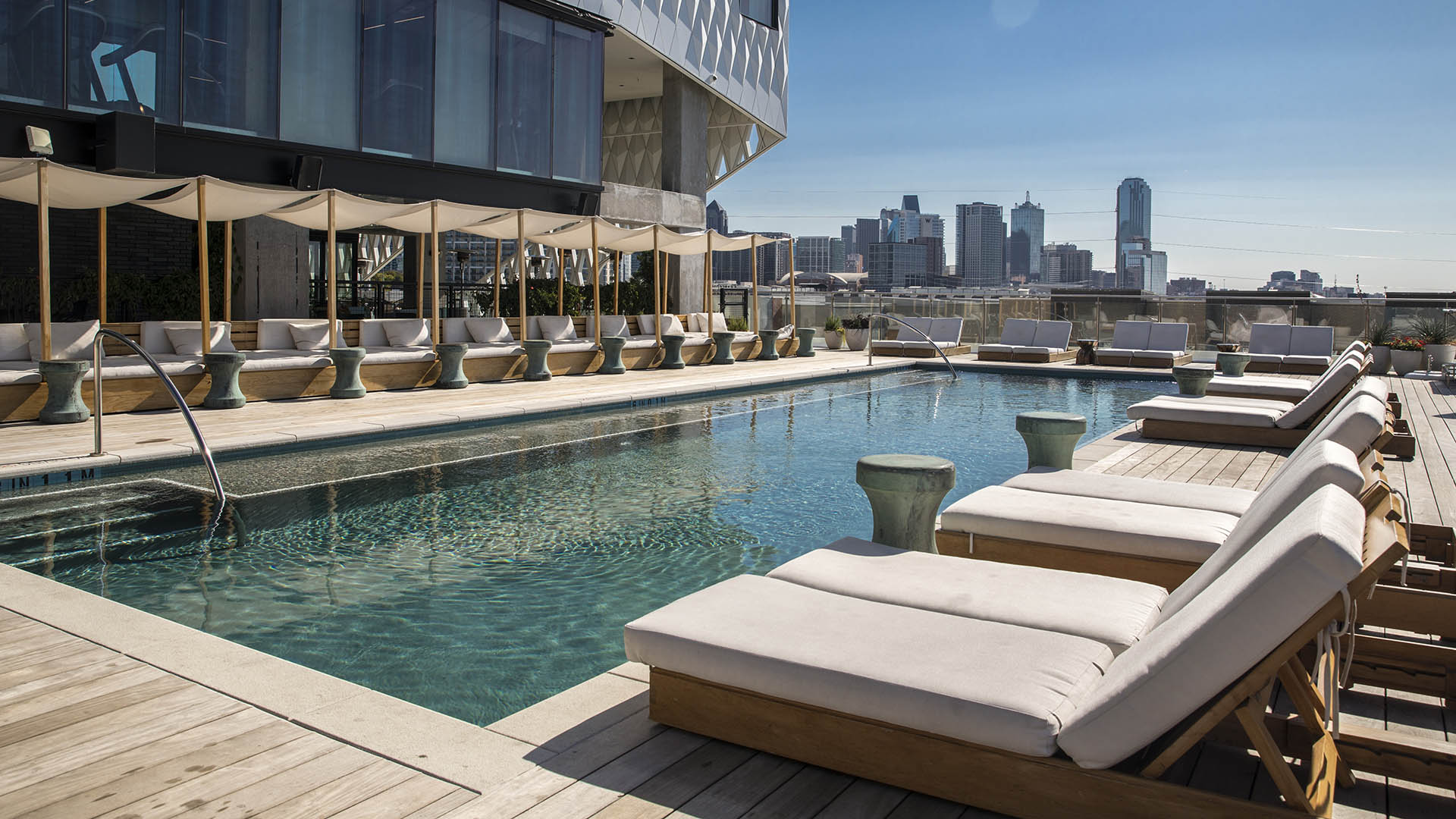
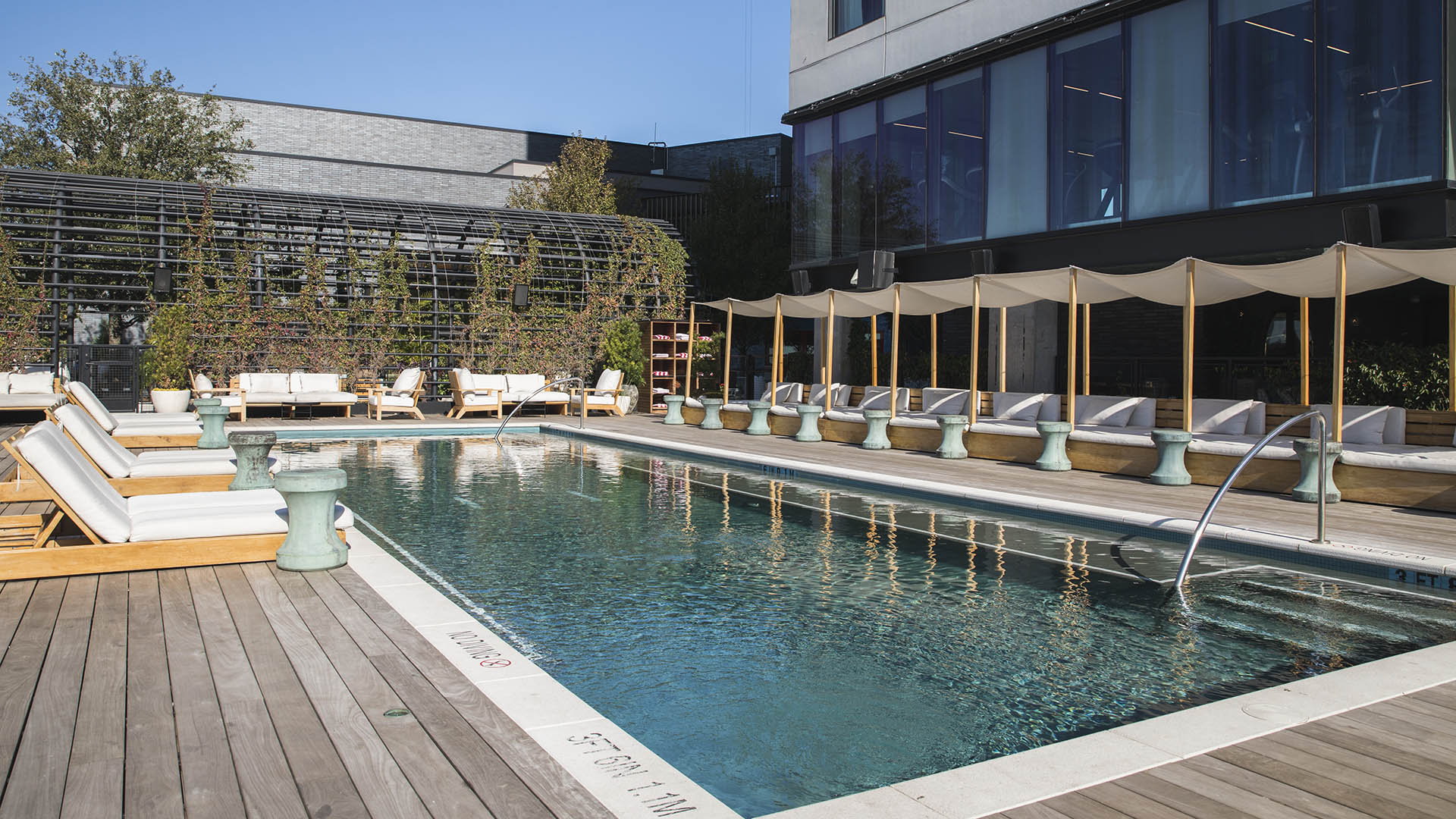
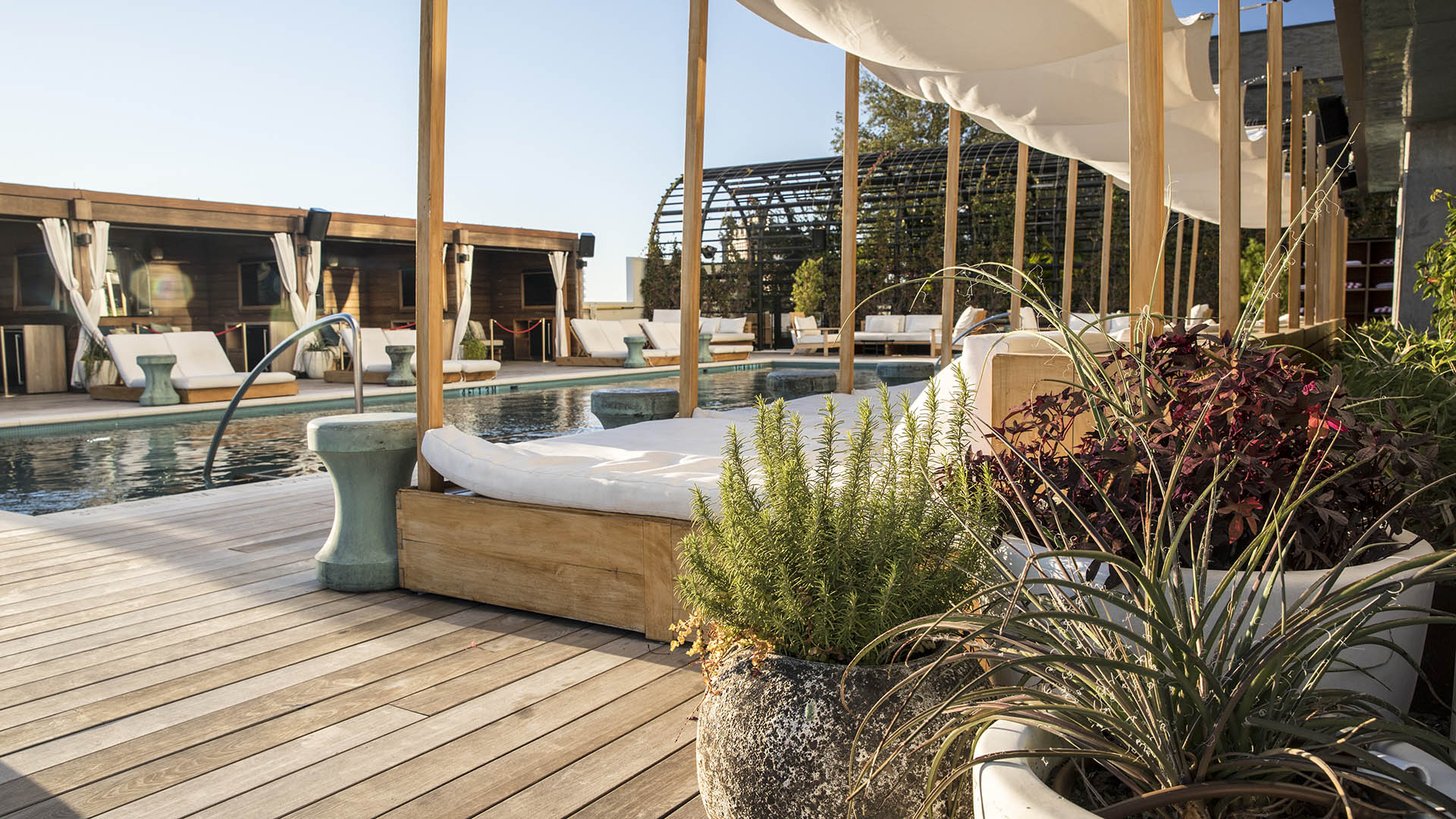
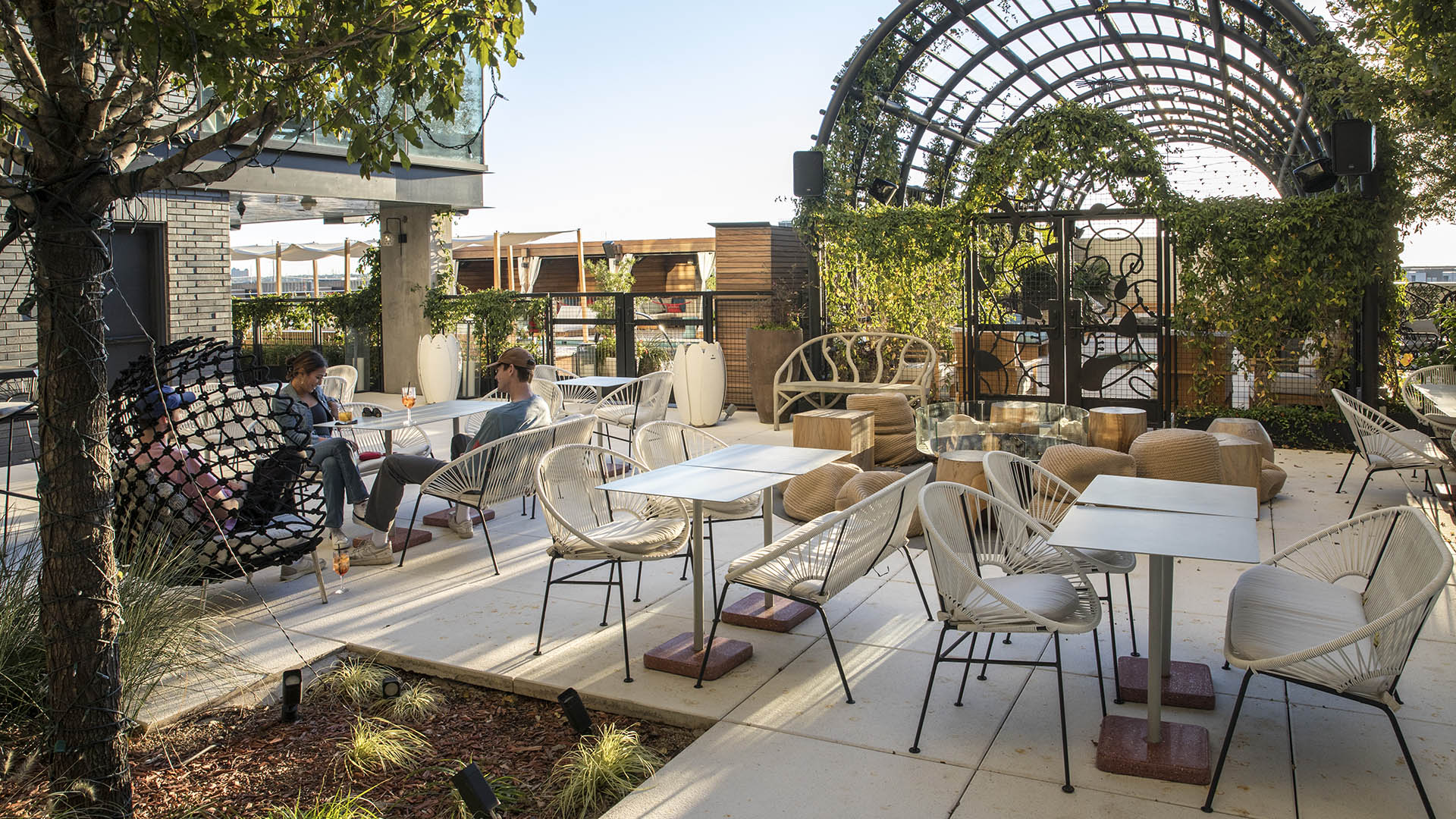
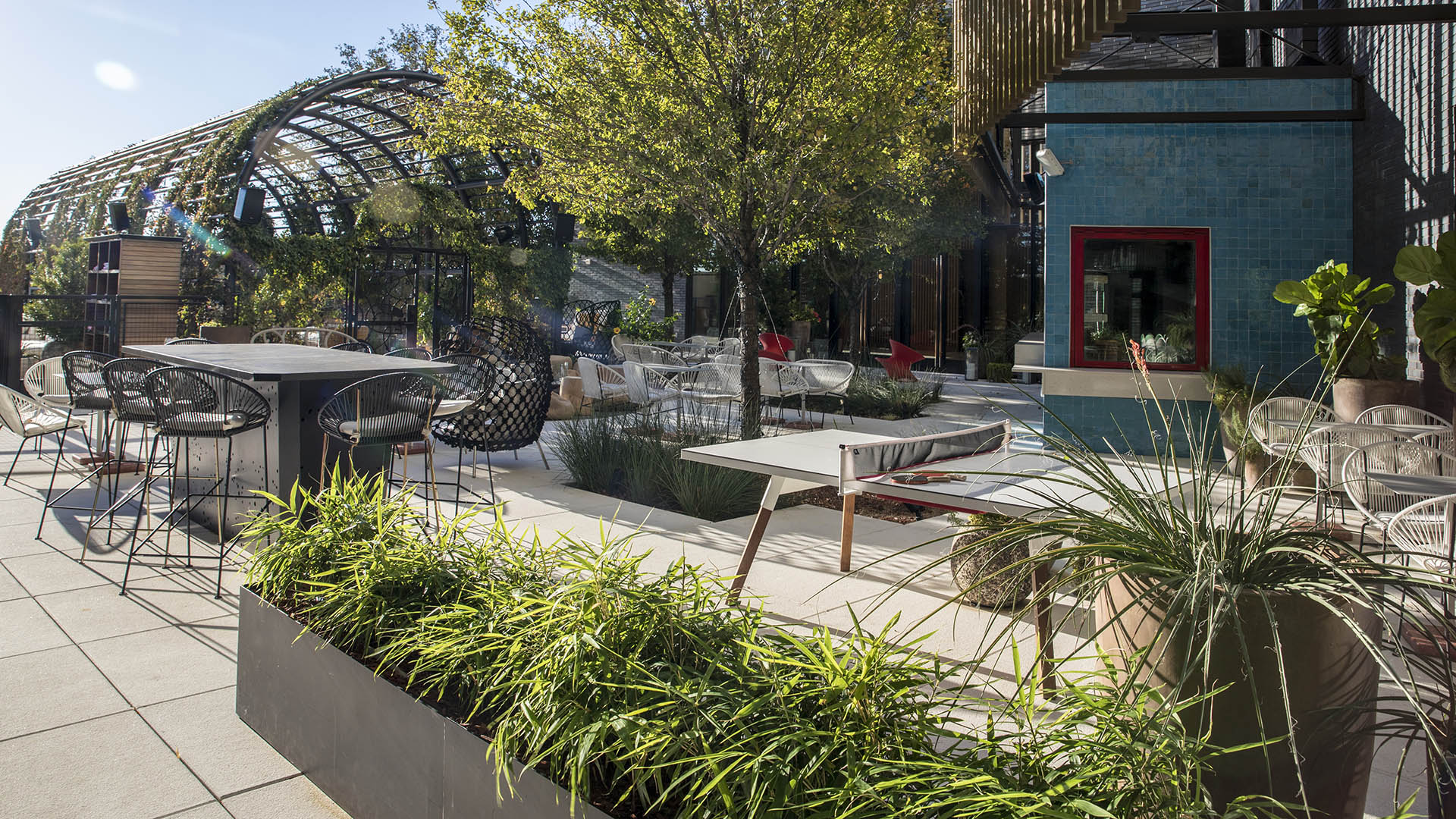

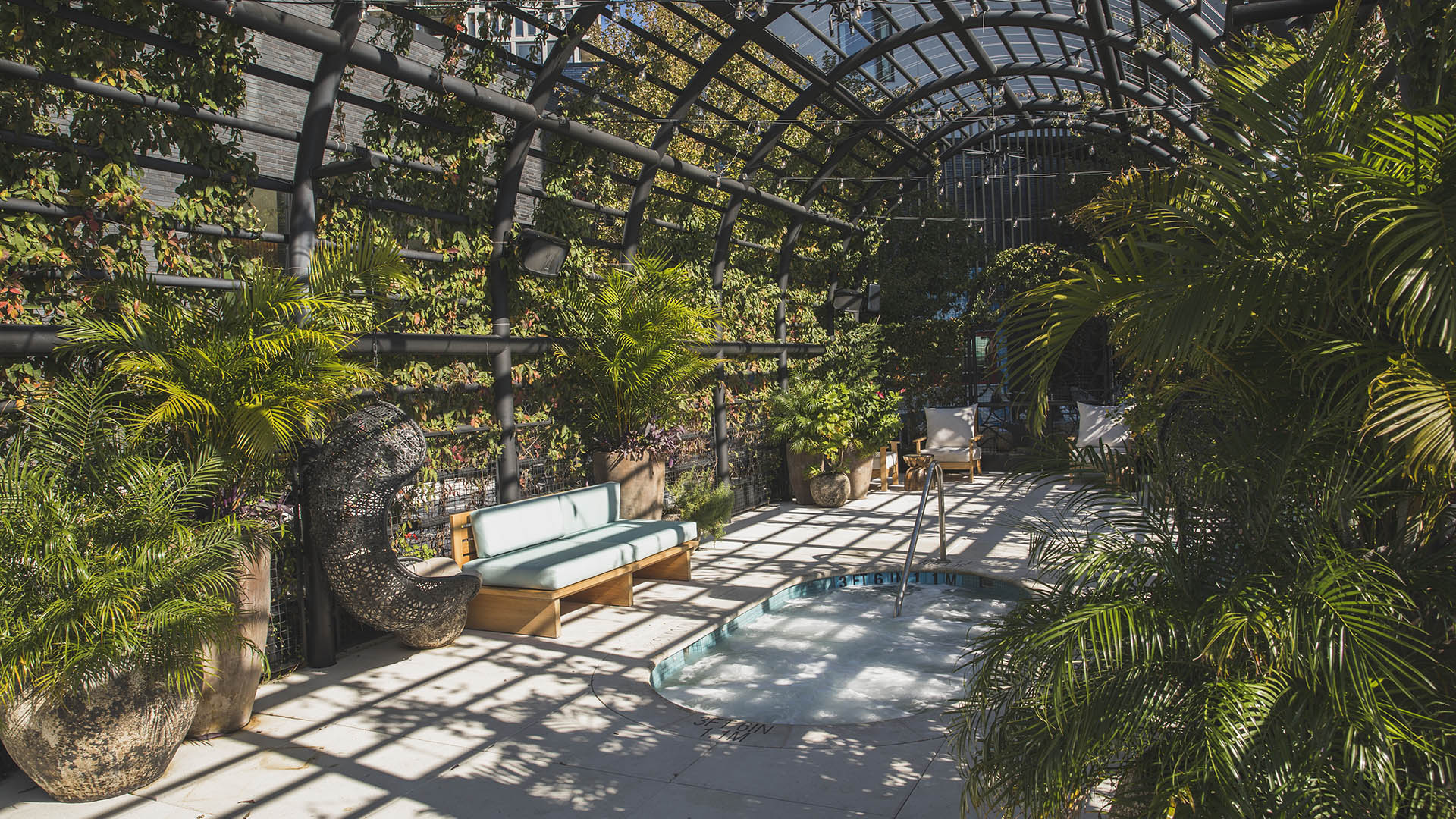
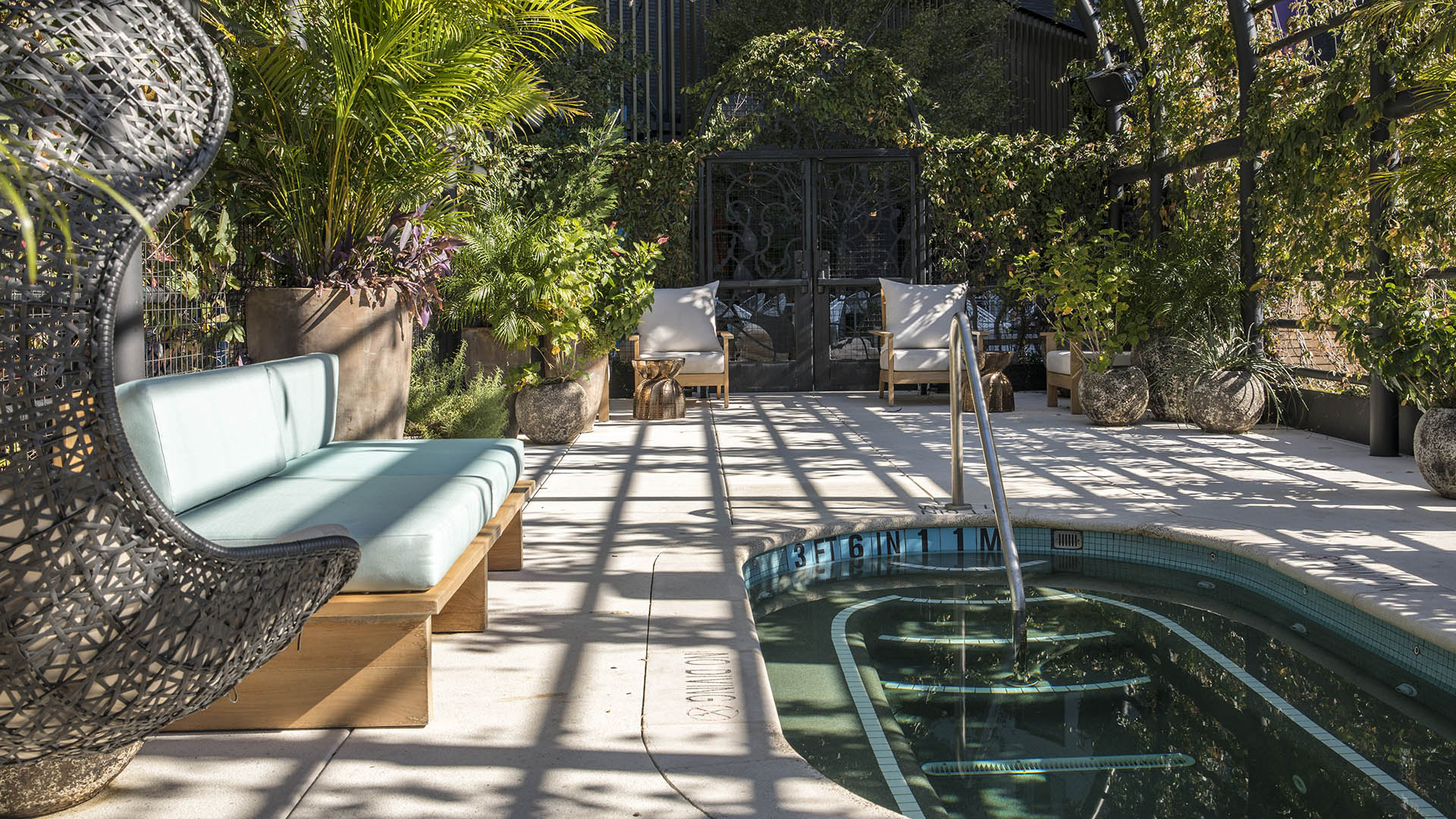

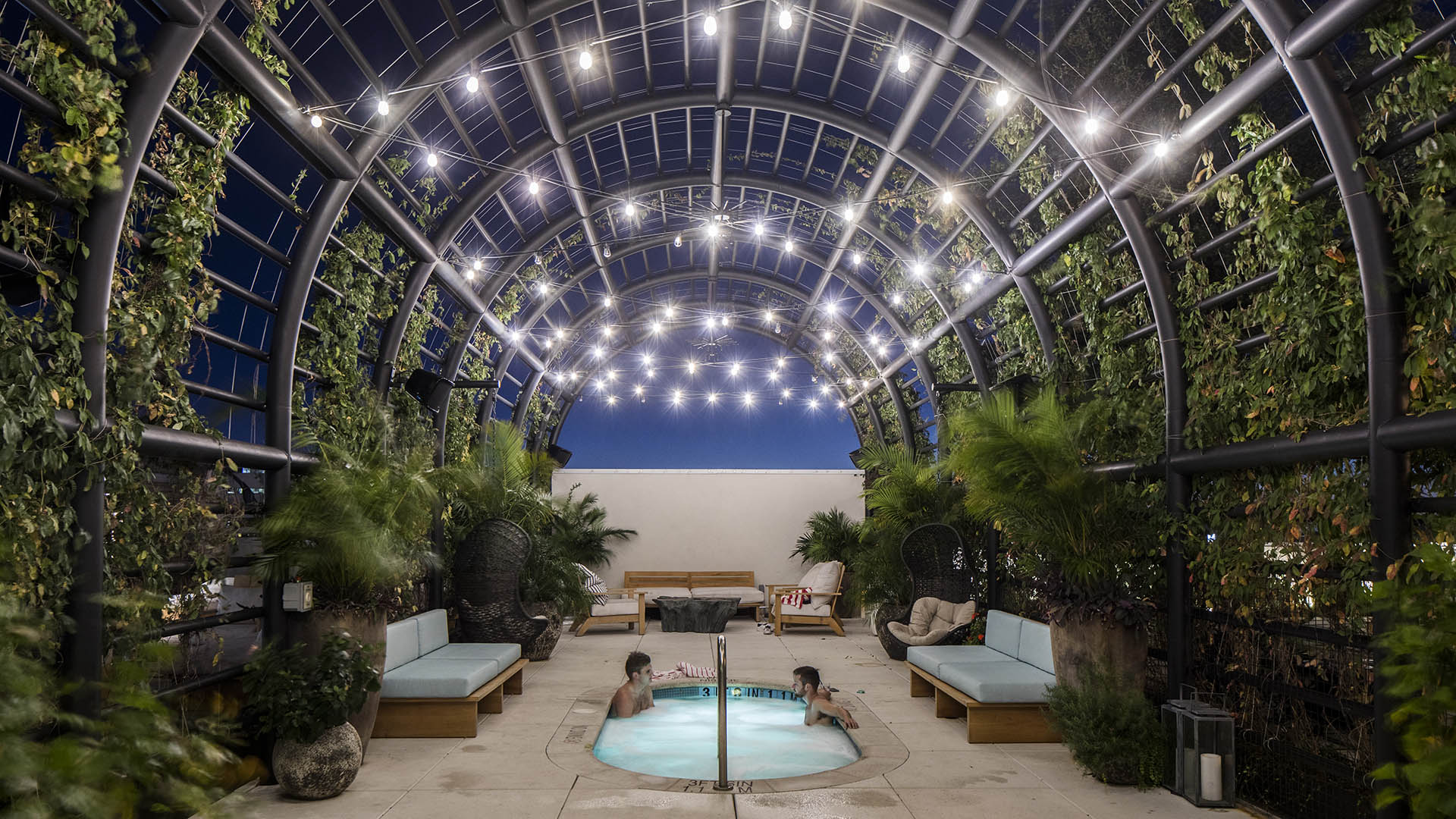
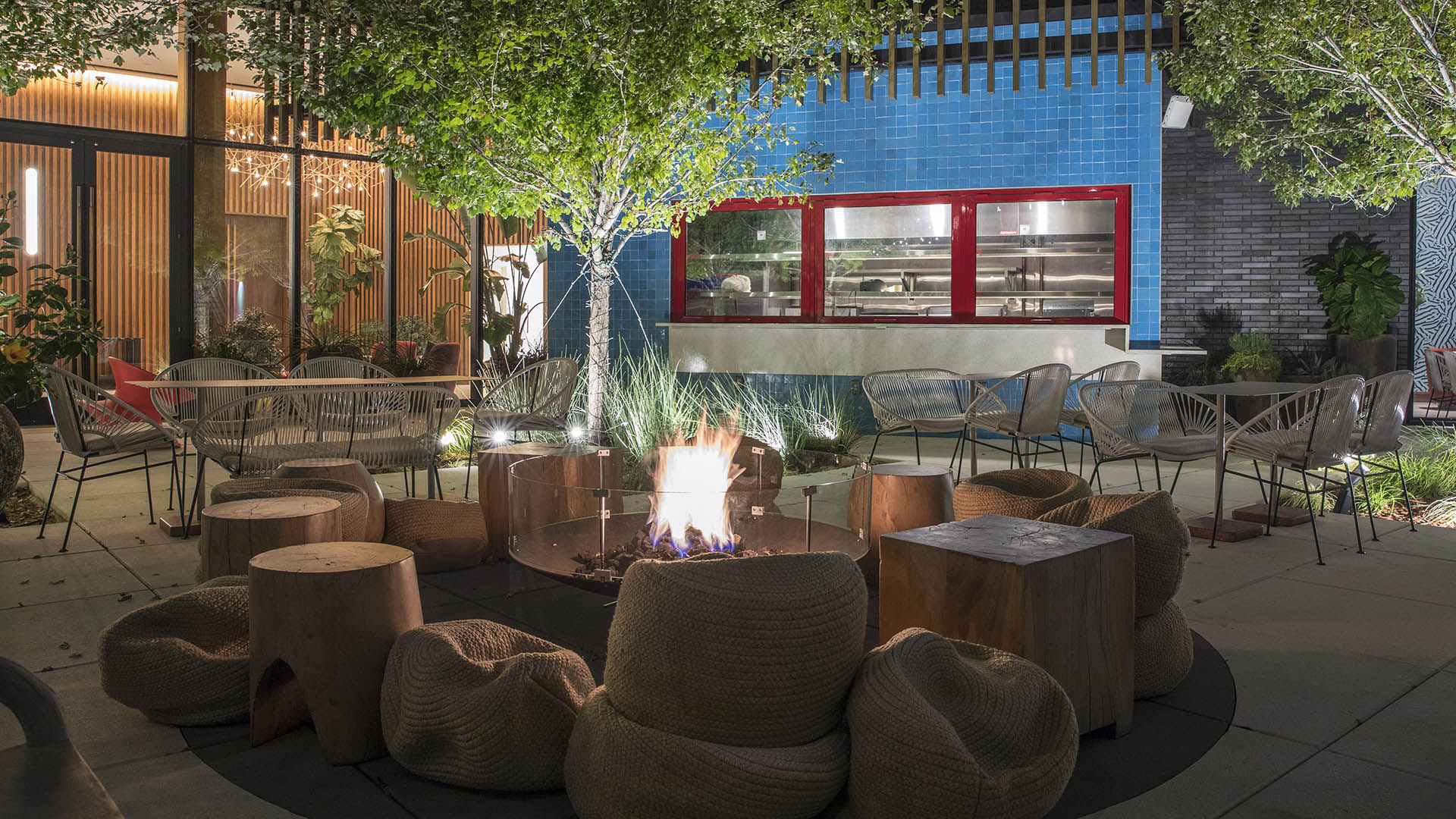
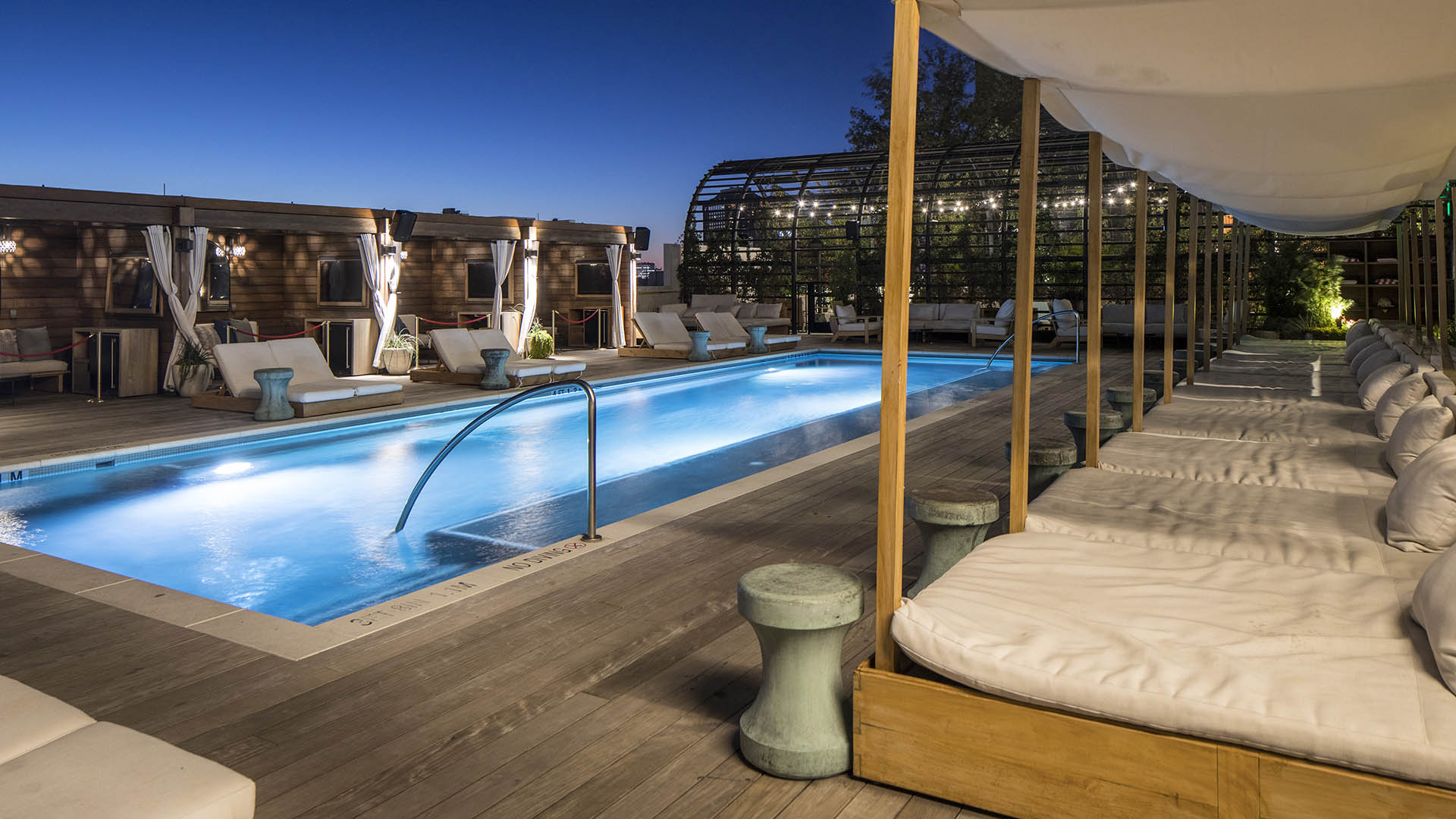
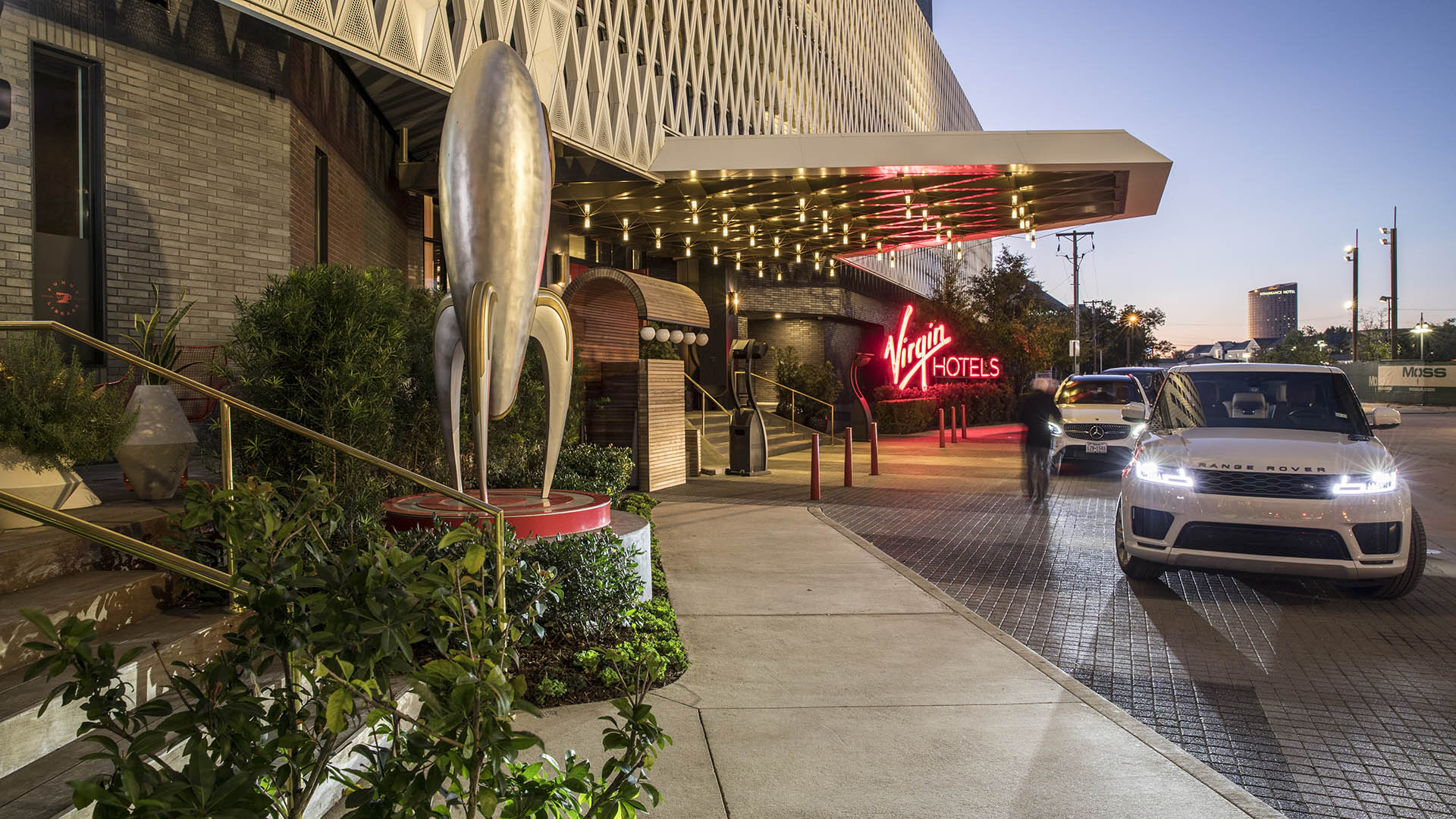
The Virgin Hotel Dallas is a boutique hotel appropriately set within the city’s design district, carrying forward Virgin’s high standards of distinctive, comfortable luxury programs and experiences for guests. SWA worked with the architecture and interior design team to propose a modern spin on an urban hotel constrained by an extremely small site. Fronting Hi-Line Drive, the hotel’s entry and streetscape, along with series of public art and artistic street furniture, serve as bold movements to attract locals. Transitions between hardscape materials help to define spaces for different programs. Trees and landscape soften the diamond pattern façade, and provide a buffer from the street. Preserved site trees not only provide shaded canopy for the outdoor coffee house, but also inherit the history and memory of the site.
Marriott Marquis Hotel
The Houston Marriott Marquis Hotel takes advantage of its proximity to Discovery Green Park and the George R. Brown Convention Center with a distinctive arrival court, pedestrian-friendly streetscape, and clear connections to the Avenida de Las Americas and the new light rail station on Rusk Street. The SWA-designed 6th-floor amenity deck overlooks ...
JW Marriott Charlotte
The JW Marriott Charlotte, developed by White Lodging and designed by HKS, is a striking 21-story luxury hotel that redefines modern elegance in a prime downtown setting. This urban mixed-use hotel seamlessly integrates sophisticated design elements throughout every space. The 7,500-square-foot amenity deck is a true designer’s vision, featuring custom tile mo...
W Hotel Palm Dubai
Positioned on the outer ring of Palm Jumeirah, the W Hotel and neighboring residential towers celebrate the contrasting views to the city’s urban skyline in one direction… and to the infinite sea horizon in the other. These contrasting views droves the form and texture of design elements throughout the property, exemplified by the juxtaposition of geomet...
Beverly Hills Hotel
Serving as the symbolic heart of the City of Beverly Hills, the Beverly Hills Hotel is synonymous with its gardens. After 80 years of high use, the hotel needed complete rebuilding and modernization. The goal of the reconstruction was to preserve and restore the historic gardens while adding new public and private outdoor spaces around the southern and western...