

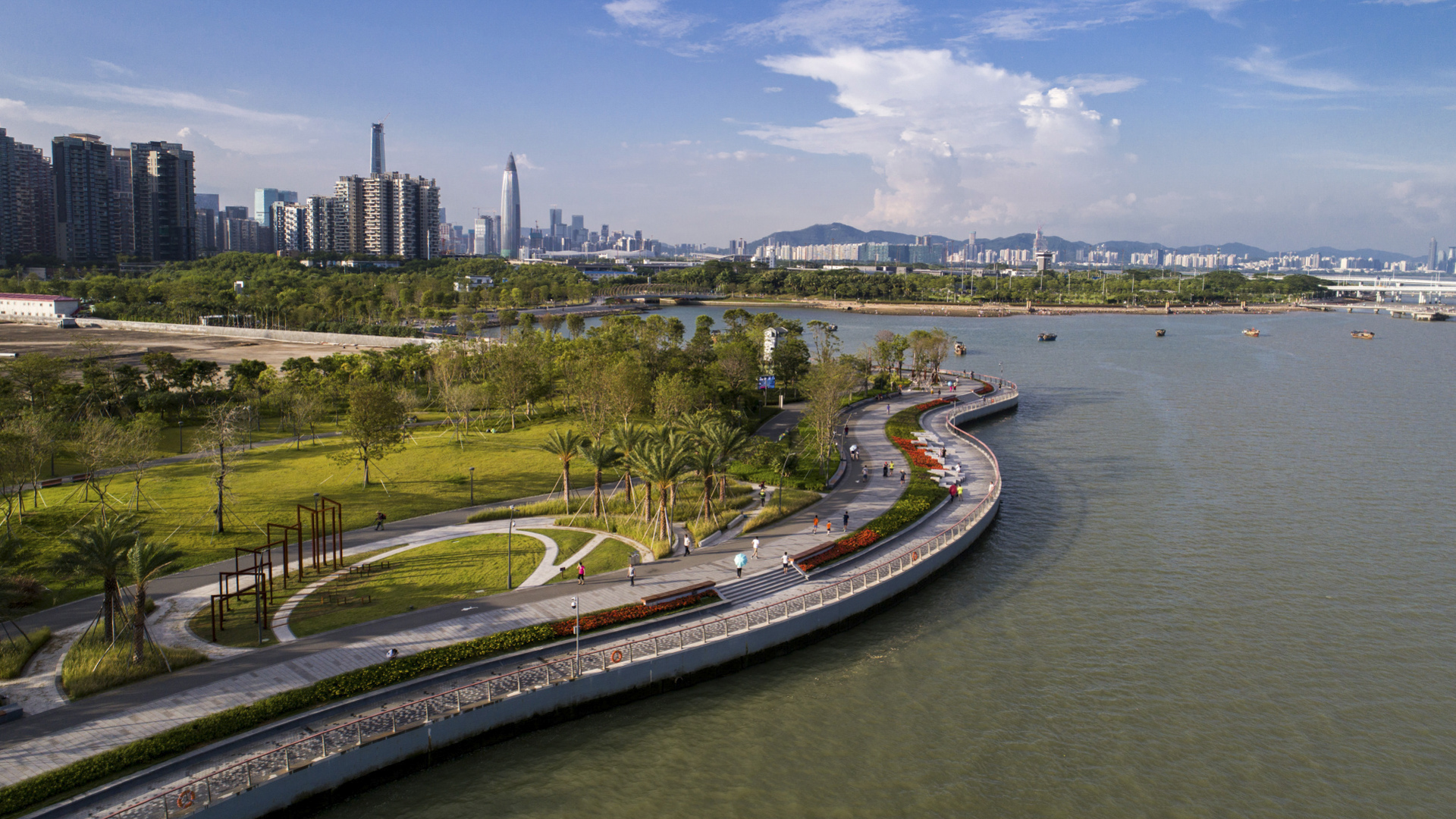
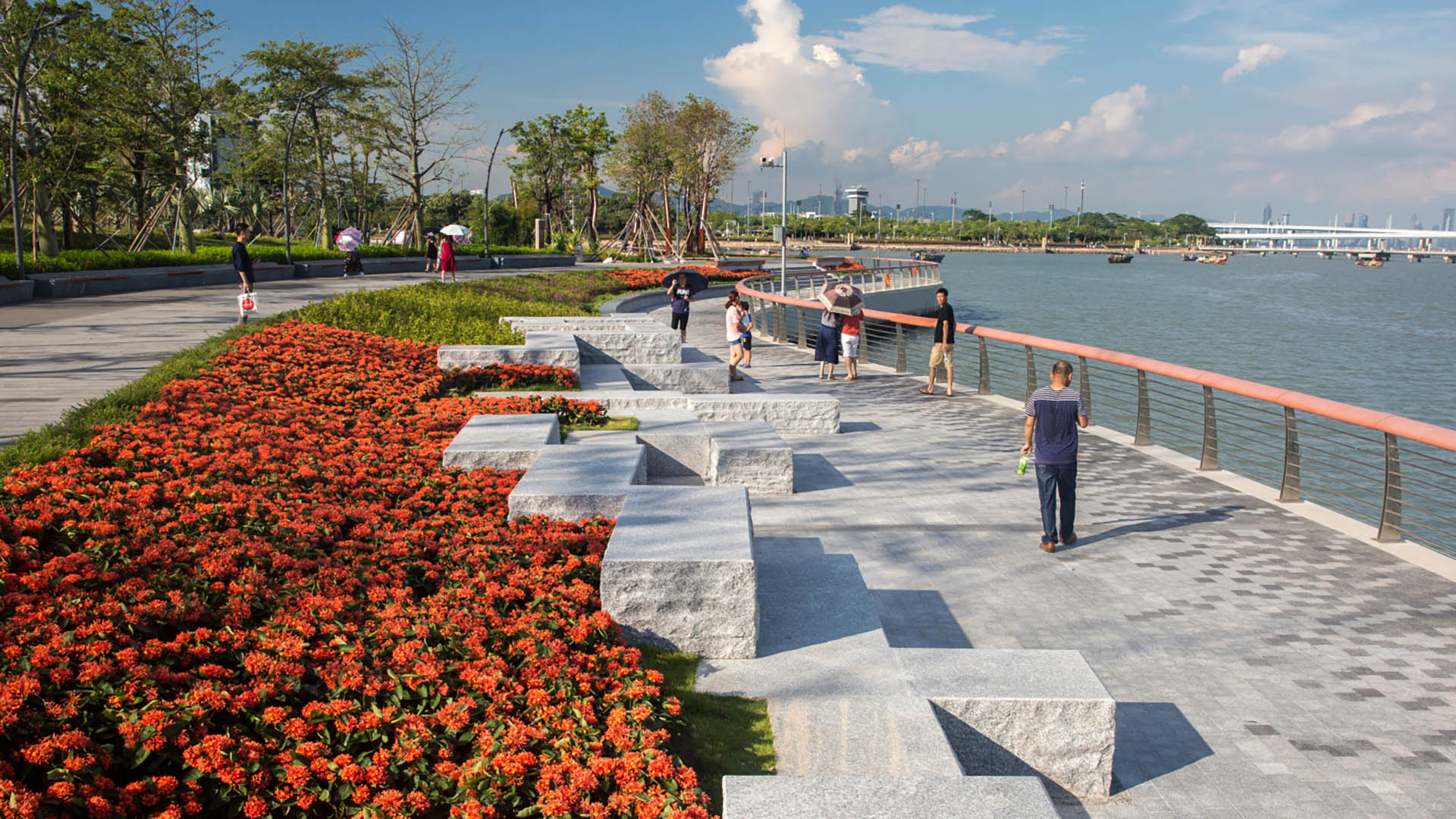
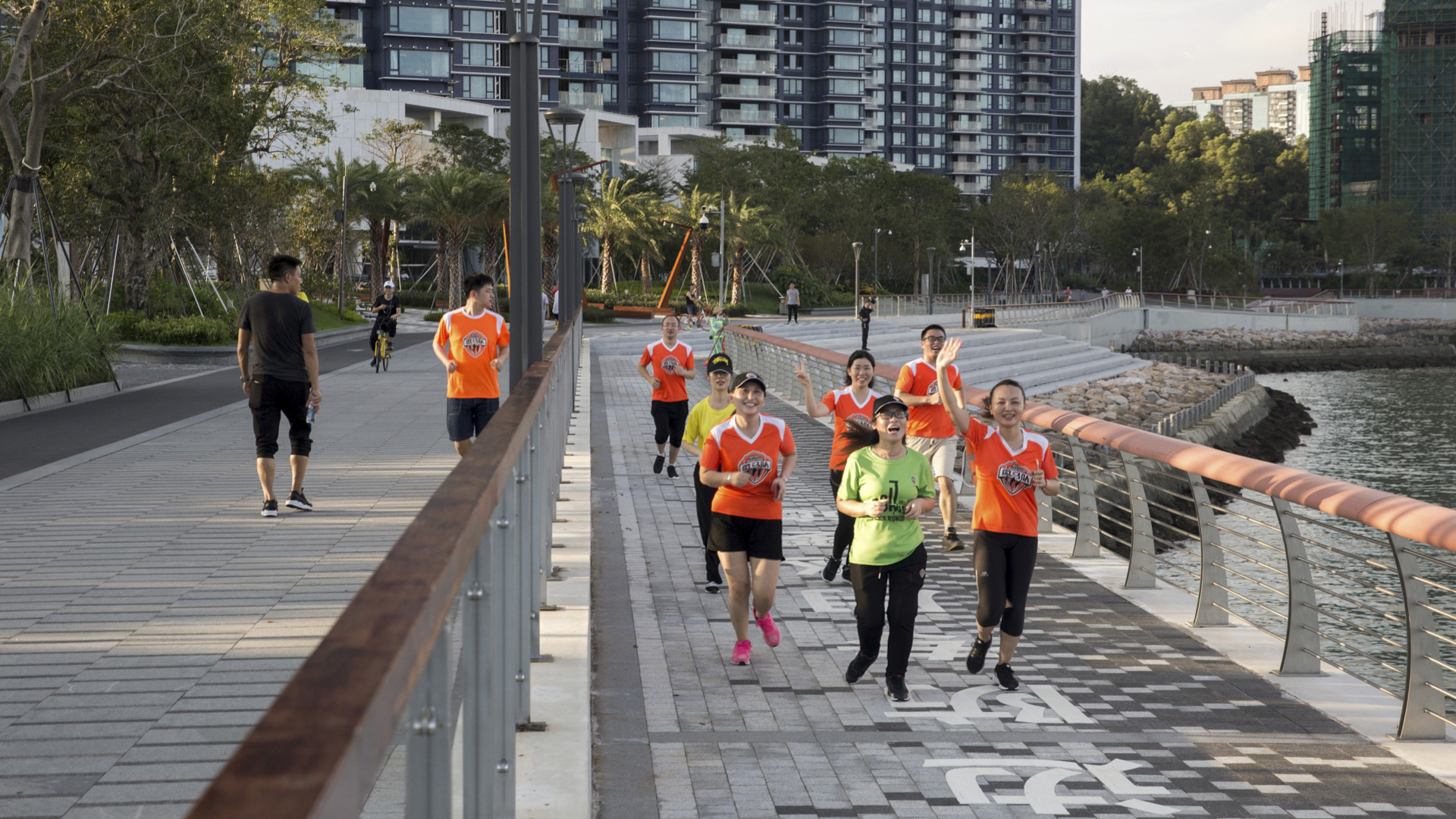
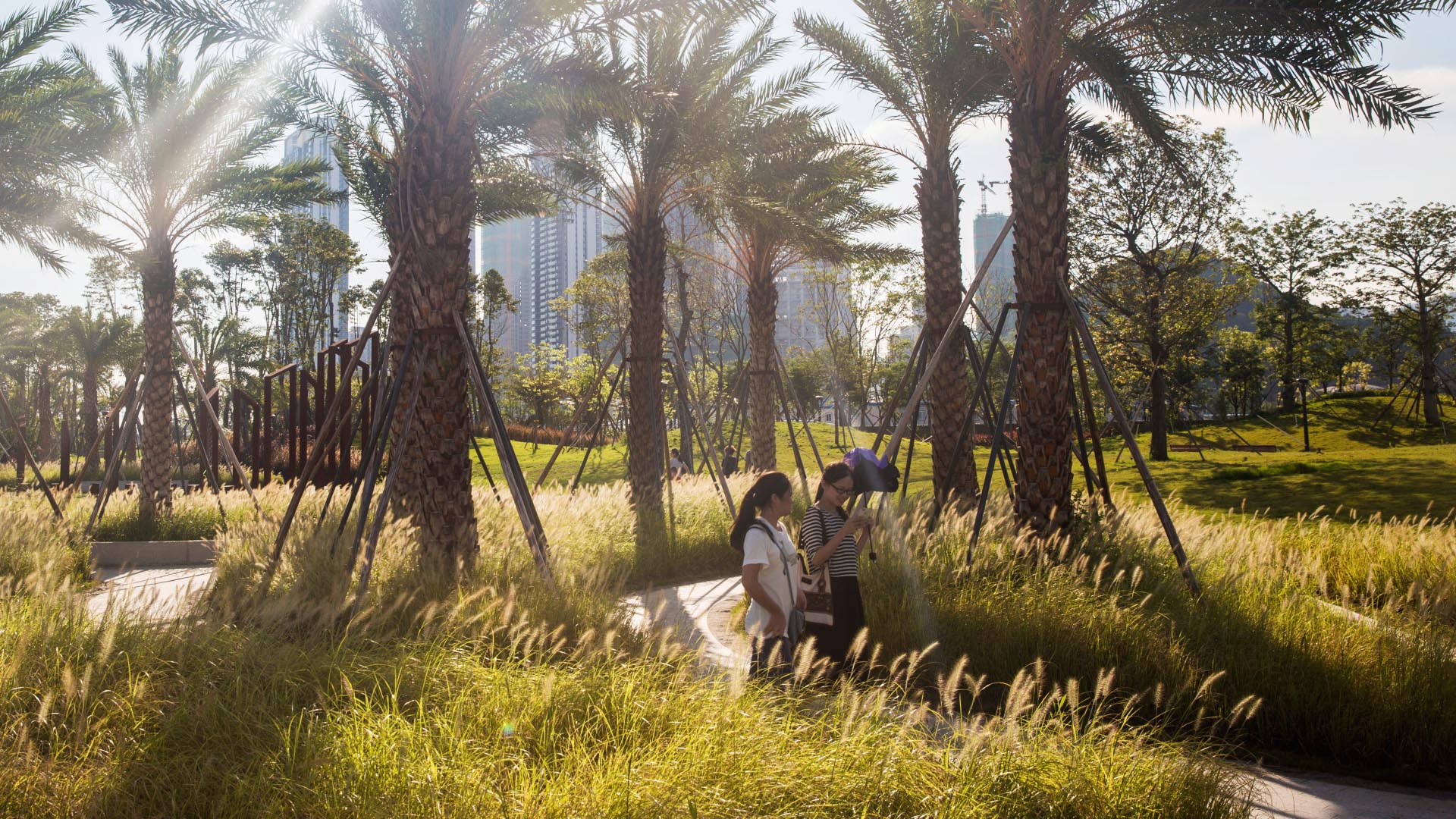
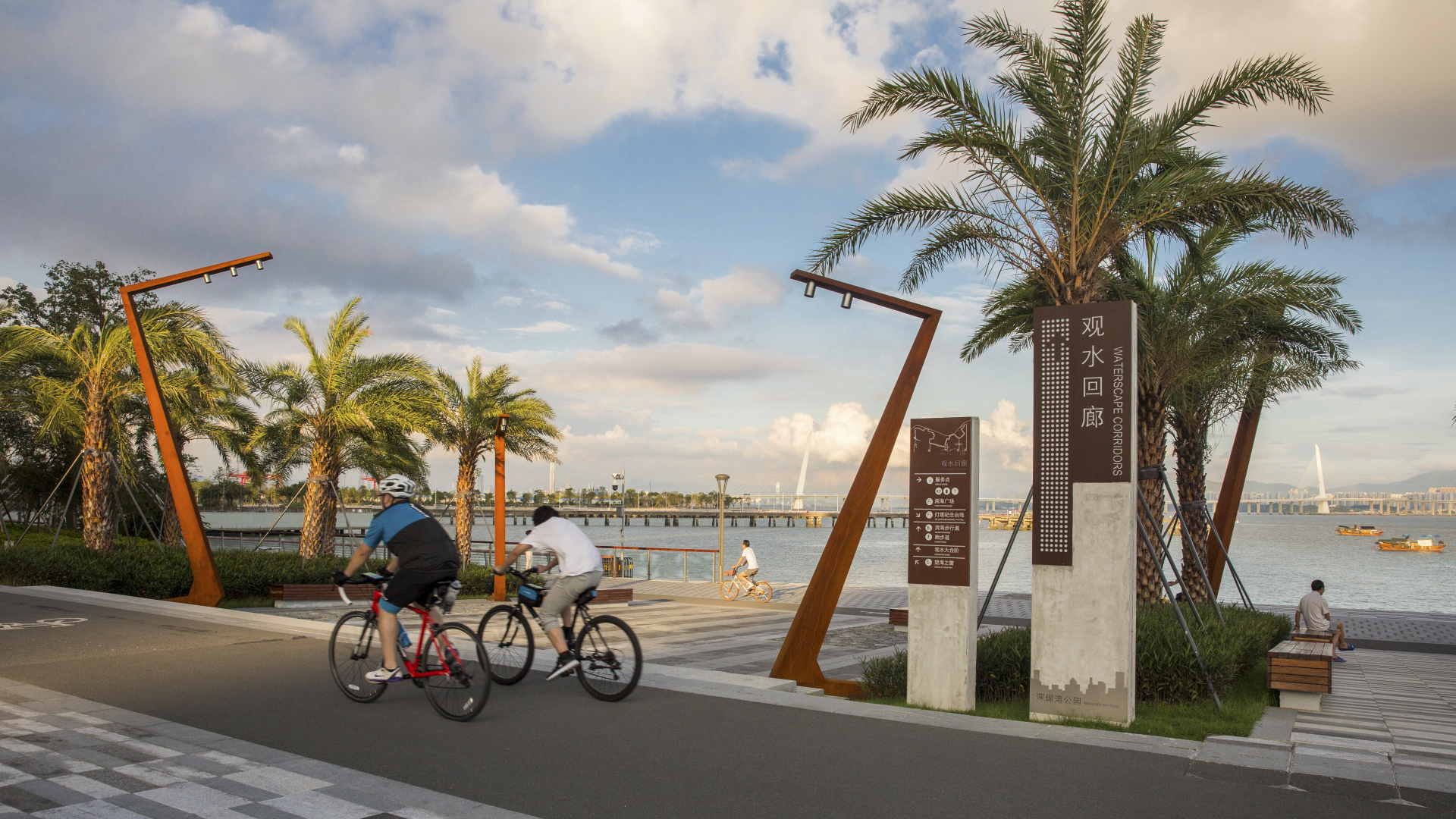
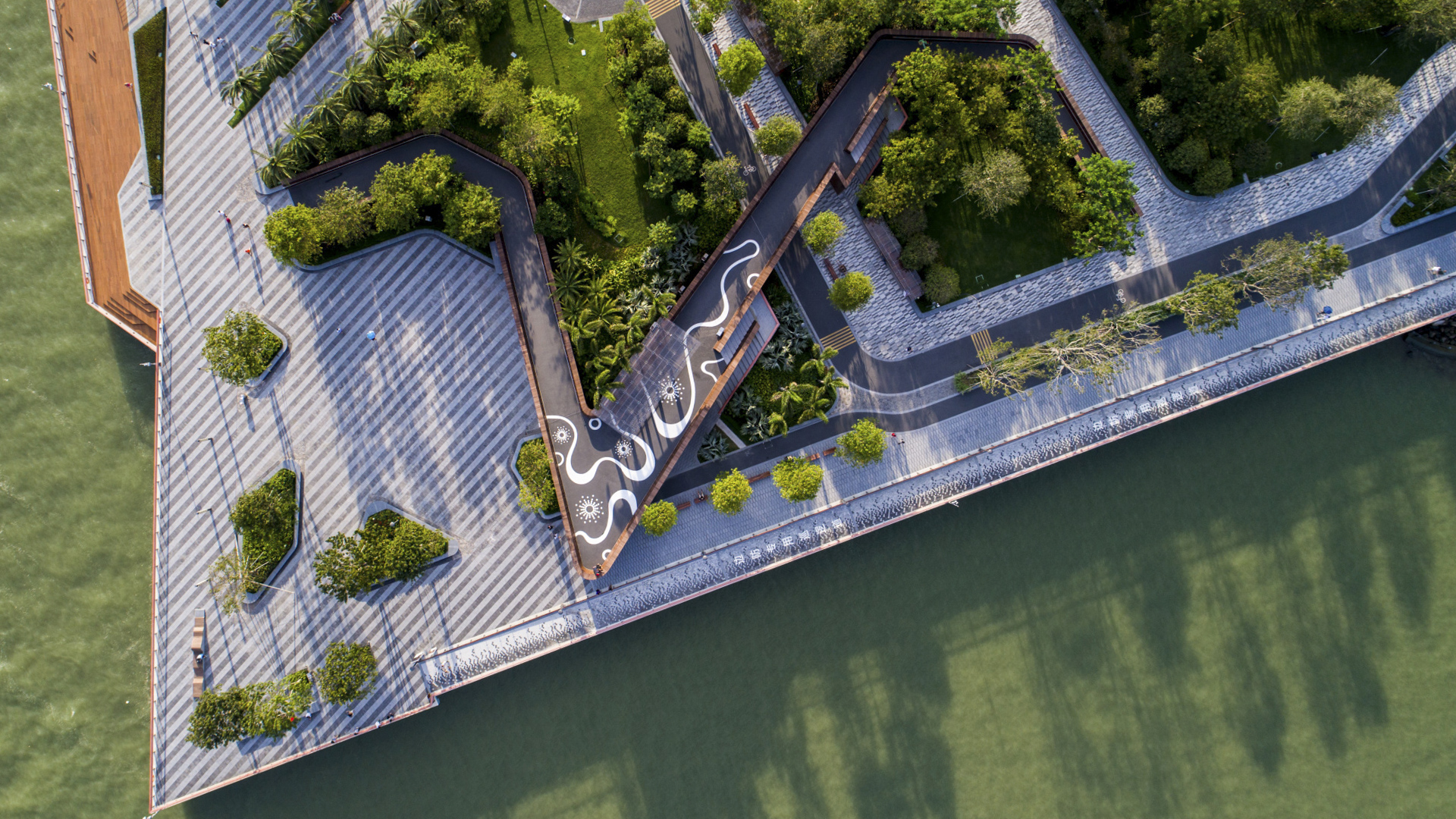
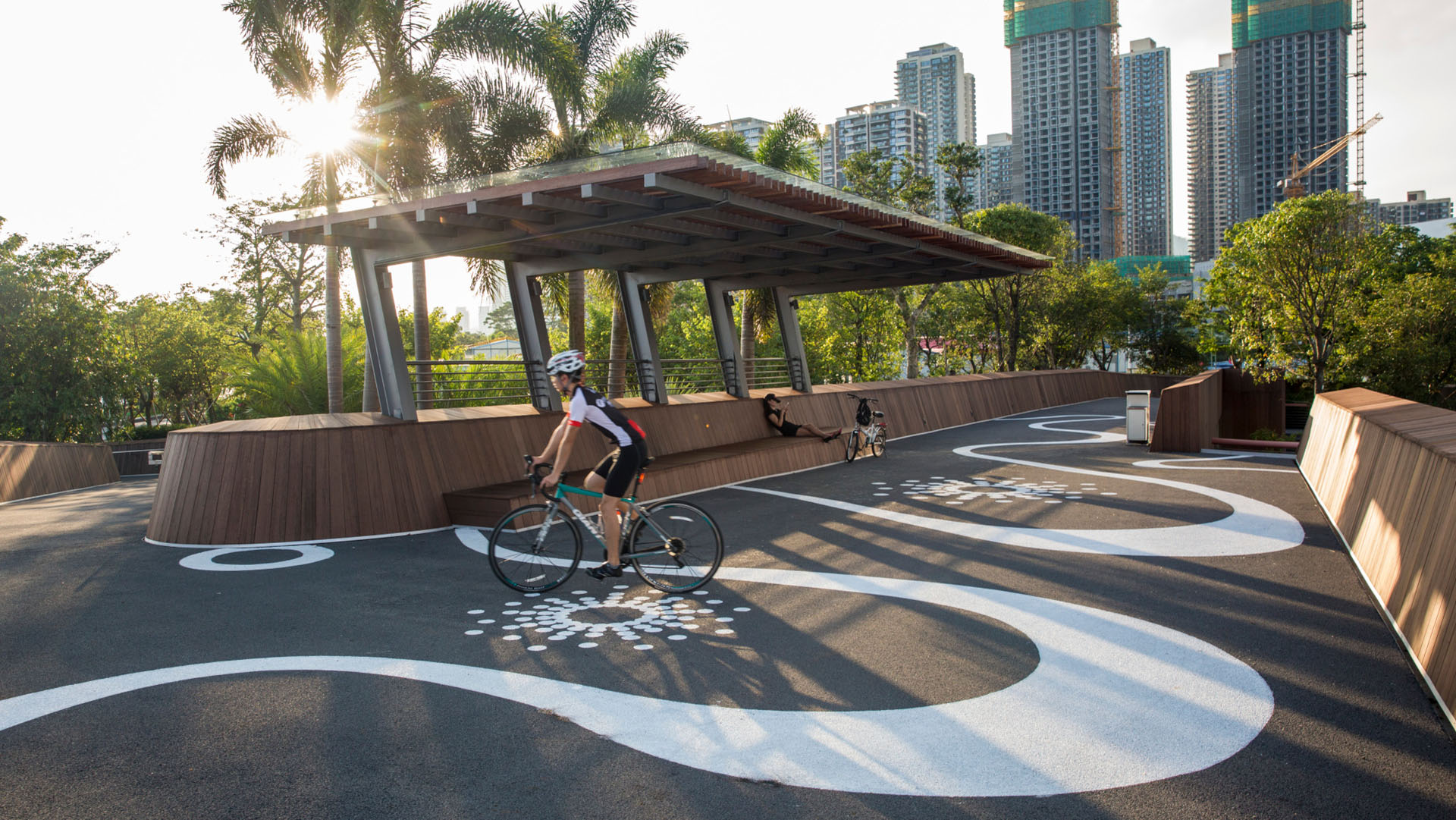
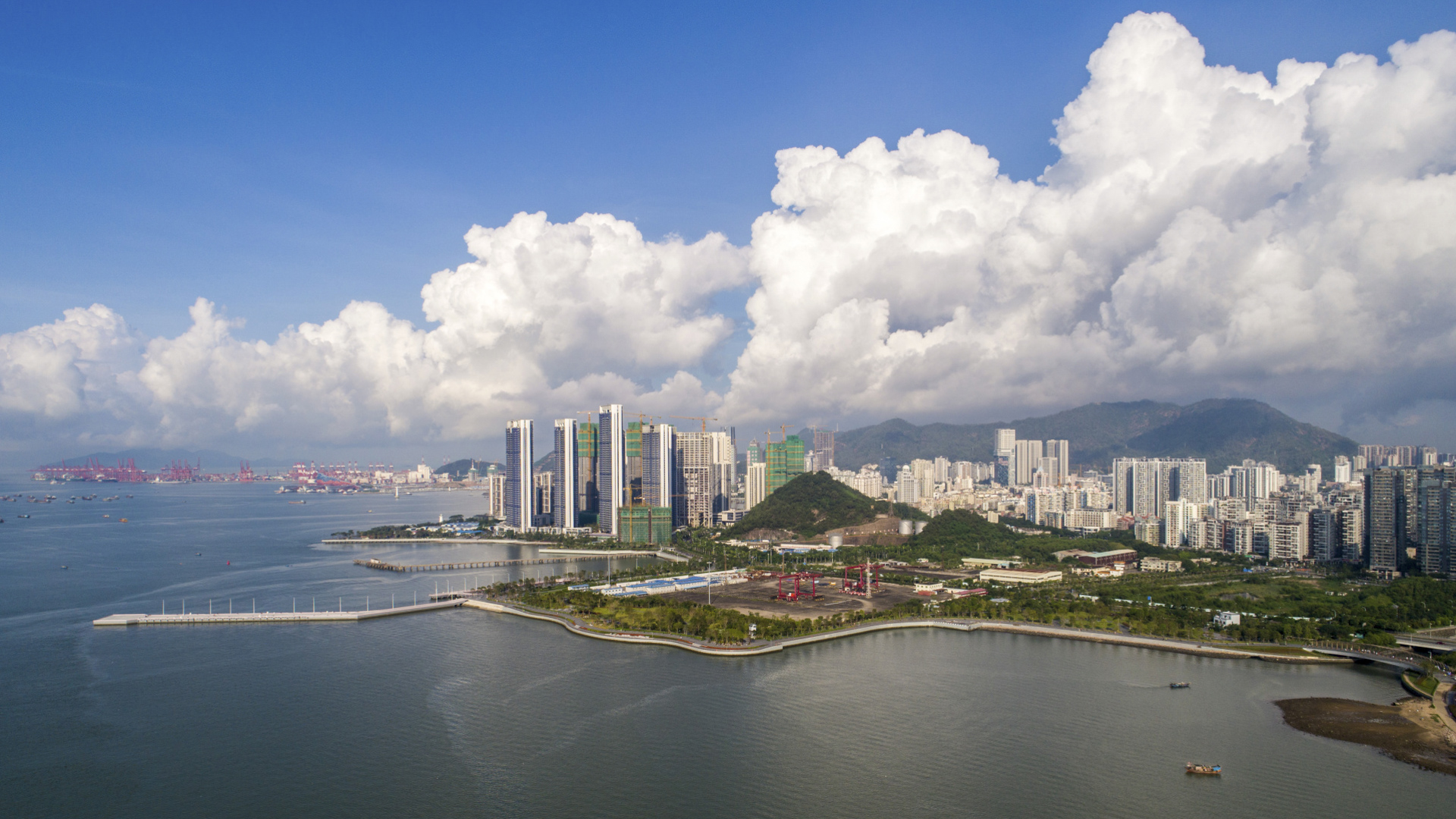
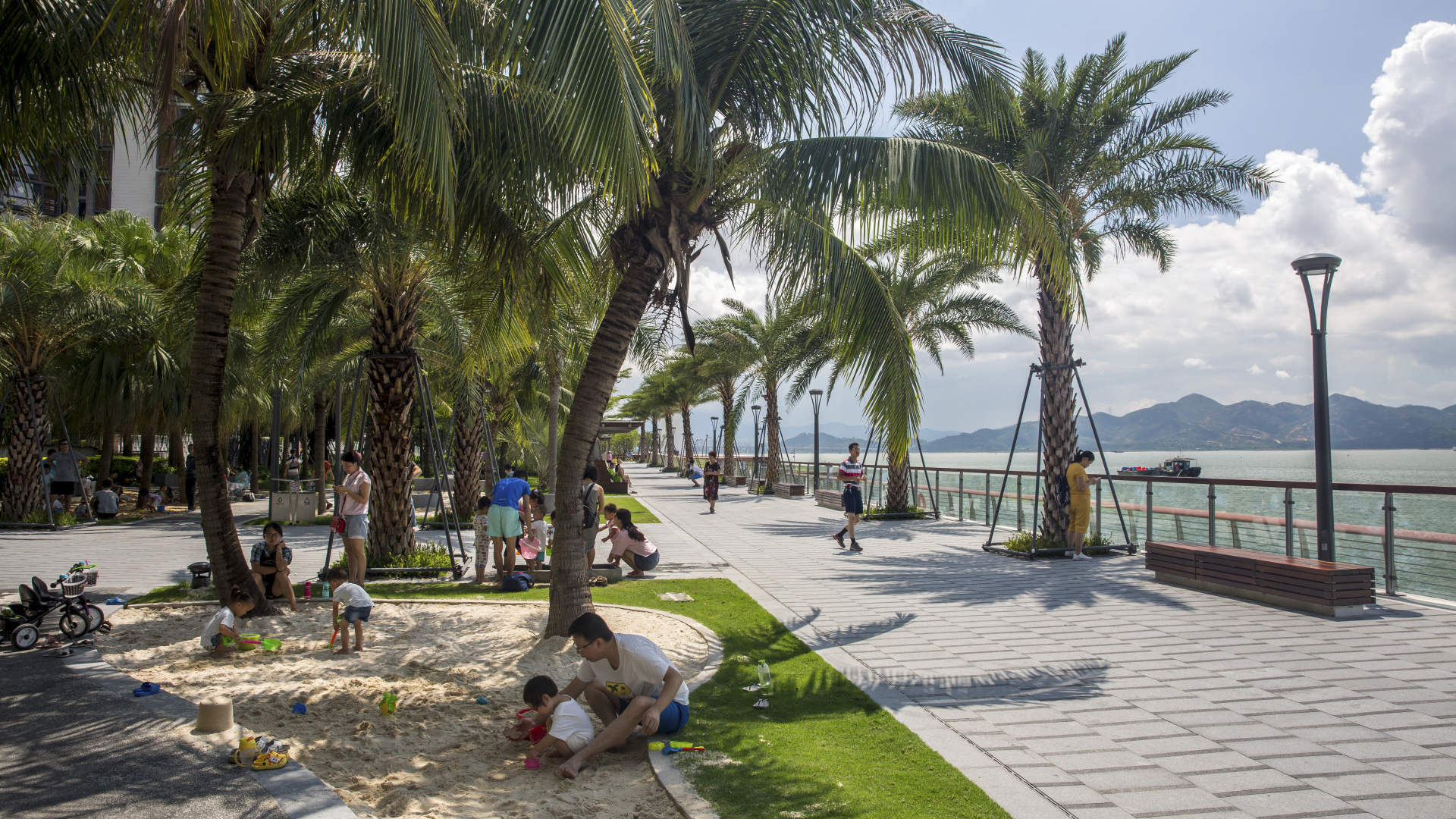
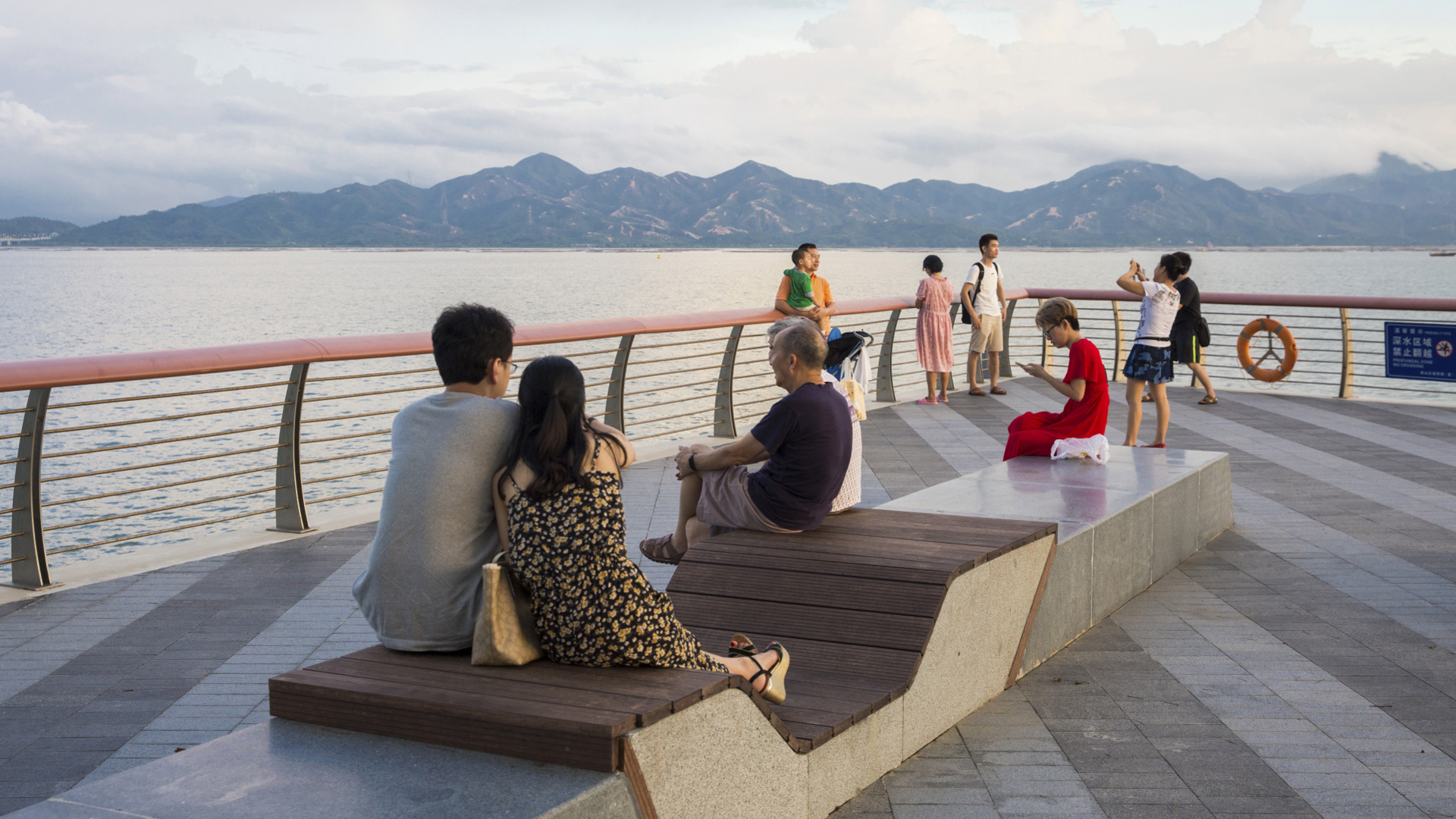
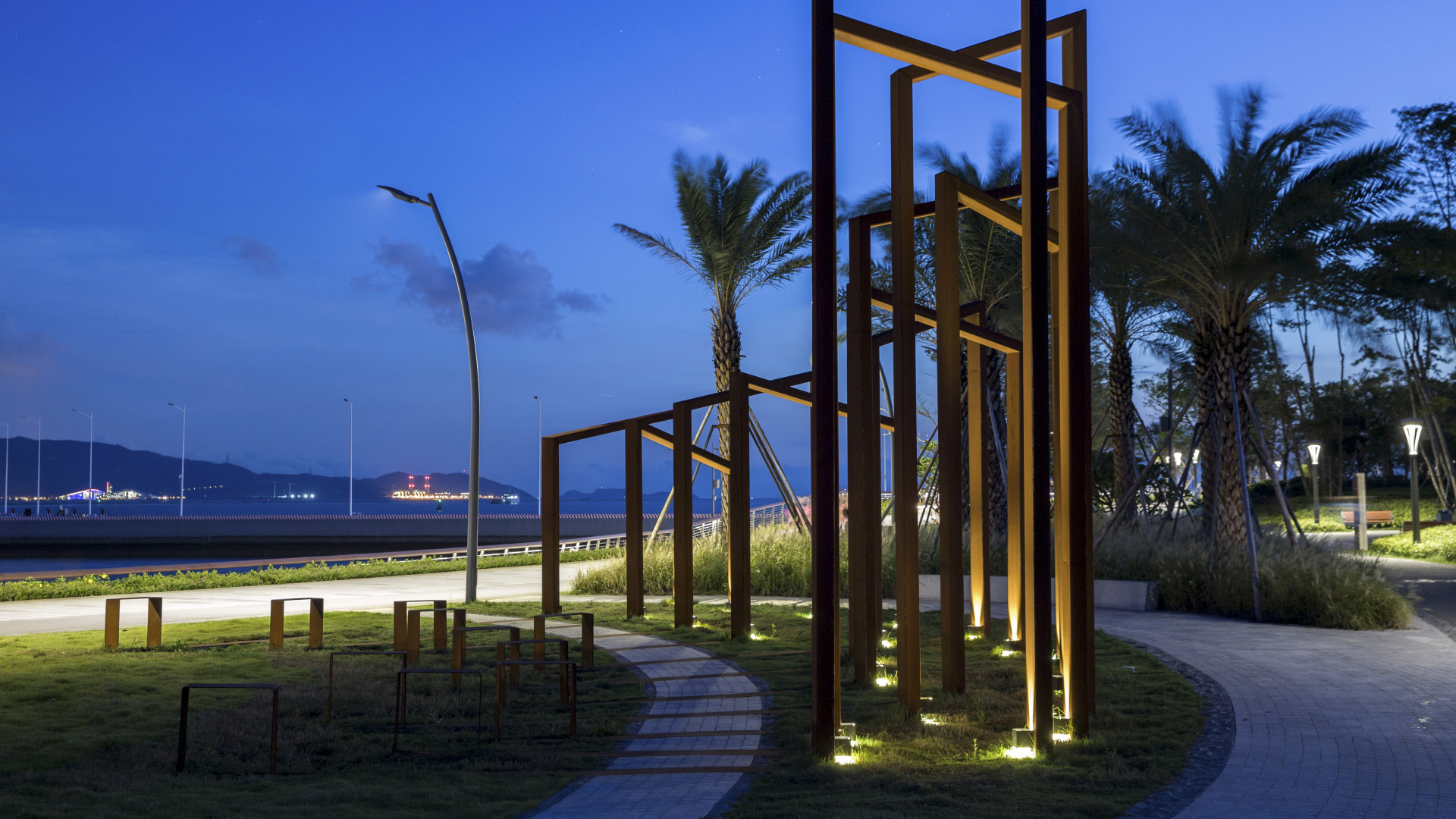
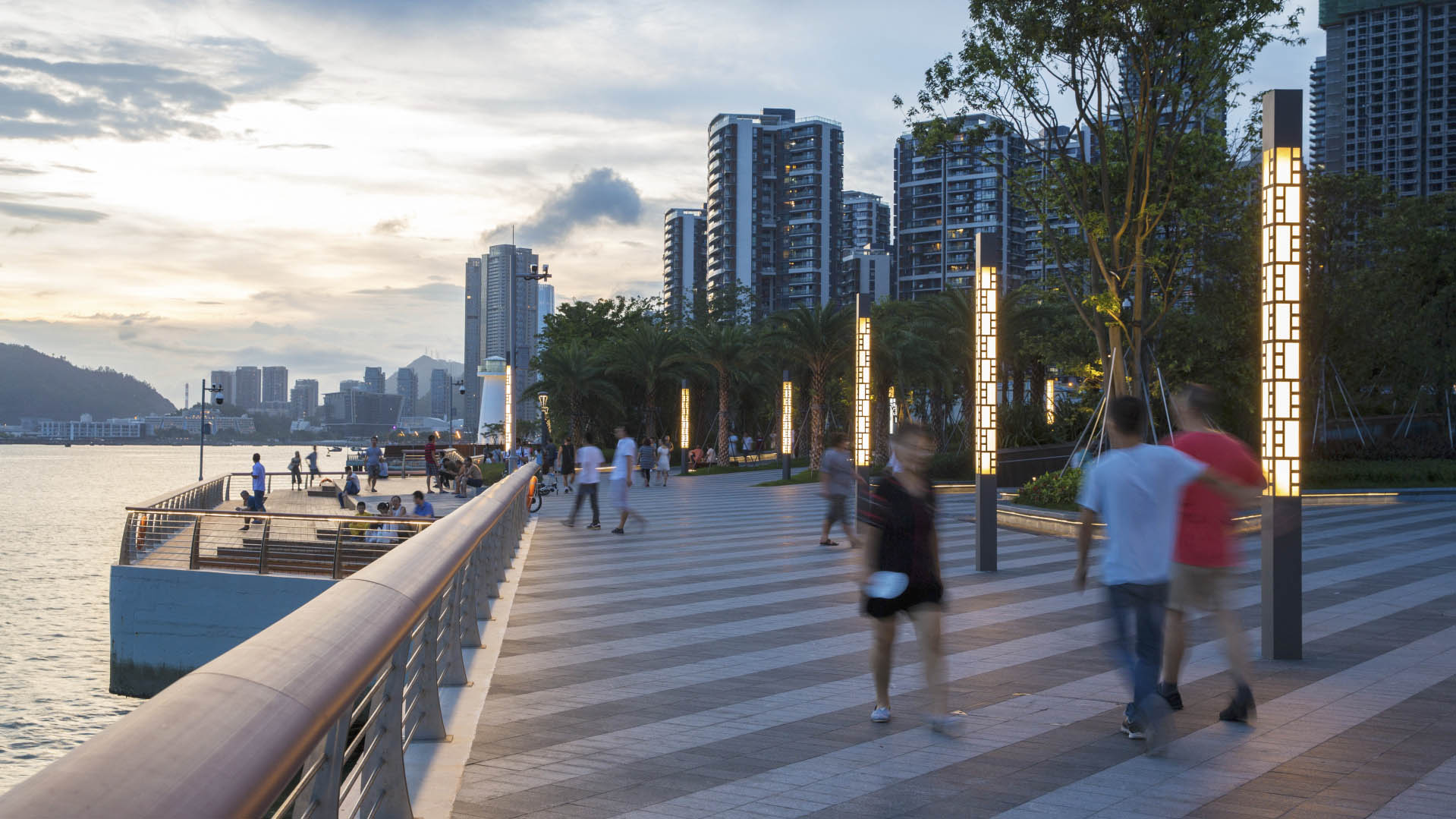

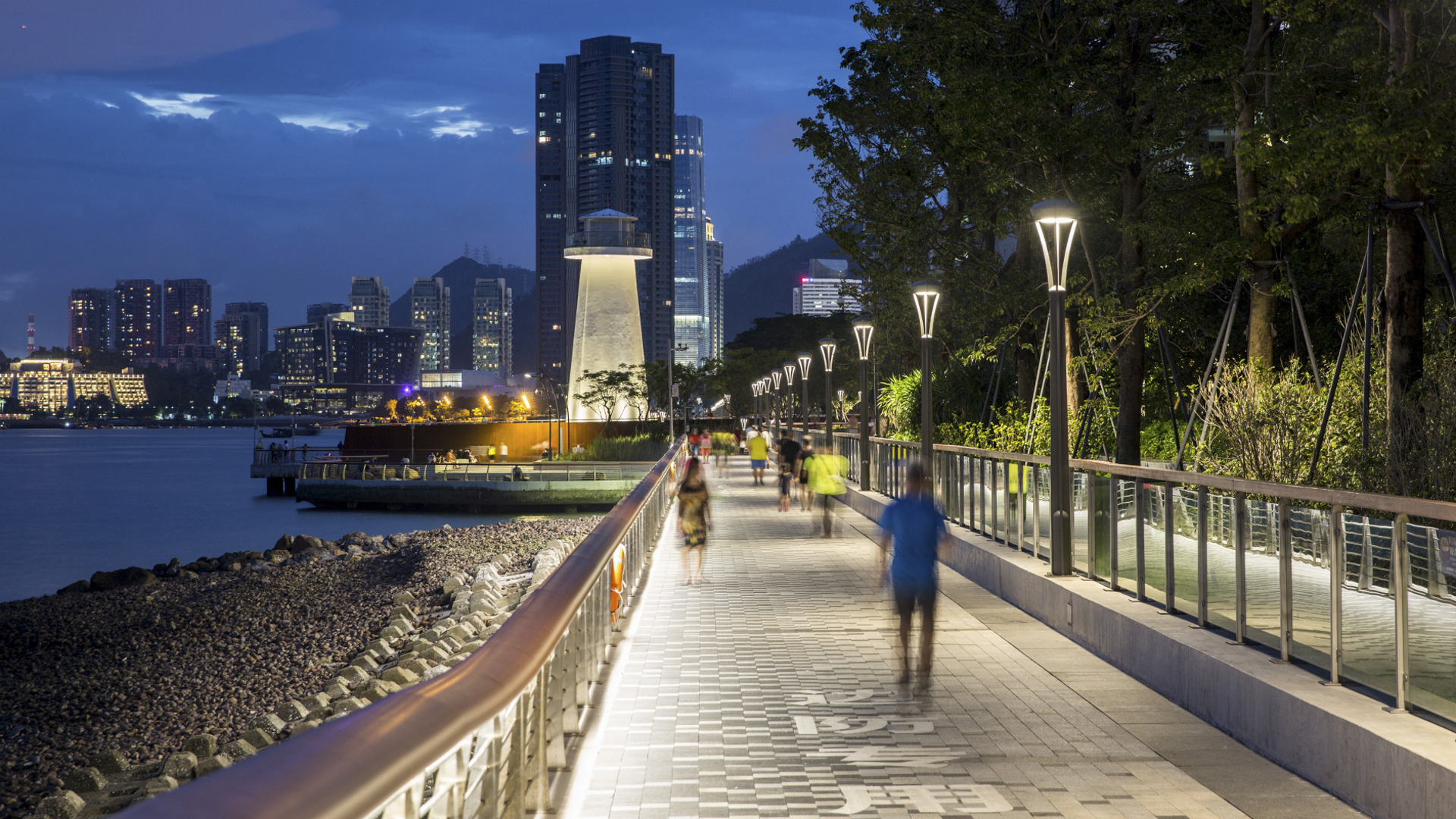
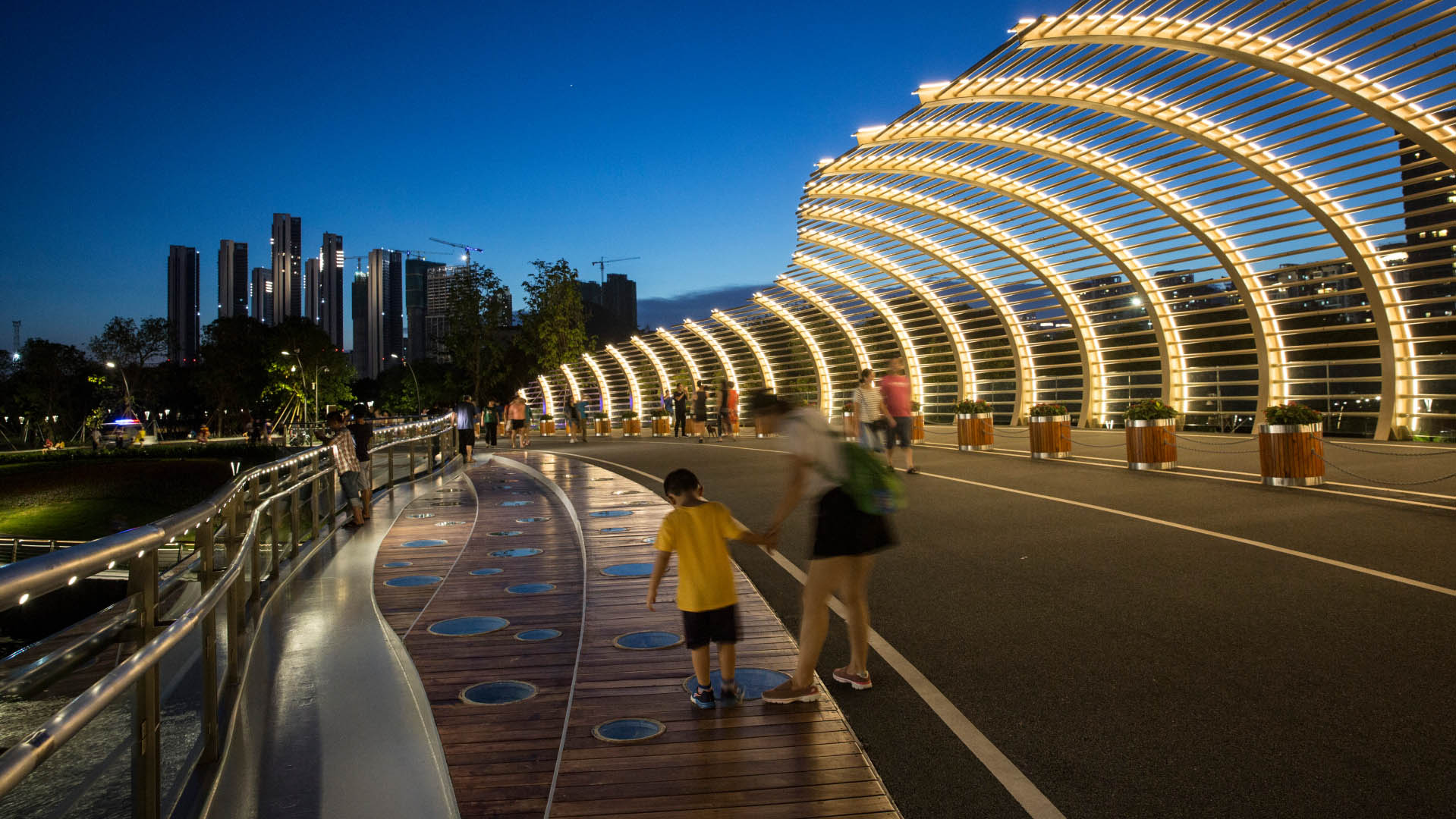
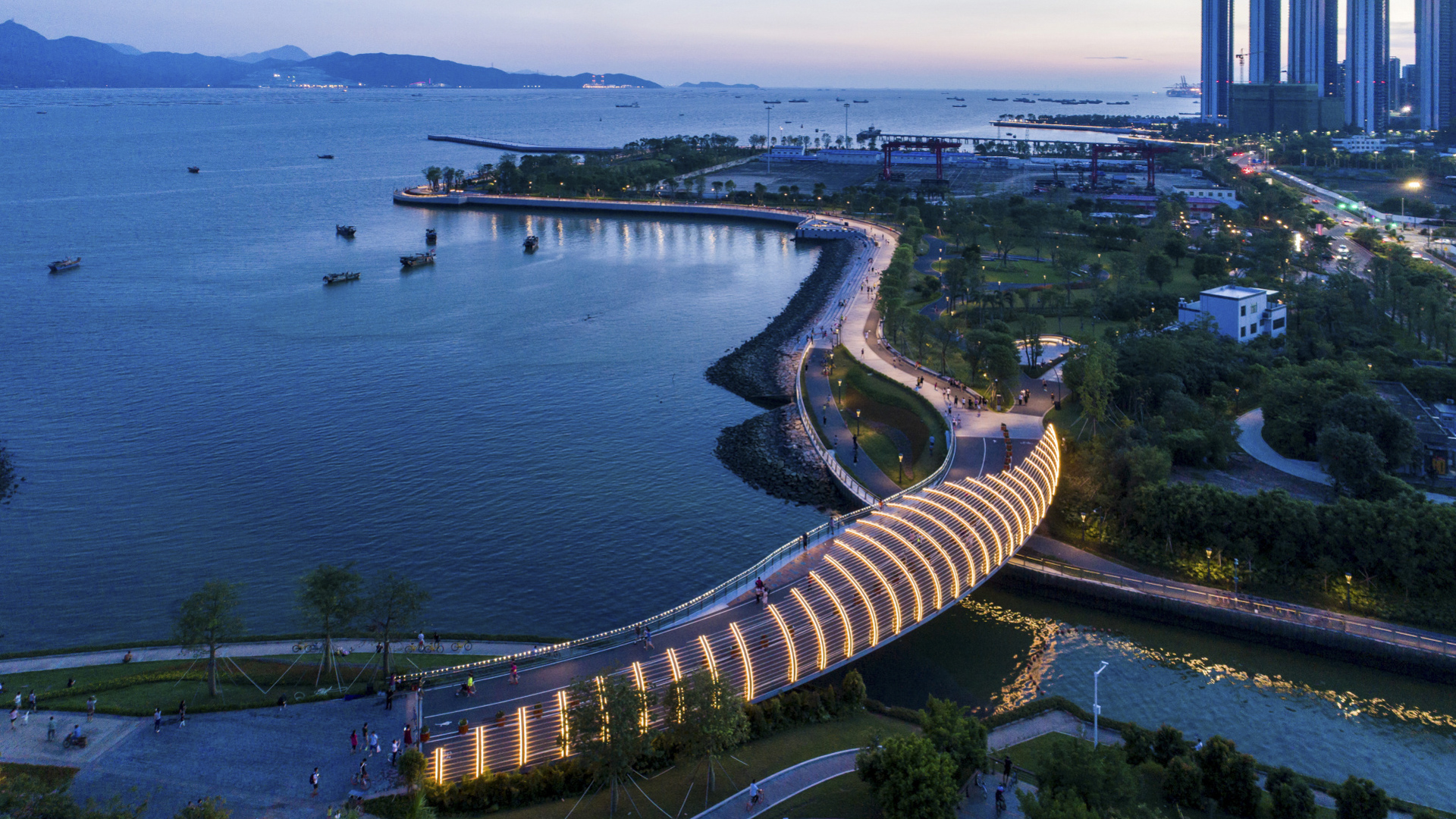
A gateway for China’s open-door policy, Shekou has revitalized its fragmented and hazardous coastline into a dynamic six-kilometer promenade that masterfully captures the area’s cultural and natural essence.
The promenade repurposes the disconnected former industrial waterfront into a celebrated open space system with new recreation programs and culturally enriched landscape spaces infused with Shekou’s authentic character. The redesign caters to visitors of all ages, offering amenities such as nursing rooms, shaded rest spots, and engaging playgrounds. Imaginative ‘mountains,’ undulating landforms, waterfront plazas, native gardens, and versatile trails harmoniously coexist with the existing fishing facilities. The repurposed Shekou lighthouse, now a captivating focal point of the Memorial Terrace, is embraced by a leisure terrace, an urban tidal pool, and carefully selected native plantings. Together, these elements create a unique environment that serves as a living tribute to Shekou’s past, present, and future.
While much of China’s past has been obscured by contemporary development, Shekou’s waterfront stands as a thriving mixed-use urban core that showcases the region’s rich industrial and natural heritage.
Xiqu Opera Centre
After it was decided to locate the main concert venue on the building’s top floor to create a covered indoor/outdoor public realm, SWA designed the entire ground level of this venue for traditional Cantonese opera, including a dramatic, covered open-air landscape space. There, an urban stage facilitates movement, provides a gathering space, and enhances ...
Litou Mountain Park
Within Guanlan Forest, an ecological heart of Shenzhen, Litou Mountain Park takes inspiration from the clothing design and production processes of Dalang Fashion Town. The town is a future gathering destination for fashion’s rising talents and a center for art. Blending nature and textiles, the project situates the park at the front of the fashion fronti...
Nanhu New Country Village
China’s rapid urbanization over the past several decades has radically diminished its agricultural landscapes and labor force, focusing instead on industrial and technological advancements. The Nanhu New Country Village brings a contemporary approach to integrating agriculture and residences in a village setting, enhancing existing rural character, and improvi...
Stanford University Terman Park
The removal of an existing building adjacent to the center of Stanford’s campus provided a unique opportunity to fashion an interim park space. The project emphasizes reuse and seeks to utilize salvaged materials as well as the existing grading and fountain as key features of the park. As a multifunctional performance and recreational space, the project ...