


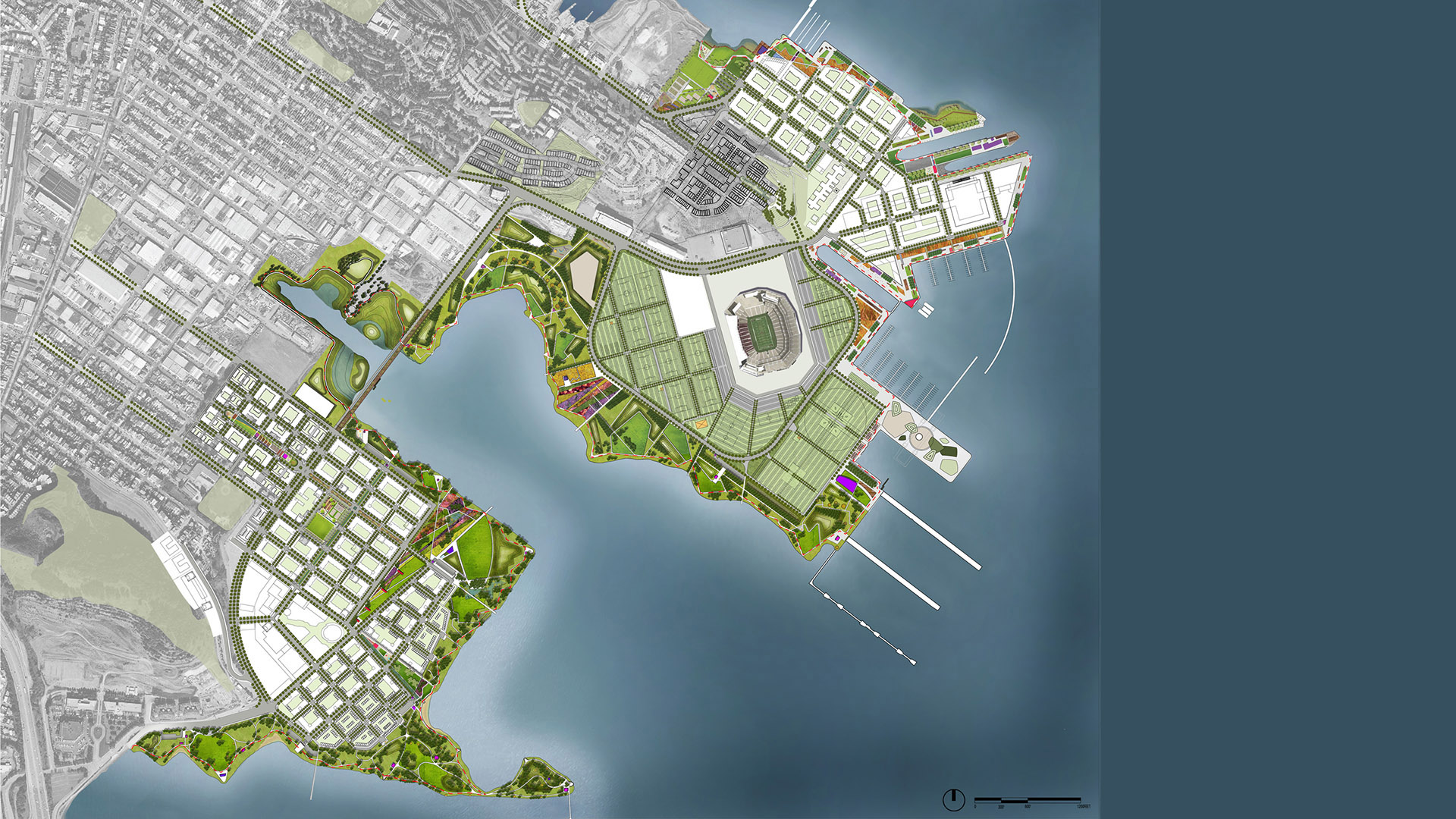
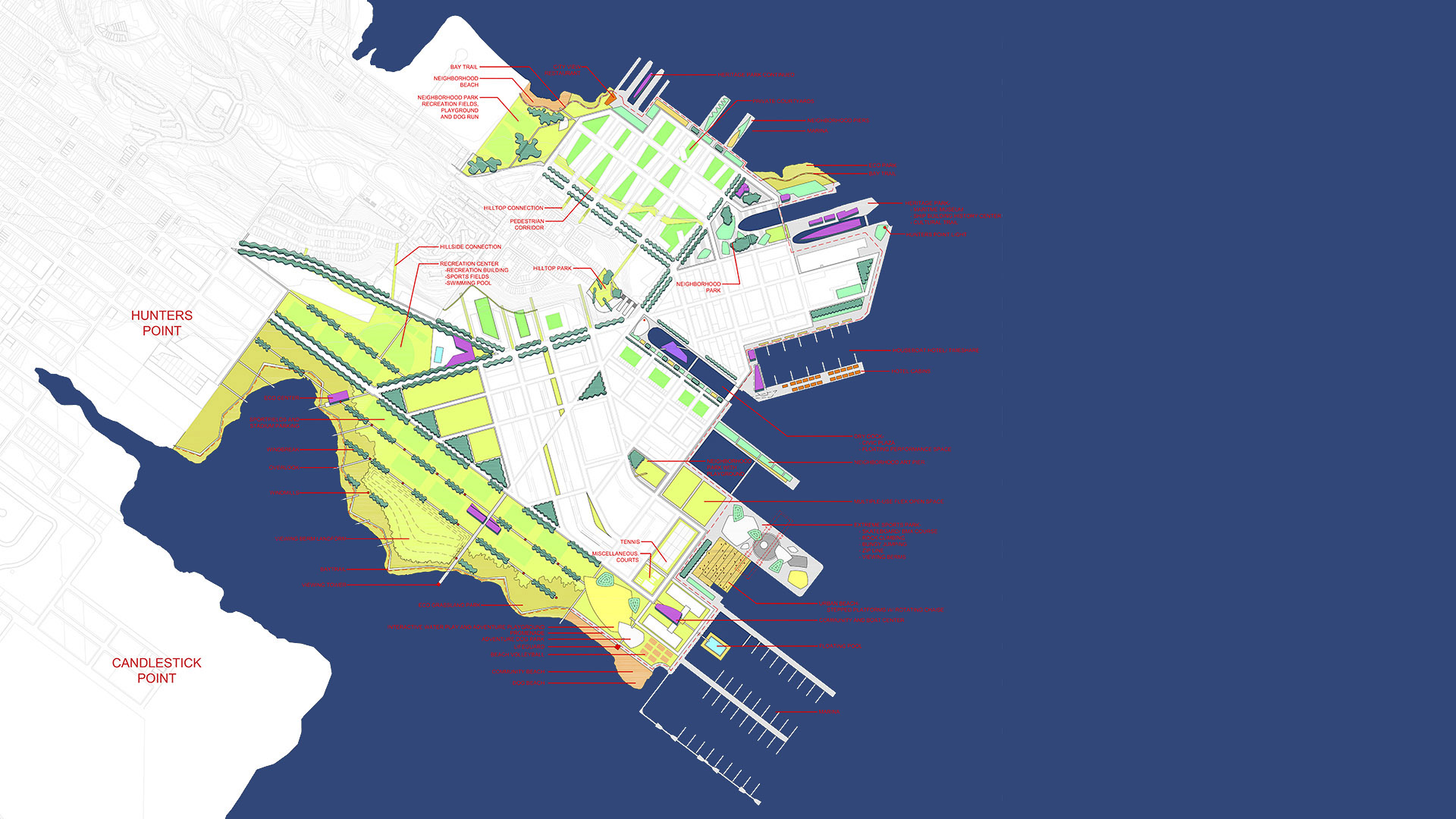
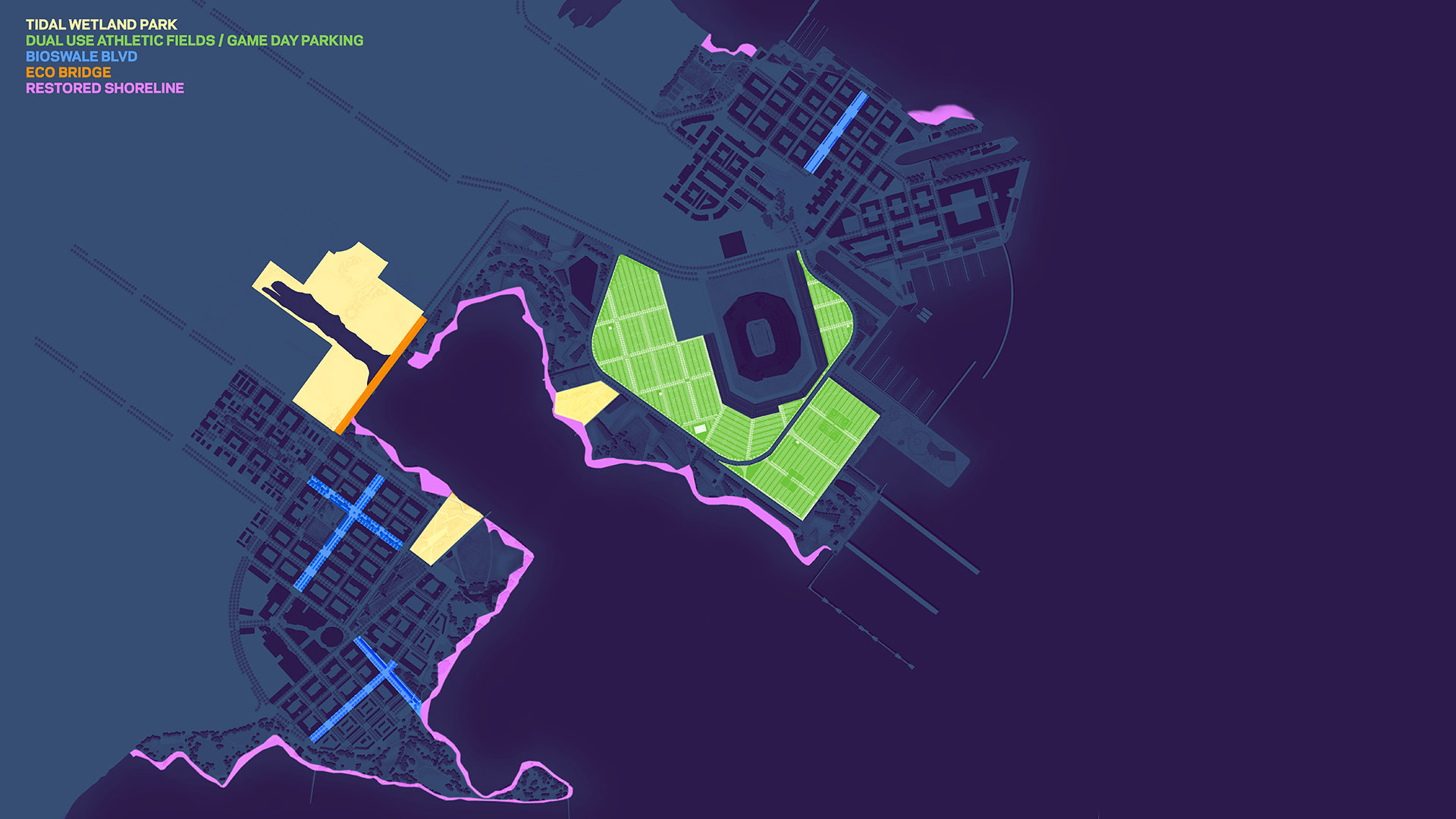

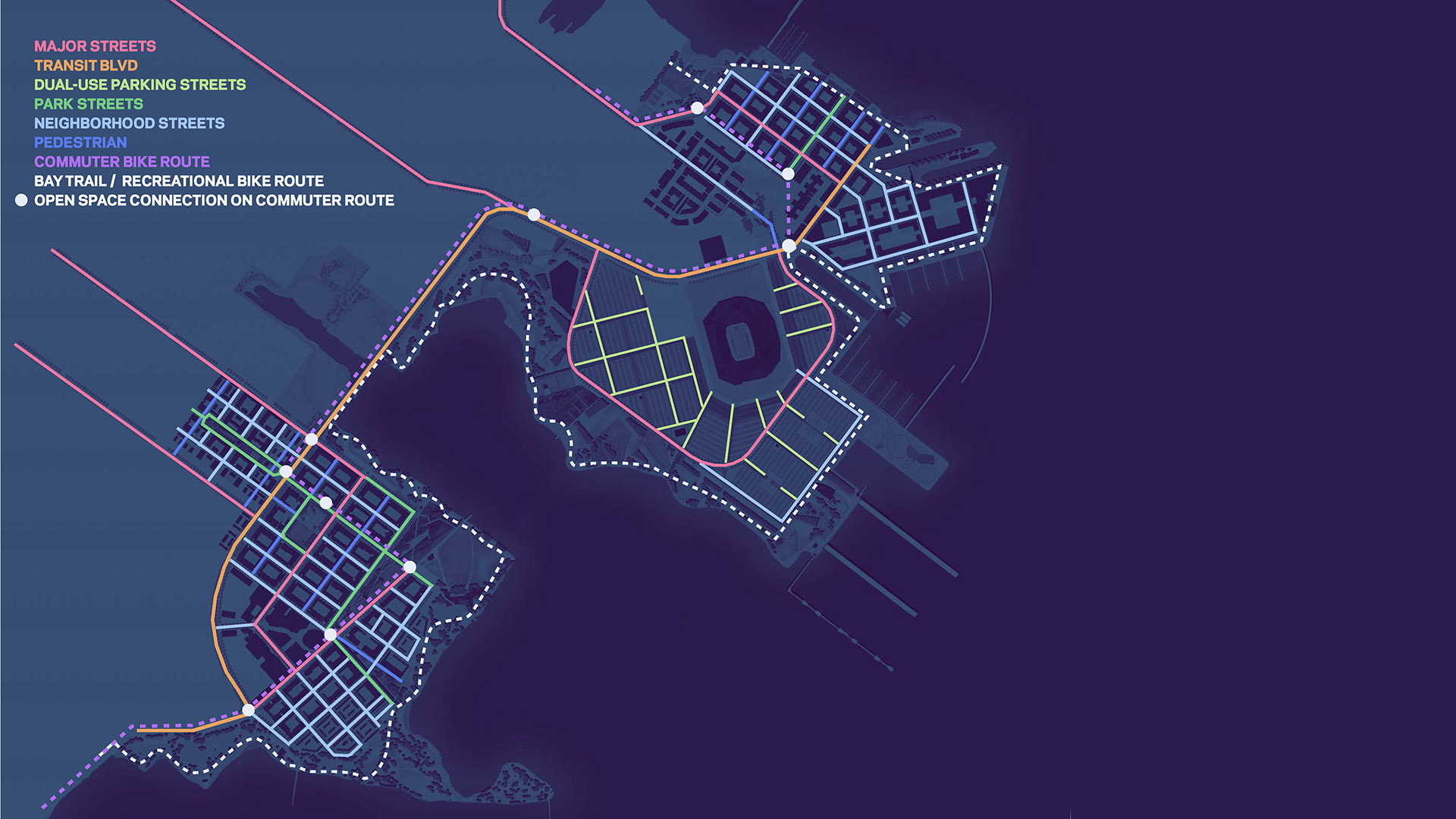
Perched on the edge of San Francisco Bay, the Hunters Point Shipyard was an important naval manufacturing center for the WWI and WWII war efforts. The abandoned shipyard and Candlestick Point were combined into a new, mixed-use residential, retail and light industry development—the largest in San Francisco since WWII. Thomas Balsley Associates collaborated with urban planners IBI Group in developing an innovative urban plan whose parks and open spaces exploit the site’s extraordinarily diverse waterfront and views as well as its rich maritime heritage. The plan combines the proposed Forty-Niners football stadium within the new mixed-use community with a sustainable system of smart streets, bikeways and diverse parks, including California’s first urban state park, redesigned to function as the front lawn to San Francisco’s Bayview and Hunters Point Community. A lively network of neighborhood parks, plazas, linear boulevard parks, roof deck recreation areas, and a continuous waterfront park trail and bikeway system knits the spaces together and connects the upland community to its new shipyard neighbors and the extraordinary bay environment. The state park’s grassland and natural shoreline has been retooled into a landscape of the highest standards of environmental and social sustainability.
Suzhou Center
The Suzhou Center is a landmark urban space within the Suzhou Central Business District that embodies the spirit of the city of Suzhou as a gateway for intersecting old and new cultural and historic heritage. The successful combination of high-density development and ecological conservation will allow for Suzhou to transition to a garden city where state-of-th...
Santaluz
This planned community 30 minutes north of San Diego is a testament to the collaboration of a visionary client, talented land planner, and creative designers and marketers. Set gracefully on its rolling site and preserving over half its acreage as open space, Santaluz is both a model of environmental planning and a financial success, out-performing all its loc...
Kasumigaseki Plaza Renewal
Tokyo’s first high-rise and architectural landmark is located in the heart of downtown, where government and major private business offices are concentrated. Urban growth changed the dynamics of the building’s surroundings and left its public spaces ineffective and barren. The addition of new mixed-use buildings provided the owners with an opportunity to bring...
Monet Avenue 2.0 at Victoria Gardens
A decade after completing Victoria Gardens, the owner looked to refresh the project to maintain its relevancy. SWA redesigned a three-block streetscape and plaza along Monet Avenue. The focus is on the next generation of users, with a shopping environment that highlights the social landscape and blurs the lines between retail and recreation. The design scope i...