





In the early 1970s, the National Park Service began the enormous task of creating a new national recreation area in the midst of an urban center—the San Francisco Bay Area, home to 4.5 million people at the time. Riding the wake of the environmental revolution of the late 1960s, the Park Service would need to find consensus among a wide range of constituents, including community members, environmentalists, landowners, and recreation advocates. It was, in the words of Park Service planner/landscape architect Doug Nadeau, a “scary prospect” that called for a new approach—an approach requiring more public participation and a more thorough environmental baseline than had ever been conceived for a national park. The willingness of the Park Service to undertake this process—and the contribution of the landscape architects who influenced their approach and led the consultant team—were crucial to the creation of the Golden Gate National Recreation Area (GGNRA), one of the largest aggregations of public lands in a United States metropolitan area.
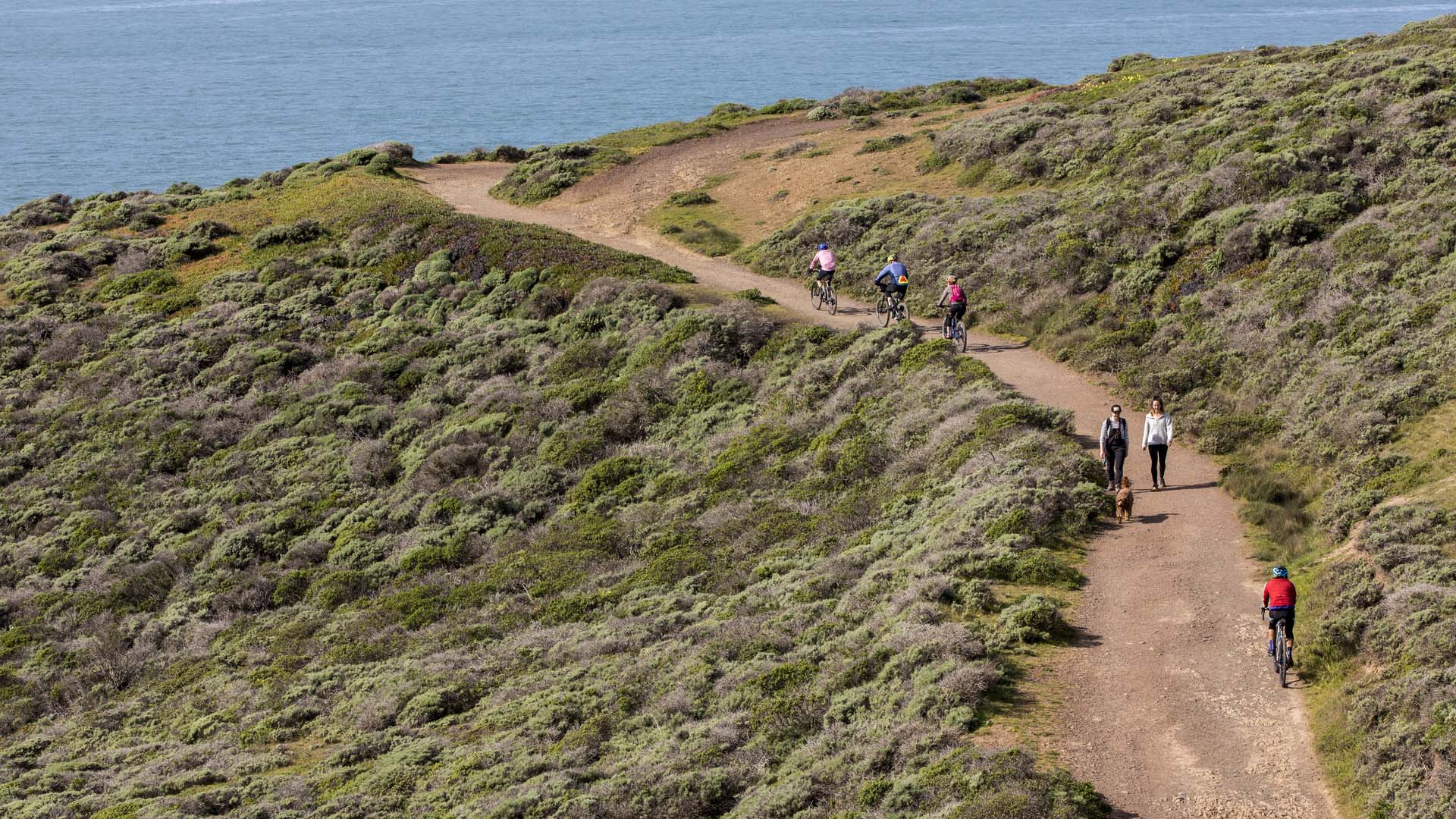
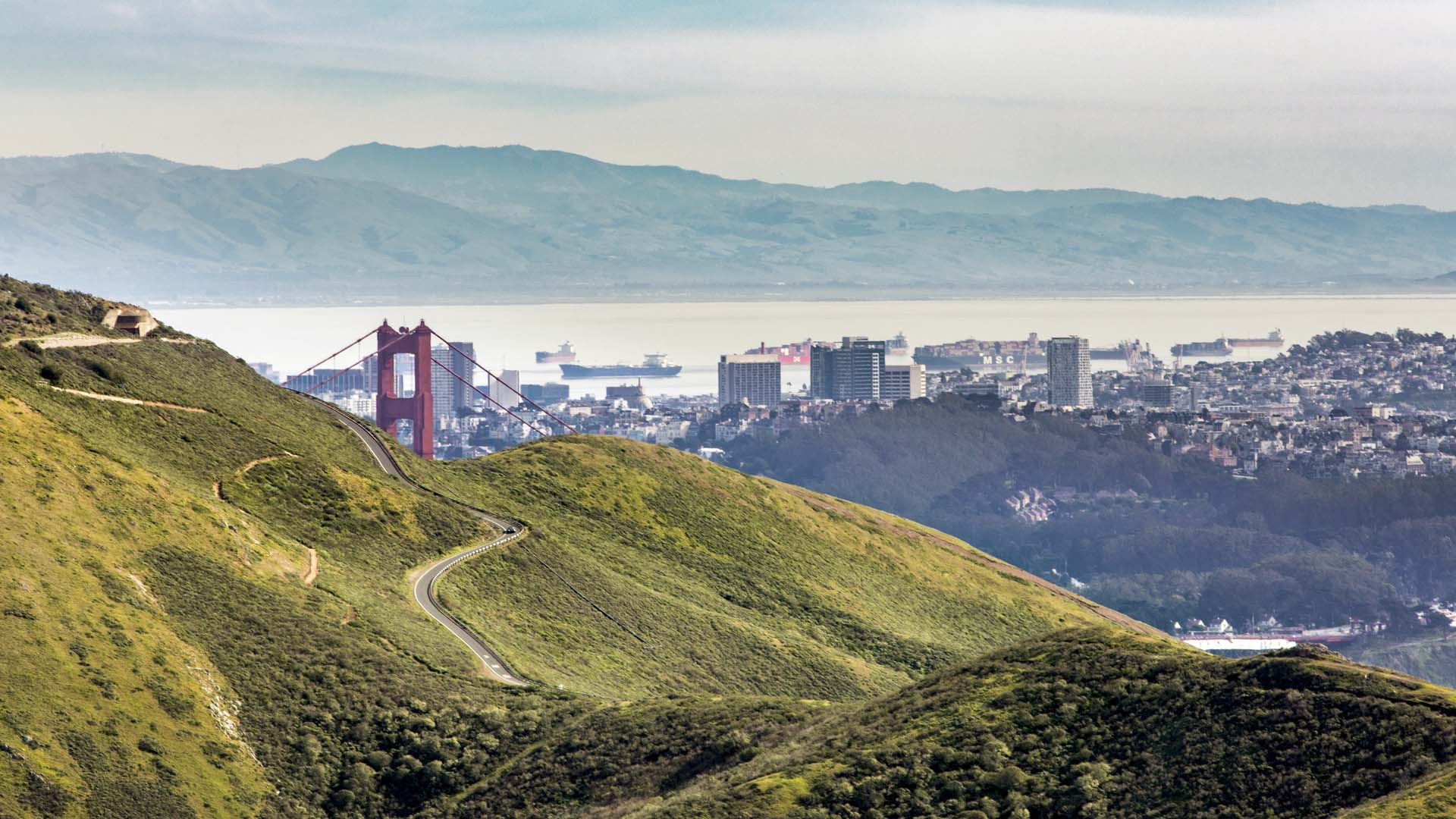
The plan for GGNRA addressed more than 100,000 acres, 59 miles of coastline, and a wide variety of cultural landscapes. The North Sector, featured here, is the 90,000-acre portion located north of the Golden Gate Bridge in Marin County, California, and includes what is now the Point Reyes National Seashore, Mount Tamalpais State Park, and Muir Woods National Monument, as well as other portions of the Recreation Area itself.
Unlike a remote resource such as Yellowstone and Yosemite, the lands of GGNRA abutted urban/suburban areas and infrastructure, with ownership fragmented between Federal, State, County, U.S. Military, and corporate and private interests including agriculture.
The approach SWA developed for the full 90,000-acre North Portion involved the first complete environmental baseline ever prepared at that time for a national park, addressing the full range of natural and cultural factors, socioeconomic considerations, land use legislation, and other elements bearing on the development of an urban park with landscape conditions ranging from ocean bluffs to towering redwood forests.
Armed with this tool, the Park Service launched a highly successful and exhaustive series of over 100 educational and planning workshops involving every facet of the community, easily the most comprehensive planning ever accomplished by the Park Service at that time. After a year of workshops and focus groups, the boundaries of park management began to become clear.
One common objective was clear: the public did not want urban park facilities—they just wanted a way to get to the park. This finding influenced park plans and led to collaboration between multiple agencies overseeing regional transportation. One of the most daunting tasks was assessing the remarkable range of resources that the park contained. Using the environmental baseline, the team divided the park into “land management zones” that could be related to proposed use; for instance, “intensive management zones” for natural resources, historic resources, and special-use zones, with further subdivision into specific management categories such as conservation, public access, or adaptive reuse. In contrast to the strong emphasis on cultural landscapes in the South Portion, proposals for the North Portion of GGNRA stressed natural values, with a focus on coastal environments and grasslands near the Golden Gate Bridge, redwood forests around Muir Woods, and the northern sector’s rural past including the dairy industry and the appropriate balance between woodlands and grass habitats.
By end of 1979, when General Management Plan began to circulate, the GGNRA had become a model for national parks in urban areas. The tandem efforts of the SWA as consulting landscape architects and the Park Service team enabled the resulting plan to successfully balanced resource conservation and public recreational goals from the Golden Gate Headlands to Point Reyes National Seashore. It also allowed for the gradual absorption of military installations into the park as they were phased out for military uses.
The North Portion of the GGNRA preserves 50 miles of coastline and vast acres of beaches, estuaries, coastal terraces, redwood forests, farms and ranches, mountains and stream valleys, earthquake faults, historic structures, over 80 protected species, and a great variety of recreational and educational opportunities. As the western “gateway” to the national park system, the GGNRA establishes a permanent setting for the famous Golden Gate Bridge, which so dramatically links urban San Francisco with the rugged open terrain to the north, and provides residents and visitors with their first impressions of the Park Service’s ideals and values.
Today the GGNRA serves a Bay Area population of nearly 8 million people, with more than 12.4 million visitors in 2020. The North and South Portions are linked by bridge, ferry and bus transportation, implementing an original vision of the planning process. The GGNRA is a striking example of a landscape architect’s contribution on a grand scale. By studying the land and reaching out to the people, the landscape professionals of the Park Service and their consultants conceived a sustainable park that serves the people of the Bay Area and beyond, while protecting the underlying natural and cultural resources for generations to come.
Ricardo Lara Park
Ricardo Lara Park is a vibrant city park and a case study in landscape infrastructure. It demonstrates how a small investment and creative thinking about landscape can transform the very infrastructure that has long divided and isolated a community into an amenity that unites it, offering much-needed environmental and recreational benefits.
Here, more ...
Changchun Tractor Factory Renovation
Once-industrial site re-imagined as a commercial complex with eye-catching public spaces.
For this site, which was once an industrial tractor factory that epitomized Changchun’s thriving industrial past, SWA provided conceptual design through implementation to transform the former of Changchun Tractor Factory into an eye-catching public realm that fulfi...
Buffalo Bend Park
Houston’s East End is a bifurcated community, with heavy industry brushing up against a vibrant and culturally diverse residential area. Answering residents’ call for more park space, SWA created Buffalo Bayou Bend Nature Park by converting a formerly neglected industrial site into a wetland ecosystem and public green space.
Three interconnected ponds, ...
Tulsa Riverfront Park
SWA directed conceptual studies for incorporating a landmark residential estate, a multi-family housing complex and a creek corridor into the adjacent Arkansas River waterfront of Tulsa, Oklahoma. Recently acquired by a local community foundation, the total 64-acre area features sweeping lawns and a historic home that provides much-needed space for the city’s ...