

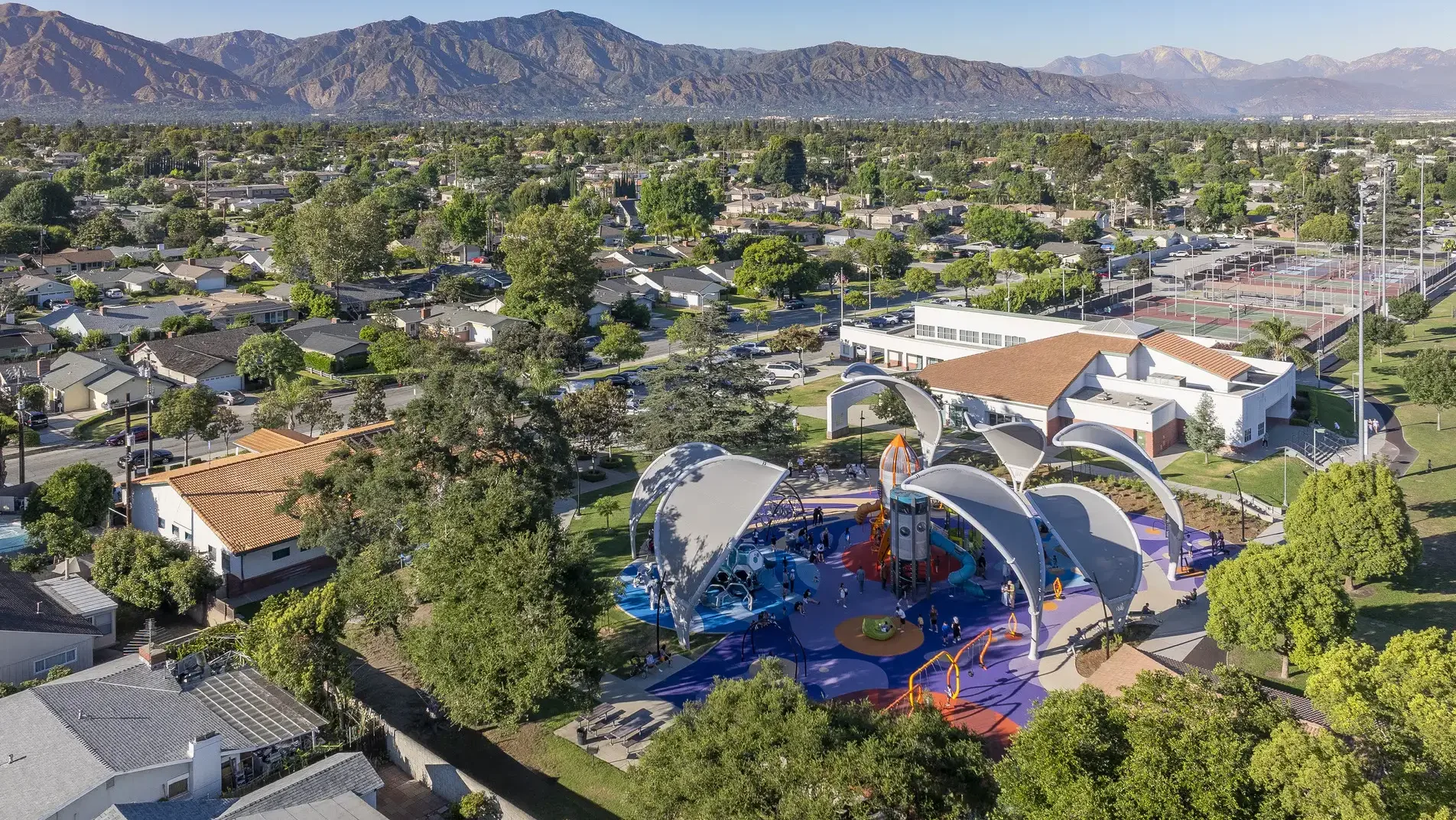
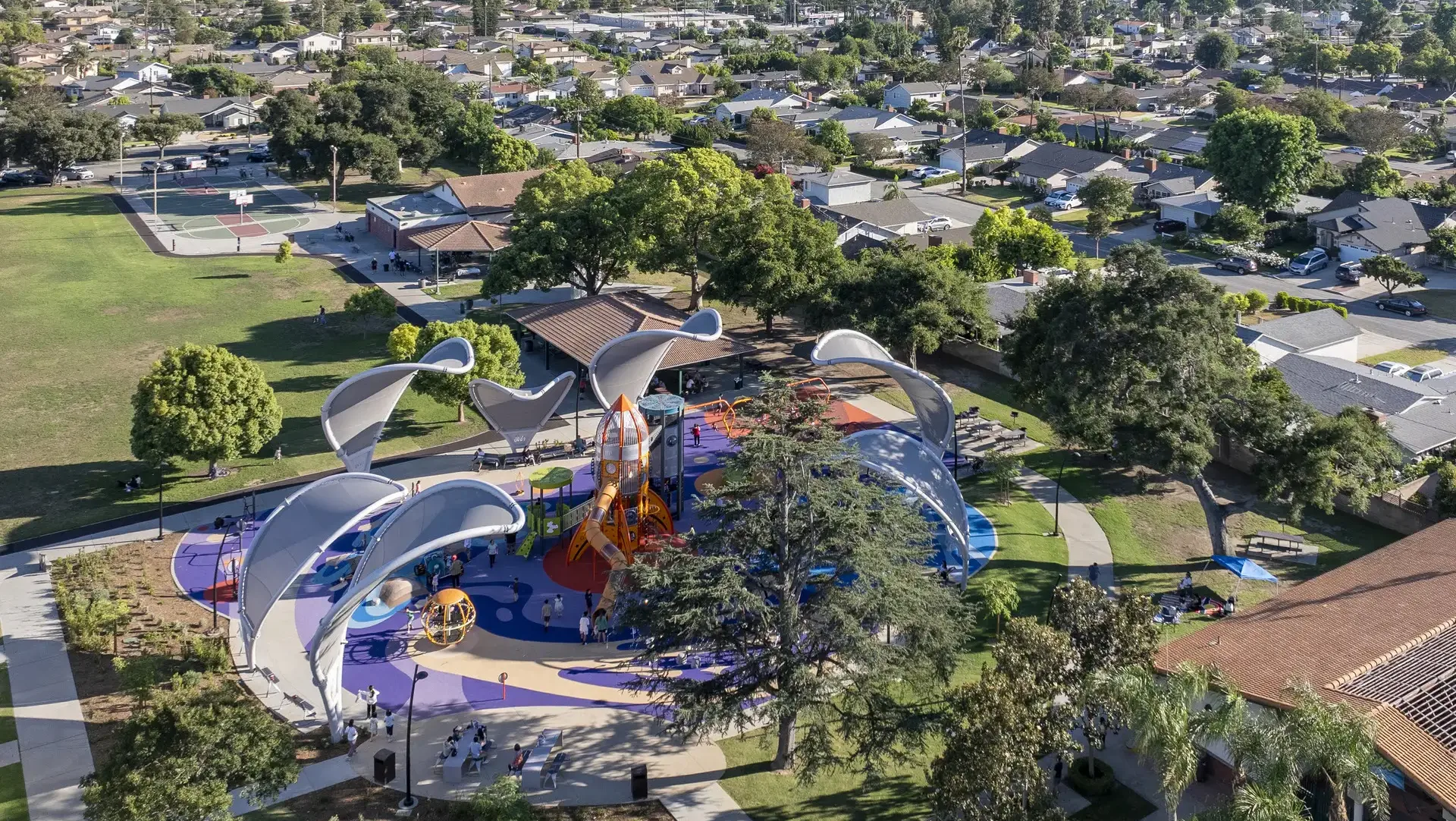
Ten miles east of Los Angeles at the base of the San Gabriel Mountains, Temple City sought to upgrade its aging parks and existing playgrounds into safe and welcoming spaces for community members of all ages. SWA worked with the city to host a community engagement workshop focused on renovating two city playgrounds: Live Oak Park, the city’s largest park, spanning 16 acres with a community center and recreation spaces, and Temple City Park, located at the civic core, hosting the community’s largest event: Camellia Festival. More than 400 residents shared their preferences through community polling, helping guide the design themes and types of play elements. Based on this input, SWA developed two distinct concepts that celebrate recreation and art: one inspired by space exploration and the other by a bamboo forest.
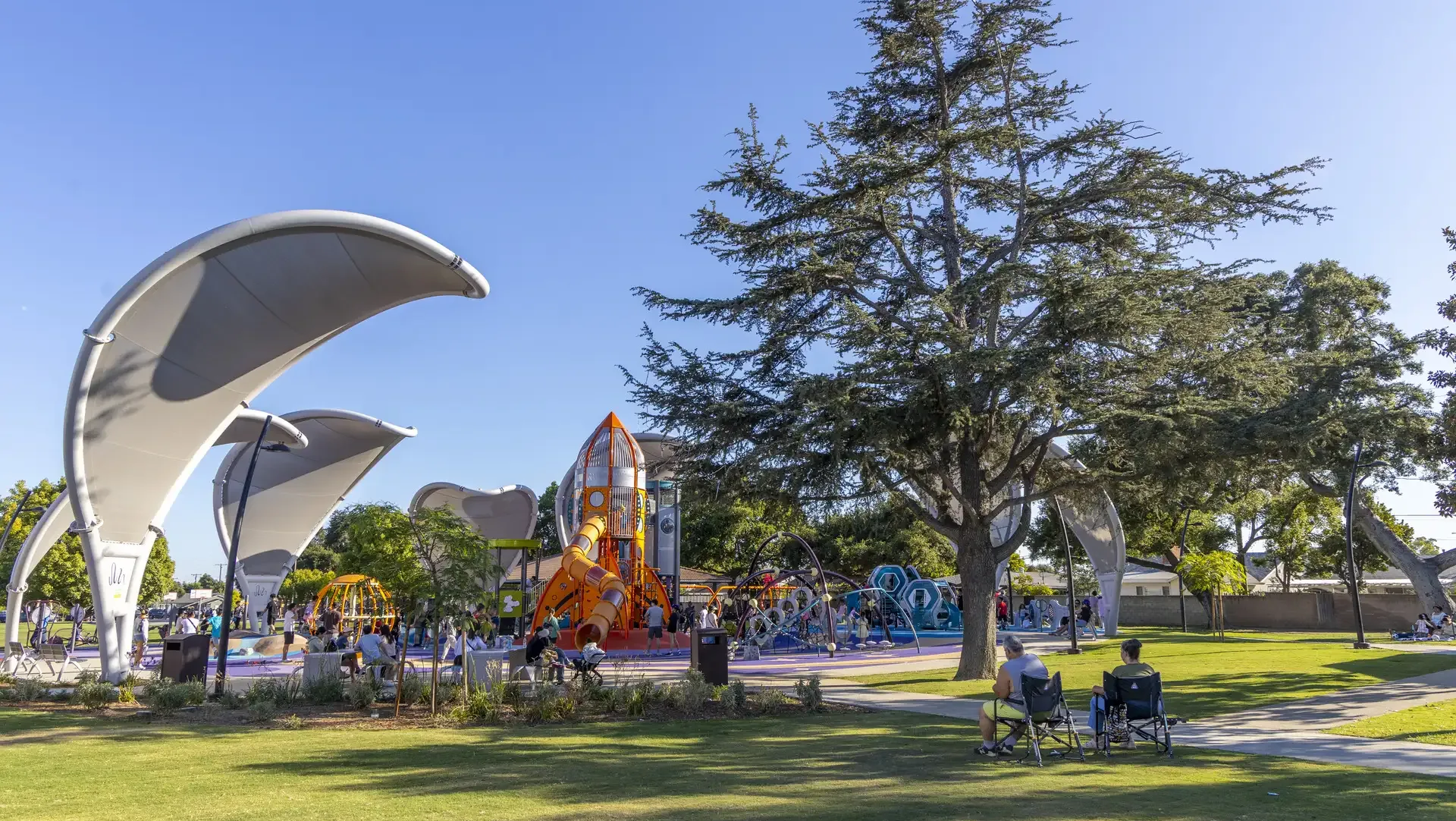
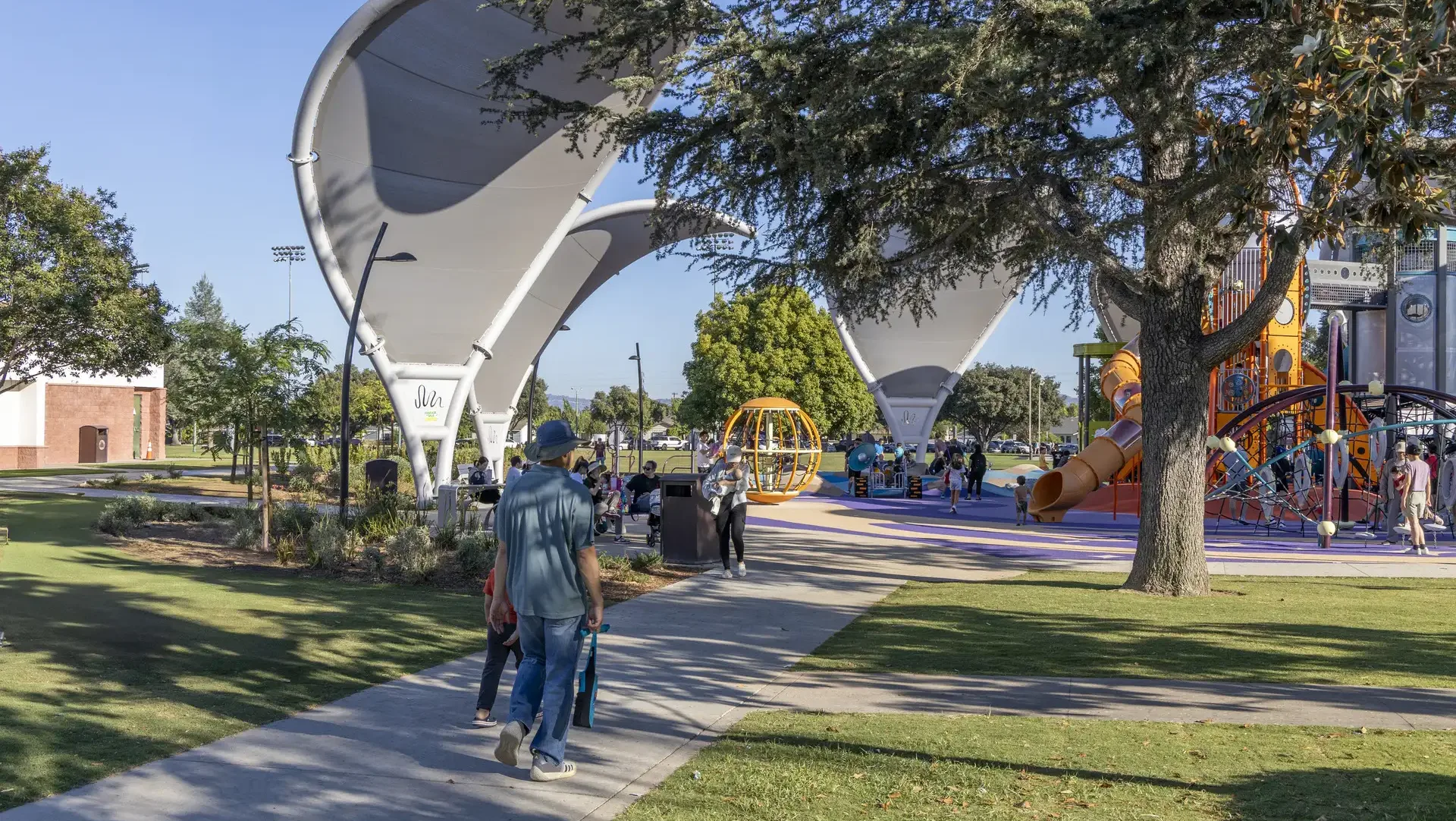
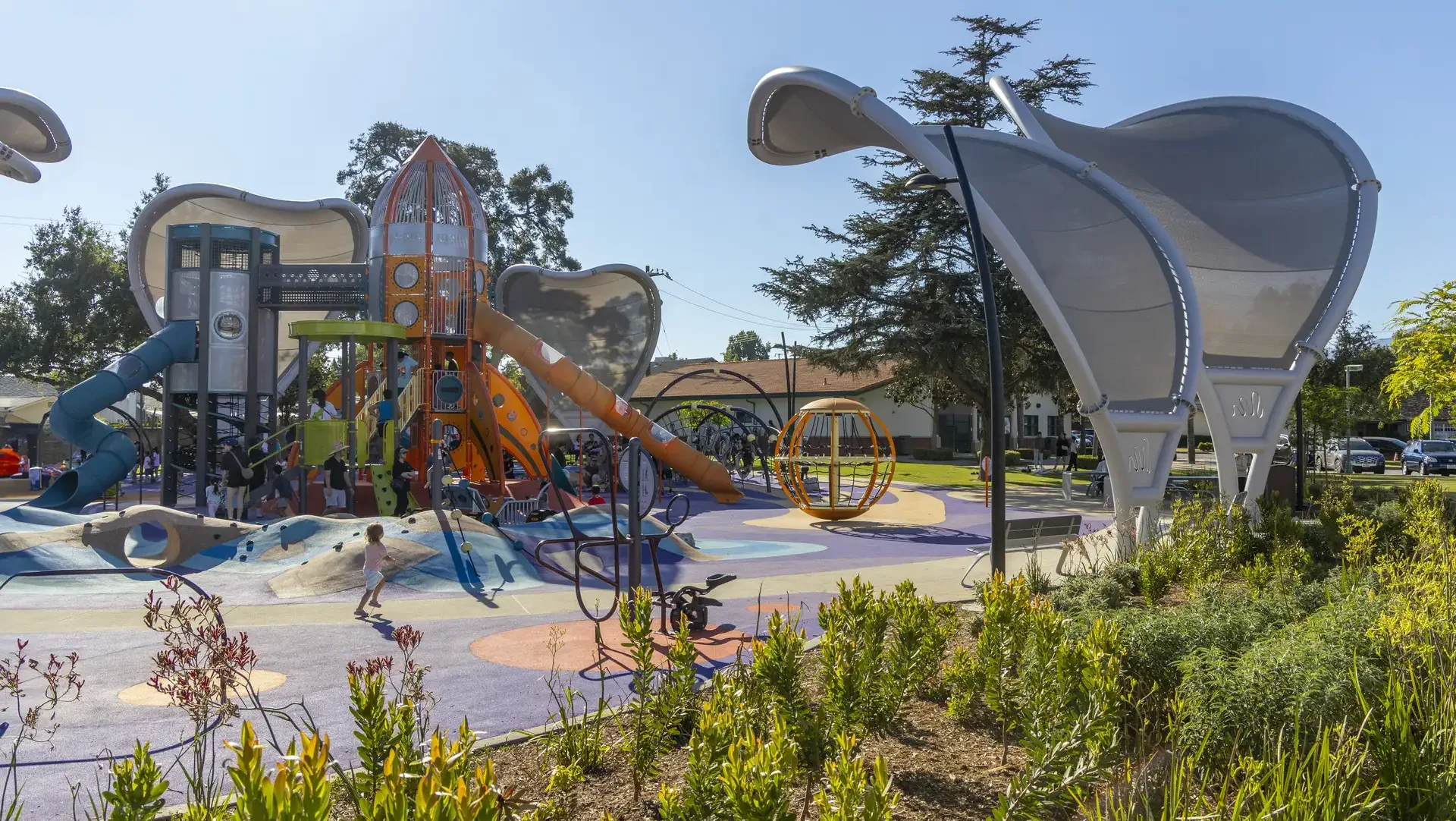
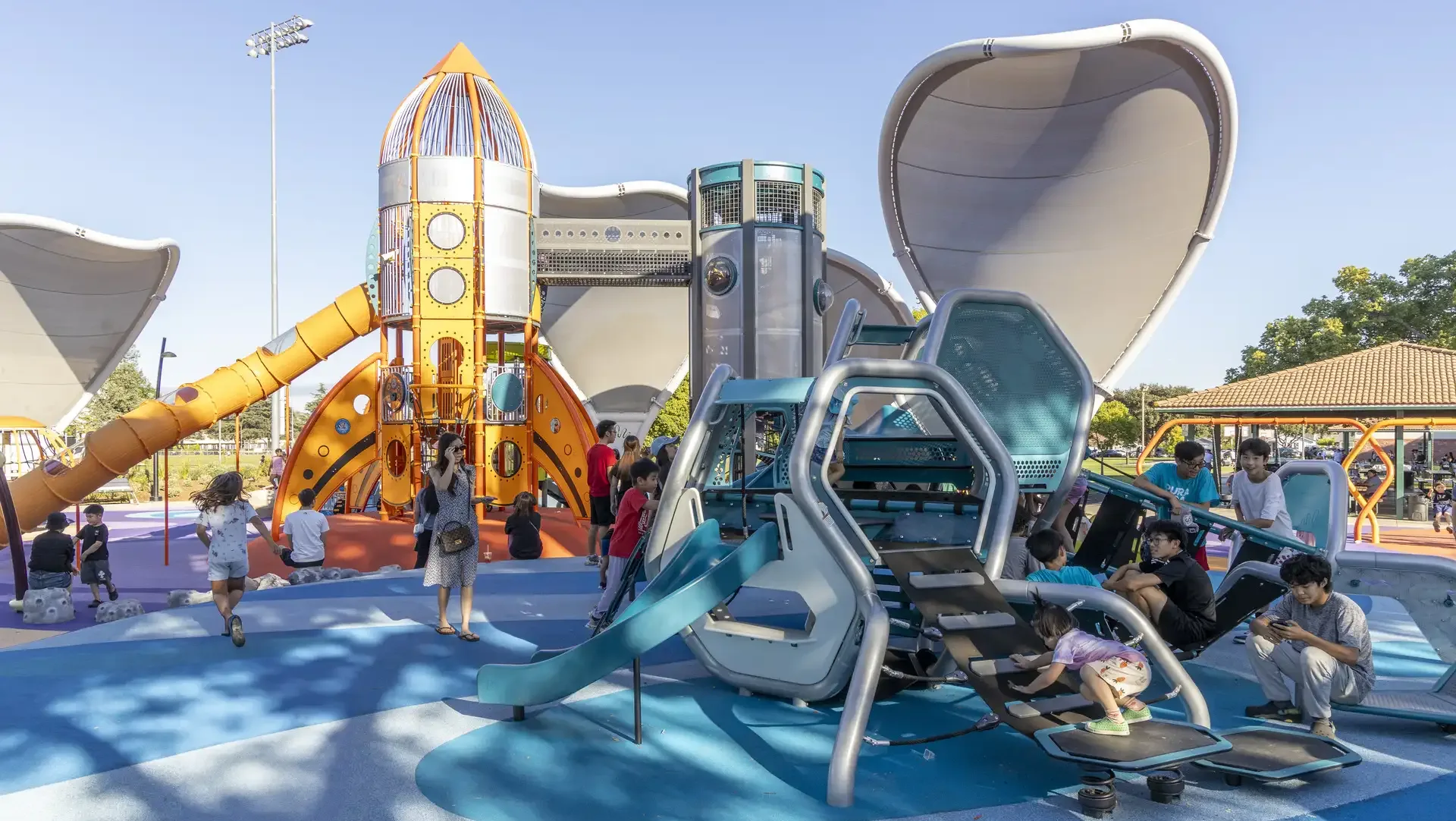
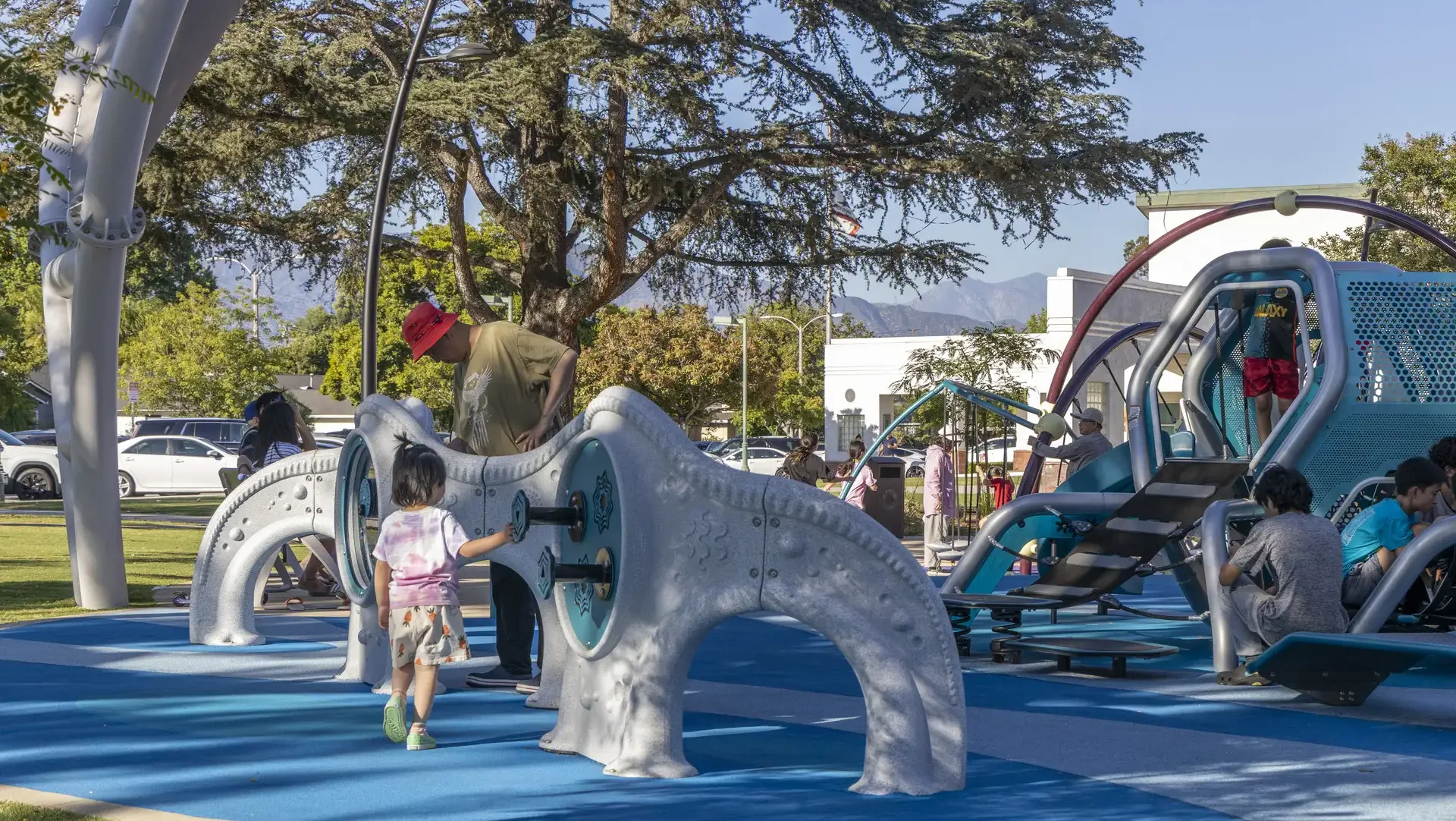
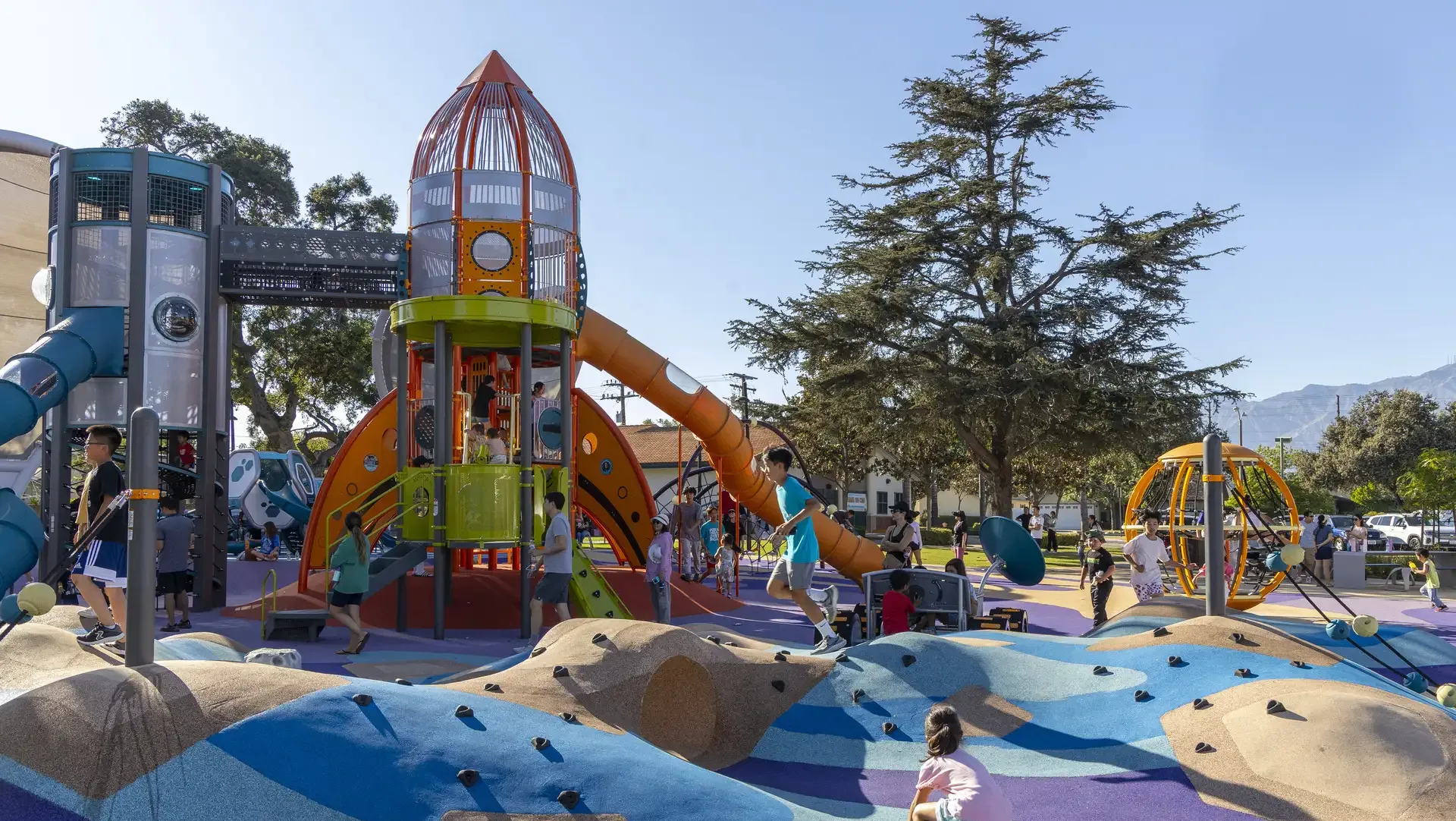
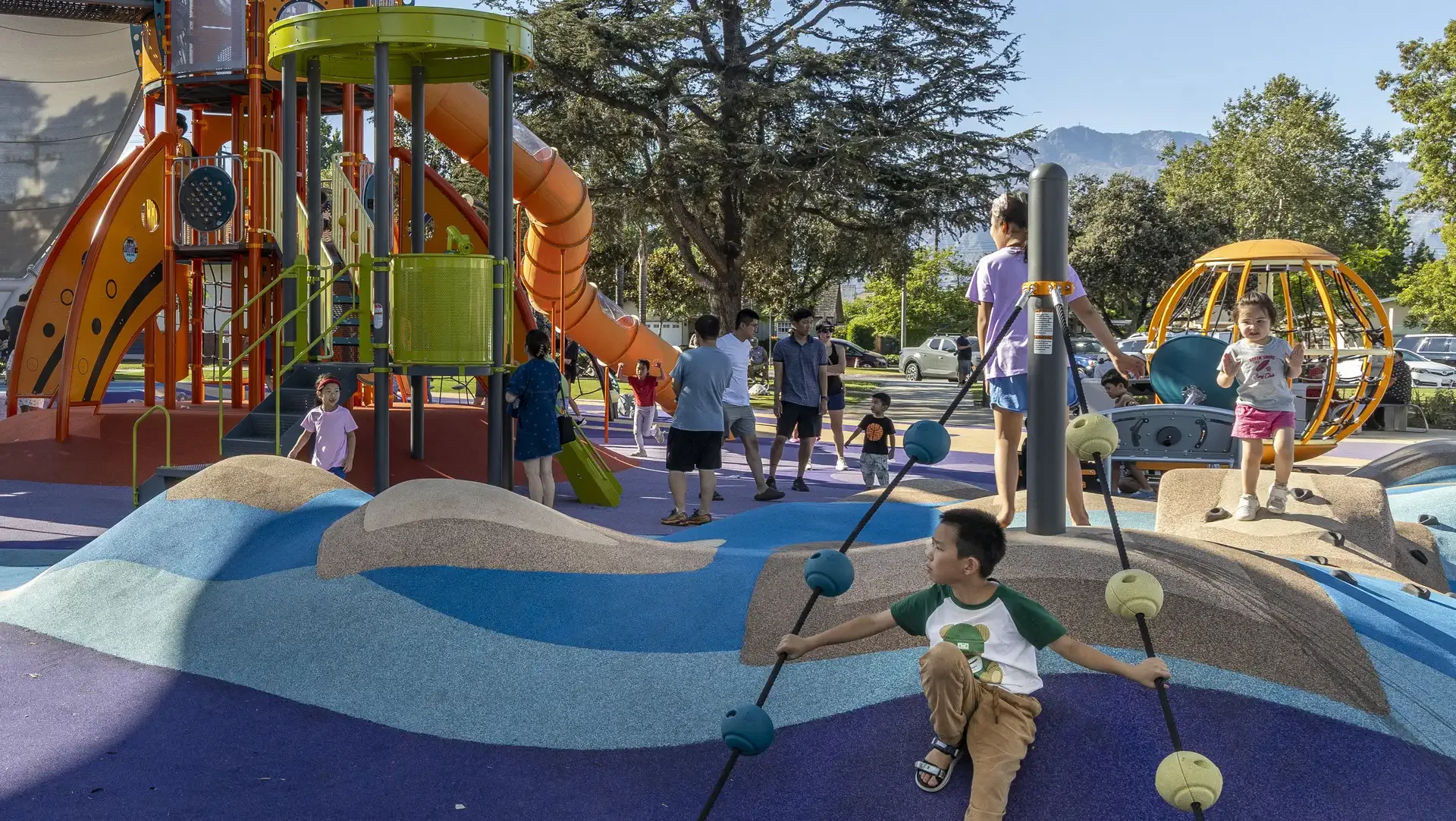
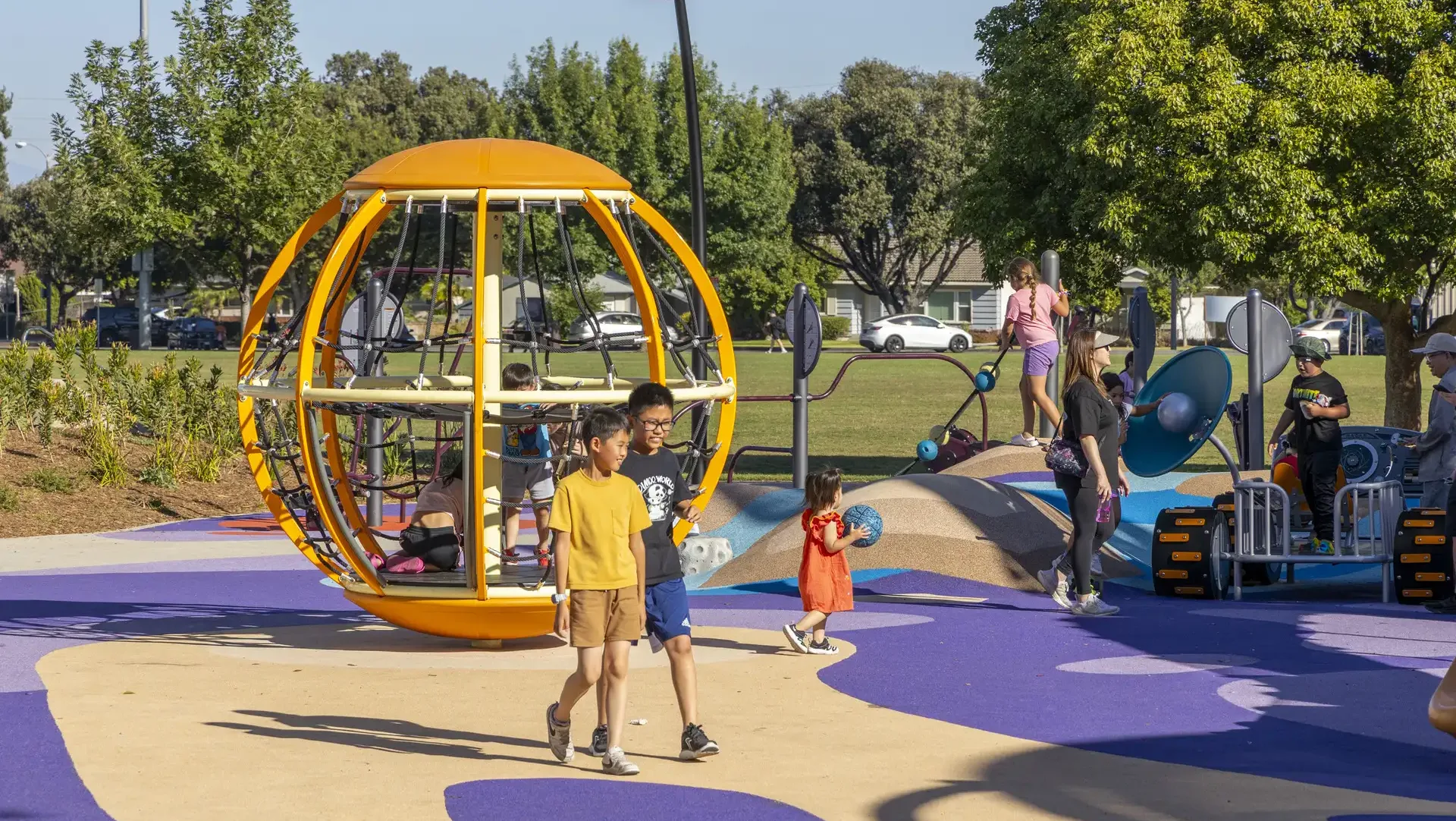
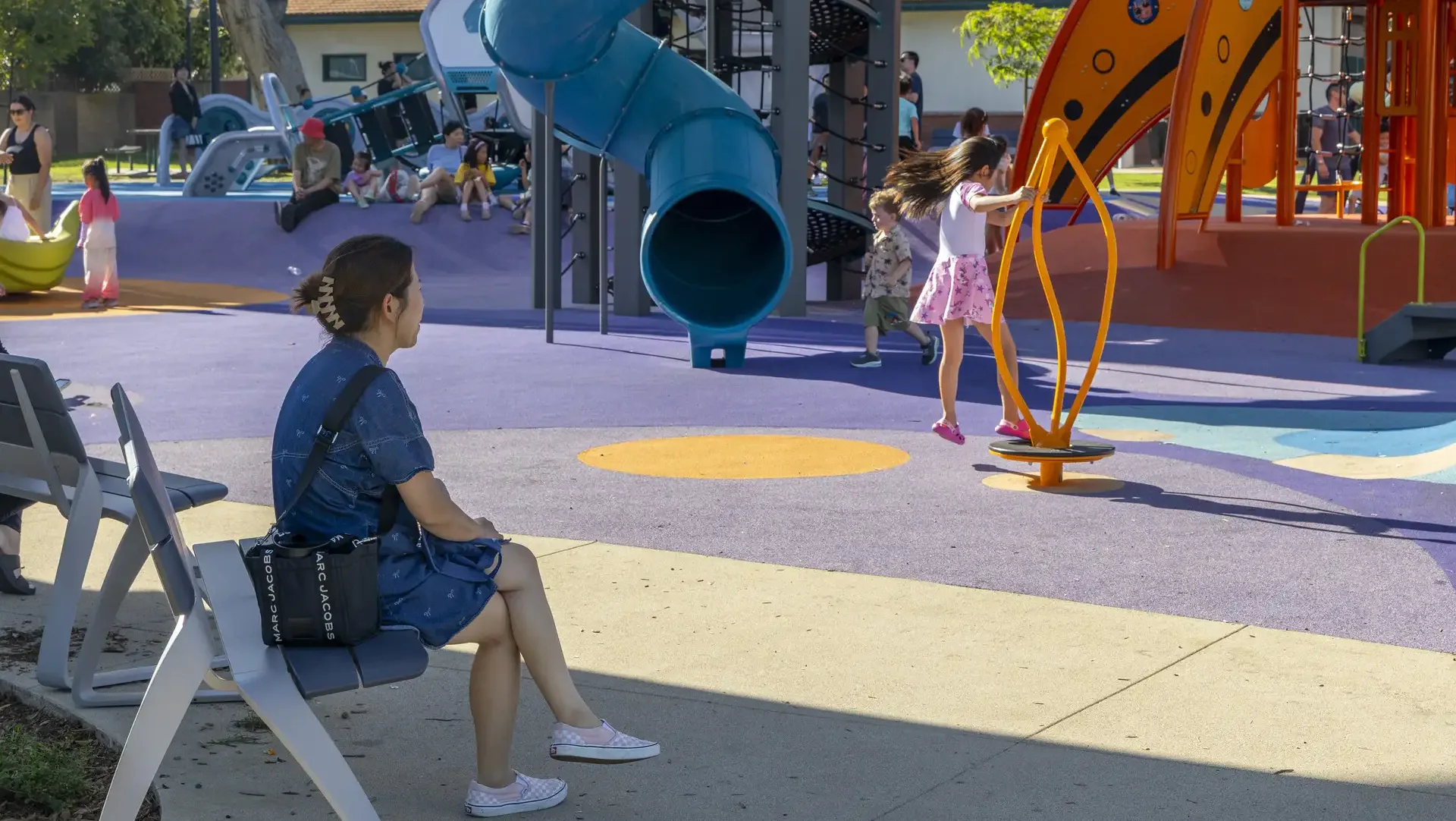
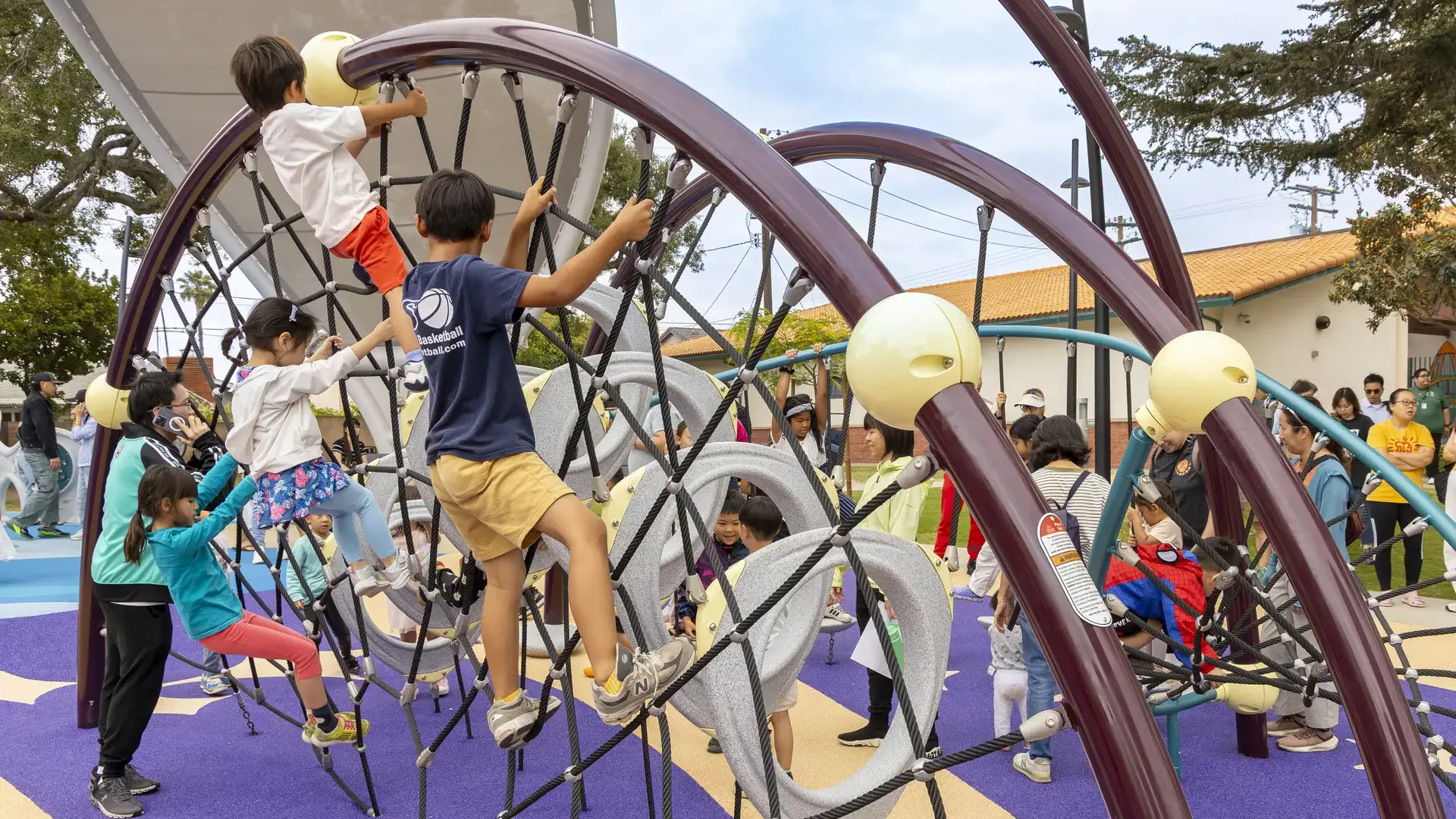
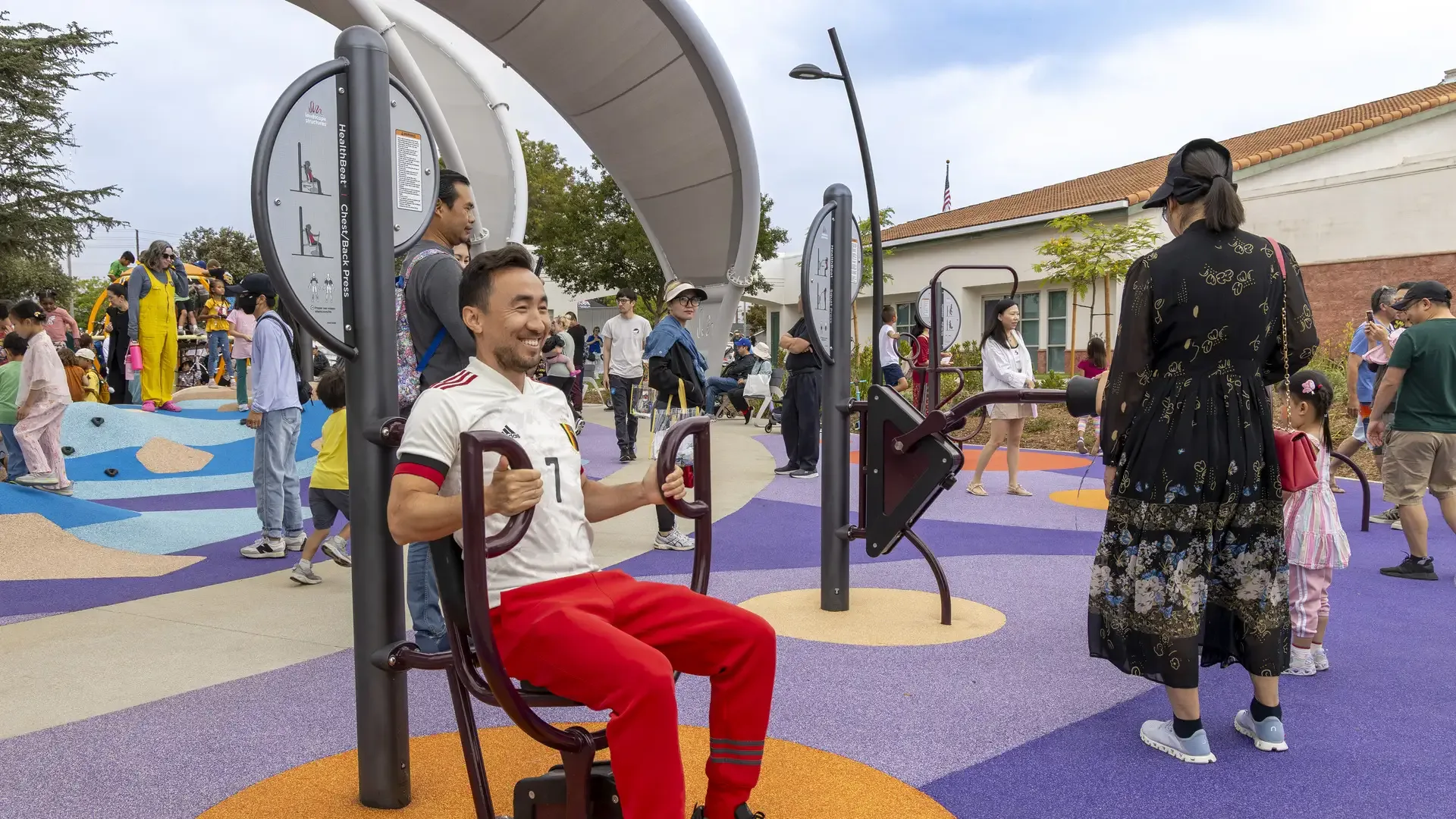
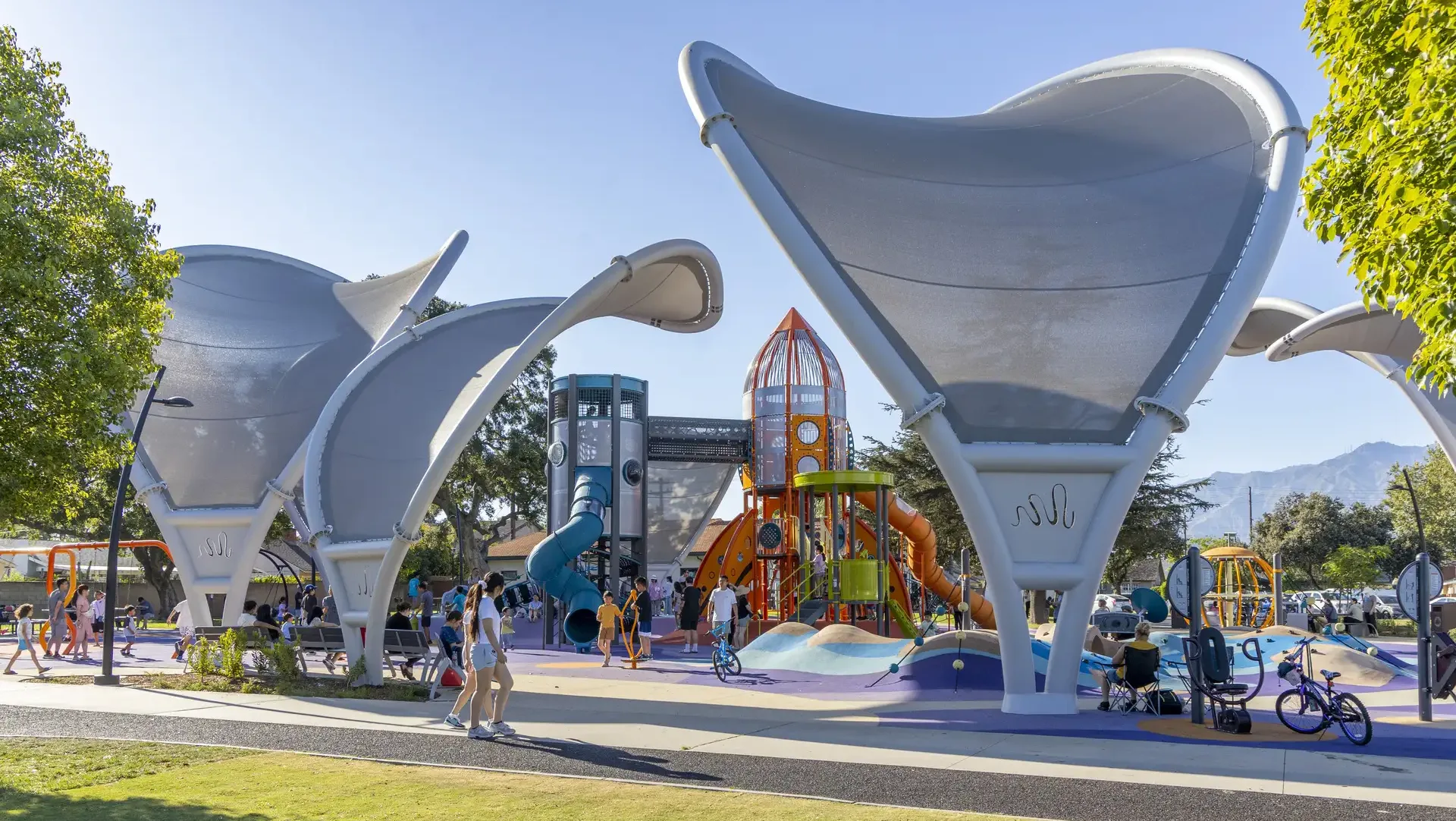
At Live Oak Park, a new space-themed playground re-energizes the park’s northeast corner, honoring the site’s history and appealing to both children and older generations. A 35-foot-tall rocket ship climbing structure serves as the centerpiece, surrounded by six distinct play zones where children can embark on their cosmic adventures. Sculptural shade structures encircle the playground, creating an otherworldly space for comfortable seating and picnic areas for both guardians and kids. Play elements were thoughtfully arranged to offer a variety of physical and sensory challenges to support growth and discovery. Grading and topography introduced climbing mounds and improved accessibility, ensuring inclusiveness for all. The existing fitness zone was relocated closer to the Live Oak Park walking path, enhancing the wellness loop and inviting users to use the machines during their daily exercise routines.
At Temple City Park, a nature-inspired Bamboo Forest playground complements the park’s mature trees and expansive green lawns. Despite a compact footprint, the playground maximizes play value with a vertical net climber, slide, swings, and sensory panels, all unified with a custom safety surface design that reinforces the natural theme. SWA refreshed the adjacent picnic shelter and added native plants to the park, creating a visual and physical safety barrier for playground users and the adjacent parking lot.
Litou Mountain Park
Within Guanlan Forest, an ecological heart of Shenzhen, Litou Mountain Park takes inspiration from the clothing design and production processes of Dalang Fashion Town. The town is a future gathering destination for fashion’s rising talents and a center for art. Blending nature and textiles, the project situates the park at the front of the fashion fronti...
Bend of the River Botanic Garden
The Bend of the River Botanic Garden Master Plan reimagines an 88-acre site in Temple, Texas, into a regional attraction. Situated at the intersection of I-35 and the Leon River, the site comprises two donated parcels, consolidated to serve Temple’s growing population of over 96,000.
SWA led a comprehensive public engagement process, facilitating conver...
Main Street Garden Park
A key component in the downtown revitalization strategy, Main Street Garden Park required razing two city blocks of buildings and garages to make way for its transformation into a vibrant public space teeming with civic life. This two-acre park fosters downtown residential and commercial growth and was designed to accommodate the needs of residents in adjacent...
Marina Central Park
What if we transformed one of L.A.’s least used freeways into one of the county’s largest urban parks—reconnecting a historically divided community and drastically expanding affordable housing in an underserved district?