


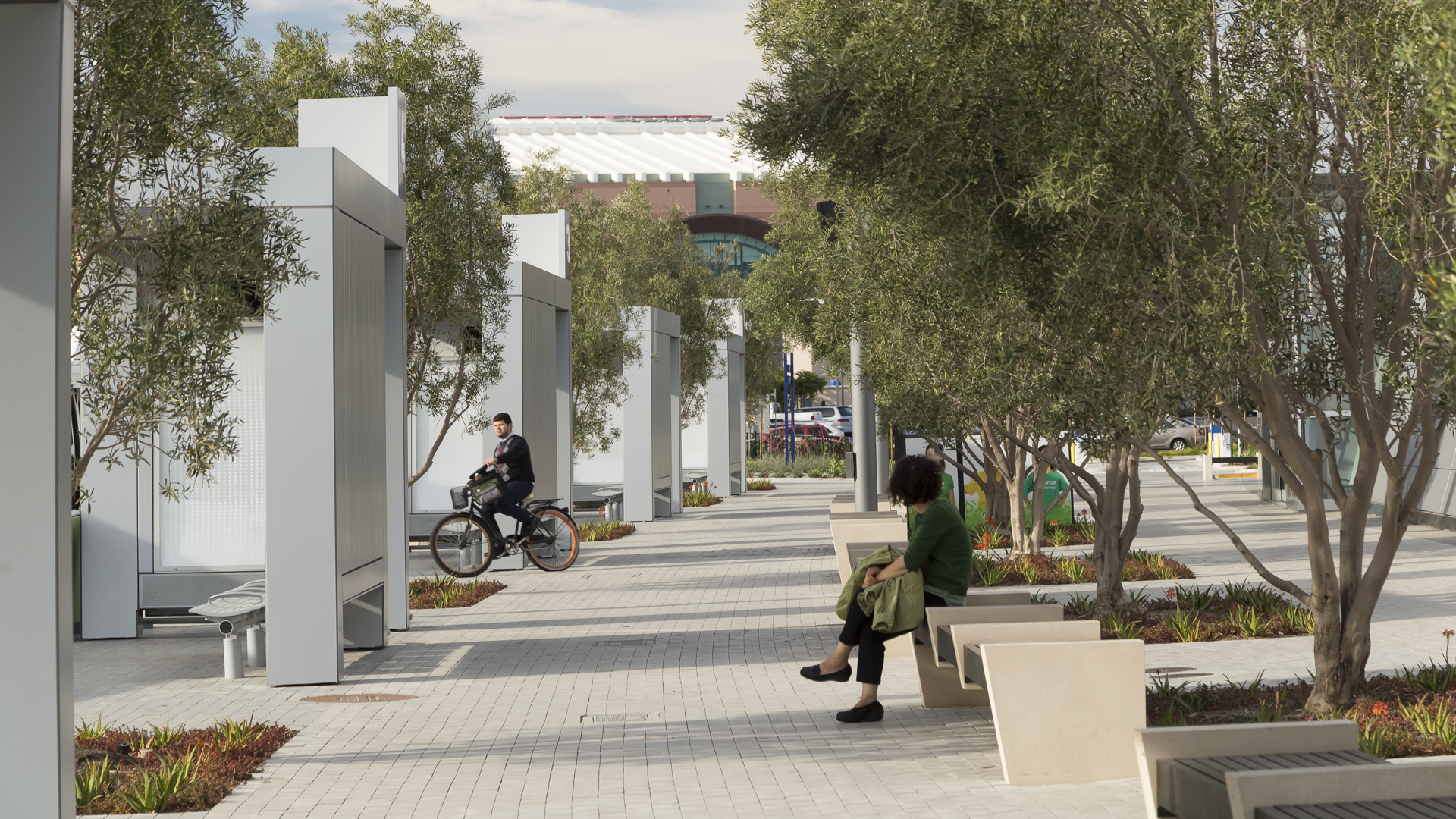


ARTIC, the new 16-acre Anaheim Regional Transportation Intermodal Center in Southern California, forms a seamless gateway from Anaheim to all of Orange County, spurring economic growth and community redevelopment throughout the region. The landscape design establishes a unique and identifiable image for the ARTIC Mixed-Use District by complementing the site’s iconic architecture with a strong streetscape identity. A large central plaza, designed to evoke the feel of a European square, integrates passenger drop-off areas, a central pedestrian zone, and a forecourt for the terminal building. Artwork is incorporated into the overall plaza design adding aesthetic diversity and visual interest to the site. Rows of olive trees and succulent plantings on either side of the building and plaza further unify architecture and site. The olive trees provide shaded seating areas for riders waiting for their buses while the succulent garden adds vibrant color and texture to the space surrounding the building. Date palms and canopy trees provide a dramatic, shaded outdoor environment for civic events and informal socializing, and visitors are afforded a relaxing riverfront walk along the Santa Ana River. In the future, a continuation of the Date Palms along a pedestrian promenade in the center of the northern parking lot will establish a strong visual and pedestrian connection to the Honda Center, providing dappled shade with a colorful garden beneath as a setting for building and parking access.
Yorba Linda Library + Arts Center
A new public library and cultural arts center were artfully sited to create memorable outdoor spaces. Working in collaboration with Group 4 architects, SWA transformed an earlier parking-fronted concept into a plan that resulted in a landmark building and outdoor space composition along one of Yorba Linda’s main streets. The outdoor space – the Paseo – serves ...
Grand Candela Memorial
The “Grand Candela” commemorates the victims and survivors of the August 2019 mass shooting tragedy at Walmart’s Cielo Vista store. Inspired by the motif of an everlasting candle and set in a plaza within the store’s parking lot, the memorial offers a dedicated place of healing and remembrance. Columns of perforated metal, one for each life lost, are joined to...
Diridon Station Area Plan
In the area around Diridon Station, the City of San José and the greater Bay Area region have the unique opportunity to build an internationally prominent transportation hub and to develop a world-class destination. This plan weaves new ideas and new development possibilities into the city’s distinctive neighborhoods and existing urban fabric. Large proposals,...
Beaumont Downtown Plan
Beaumont sits at the heart of Texas’s “Golden Triangle” and has recently been named a top travel destination and the “Cajun Capital of Texas,” with billions of dollars in new energy investment now flowing into the city. Yet despite this momentum and its historic architecture, downtown Beaumont has struggled to sustain vitality, at...