

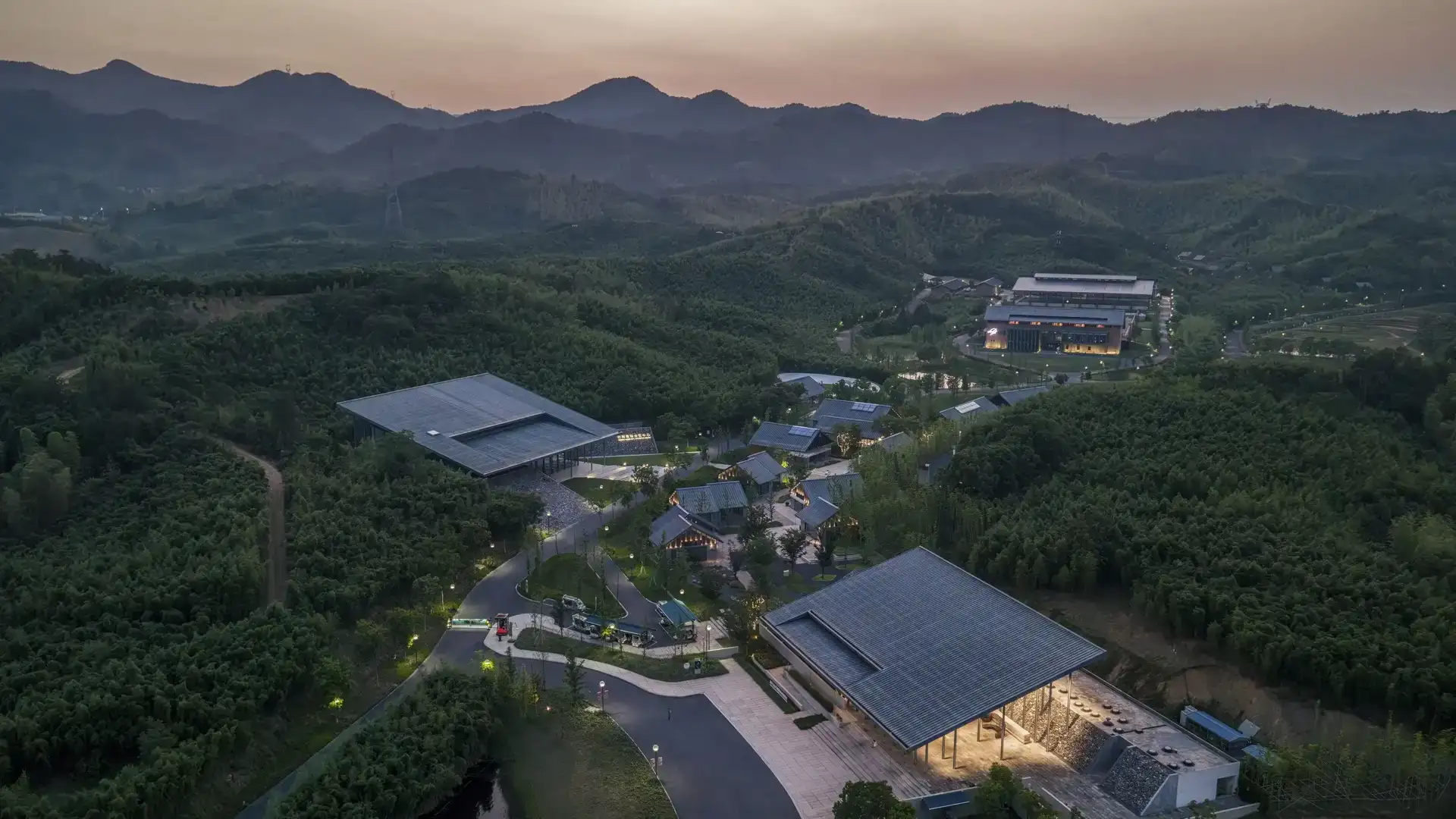


Set within the quiet valley neighboring Moganshan, the 247-acre Elephant and Moon Resort unfolds as both a retreat and conference center. The immersive landscape is grounded in the client’s ethos, “A passion for the outdoors.” Rather than imposing a new identity, the design builds from what already exists: a farmhouse, fishponds, bamboo groves, paddy fields, chestnut orchards, and Elephant Moon Lake. These inherited elements are not replaced, but elevated, forming the foundation of a renewed landscape that feels both familiar and newly alive.
Water is the project’s guiding force, conceived not simply as infrastructure but as a living system that moves, adapts, and inspires. The mulberry dyke fishpond is a central piece of the resort, a symbiotic agricultural model where organisms feed on vegetation and their waste fertilizes the soil, sustaining a continuous cycle of life. Expanded into a broader hydrological network of detention ponds, retention gardens, and lakes, this system shapes paths, clearings, and gathering spaces while embodying a resilient Sponge City strategy that filters and reuses stormwater.
Engaging with the younger generations, “Play, Fish” sculpture is a focal point of the play spaces. Inspired by a leaping fish, white terrazzo ripples outward like water shaped by terrain. Children encounter the rhythms of the landscape firsthand, ensuring that the systems sustaining Elephant and Moon Resort are not only preserved, but felt, understood, and carried forward.
The landscape is organized through low-impact interventions that work with the land rather than against it. Accommodation, including neighborhoods of wood cabins and campgrounds, are carefully tucked into existing formations, allowing the topography to guide placement. New program elements, from the boathouse and equestrian club to the visitor center, extend the site’s working landscape while maintaining its ecological integrity. Indigenous Yangtze River Delta species are arranged into self-sustaining plant communities, supported by Integrated Pest Management and habitat diversification to foster long-term resilience.
Reclaimed stone, timber, and recycled aggregates reduce embodied carbon, while local artisans helped shape the site’s tactile identity—casting concrete within bamboo frameworks, handcrafting play elements, and contributing sculptural pieces gathered from nearby villages. These moments transform the landscape into a cultural as well as ecological experience, inviting visitors to engage with both process and place.
Seasonality and stewardship are central to the project’s vision. Through successional landscaping, the environment evolves throughout the year, encouraging repeat visits and deeper connection. Organic cultivation, bamboo harvesting, and chestnut foraging remain active practices, sustained by local farmers who continue to live and work on-site.
Bishop's Lodge
Bishop’s Lodge Resort is a 66-acre parcel situated along valleys and ridges in the high New Mexican desert, four miles from downtown Santa Fe, known for its history, natural beauty, outdoor activities, and isolated location. The core of the resort is composed of a number of individual lodge-style buildings, along with the historically significant 150+-ye...
Coronado Springs
Coronado Springs Resort is an existing 1,900-key Spanish Colonial-themed convention hotel that was built in 1997. The project site required filling 8.5 acres of the existing lake to make room for the new 550-key tower and associated parking. The design is inspired by the work of Gaudi and famed artist Mary Blair. Additional inspiration came from a collaborativ...
Four Seasons Oahu at Ko Olina
The design team’s challenge was to re-envision the existing hotel as a premier luxury destination that employs aspects of local culture and heritage to create a unique sense of place. An existing pool and water features were renovated, two new pools added, and restaurants enhanced. The resulting Four Seasons Hotel redevelopment and new residences by partner To...
Las Ventanas al Paraiso
On the Baja peninsula a seemingly lifeless landscape meets the Sea of Cortez in a dramatic vista of eroded mountains, sand and sea, creating one of the most diverse biomes on the planet. The term “sustainable” was not typically in use at the time Las Ventanas al Paraiso was conceived nearly 20 years ago, but the landscape architect nonetheless inherently recog...