

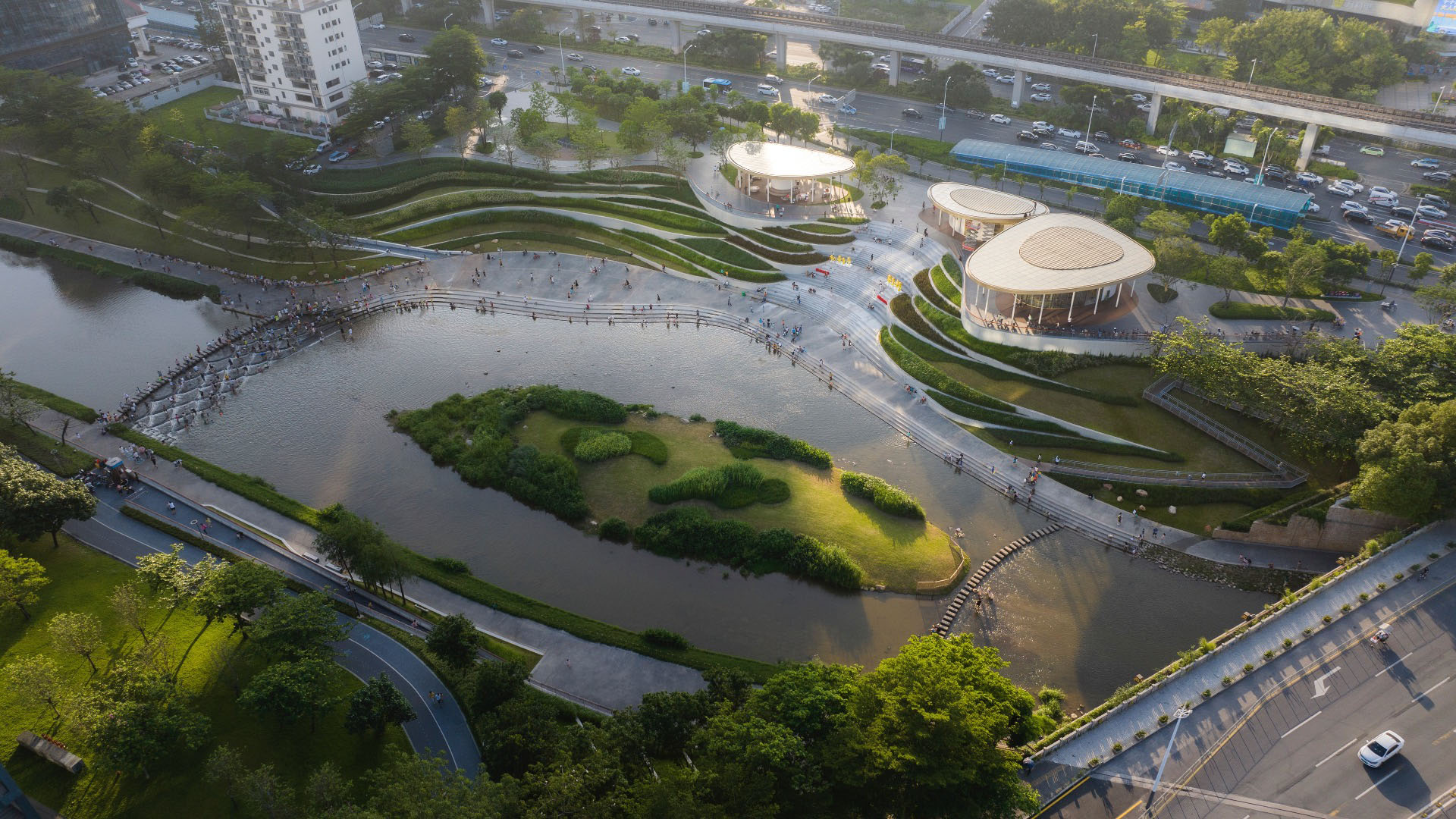
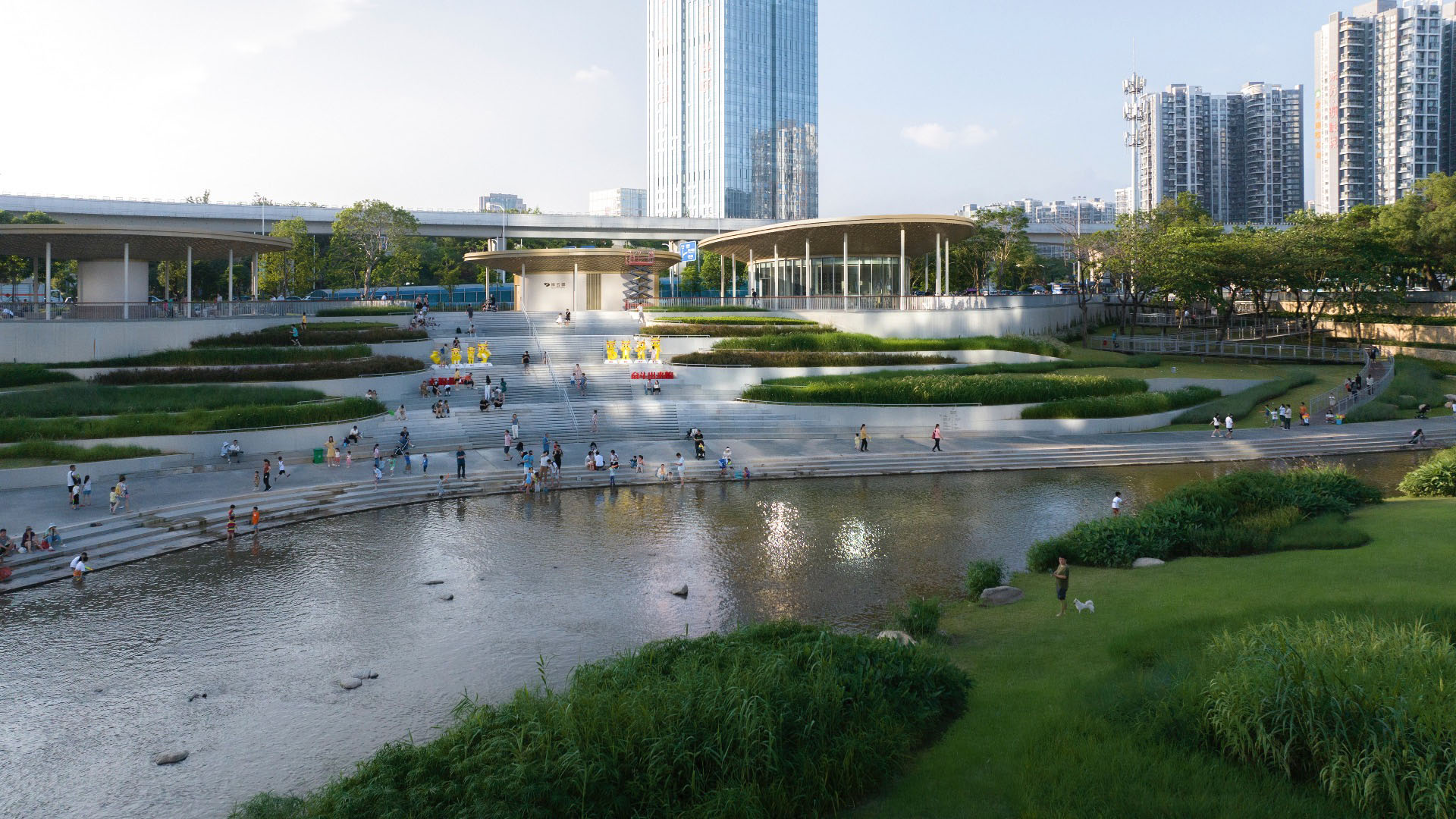
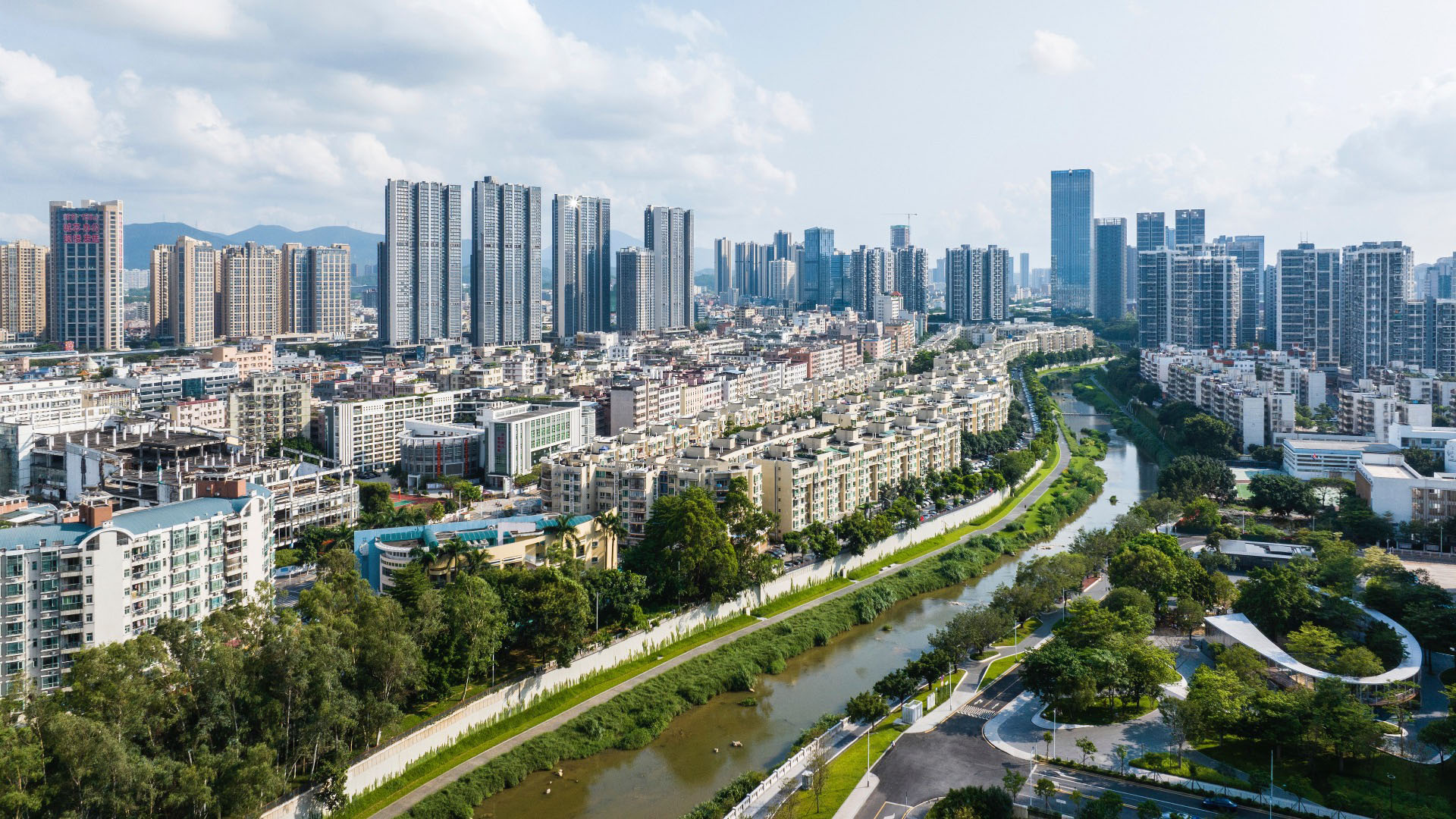
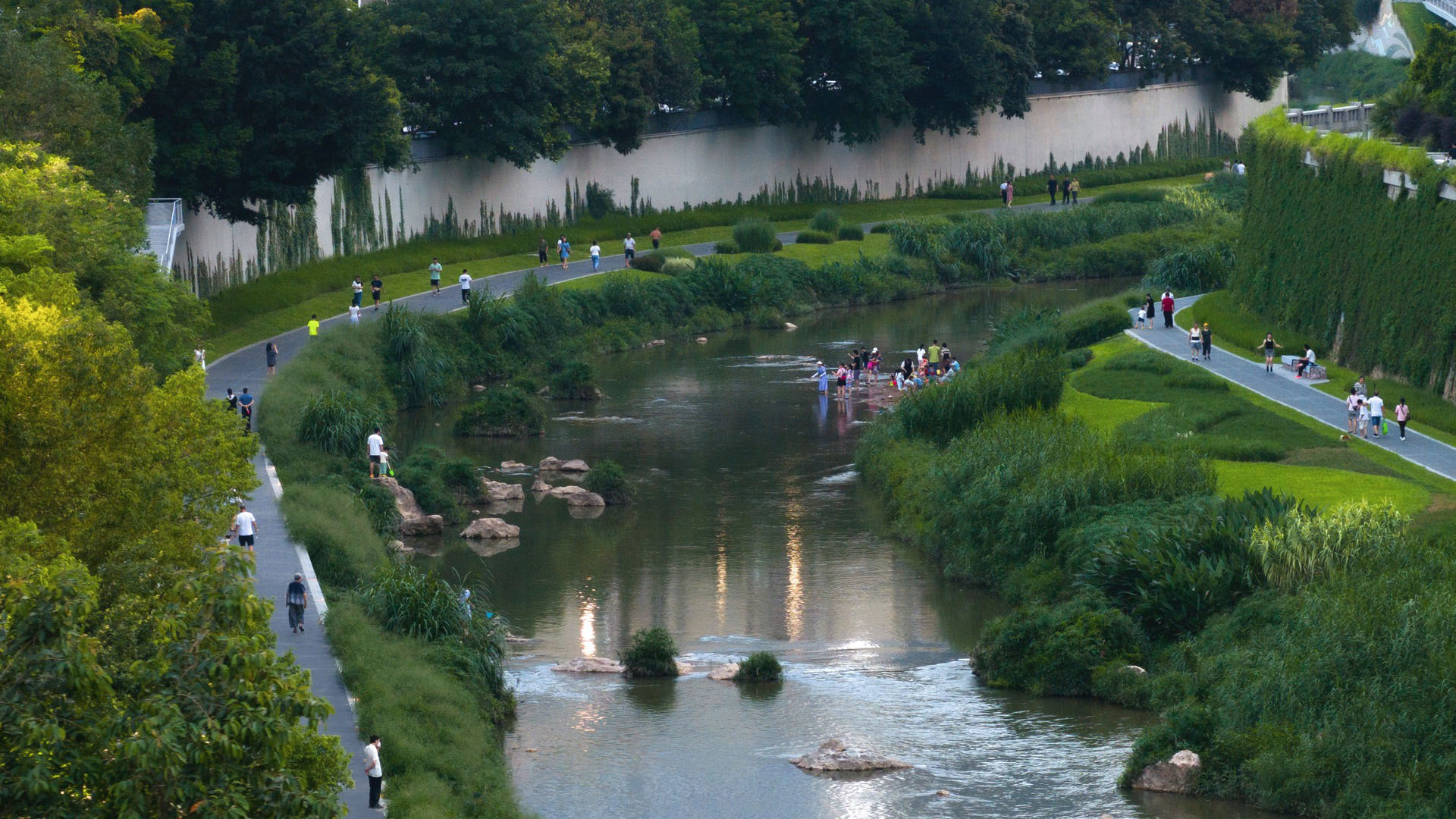
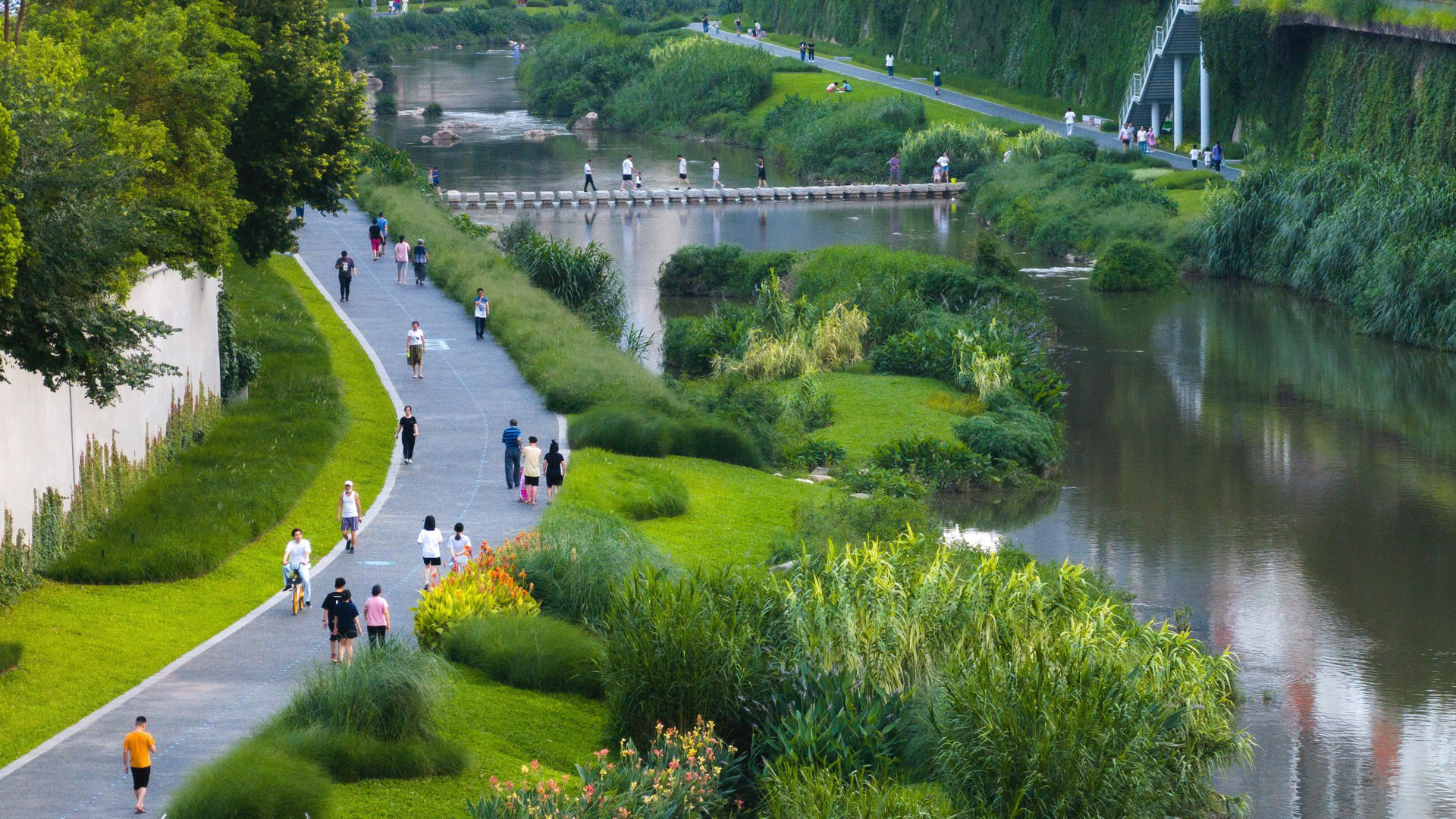


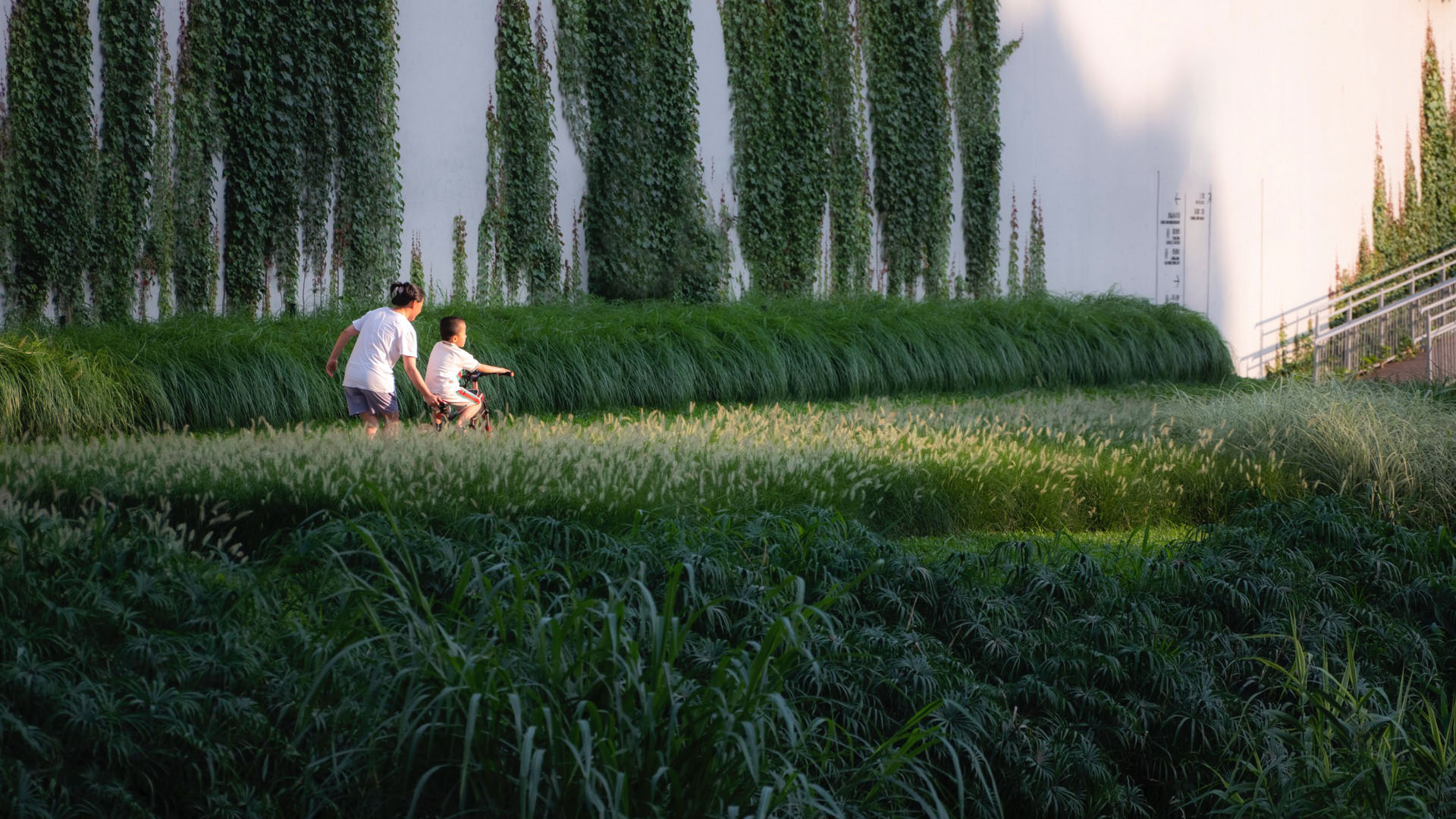
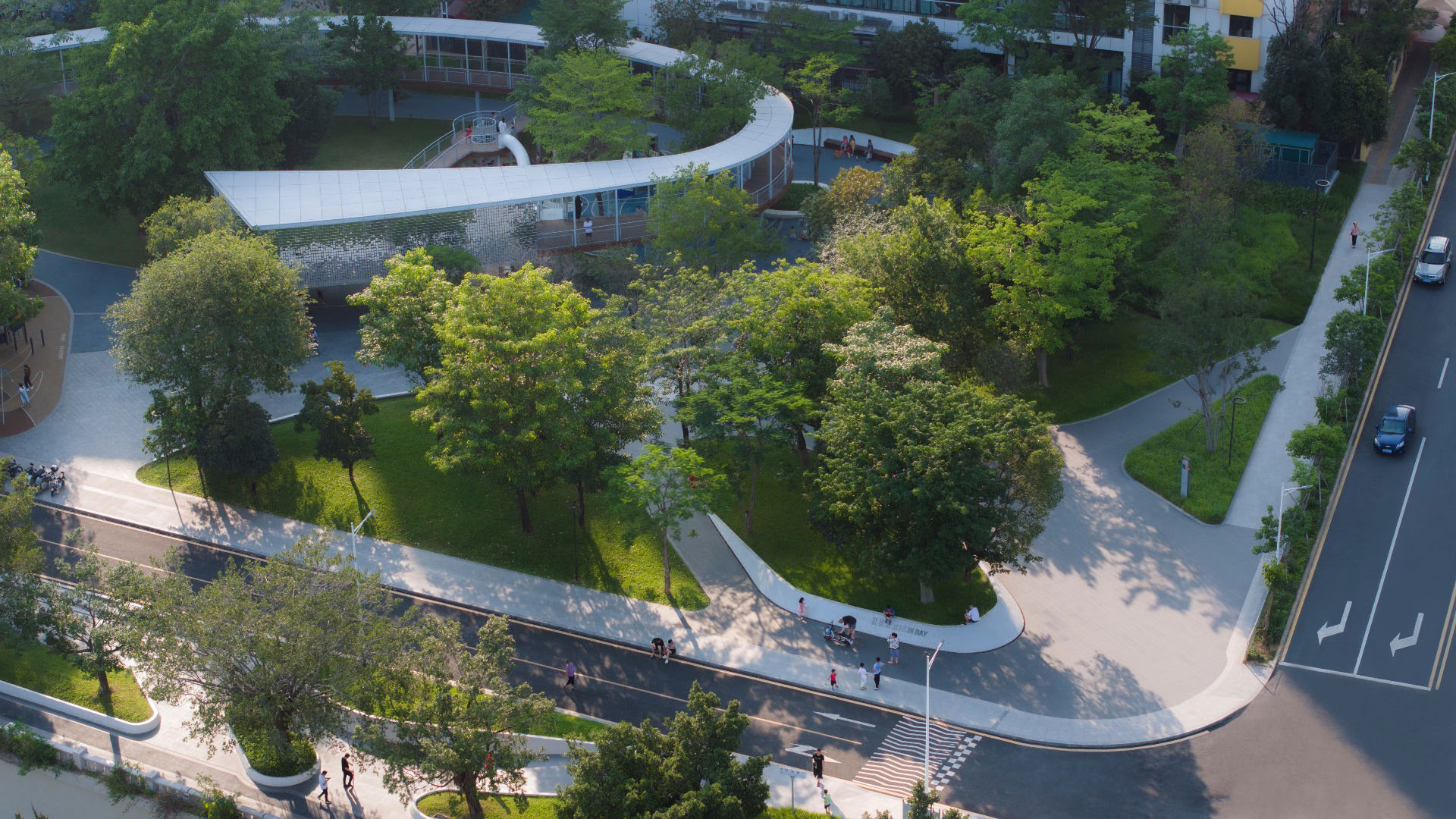
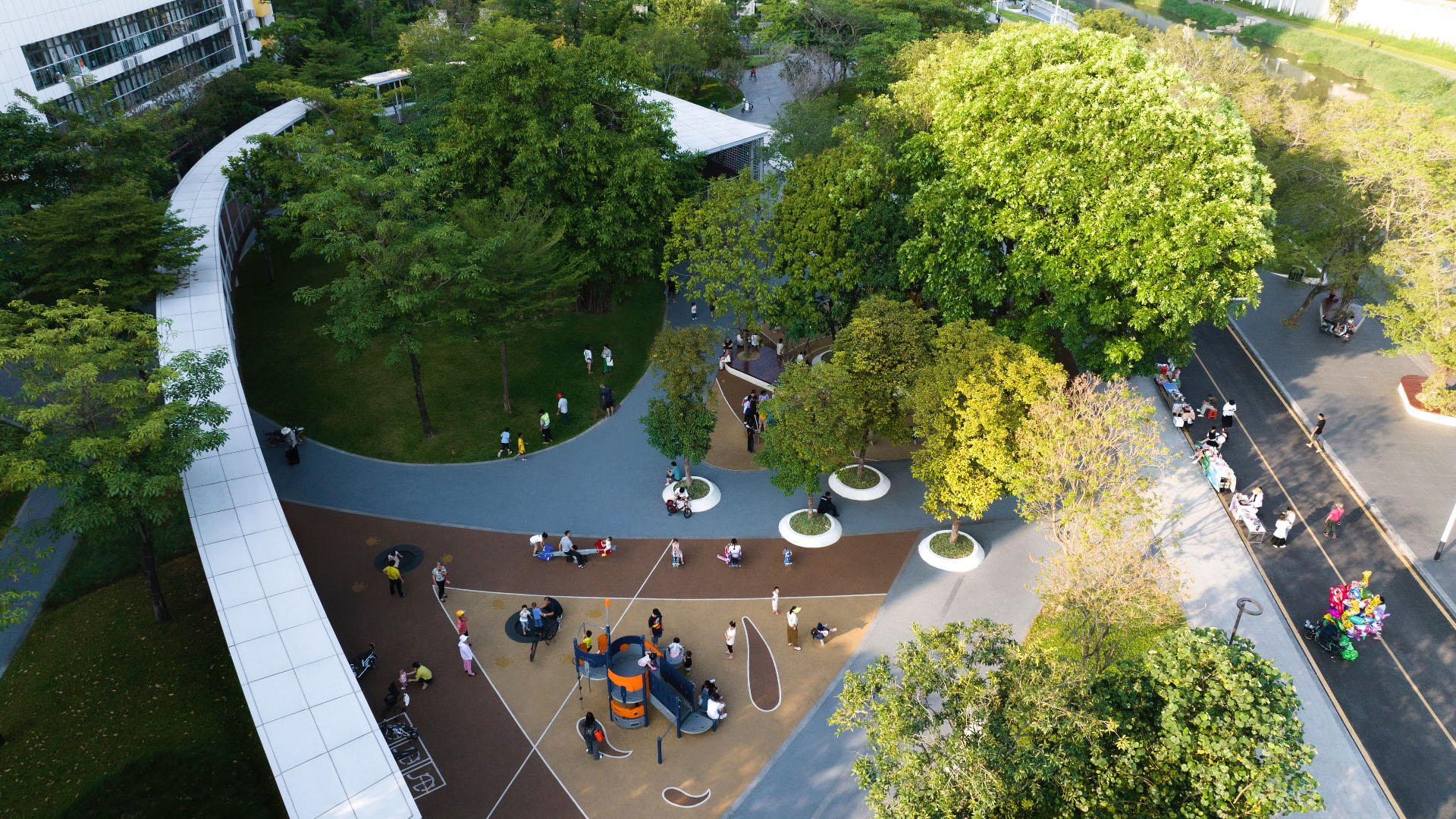
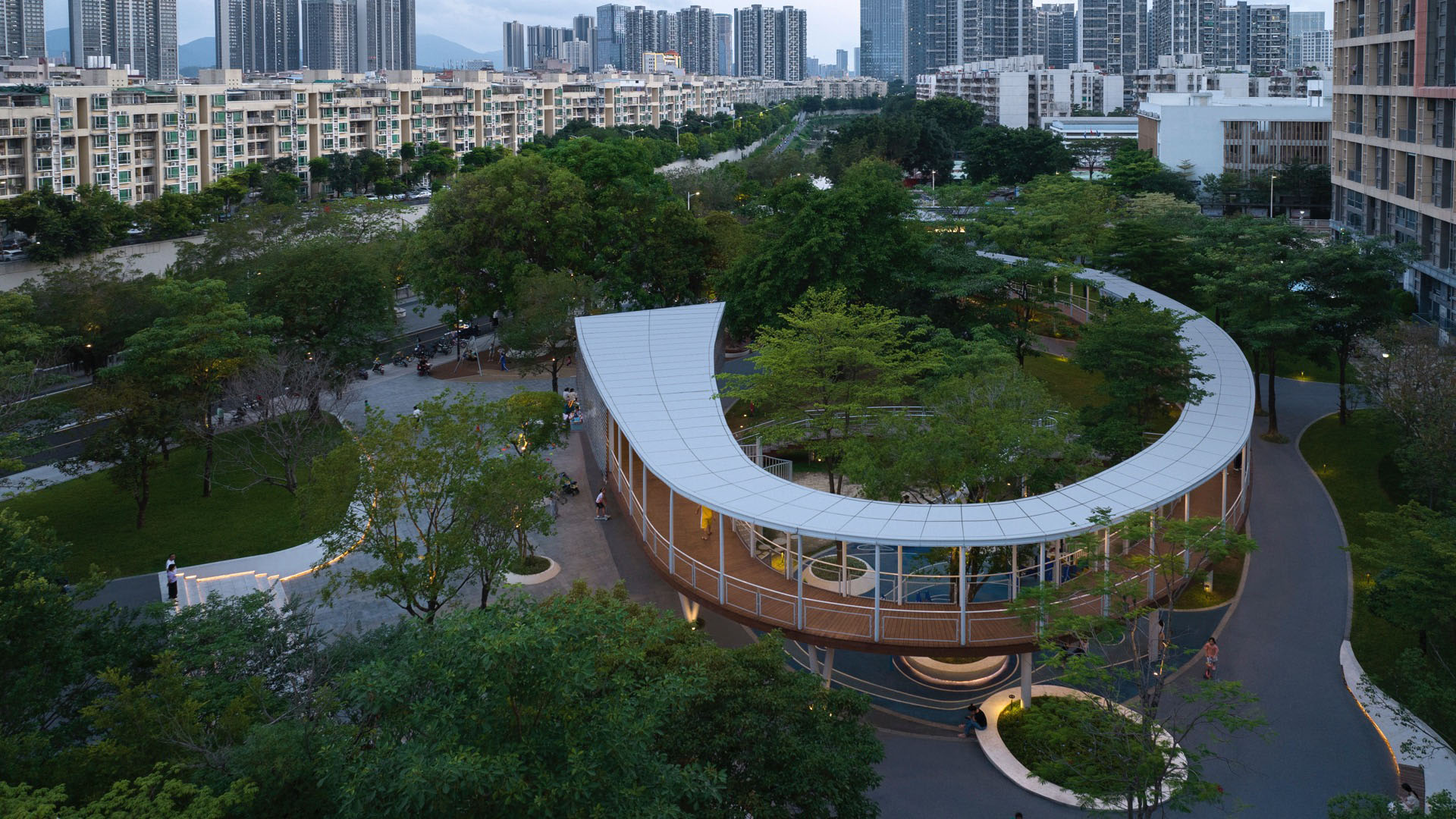
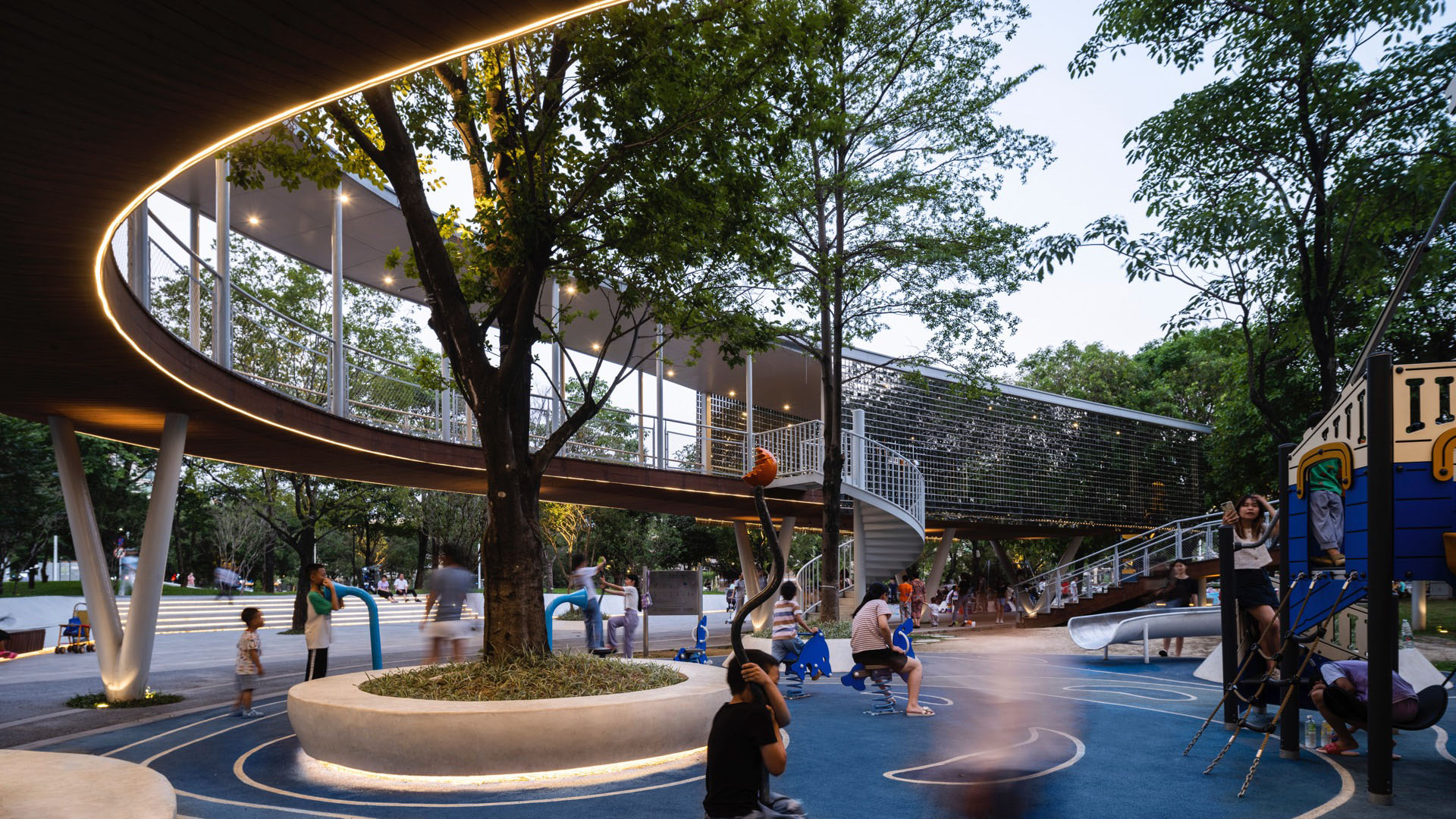
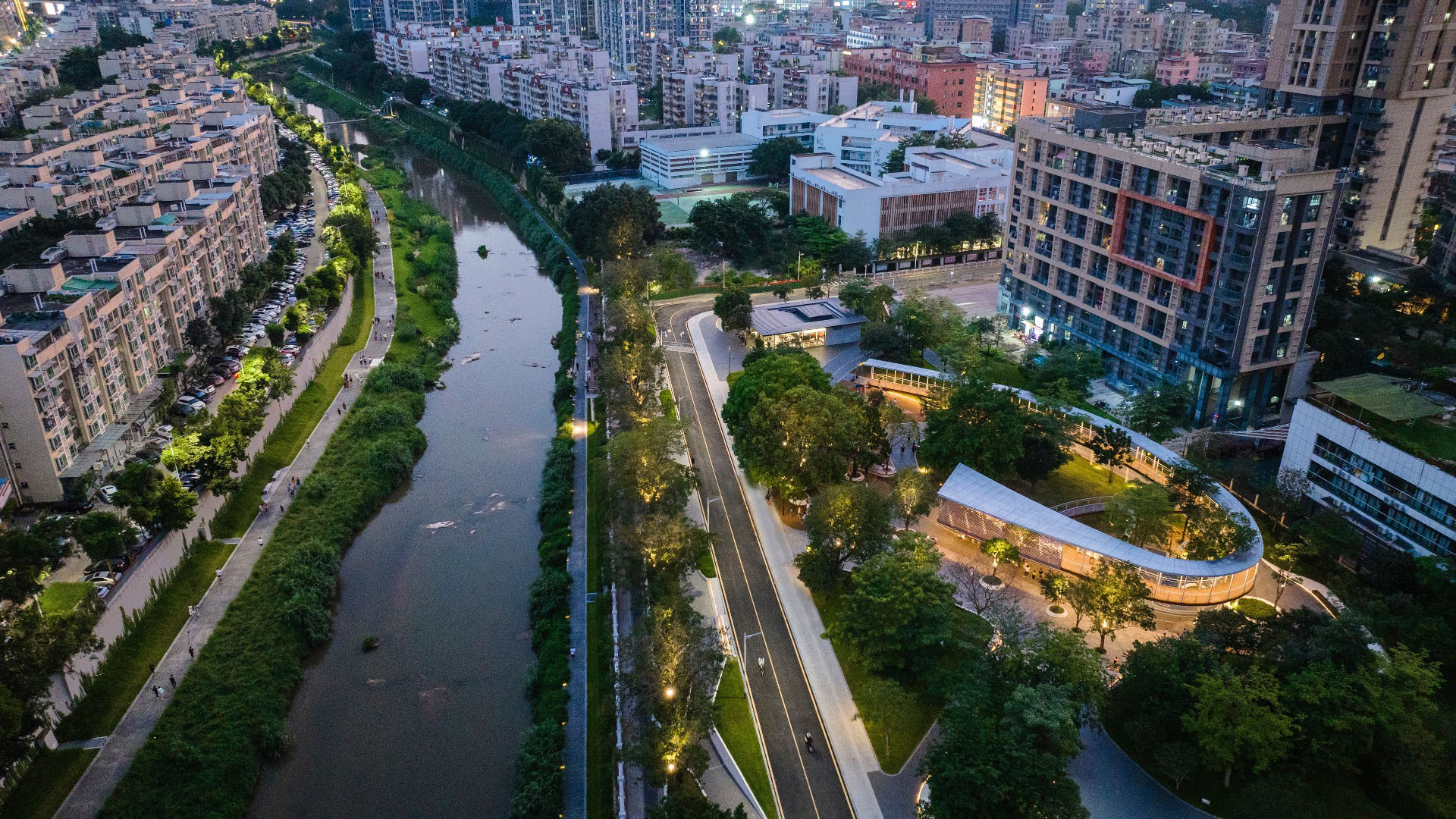
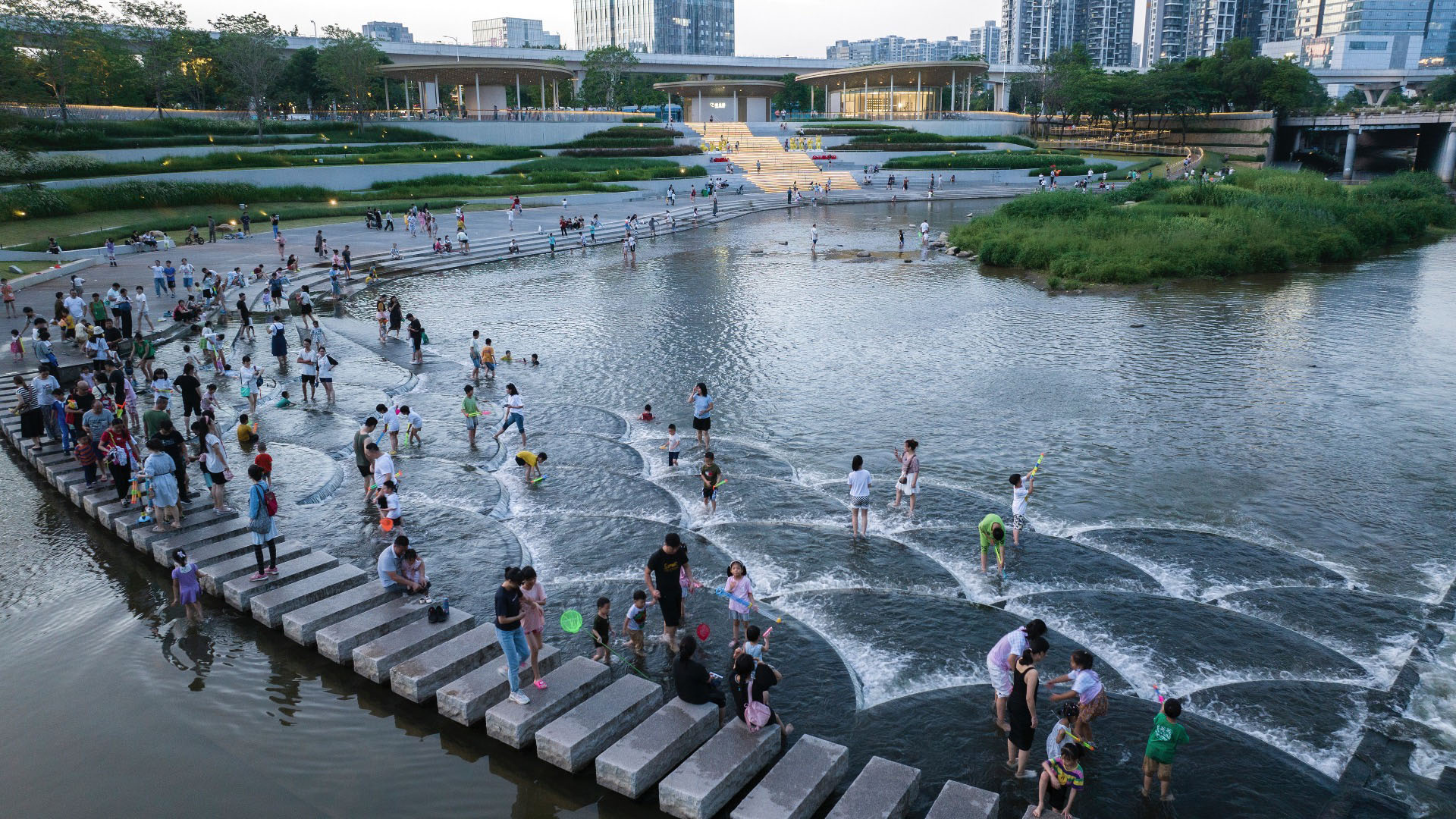
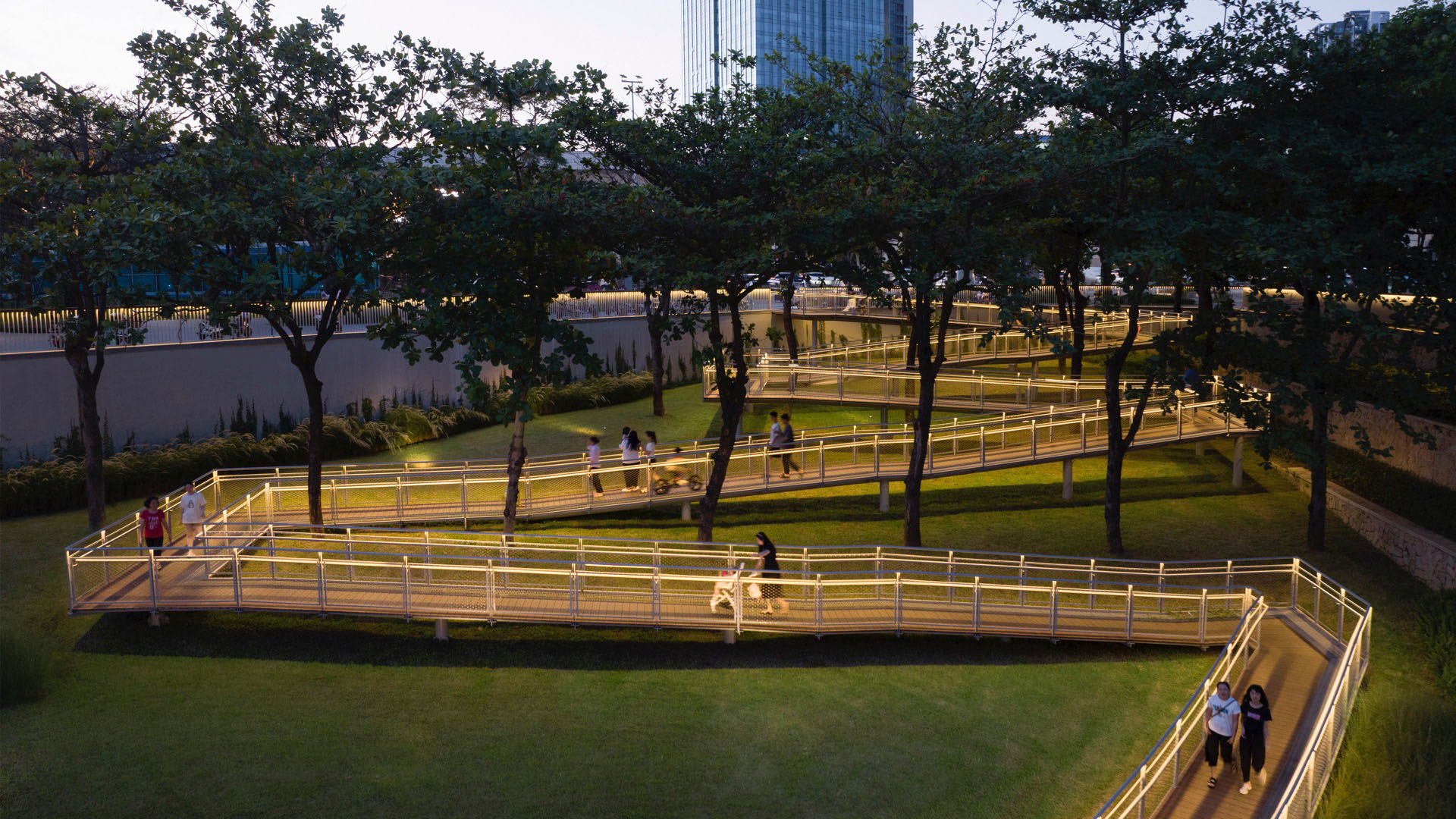
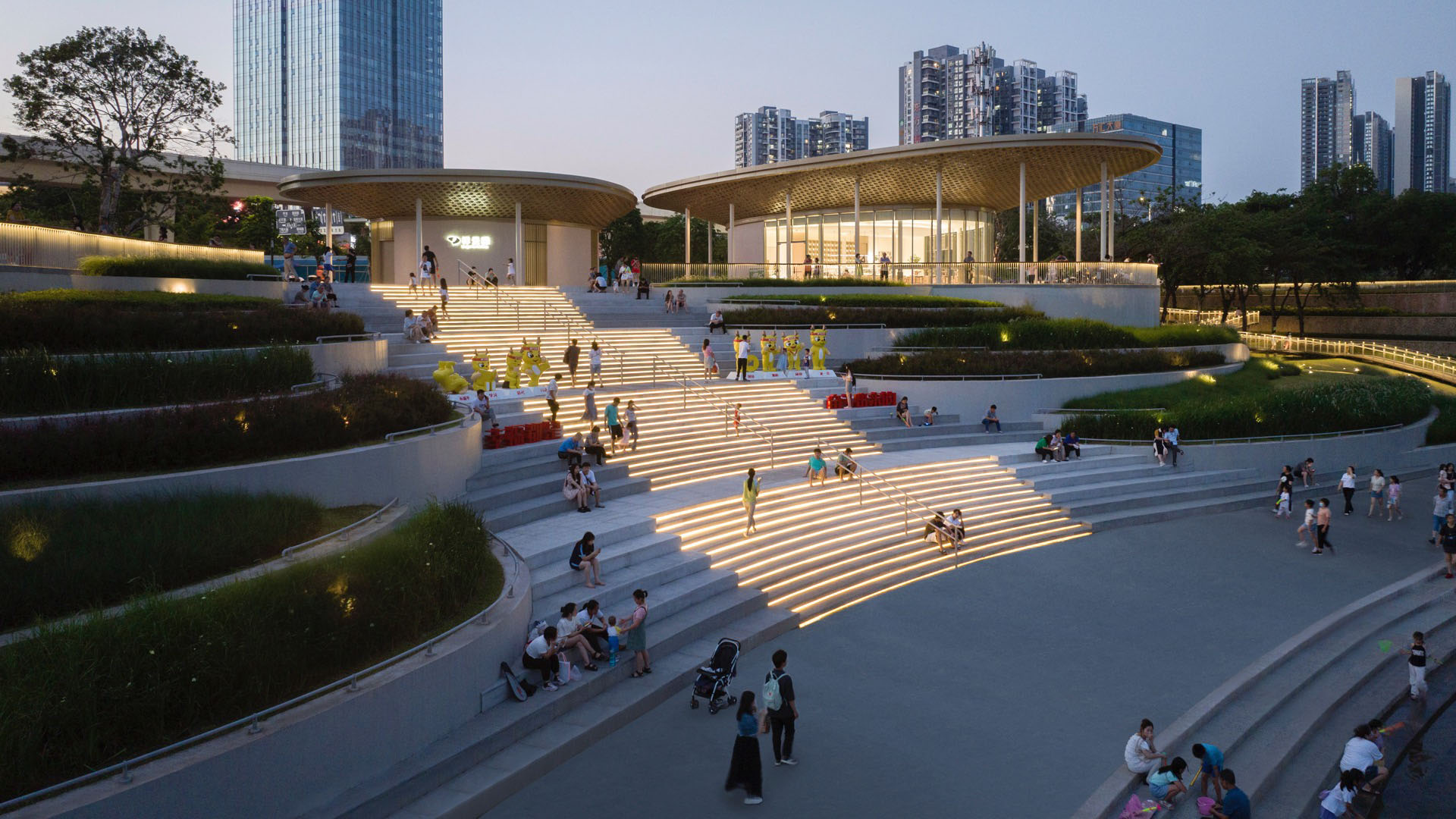
The Shenzhen Longgang River Blueway System is envisioned to unlock the tremendous land value of this 13-mile-long suburban watershed and galvanize the city’s future growth. SWA’s proposal addresses urbanization issues pertaining to water, the environment, and open space shortage, while also activating industrial and cultural revitalization in the surrounding district. The design builds riverside ecological corridors at a regional scale while guaranteeing water quality and quantity; by incorporating pockets of native planting and habitat that extend deep into the adjacent urban areas via rain gardens and bioswales, streets move water as well as people and vehicles. Striking murals line the riverside walls and punctuate urban villages and new developments, conveying the history of Longgang and the Hakka people who inhabited these lands centuries ago.
Residents and visitors are offered a rich variety of outdoor pursuits: art, craft, and food markets; music events, and fascinating evening light shows. Unique developments engage the river as a new recreational resource. Sporting opportunities for young adults, adventure play for children and families, and birdwatching for seniors define the new open spaces along the river.
Dubai Expo 2020
From October 2021 to April 2022, the City of Dubai hosted the World Expo: a large-scale International Registered Exhibition that brings nations together with universal themes and immersive experiences. It comprises an entirely new city, built on a 1,083-acre site between Dubai and Abu Dhabi. The Expo site is organized around a central plaza linked to three mai...
Litou Mountain Park
Within Guanlan Forest, an ecological heart of Shenzhen, Litou Mountain Park takes inspiration from the clothing design and production processes of Dalang Fashion Town. The town is a future gathering destination for fashion’s rising talents and a center for art. Blending nature and textiles, the project situates the park at the front of the fashion fronti...
Lynwood Mega-Playground
Inspired by the city’s rich history of aerospace research and manufacturing, Lynwood Mega-Playground brings a dynamic space exploration-themed playground to the heart of the Central Los Angeles city.
Completed in Fall 2024, the playground transforms the Northwest corner of Lynwood Park into a colorful spectacle with super-sized play features including a...
Fernwood Avenue Park
The Fernwood Avenue Park represents a significant opportunity for the city to enhance the water quality and availability of groundwater for residents, while also offering public amenities. Equipped with four detention basins that capture water onsite and from the street, the project plays an important role in the community as a stormwater infiltration site. Th...