

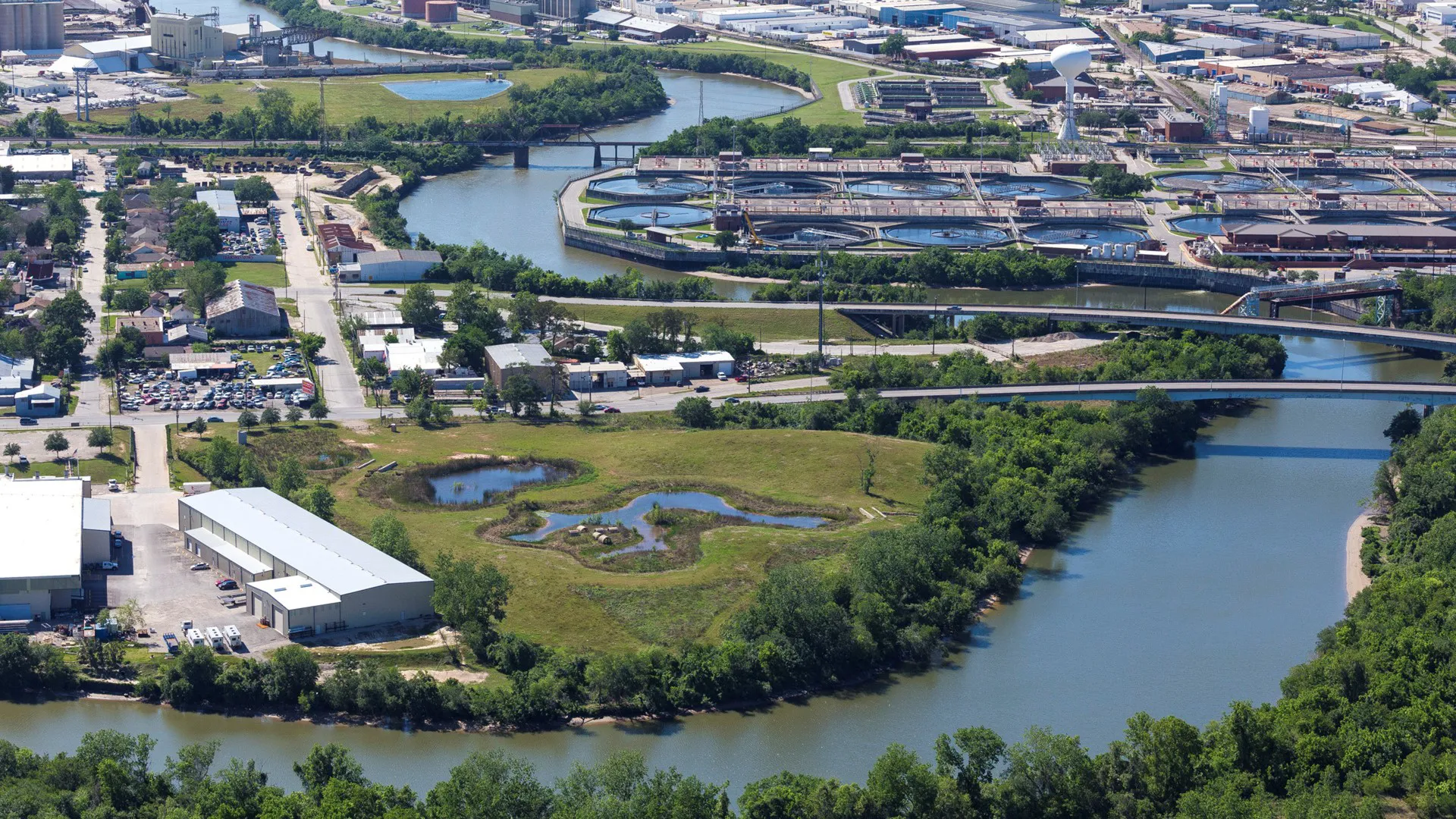
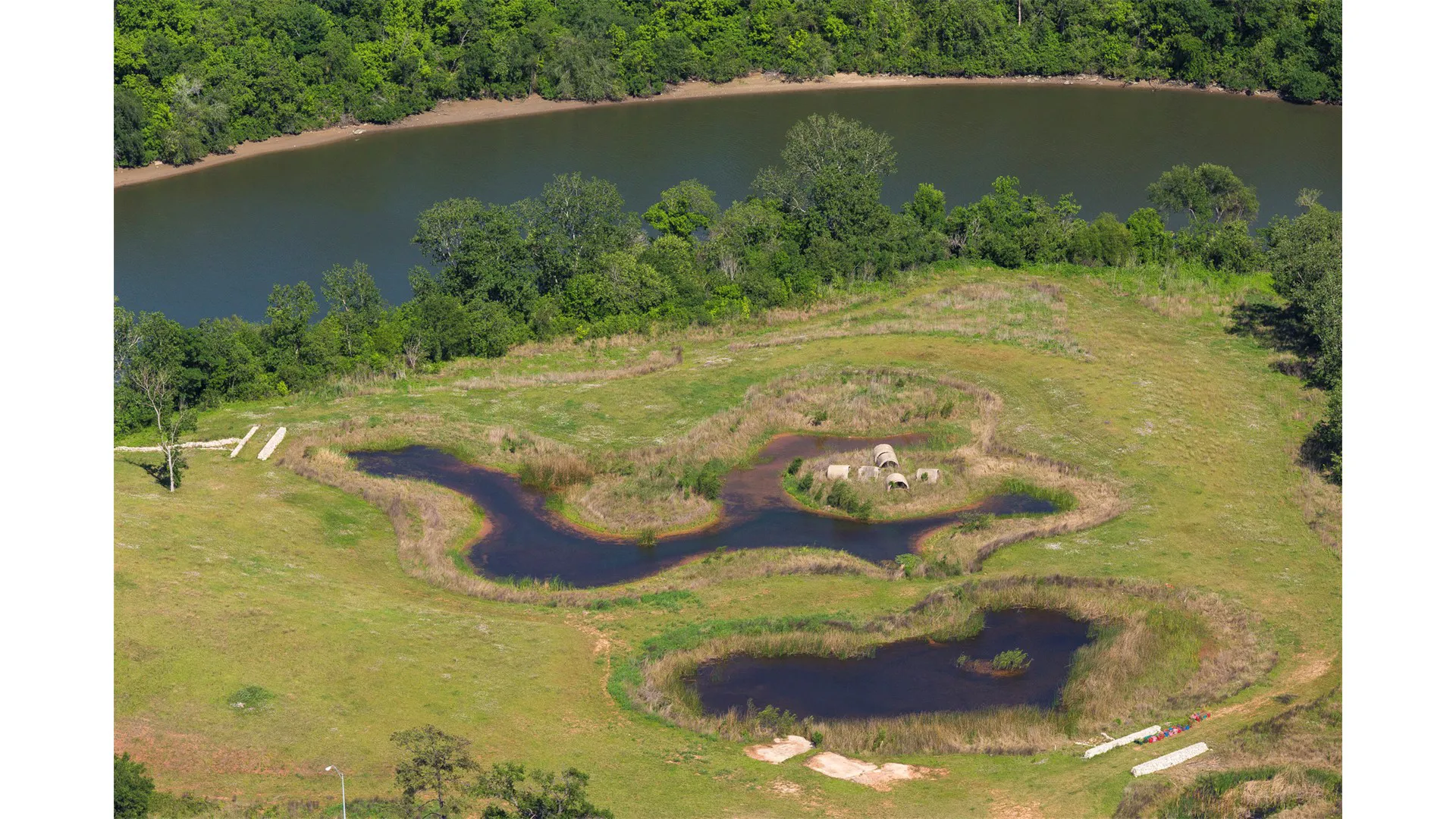
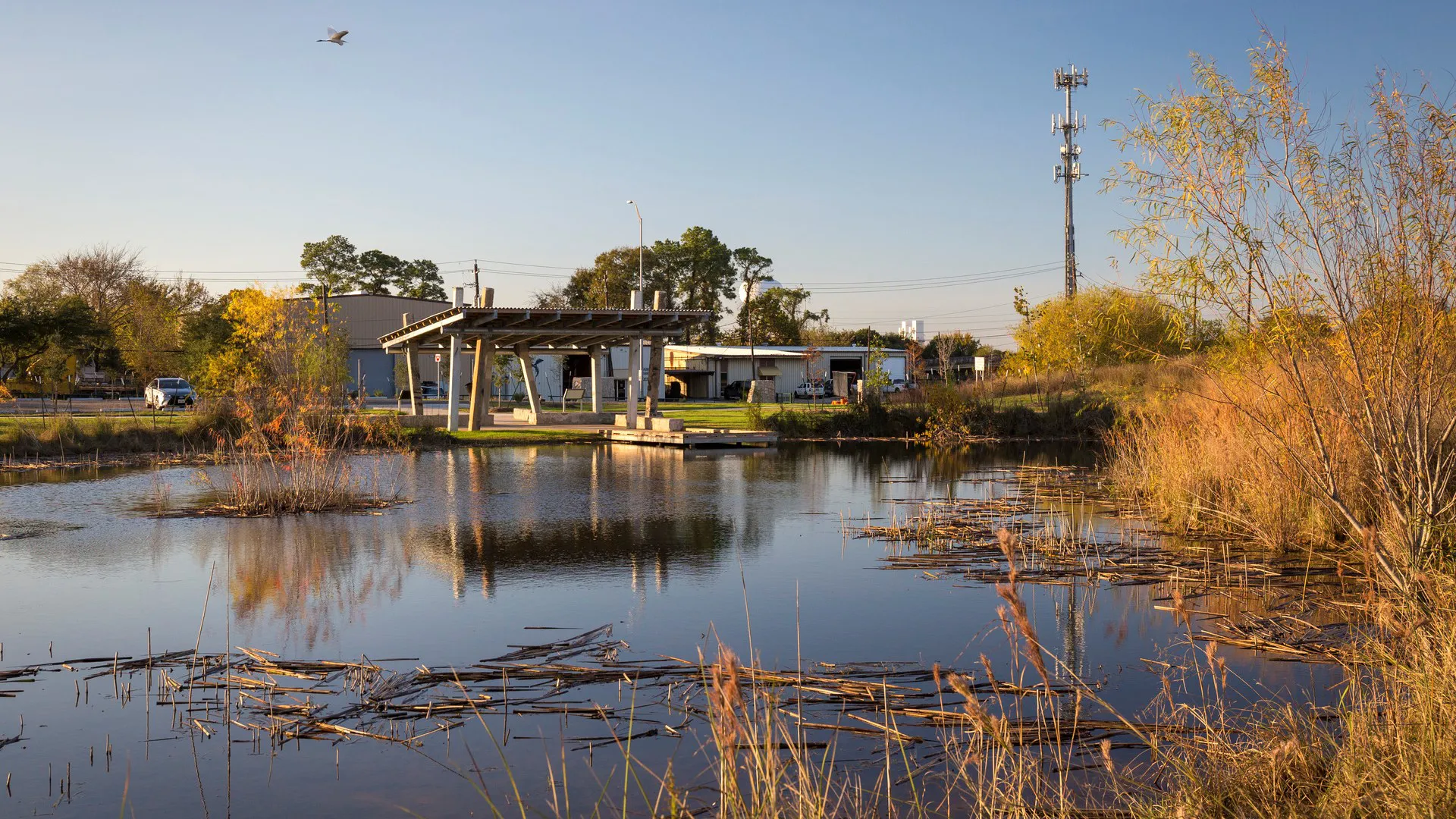
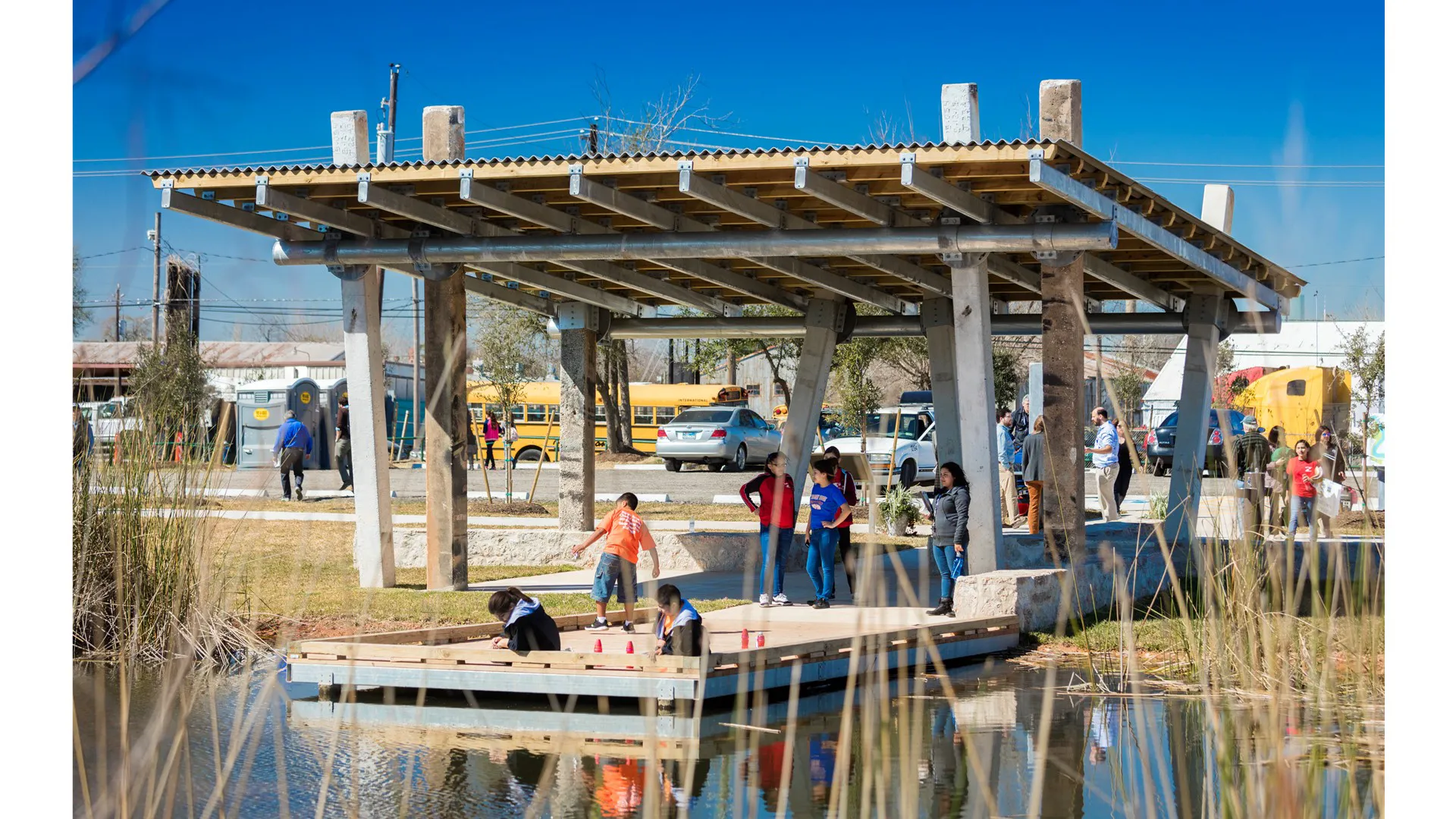
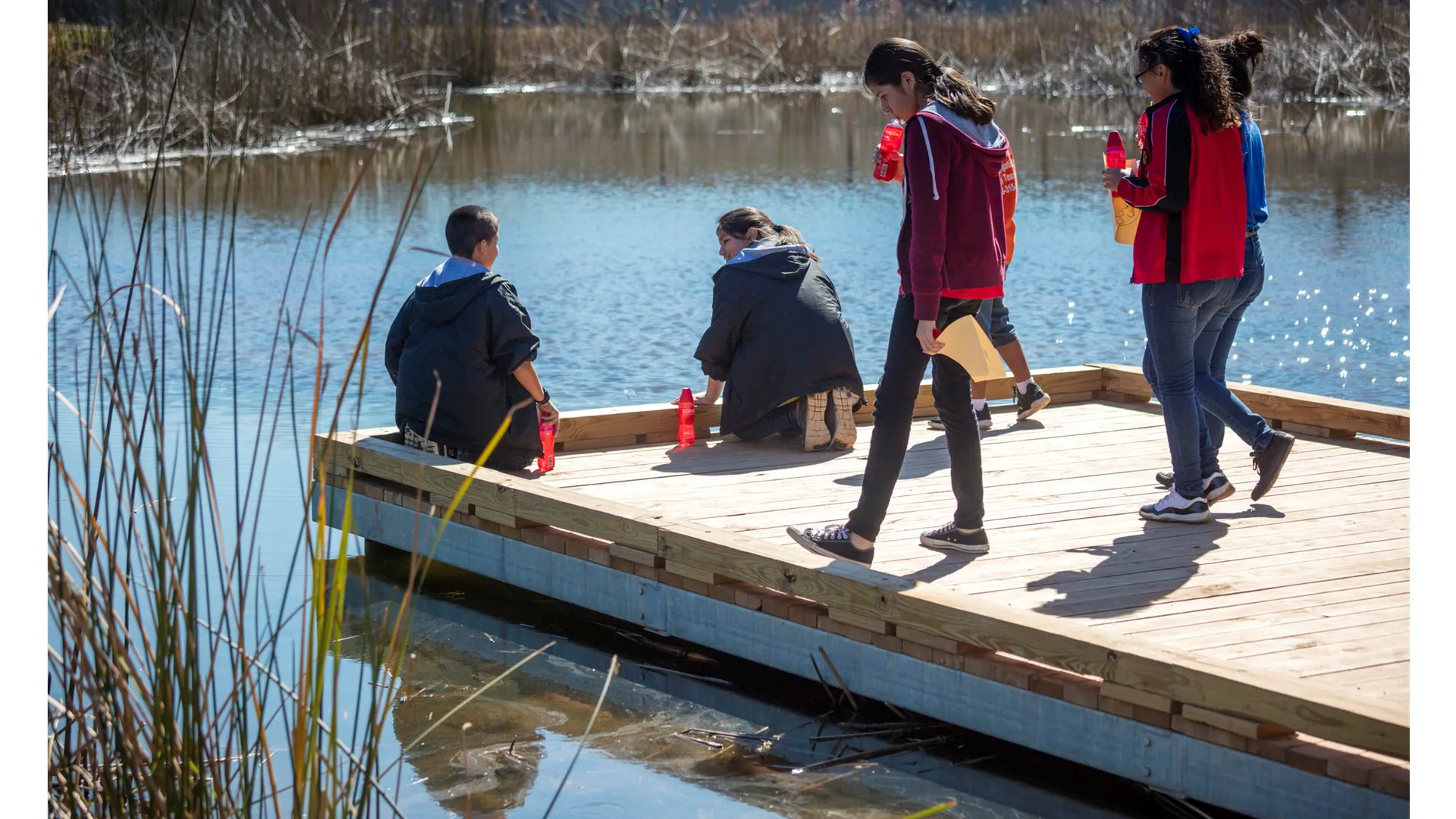
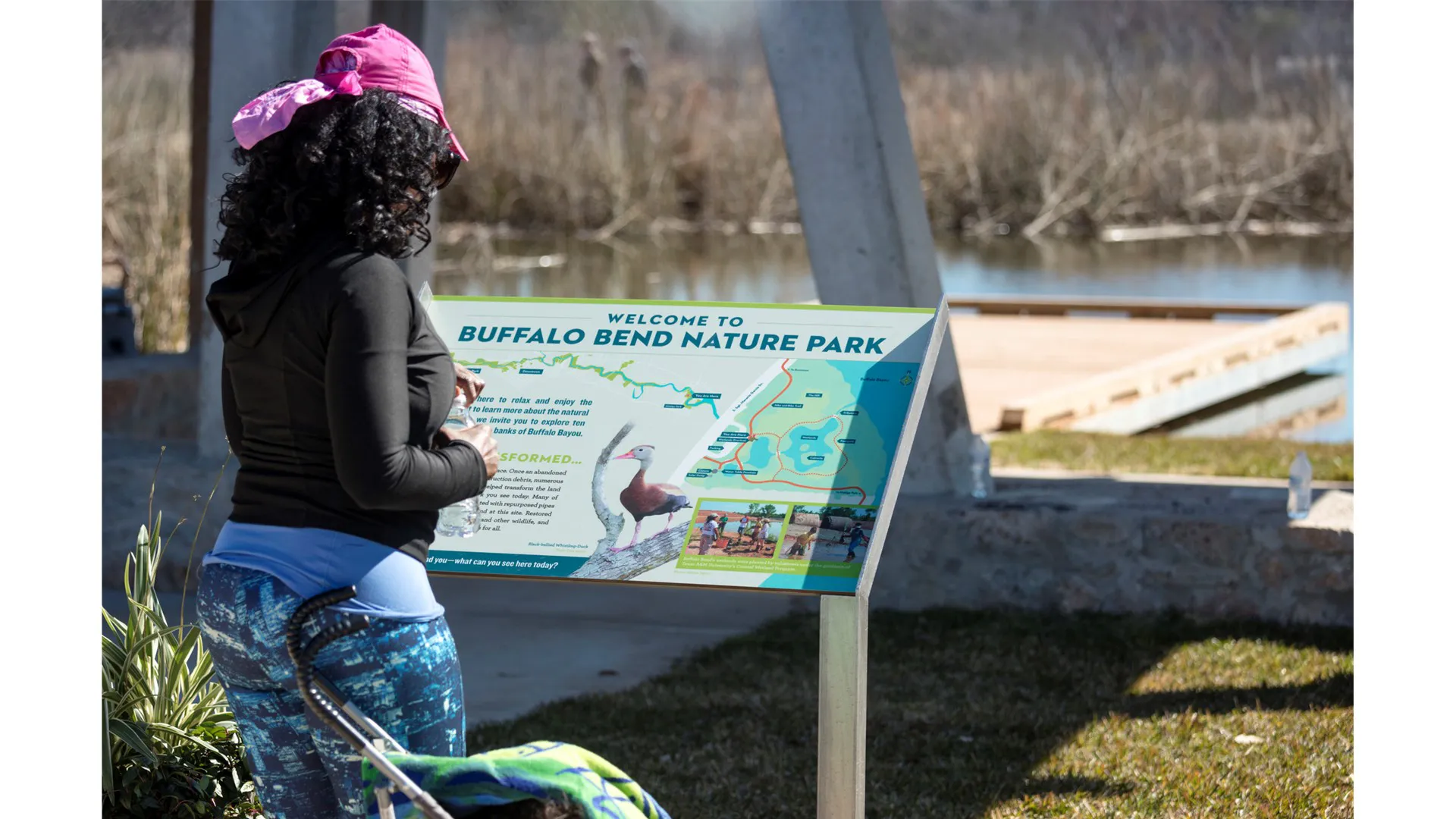
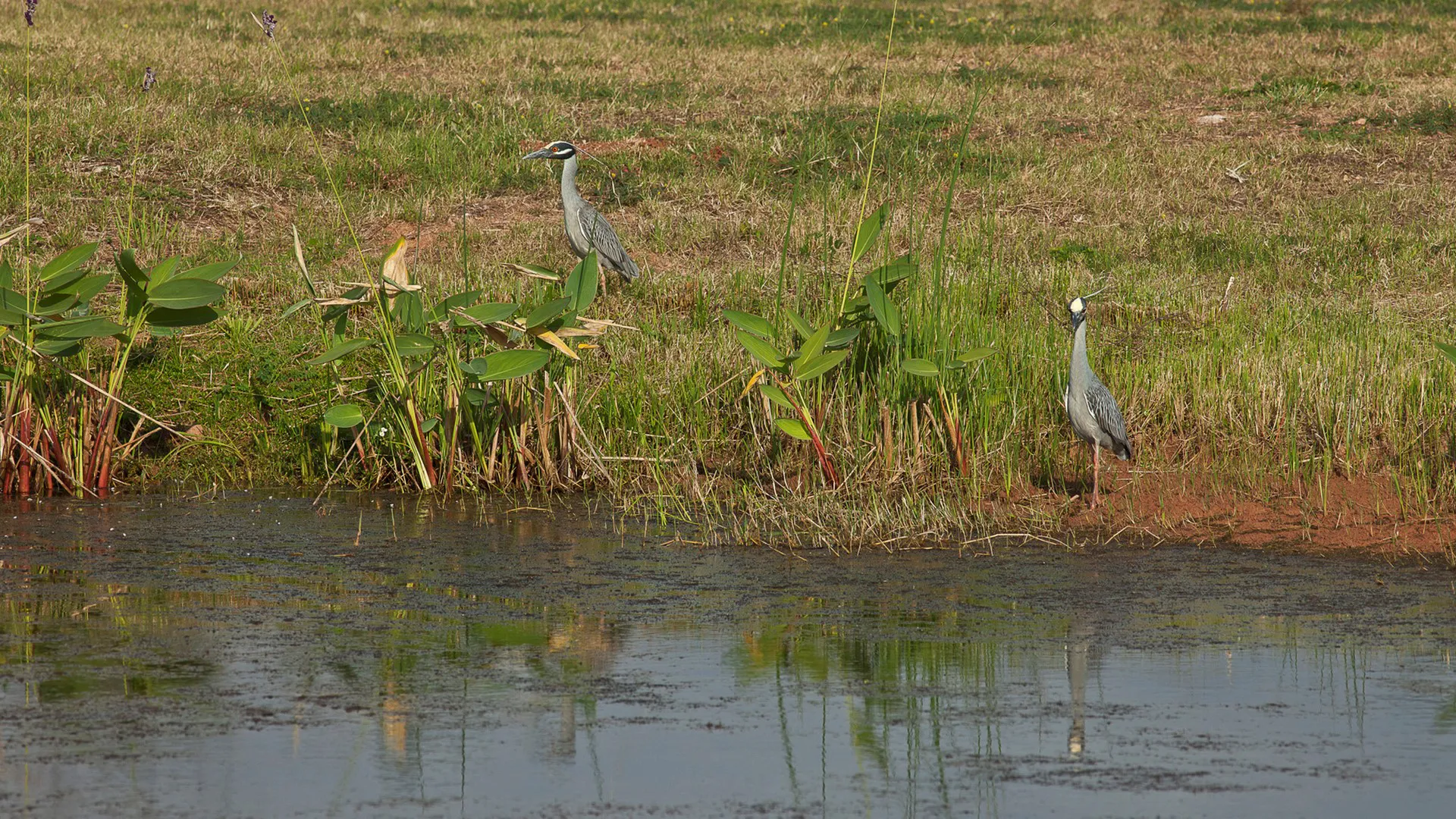
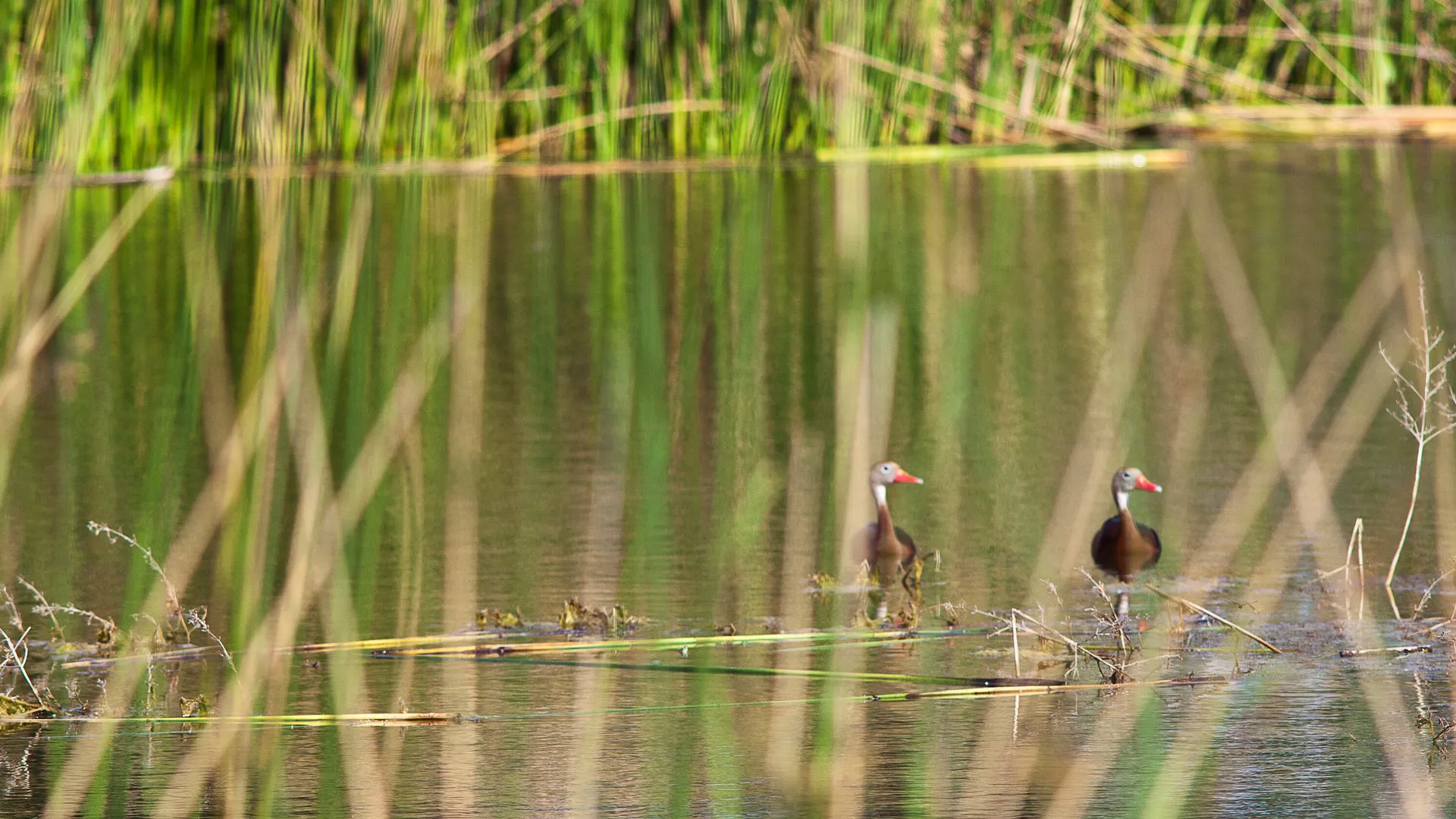
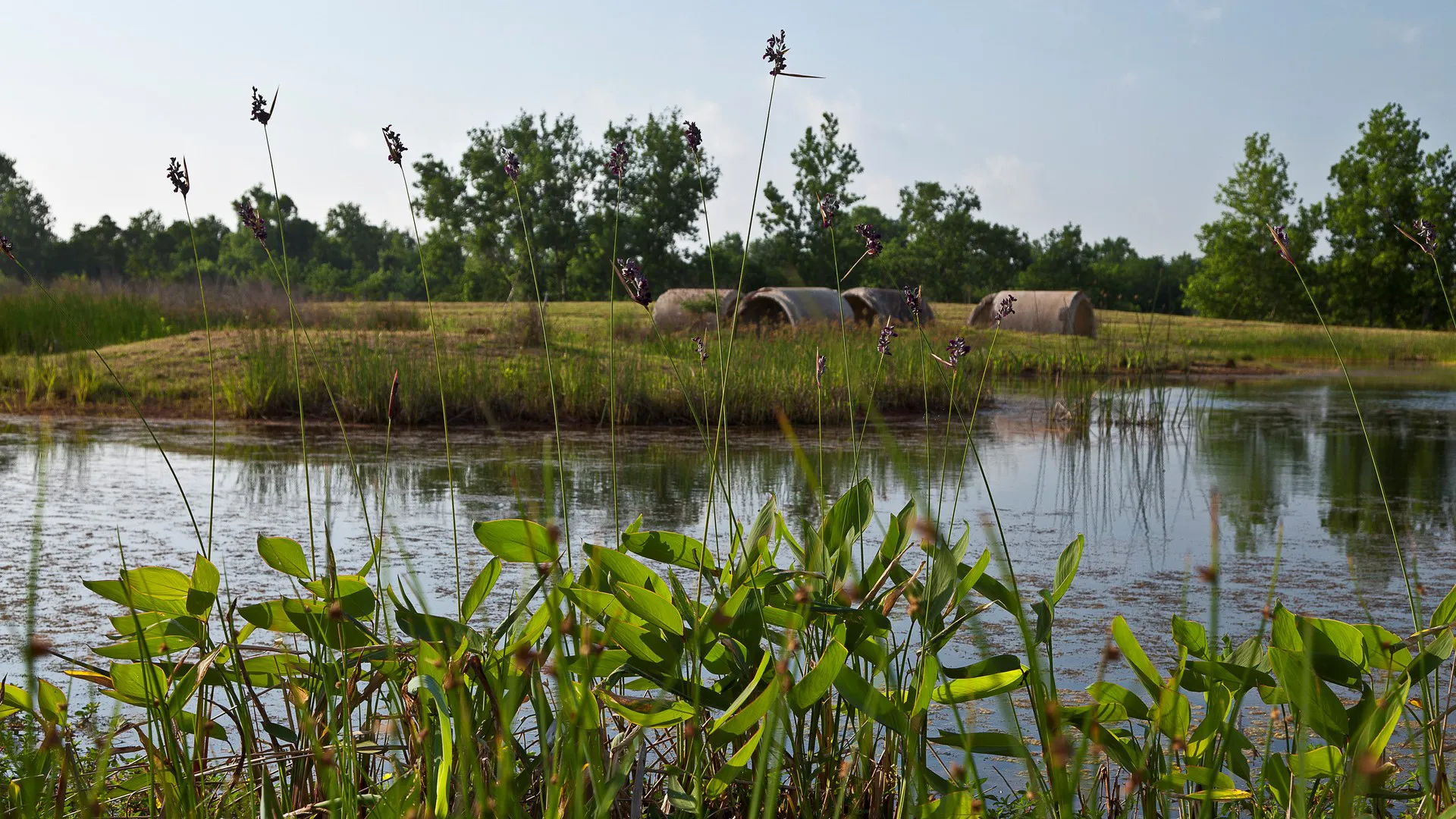
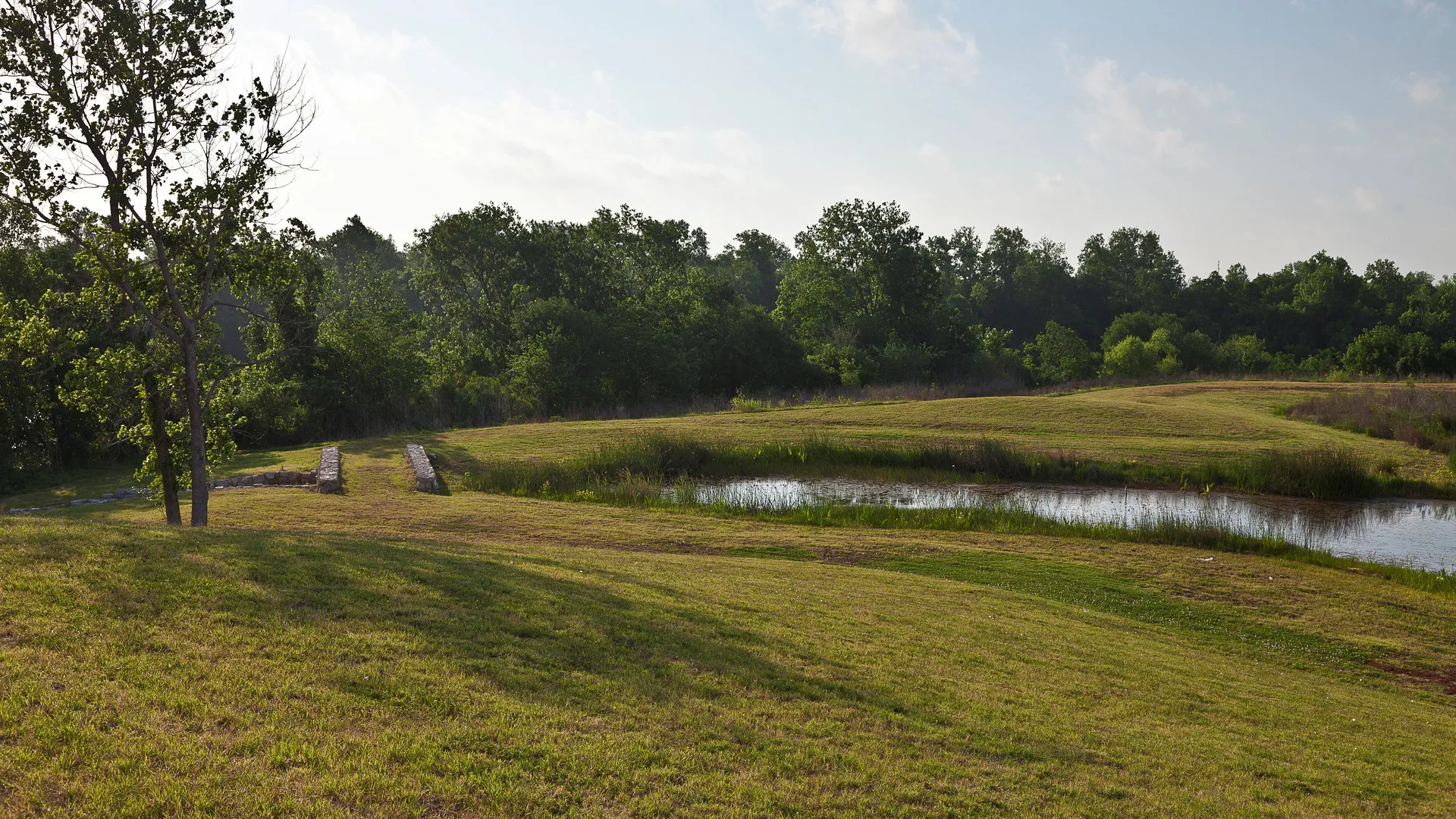
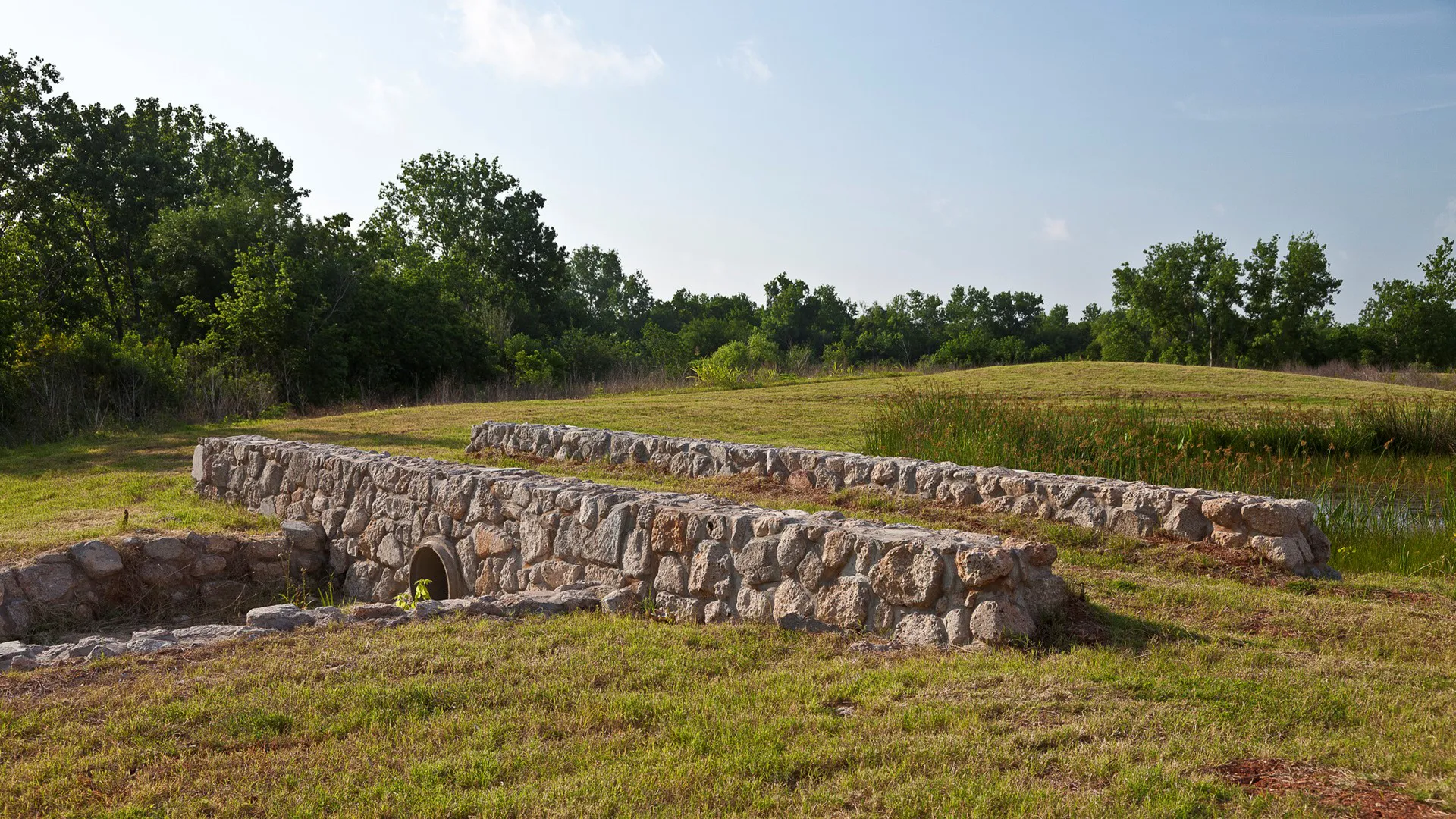
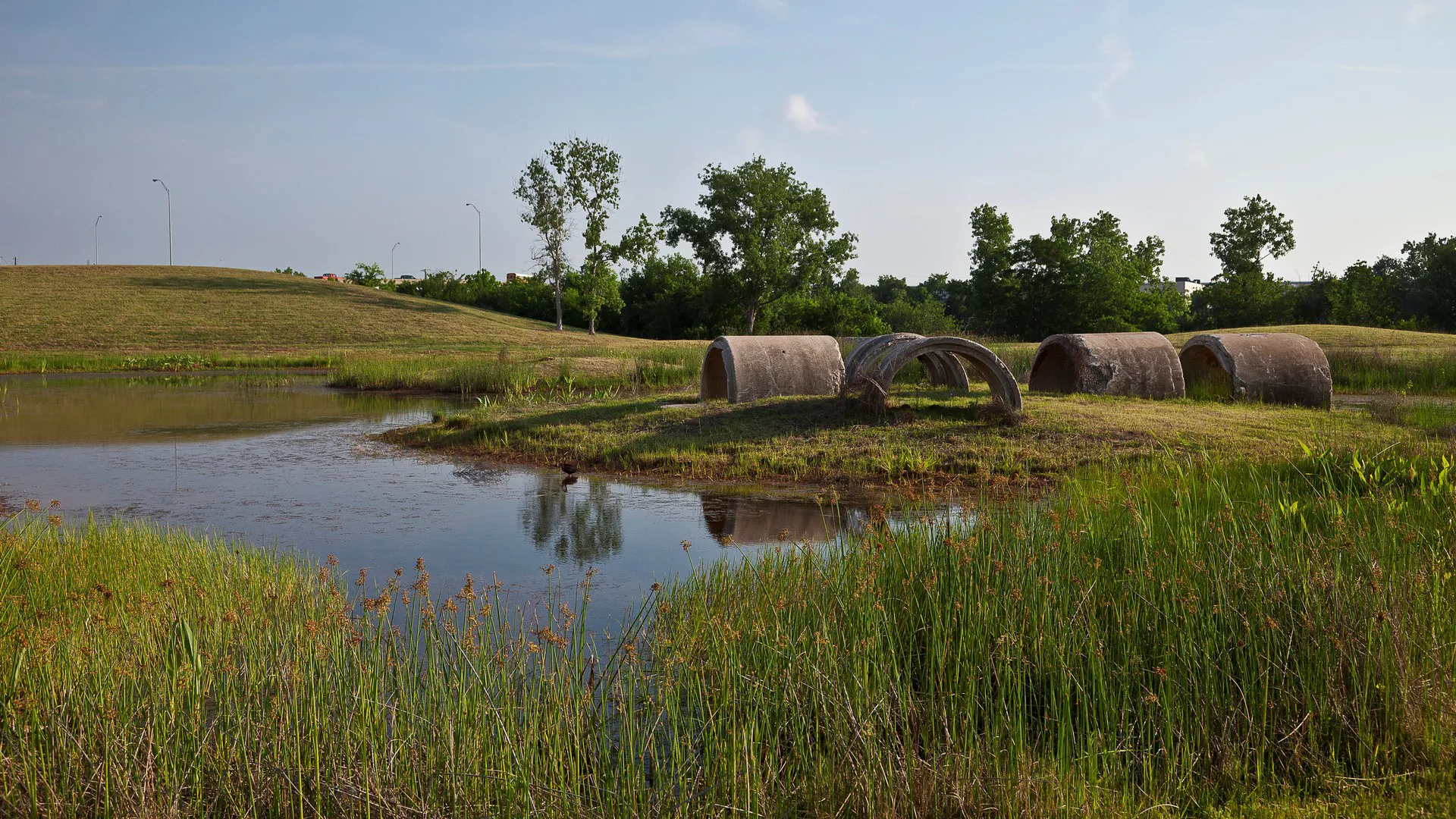
Houston’s East End is a bifurcated community, with heavy industry brushing up against a vibrant and culturally diverse residential area. Answering residents’ call for more park space, SWA created Buffalo Bayou Bend Nature Park by converting a formerly neglected industrial site into a wetland ecosystem and public green space.
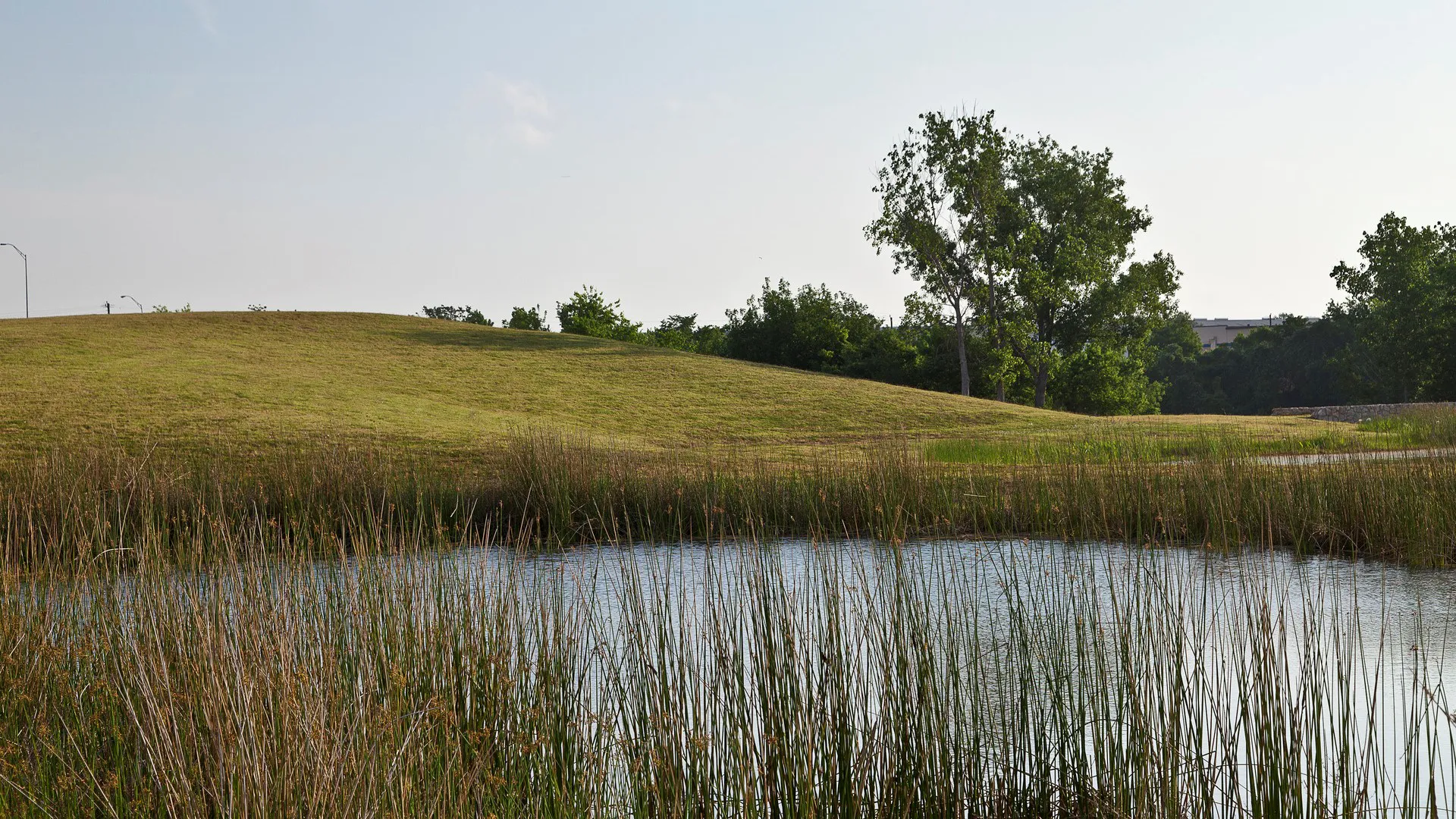
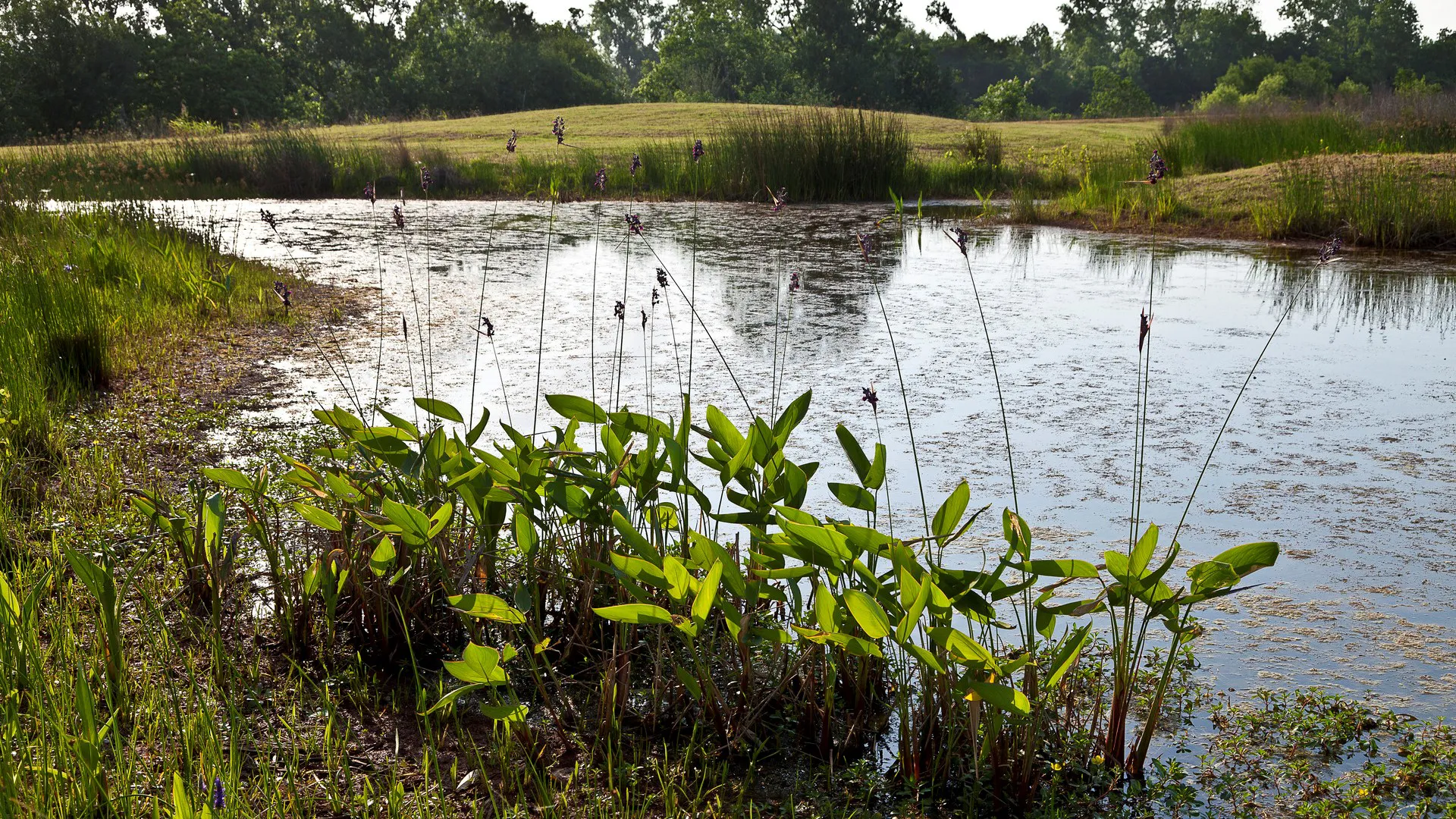
Three interconnected ponds, hosting 10,000 carefully chosen native plants, create a natural filtration system for urban runoff. A solar-powered pump draws water from Buffalo Bayou into a repurposed concrete cistern, initiating its journey through these constructed habitats. As it meanders, the water is cleansed of bacteria, excess nutrients, and toxic materials before returning to its source. An interactive “Water Table” allows visitors to compare the quality of incoming and outgoing flows, making this complex ecological process tangible.
ADA-compliant crushed gravel paths wind through the wetlands, while a small hill formed from excavated material adds topographic interest and offers a vantage point for visitors. Recycled elements throughout pay tribute to the site’s industrial past.
As a node on a 10-mile regional trail network, Buffalo Bend Nature Park addresses the need for open space in this historically underserved area and serves as a model for ecological restoration and education.
Resonant Memory: One October Memorial
Inspired by the shared love of country music that brought people from all over the world together for the Route 91 Music Festival, Resonant Memory is based on the shape of an acoustic guitar. The design makes particular use of the instrument’s sound hole as a recurring motif to represent absence, honoring the lives lost on October 1, 2017, in Las Vegas, Nevada...
Naftzger Park
Naftzger Park offers a contemporary and communal gathering space in downtown Wichita with enough variety to appeal to everyone. Designed to activate an area of town between Old Town and a burgeoning new entertainment district, the park is at once an urban foyer and outdoor recreation room. A contemporary pavilion can accommodate picnic tables by day and perf...
Portsmouth Square
Portsmouth Square is the heart of San Francisco’s Chinatown: the main civic park for all community festivals and events as well as an important day-to-day outdoor living room for the community. Centered in the densest community in the United States west of the Hudson River, the park plays a critical role in the health and well-being of the local residents, ove...
Bensonhurst Park
Bensonhurst Park is part of the larger Shore Parkway, an 816.1-acre collection of parks that stretches across Brooklyn and Queens. Today, the site provides a series of pathways, passive seating areas, recreational fields and a playground.
SWA/Balsley created a master plan for the redesign of the north end of the park and final design and construction doc...