

Where Landscapes Begin
Over the past several decades, landscape architecture has expanded its understanding of what constitutes a site.
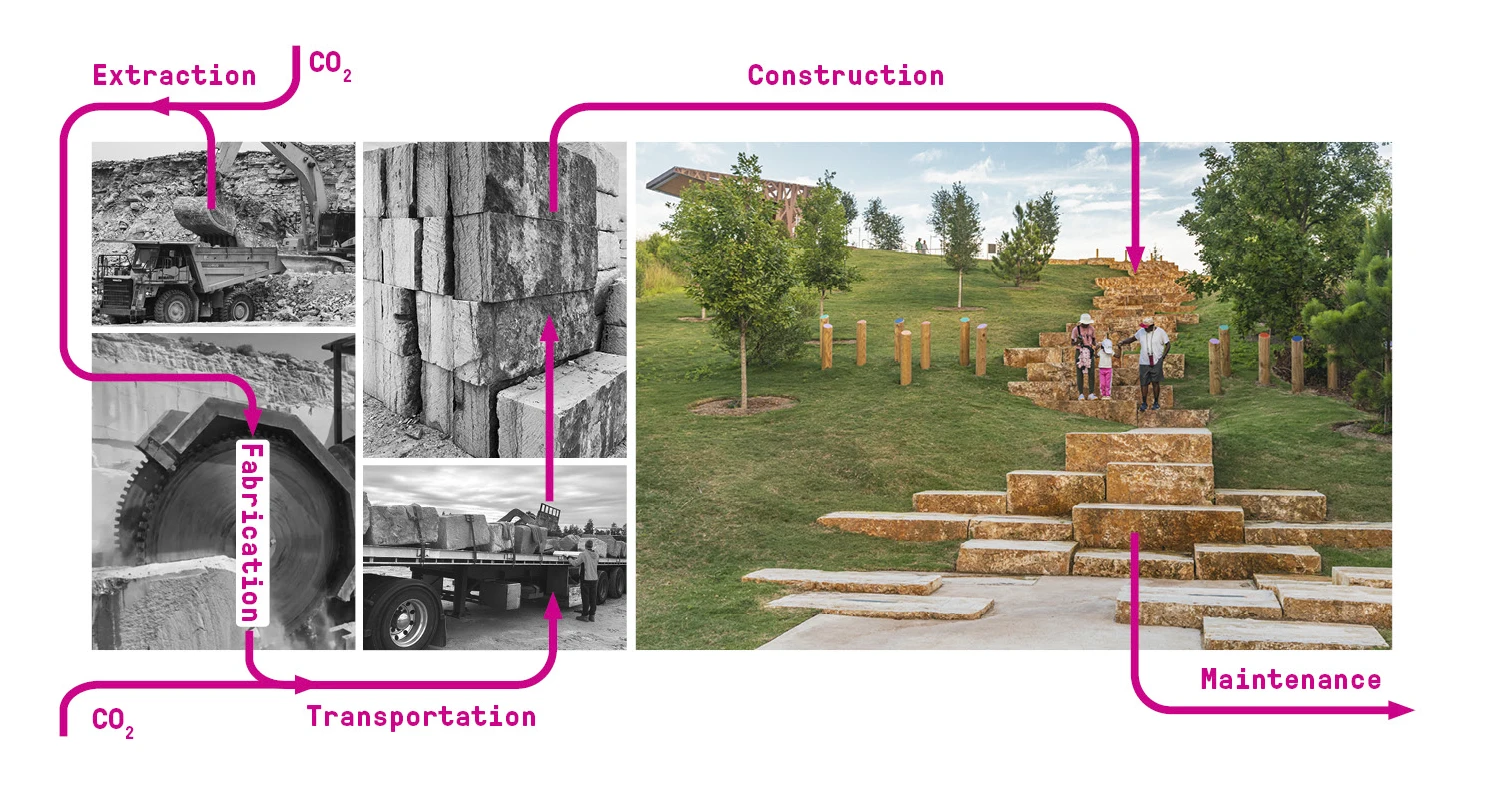
Once understood primarily as a physical location, site has become something much richer—a convergence of ecological processes, cultural histories, hydrologic systems, patterns of occupation, and temporal change. We have learned to read places as watersheds rather than parcels, as habitat networks rather than isolated open spaces. Landscapes are shaped as much by topography and vegetation as by cultural memory and ecological succession. Much of the richness of contemporary landscape practice has emerged from this expanded understanding of site as process rather than object.
Today, climate action asks us to make another expansion. Not outward this time, but upstream.
As landscape architects begin measuring embodied carbon in our built work, we are discovering that the project site does not mark the beginning of our influence. Rather, the processes that produce and shape our materials must be accounted for as part of our professional responsibility. Climate change is forcing us to become systems thinkers in a broader sense than ever before, grappling with questions that are geographically, politically, economically, and ethically much further removed from the places we ultimately design.
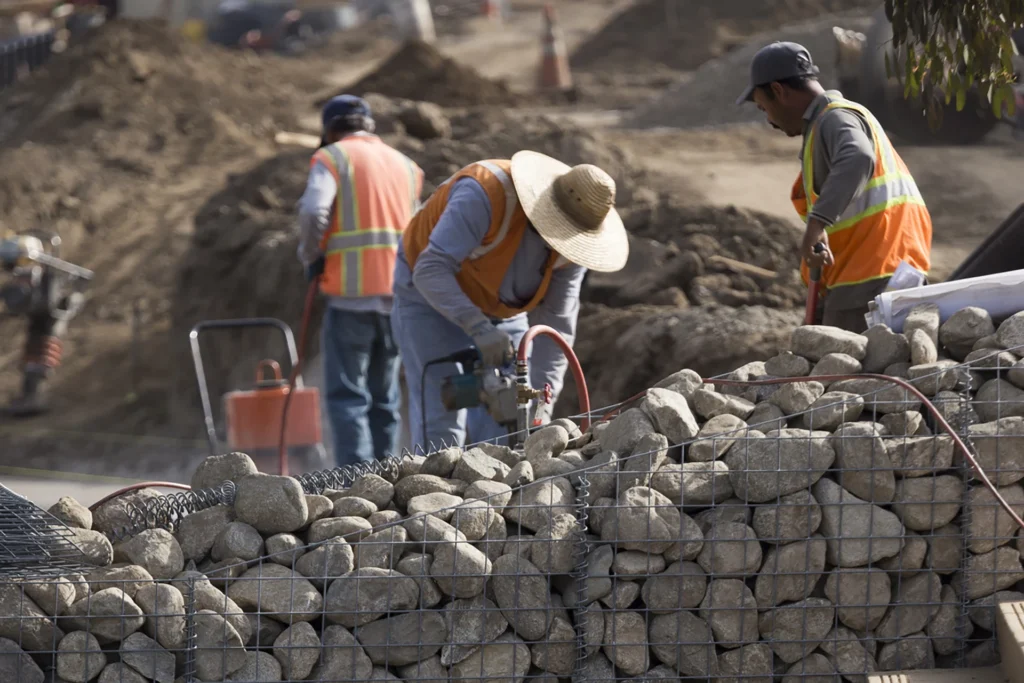
A concrete plaza is no longer simply an open square. It becomes limestone extracted from a quarry, clinker fired in a kiln, aggregate washed and graded, steel reinforcement rolled in a mill, and materials trucked to the site. A timber bench begins in a forest. A granite wall begins in a mountainside. The landscape we eventually inhabit is simply the most current chapter in a much longer story. In this way, carbon is a portal into the hidden life of materials—the landscapes they transformed, the labor they required, the energy consumed in their manufacture, and the infrastructures that carried them across continents.

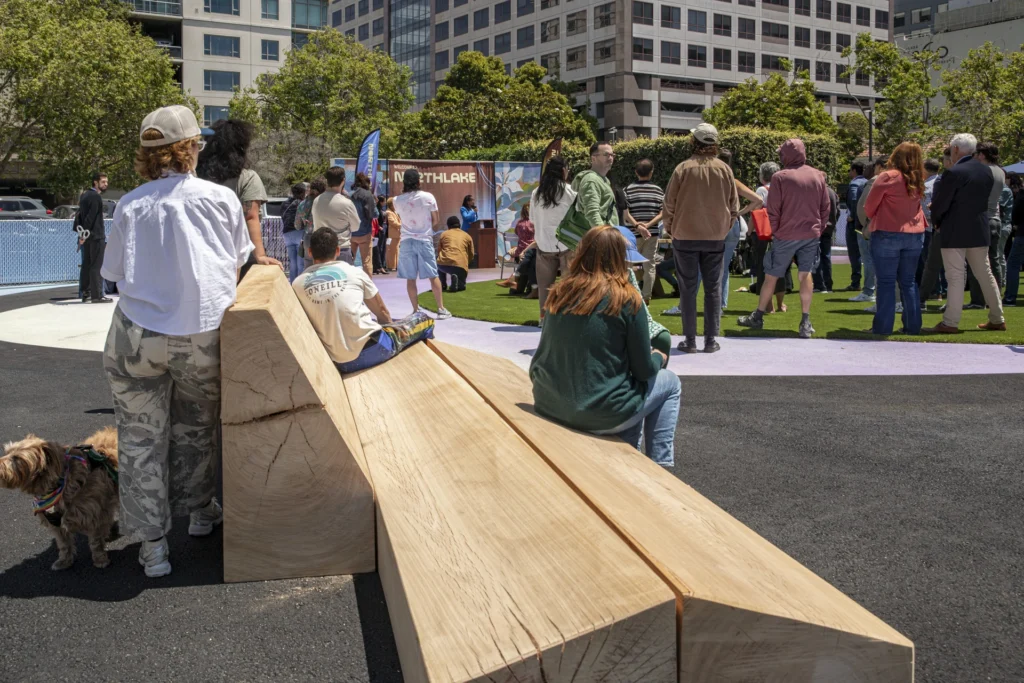
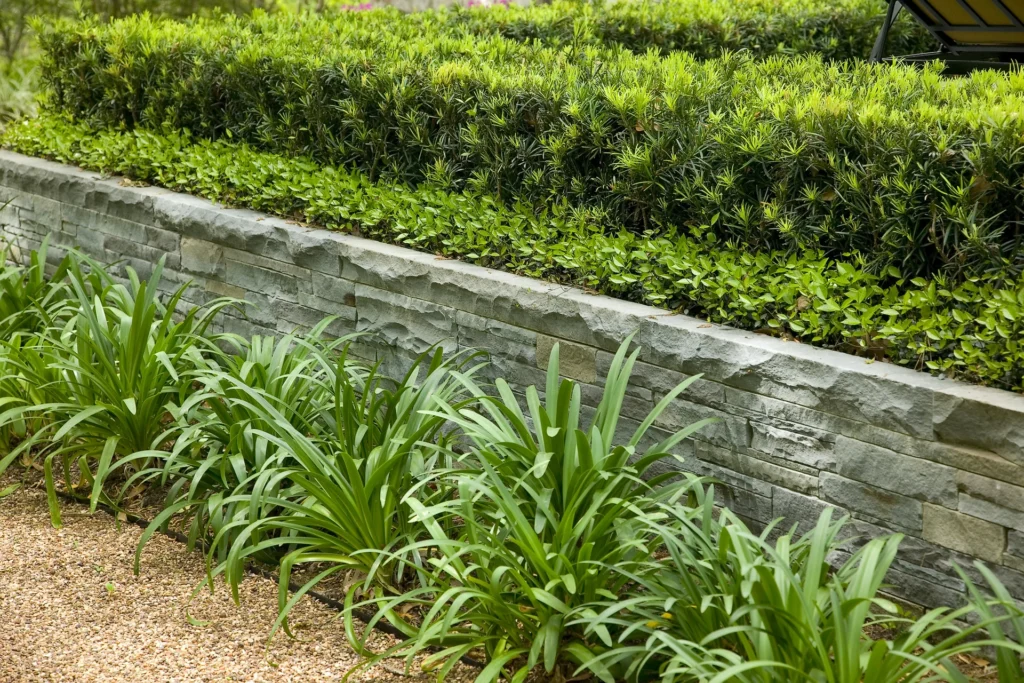
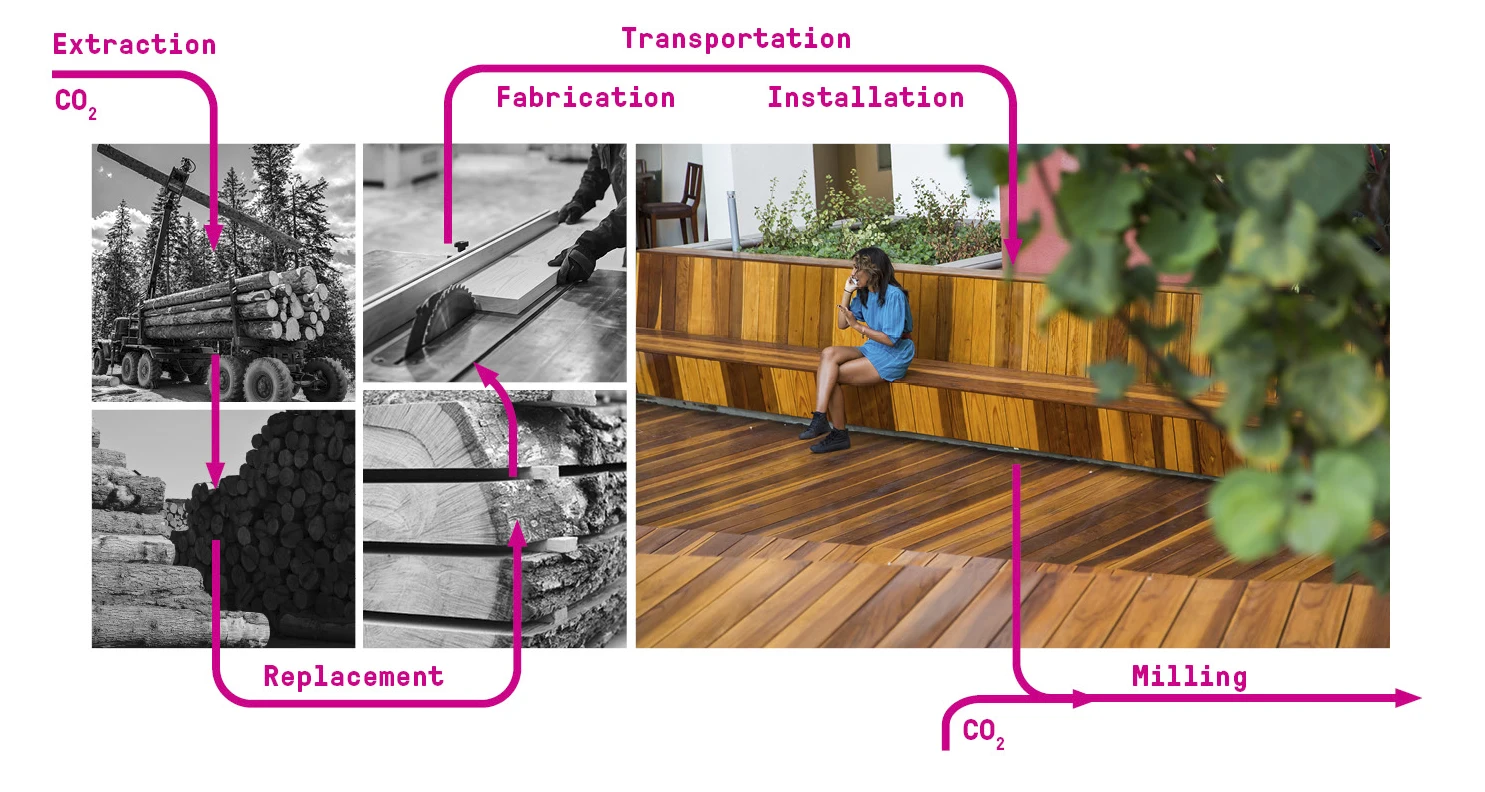
Greenhouse gas emissions are only one property of a material’s history. Follow the same supply chain a little further and other stories begin to emerge. Forests and fisheries. Water and biodiversity. Labor and human rights. Chemistry and toxicity. Transportation, certification, verification. The further upstream we travel, the more difficult it becomes to separate environmental performance from the social, political, and economic systems that produce it. Questions may multiply faster than they can be answered. Was this timber harvested from a responsibly managed forest? What habitats were altered to extract these aggregates? How much freshwater was consumed during manufacturing? Who fabricated these components? Under what labor conditions? How do we verify these claims?
This is where the floodgates open. Carbon reduction ceases to feel like the sole destination and instead becomes a stop along a much larger journey toward systems literacy. Increasingly, digital tools are helping make these hidden relationships legible. Environmental Product Declarations reveal manufacturing emissions. Chain-of-custody certifications trace timber through complex supply networks. Emerging platforms estimate biodiversity impacts, evaluate transportation logistics, and even identify the likelihood of forced labor within global manufacturing systems.
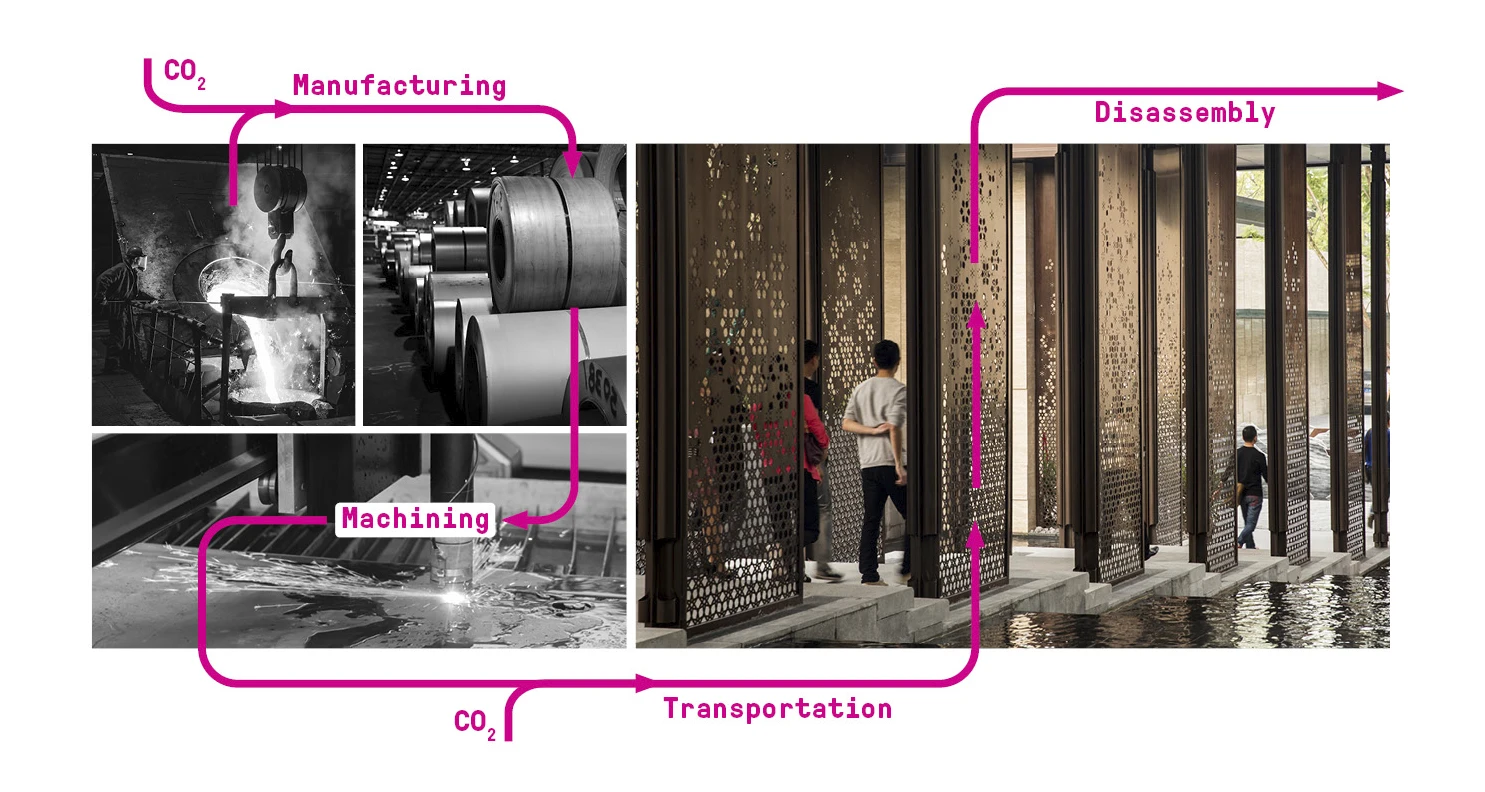
We are entering an era in which materials carry legible biographies. They are no longer inert products selected from a schedule. They are landscapes in another form, shaped by geology, climate, labor, energy, infrastructure, and time.
One of the unexpected discoveries from our efforts to track carbon on our projects has been how often our assumptions about “local” materials prove incomplete. Projects located within rich regional material traditions sometimes relied on products shipped halfway around the world, while other projects achieved significant emissions reductions even when sourcing from manufacturers further away. This work has revealed just how little we had previously known about the journeys our materials take before arriving on site.
This awareness changes how landscape architects practice, extending conversations beyond clients, ecologists, civil engineers, and contractors. Networks now include concrete plant managers, fabrication shops, material scientists, sustainability consultants, procurement specialists, manufacturers, and supply-chain analysts. Some of our most significant emissions reductions have come simply by asking more questions about where and how a product was sourced, whether a different mix design was available, or whether an existing material could remain in place. The profession is becoming fluent in an entirely new vocabulary as the fields of manufacturing and logistics increasingly shape the environmental performance of the places we design.
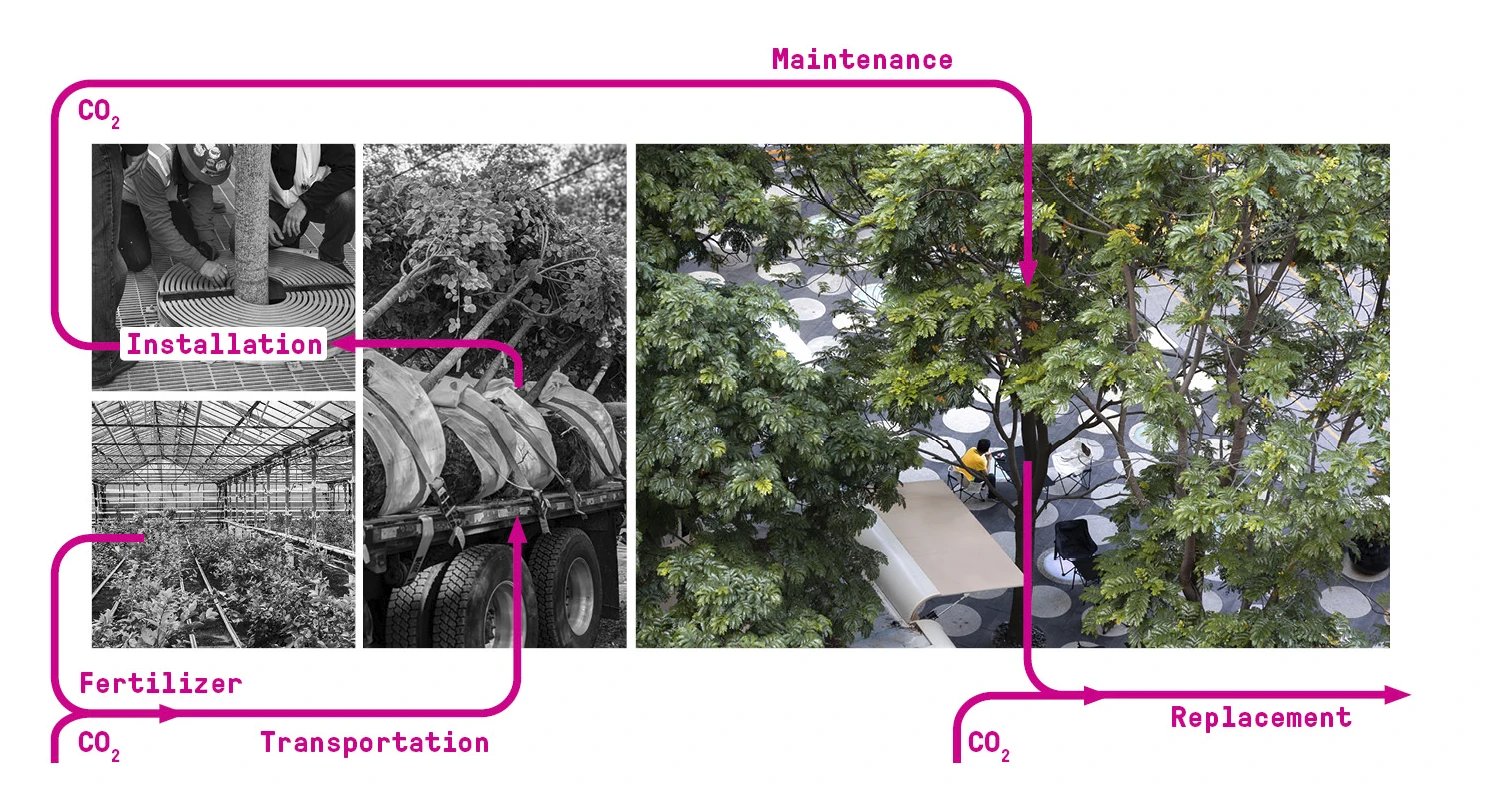
In this way, climate action is expanding not only our technical knowledge, but also our professional community. Landscape architecture has always been an integrative discipline. We connect ecology with infrastructure, culture with hydrology, public life with environmental performance. Climate action asks us to extend that connective capacity further upstream, becoming translators between material science, manufacturing, supply chain management, construction administration, and design – learning to see the productive relationships between them.
For guidance in framing this shift, I return to a passage that the pioneering regional planner Benton MacKaye wrote a century ago in The New Exploration. Writing while standing in the middle of Manhattan’s Times Square, he imagines mentally following streams of traffic outward through suburbs and hinterlands until they reveal the larger systems that structure the built environment and civilization more broadly. The exercise is not really about roads, but about cultivating a way of seeing. By tracing something ordinary back toward its source, we find that invisible relationships slowly come into focus.
The low-carbon landscape is asking us to practice differently. Perhaps, more profoundly, it is asking us to see differently. We once understood our projects primarily through the histories embedded within places. Today, we are beginning to understand them through the histories embedded within materials as well.
As we continue following these materials toward their proverbial headwaters, and imagining their lives long after we are gone, we may discover that landscapes begin much earlier, and last much longer, than we ever imagined.
I have come to think about embodied carbon in much the same way. If we follow our materials upstream, eventually our project sites dissolve into an interconnected geography of extraction, manufacture, transportation, labor, ecology, and energy. And following materials upstream is only half the story. Tracking carbon in our projects also asks us to look downstream toward maintenance, repair, reuse, disassembly, and eventual recovery. If upstream reveals where landscapes come from, downstream asks what becomes of them. Together, these expanded timelines challenge the assumption that design begins at the property boundary and ends at project completion. Our sites become networks of relationships stretching far beyond the boundaries of the drawing.

As Director of Climate Strategy, Jonah Susskind leads SWA’s decarbonization efforts, overseeing the implementation and advancement of the firm’s Climate Action Plan. He drives innovative climate engagement across SWA’s global portfolio, ensuring climate-positive strategies are embedded into every facet of the firm’s operations and design processes. Additionally, Jonah directs applied research related to wildfire risk mitigation, coastal resilience, and climate adaptation.
This blog is the third publication in a series. Read “50% of What?” and “What Does the Low-Carbon Landscape Look Like?”