

SWA to design new 36-acre urban forest at World Trade Center Seoul
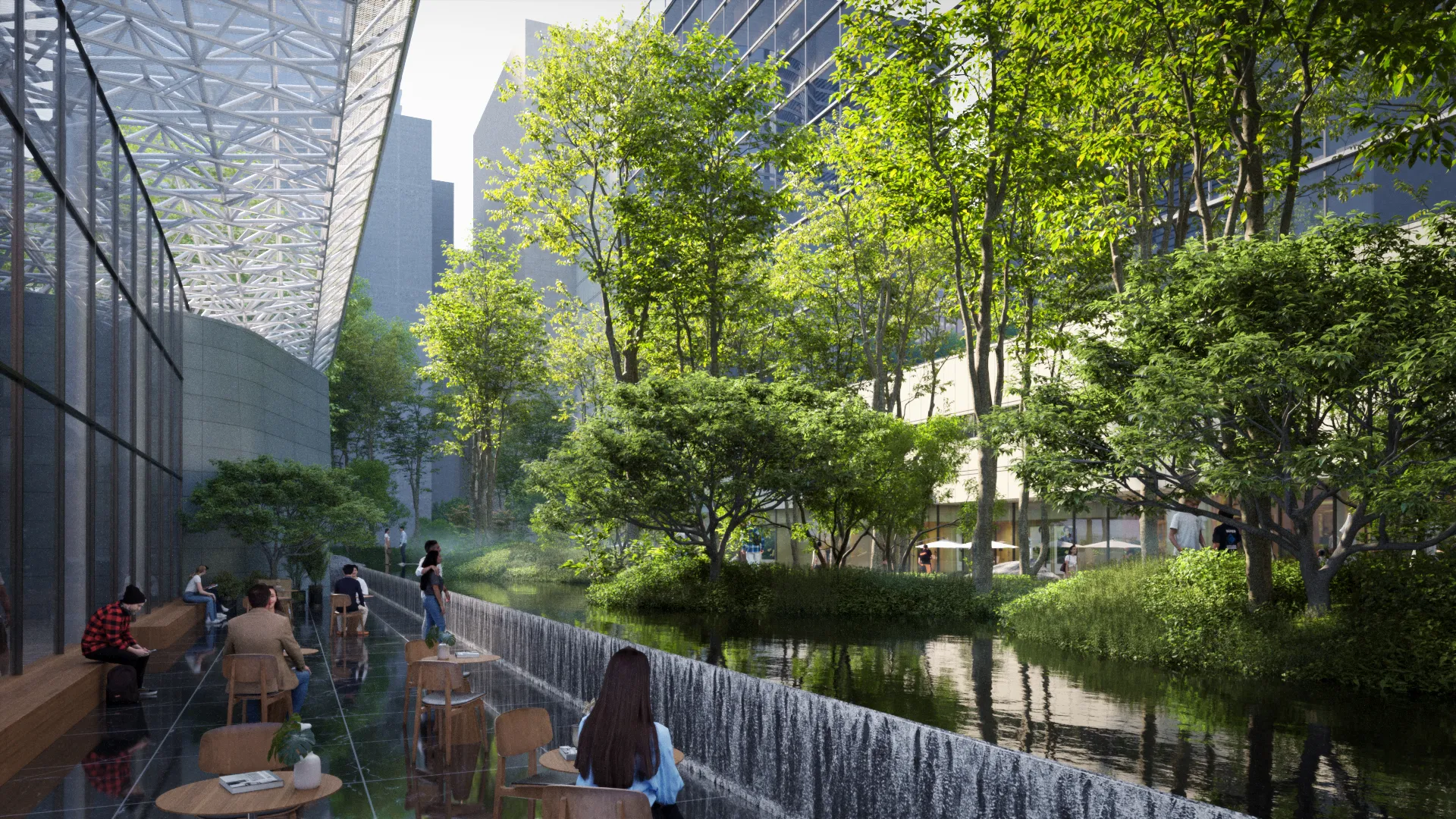
Selected through an international design competition, SWA’s proposal aims to transform the heart of the Gangnam district into an immersive woodland and civic hub, with a target completion date of 2029.
Earlier this year, the Korea International Trade Association (KITA) announced its selection of SWA as landscape architect for a major redesign of the public realm at the World Trade Center Seoul—one of Asia’s preeminent convention, shopping, and exhibition venues.
Junglim Architecture is the local architecture lead for the redevelopment, with Seo-Ahn Landscape Architecture as the local landscape architecture lead; Heatherwick Studio has also been commissioned as the architect of a new exhibition hall façade at the center of the complex. Working in close collaboration with each team, SWA will lead the design of a new 36-acre public realm and urban forest enveloping the overall campus.
Along Yeongdong-daero, one of Seoul’s major arteries, SWA’s proposal integrates triple rows of plane trees on a raised platform with adjacent clusters of ginkgo, oaks, maple, and pine, forming a green corridor that connects the World Trade Center Seoul to the planned Gangnam Intermodal Transit Center (GITC), Hyundai Global Business Center (GBC), and Jamsil Sports Complex to the east, and historic Seonjeongneung burial ground to the west. Divided over three interconnected plazas anchored in a central woodland, the plan carefully weaves an estimated 423 canopy trees across the site, cooling the streetscape by up to 4°C—coupled with shade structures, fountains, and misting features during summer; and heated furniture and trellises in winter.
“Seoul has long pioneered the transformation of car-centric corridors into people-centered streets and landscapes,” said Ji-Hyun Yoo, Principal at SWA and design lead for the project. “We’re deeply honored to bring this ethos to the World Trade Center Seoul, showing the immense ecological and social potential of urban forests to make city centers more resilient to heat and stormwater while still supporting active civic life.”
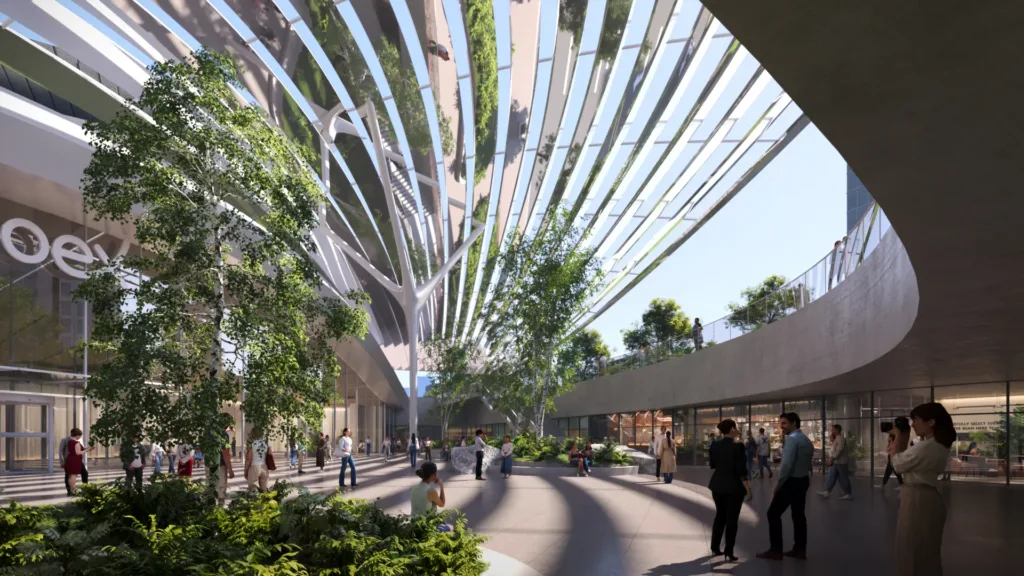
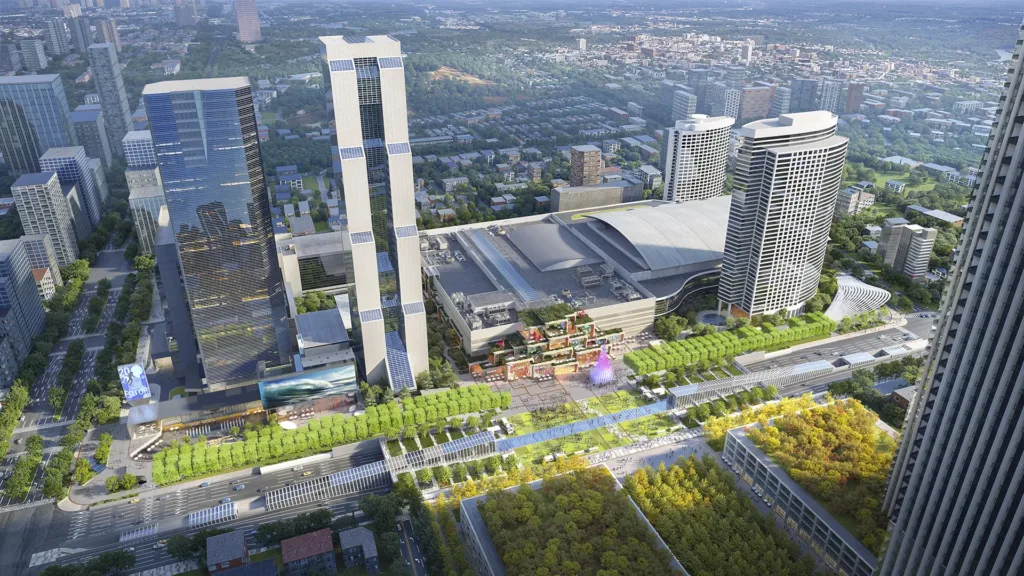
Designed for programmatic diversity and visual interest across seasons, the site is divided into four distinct spaces:
Flexible Event Plaza
At a central hub along the boulevard, the landscape connects a planned entrance façade designed by Thomas Heatherwick to the Dominique Perrault-designed “Lightwalk,” a forthcoming mixed-use development and transit center obscured beneath a 4.5-acre deck park dubbed “Greenland”—altogether part of the proposed GITC development. At its northern end, the plaza is pierced above and below grade by a large-scale light installation; along the building’s entrance, a flexible plaza accommodates large crowds for performances, festivals, screenings, and more.
K-Pop Plaza
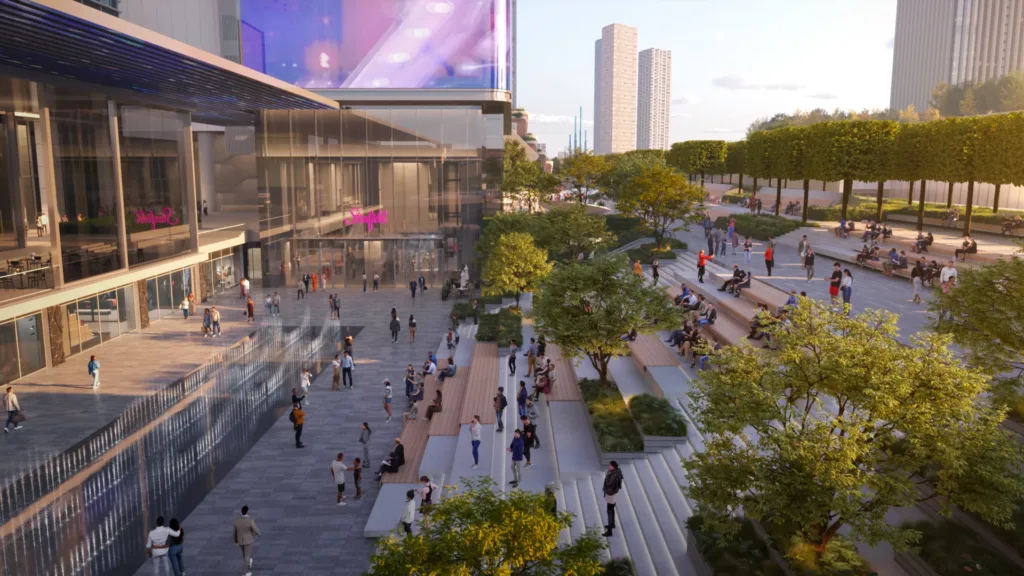
Toward the southern end of the building’s adjacency with Yeongdong-daero, the landscape steps down in amphitheater seating interspersed with planted terraces of Japanese maple, facing an interactive fountain and event stage overscored by a soaring media pavilion and canopy. At night, the plaza is easily transformed into a sunken outdoor venue for K-Pop concerts—one of the country’s most celebrated cultural exports.
Discovery Garden Plaza
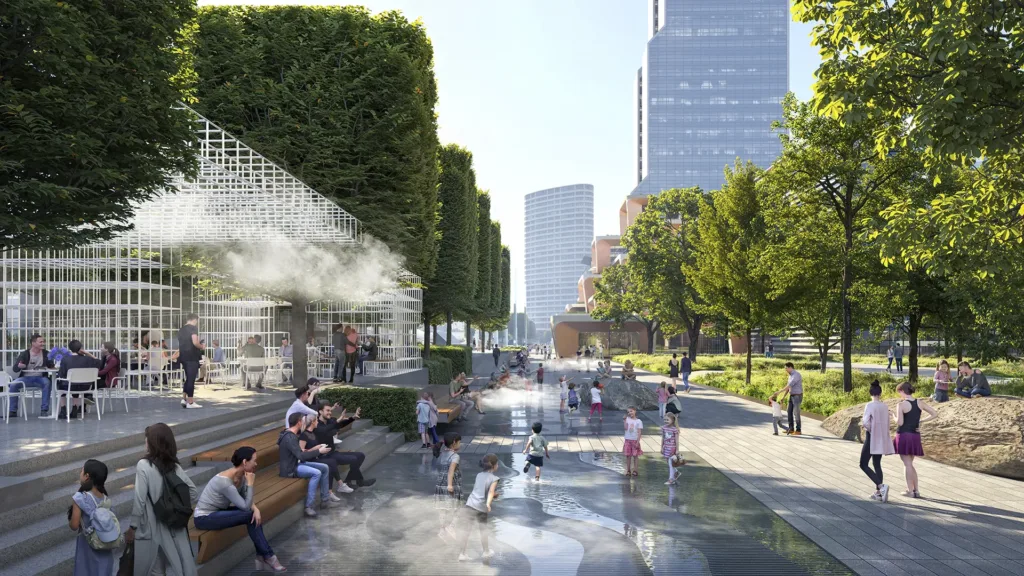
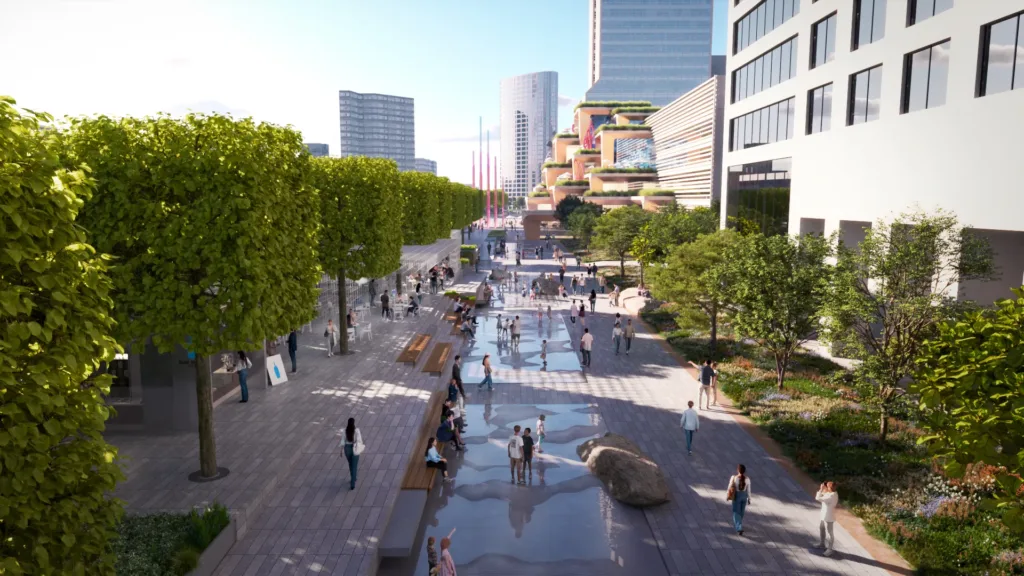
Along the building’s northern edge, an underutilized streetscape is reimagined as a modular plaza with outdoor cafes, misting trellises, and lounge areas staggered along the tree platform, running parallel to a shallow water feature punctuated by rough-hewn boulders and seating areas. At the building’s northern terminus, the design brings pedestrian cohesion to the entrances of ASEM Tower and Bongeunsa Station—for the latter, proposing the addition of a mirrored canopy structure that visually reveals the activity below grade to the street above, creating a lively connection between the underground and the surface realm. Below grade, raised beds with mature birch trees and understory planting soften and provide a sense of scale.
Starfield Library Forest
Reaching into the World Trade Center campus to envelop Starfield Library, Seoul’s iconic Trade Tower, Parnas Tower, and Samseong Station Airport Terminal, an immersive forest is threaded into the interstitial corridors between buildings, forming the heart of the complex’s new identity. Perpendicular to the boulevard, the forest creates a cool, highly biodiverse microclimate with meandering trails of irregular stone contrasting with the orthogonal paving of the three plazas outside.
Comprised of zelkova, cork oak, hackberry, red pine, oak, needle fir, hornbeam, alder, and elm, its design draws inspiration from the forests surrounding Korea’s mountain temples and the Miyawaki method—a botanist-developed technique to “jump-start” fast-growing urban forests through densely planted species mixed across canopy layers. Throughout the forest, elevated berms and meandering ponds manage stormwater runoff from the adjacent structures, recirculating water through drains carefully nested under the landscape.
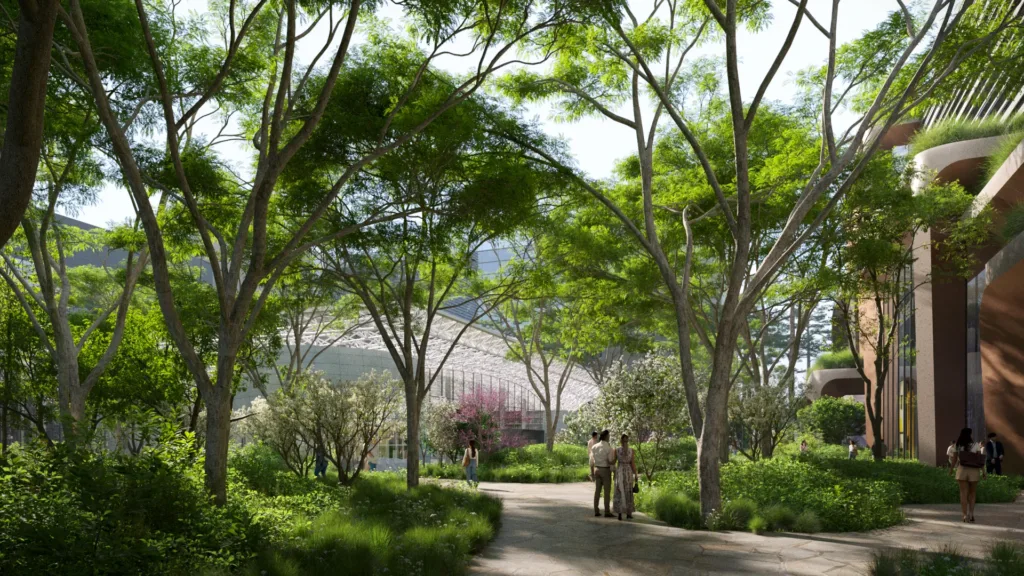
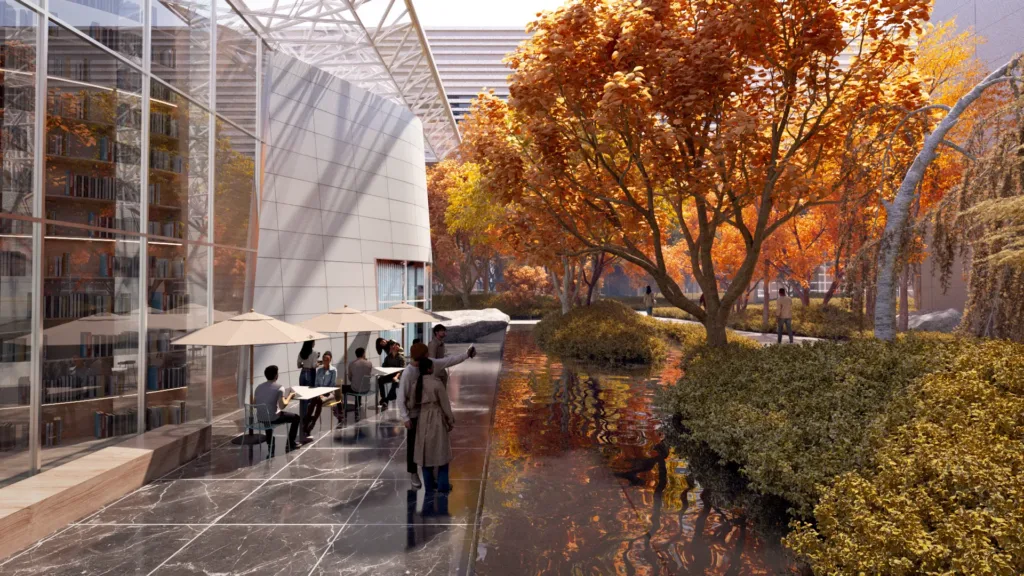
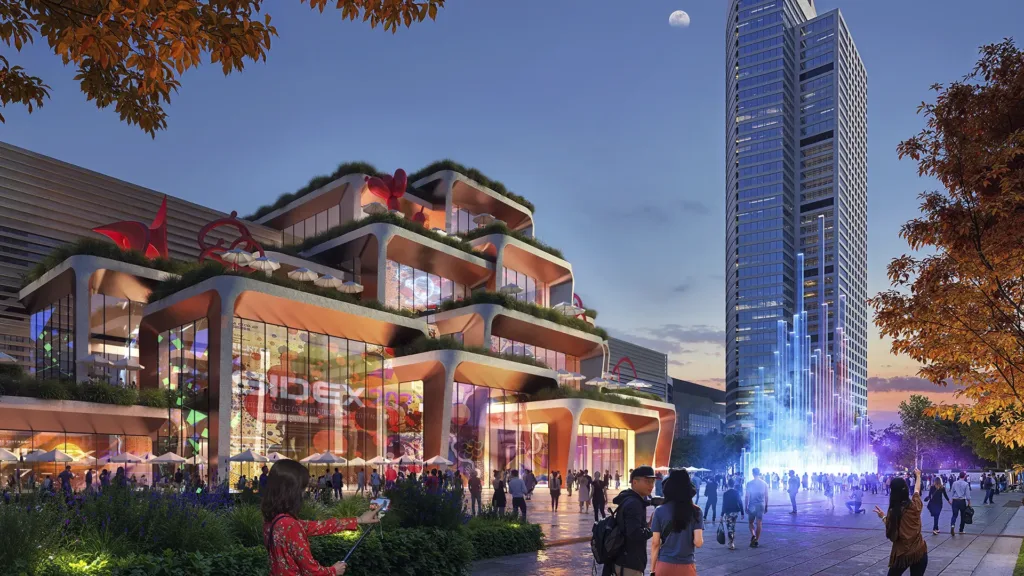
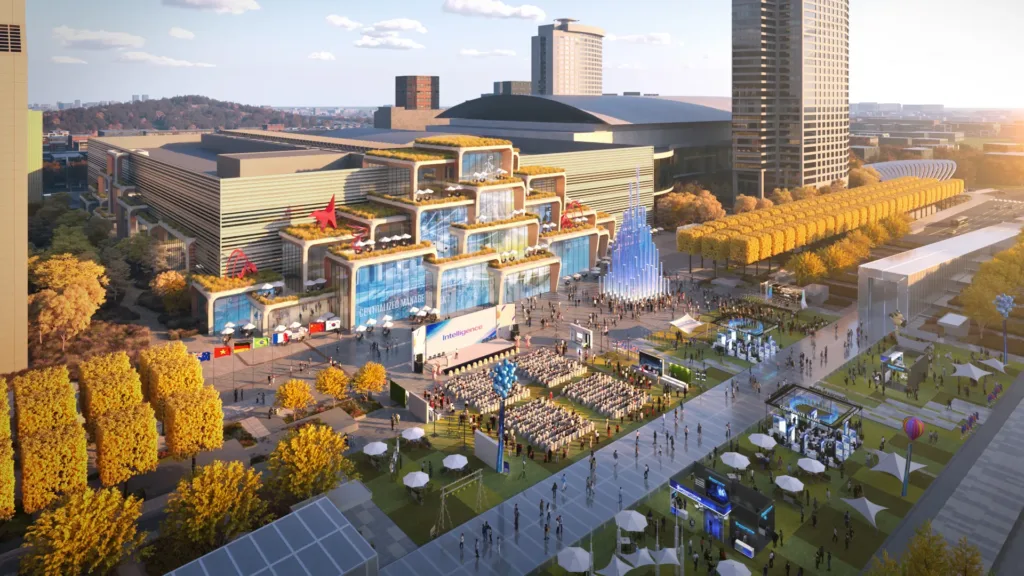
Using a predominantly native plant palette and locally quarried stone as landscape materials, SWA’s plan is projected to sequester enough carbon by the mid-2040s to surpass its embodied carbon, capturing an estimated 1,936 tons of atmospheric CO2 in its densely planted forest over its first 60 years of occupancy, according to an initial calculation by Carbon Positive Design. Employing sustainable design principles from the earliest concept stages forward, SWA intends to showcase a range of carbon-conscious interventions throughout the project’s 36 acres to help it meet these targets in alignment with the firm’s 2024 Climate Action Plan and KITA’s own sustainability goals.
The project has been fast-tracked toward construction with a goal of completion and opening in 2029.