

Grounds for Change: 50 Years of University Planning
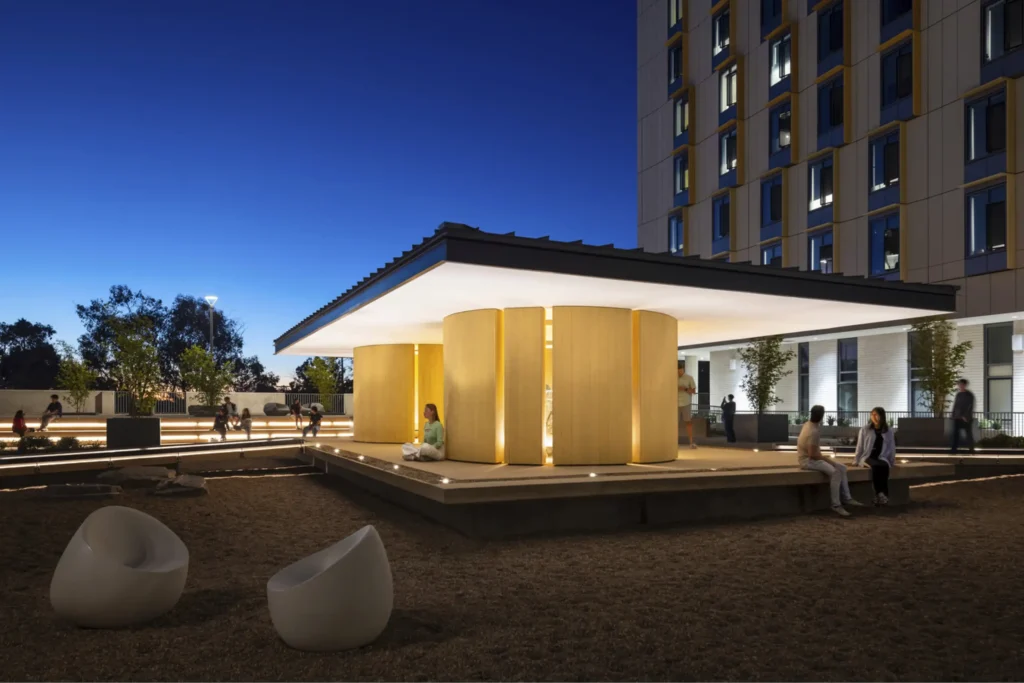
At their best, college and university campuses are mirrors to society.
Serving an ever-changing cast of students, faculty, and staff, institutional landscapes are often inseparable from the institutions themselves—whether as clear expressions of utopian ideals or contested terrain where culture, policy, and pedagogy intersect. Over the past 50 years, the nature of campus planning has shifted dramatically. And at SWA, our relationships with institutions of higher education have evolved in parallel—including a decades-long collaboration with Stanford, ongoing transformations of the University of California San Diego and California Polytechnic State University, and landmarks like the California Academy of Sciences and Universidad de Monterrey.
No longer viewed as static, top-down environments, today’s academic landscapes are shaped by lived realities: aging infrastructure, shifting mobility patterns, technological innovation, climate risk, and growing demands for institutions to embody social and cultural values.
Long-Term Collaborations
Stanford University
1980 – Present
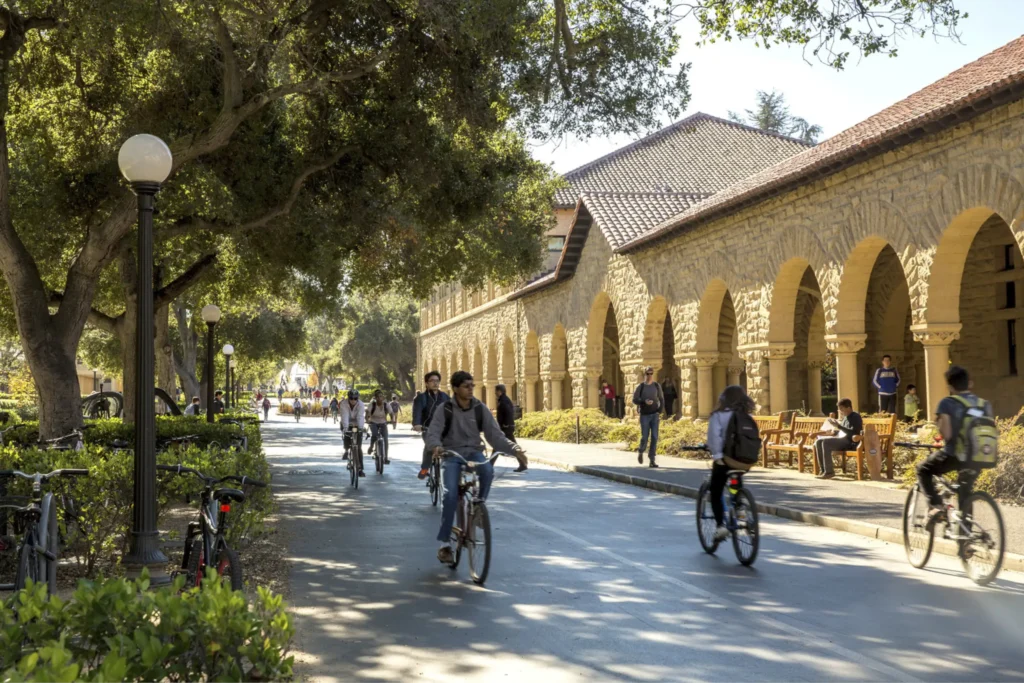
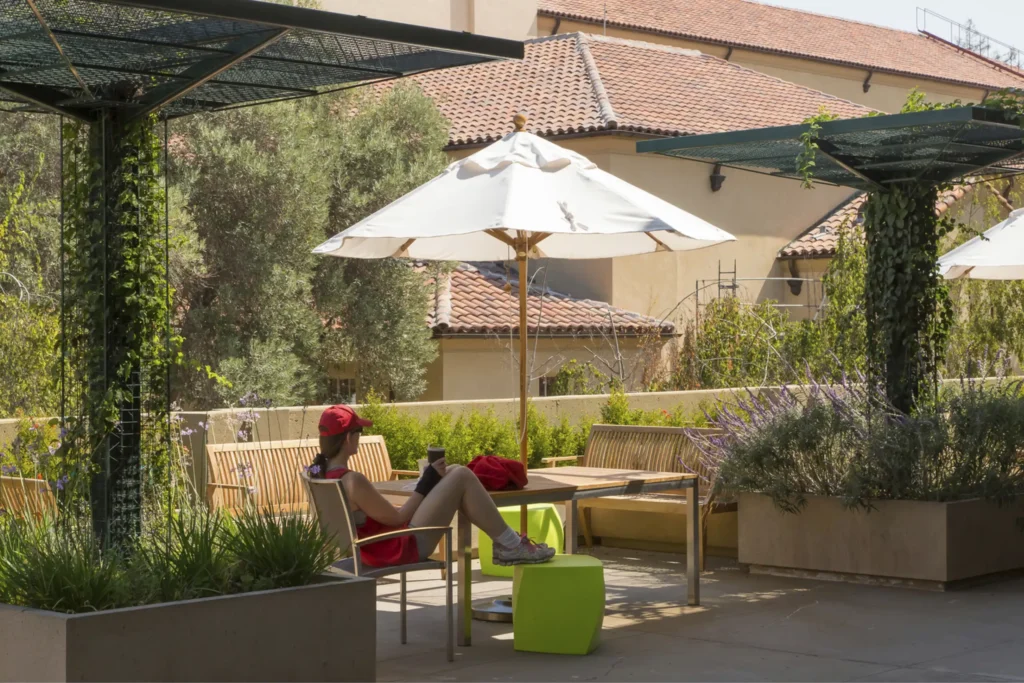
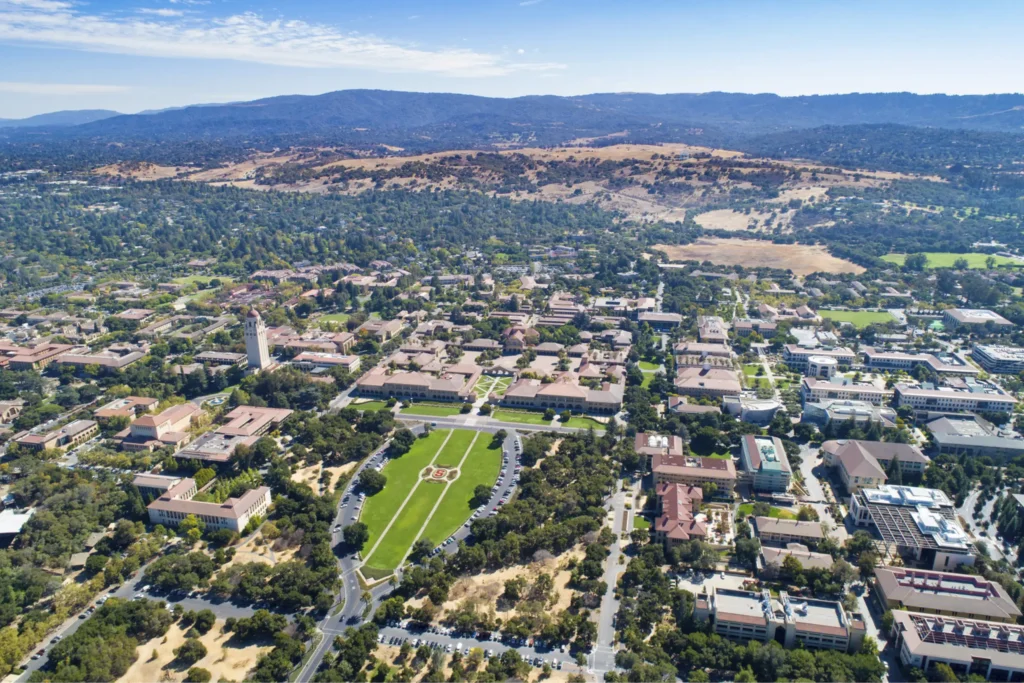
Over nearly four decades, SWA has worked with Stanford University to revive, enhance, and improve the connectivity of its 8,180-acre campus, originally designed by Frederick Law Olmsted, Sr. and Leland Stanford on the site of a vast stock farm from the 1880s. Through almost 300 projects, SWA’s work has helped the university recover from major disasters such as the 1989 Loma Prieta earthquake, integrate historic and contemporary landscapes and buildings, adapt to changing environmental conditions with water and energy-efficient design, prioritize mobility, and incorporate flexible, mixed-use commons that break down spatial siloes and better connect the campus to its surroundings.
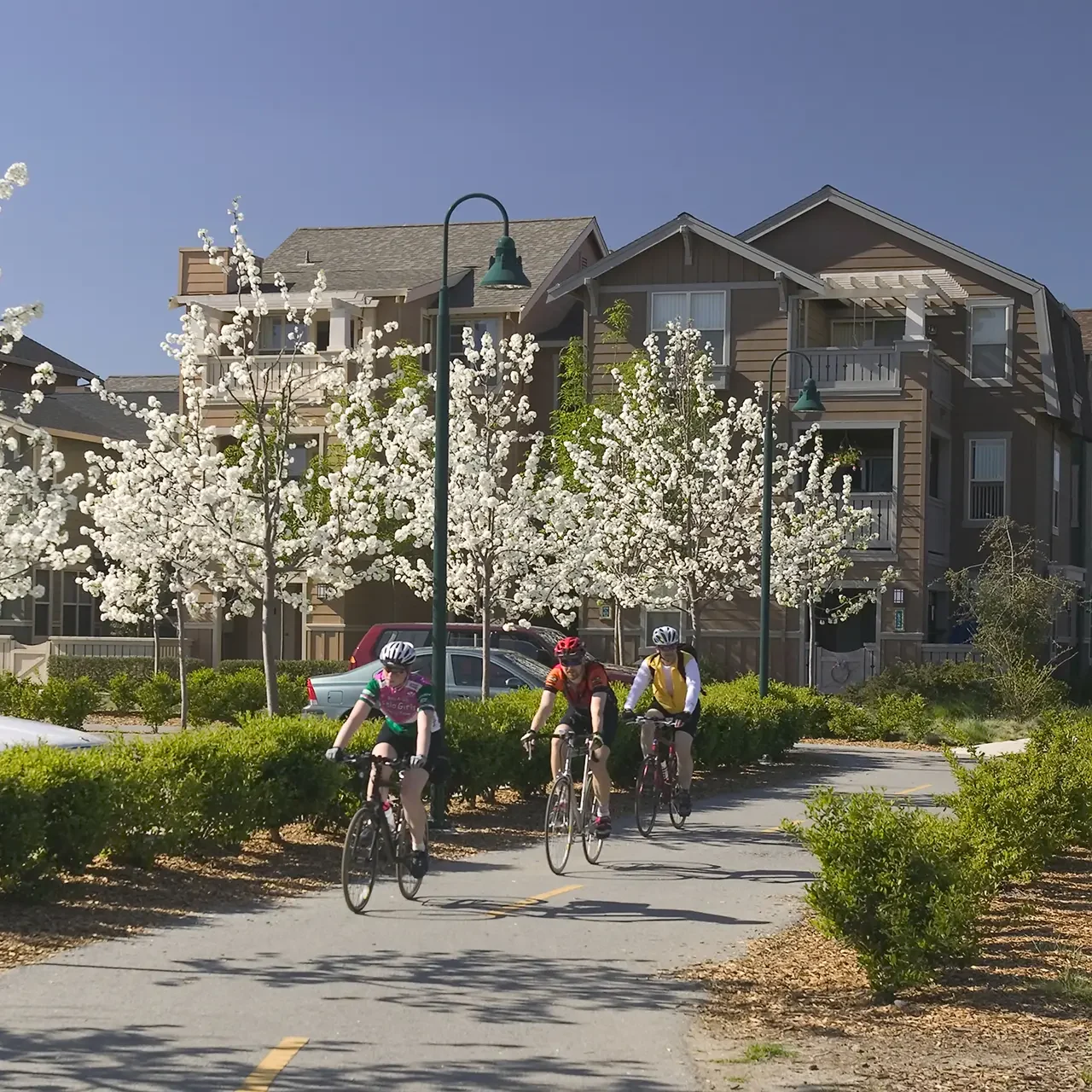
Following Stanford’s mid-1980s proposal to extend Sand Hill Road and introduce new rental housing on the West side of campus, SWA worked with the university both on a comprehensive plan for the new corridor as well as various related projects, including Stanford West Apartments (adding 628 new multifamily and senior units, completed in 2002), the Rosewood Sand Hill Hotel (a 120-room multiuse hotel and office, completed in 2009), and an expansion of the Stanford Shopping Center that introduced new revenue streams for the university.
Problems addressed: housing expansion, aging infrastructure, connectivity.
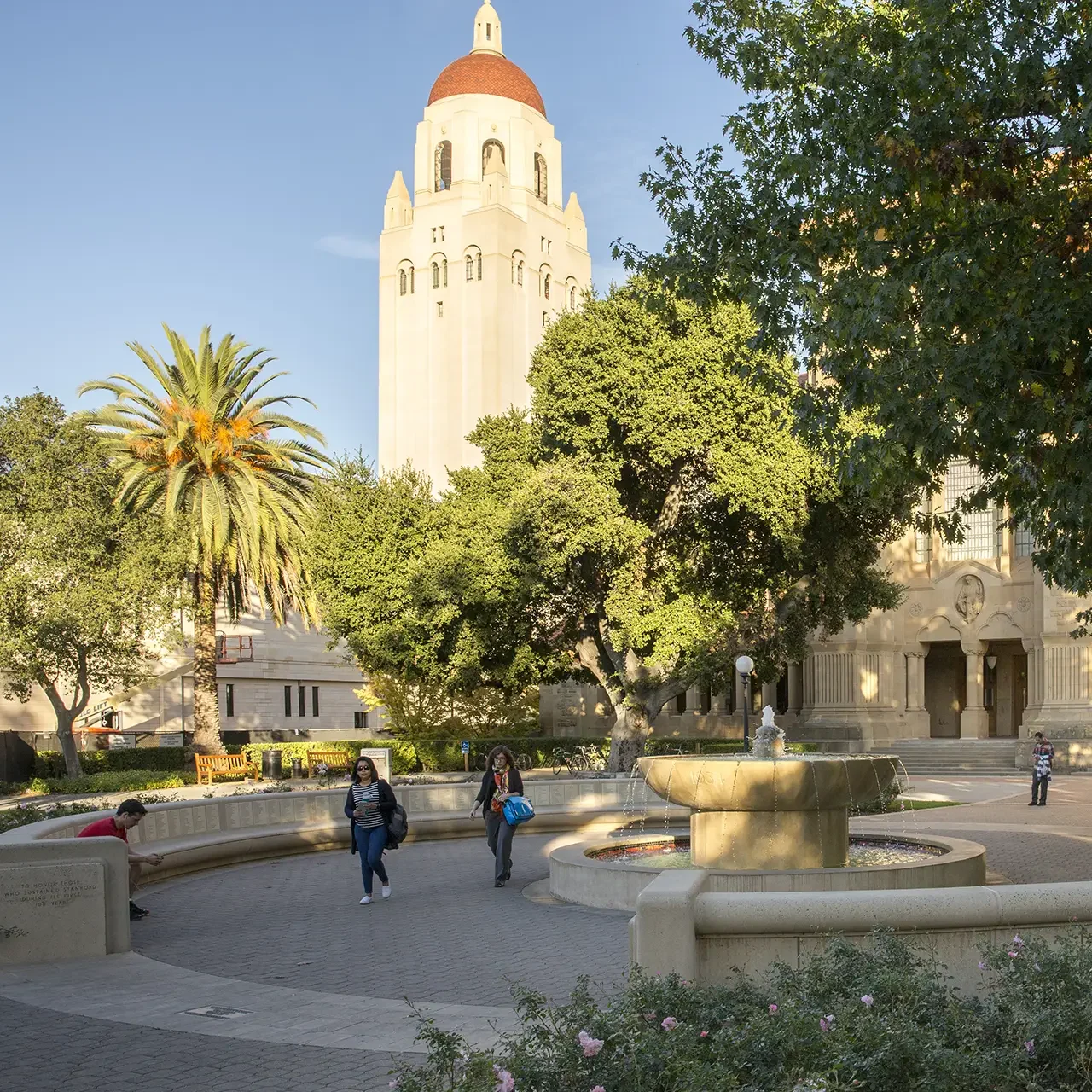
Completed in 1999, the renovation of the historic Green Library and its landscape corrected damage caused by the 1989 Loma Prieta earthquake and reimagined the classical ideas of the original structure and site. SWA’s design redefined features such as the great lawn and fountain, two key elements that set the overall character of the setting. The new layouts of pedestrian, bike, and service access enhanced circulation efficiency. The project, along with other campus renovations, earned Stanford the 1999 Governor’s Historic Preservation Award for historical landmarks.
Problems addressed: earthquake recovery, accessibility, historic preservation.
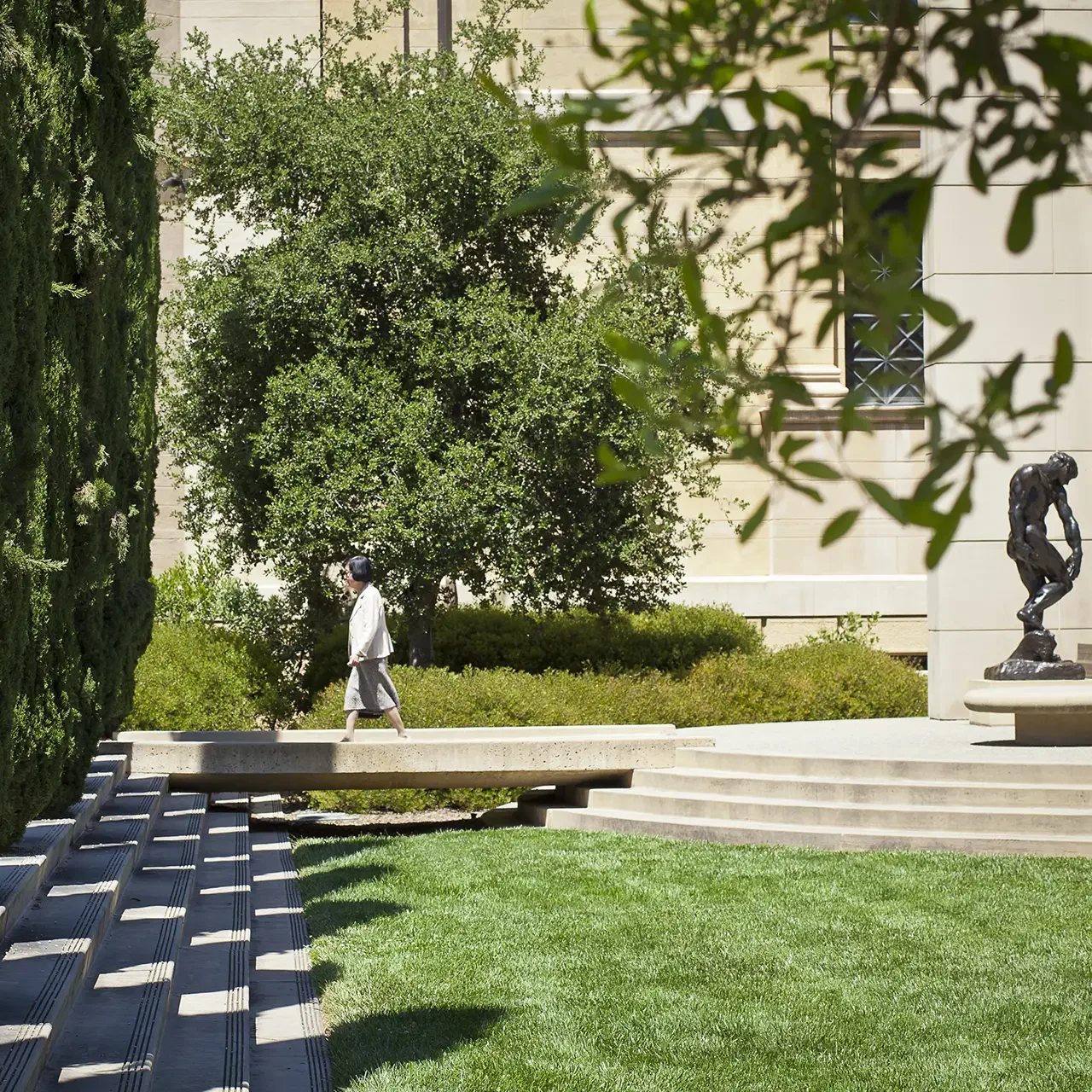
Completed in 2000, the Cantor Center was rebuilt following extensive damage from the Loma Prieta earthquake. Guiding an overall master plan for the reimagined museum grounds through construction, SWA’s work included new pedestrian paths, two new sculpture terraces and courtyards, renovation of the Rodin Sculpture Garden, and enhanced indoor-outdoor connection.
Problems addressed: earthquake recovery, indoor-outdoor connection.
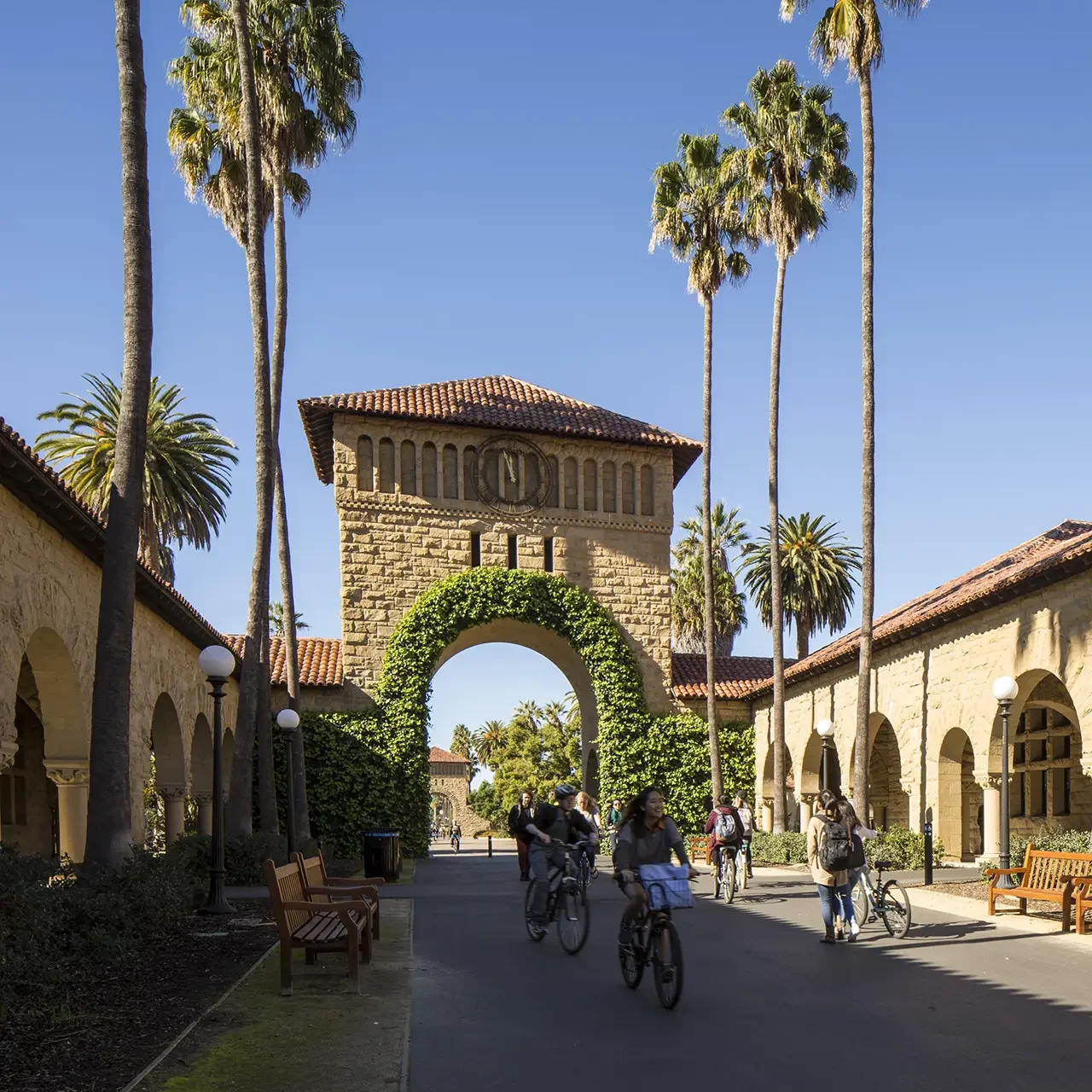
Completed in 2000, this redeveloped pedestrian mall realigns Olmsted’s historic North-South axis to better connect the Business School (to the North) with the Student Union (to the South), incorporating a new base walk with granite curb for the Main Quad, as well as new planting, seating, lighting, and bike parking.
Problems addressed: connectivity, bike/pedestrian infrastructure, historical alignment.
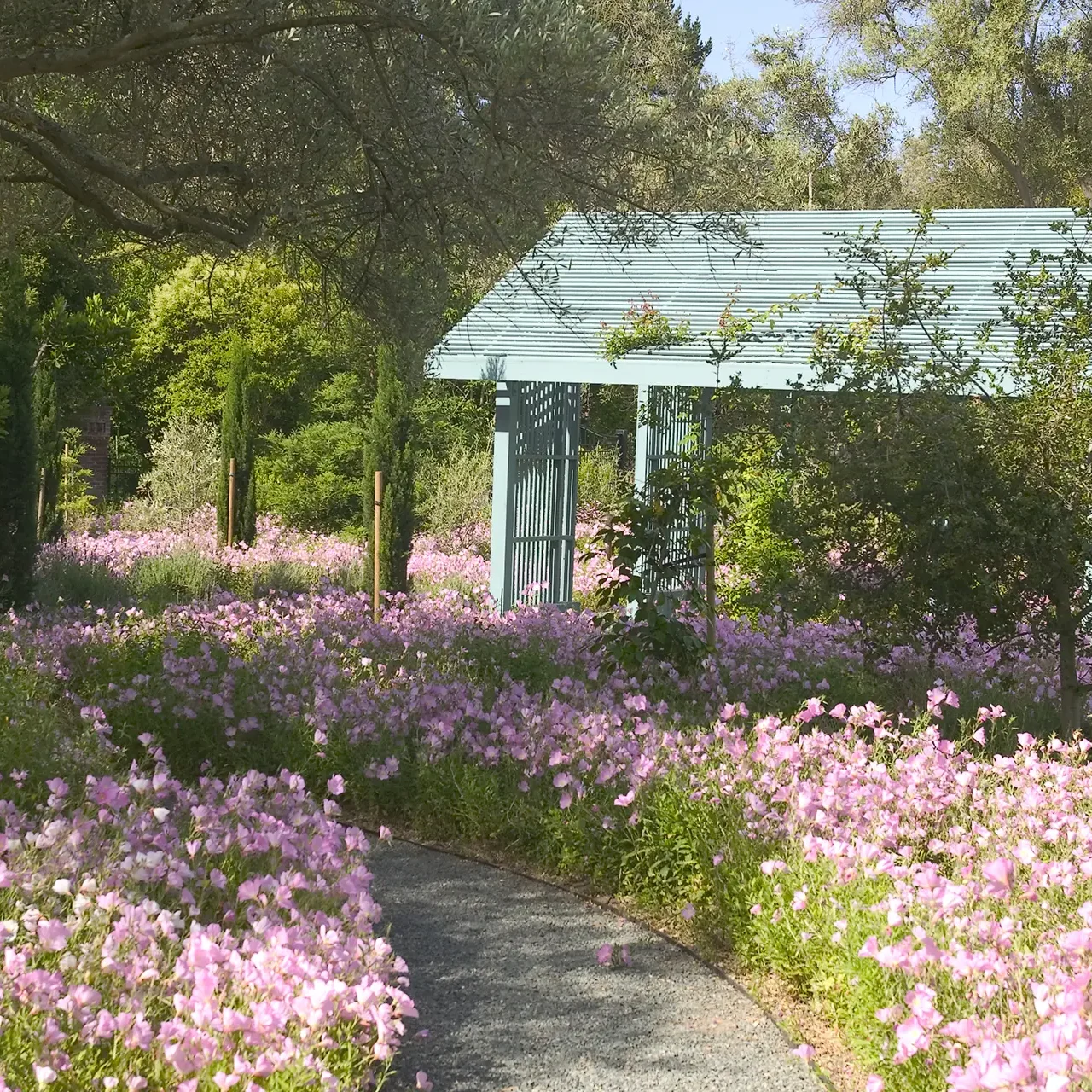
Bequeathed as a gift to Stanford University in 1970, the two-story home on the seven-acre estate originally belonged to San Francisco Financier J. Henry Meyer. The building was used as a campus conference center until damage from the Loma Prieta Earthquake resulted in its closure. In 2003, SWA worked with Page & Turnbull Architects on the restoration and renovation of the site, upon which it reopened as the residence for the University’s Provost. The project created new gardens based on historical precedents.
Problems addressed: historic preservation, adaptive reuse.
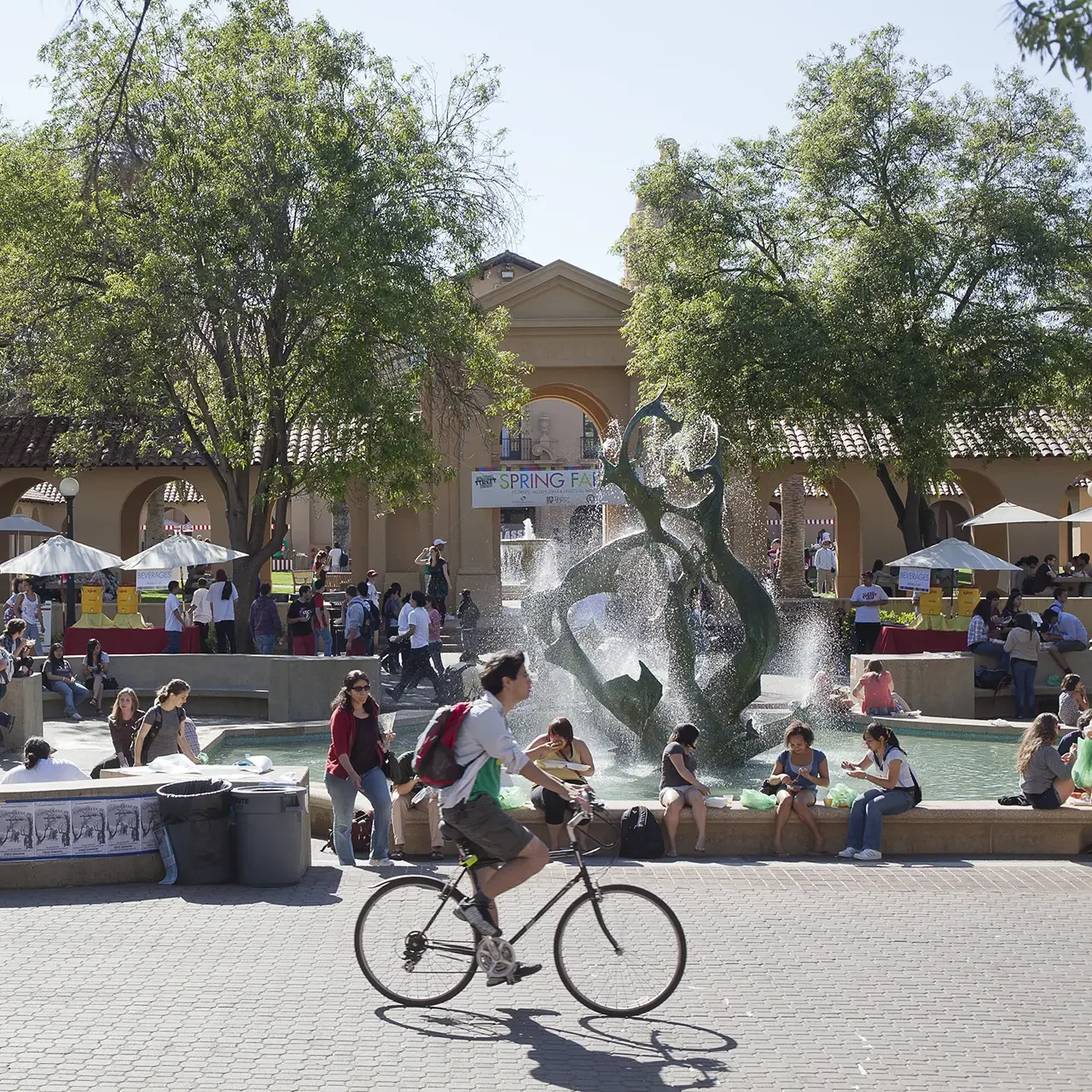
Completed in 2009, SWA’s design for common spaces surrounding the new campus center focused on enhancing multimodal connectivity and reengaging the complex’s surroundings through courtyards at the Northwest and Southeast sides, introducing new bike and pedestrian paths, carefully retrofitting historic structures to improve seismic performance and programmatic opportunities, and sheltering open spaces with a palette of elm, cedar, cypress, and Japanese black pine trees.
Problems addressed: mobility, seismic retrofitting, open space activation.
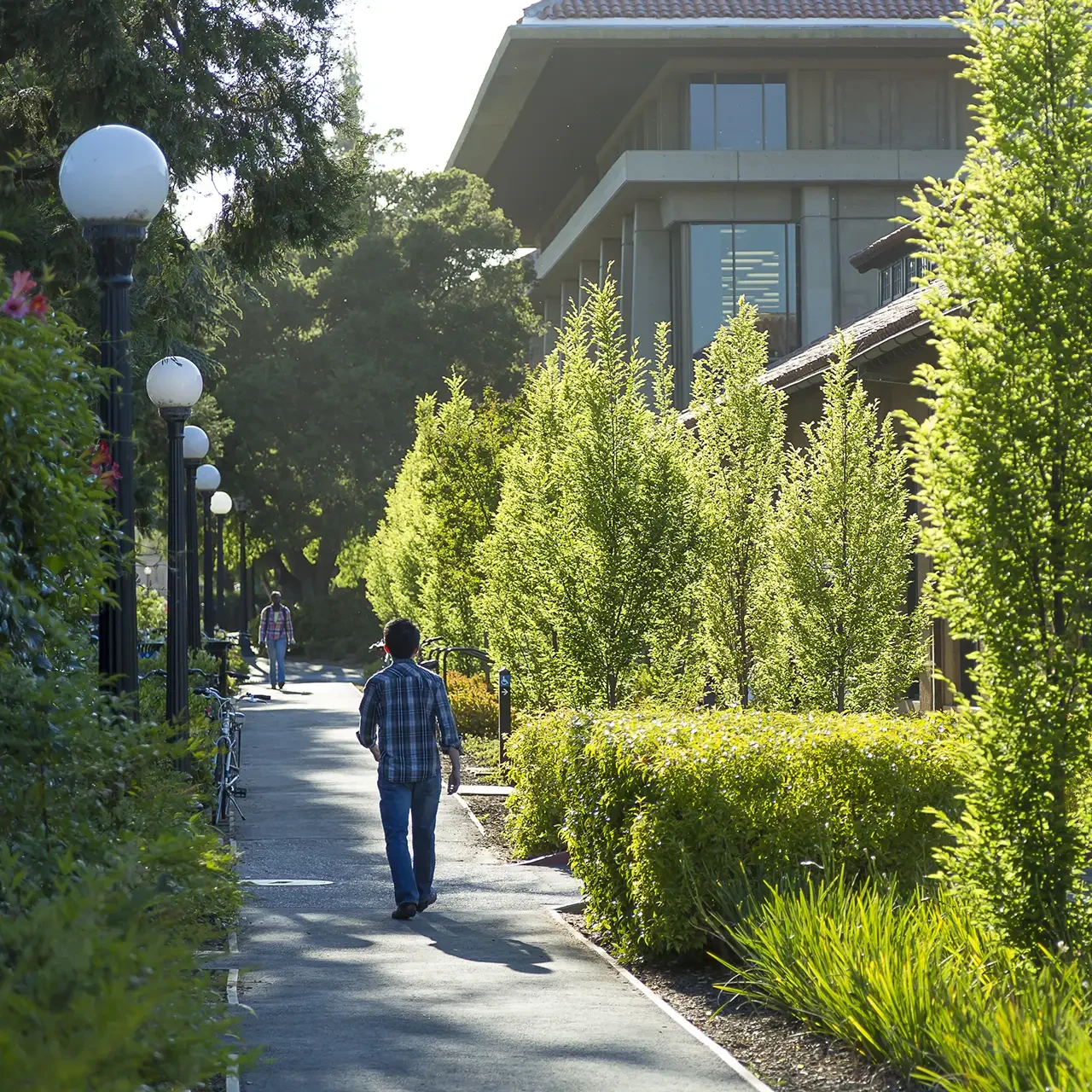
Completed in 2011, Panama Mall is a major connection corridor between the East and West Quad. During the design and construction process, SWA was tasked with maintaining the existing service and emergency access while providing a separate new pedestrian and bike path. The Mall converts a utilitarian service route to a main east-west corridor for students, fitted with informal seating, picnic tables, group study areas, and new bike parking. New canopies accompany existing spruce trees in the same alignment to reinforce the corridor’s structure.
Problems addressed: pedestrian/bike access, public realm improvement.
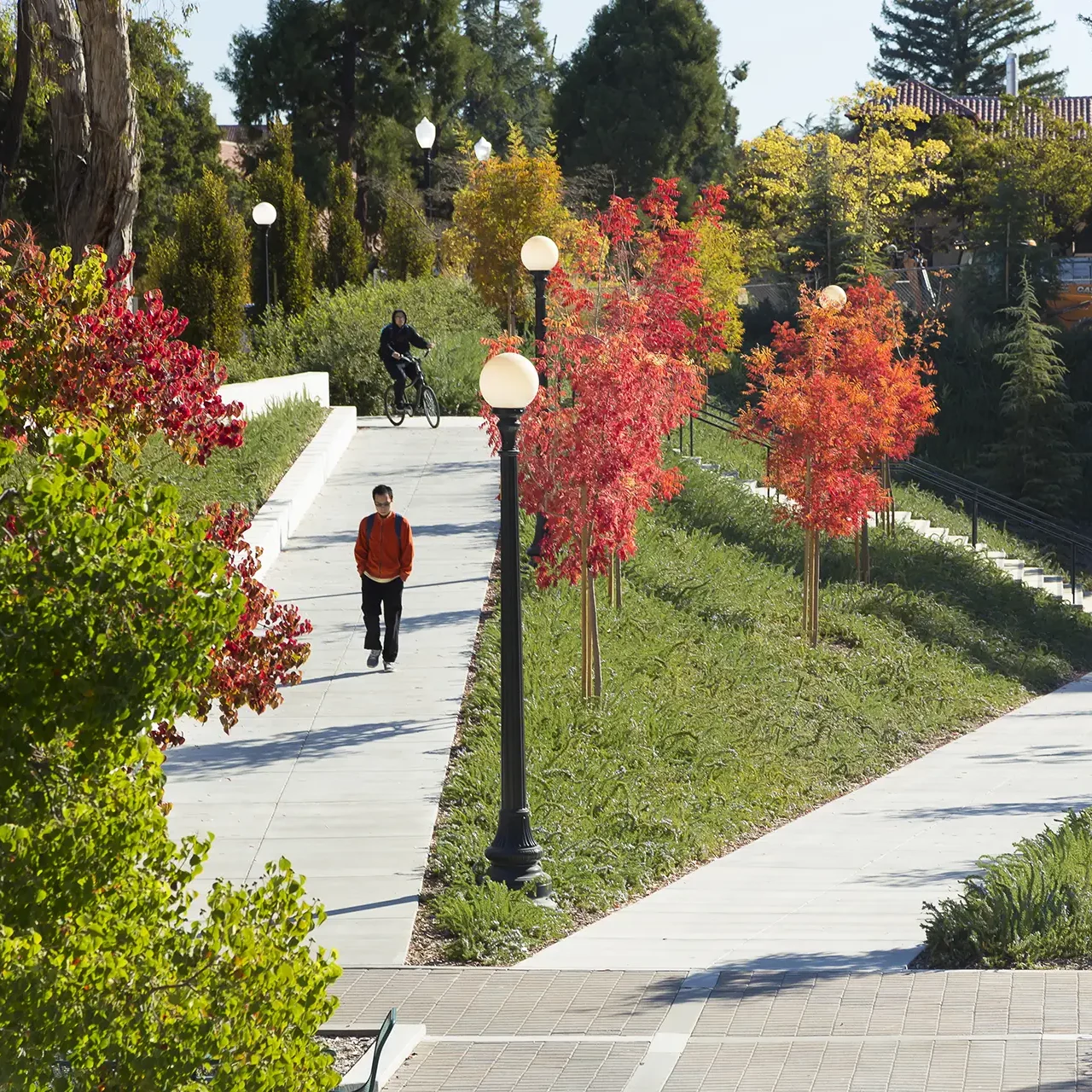
Completed in 2012, this 3-acre park by SWA replaced a building near the center of campus, providing an interim space later reconfigured as part of the longer-term Panama Mall master plan. On a limited budget, the park introduced multi-level paths, lawns for active and passive recreation, and a fountain, using fill from a nearby campus project, salvaged redwood from the prior building’s façade, and recycled storm runoff for the water feature.
Problems addressed: adaptive reuse, stormwater management, recycling.
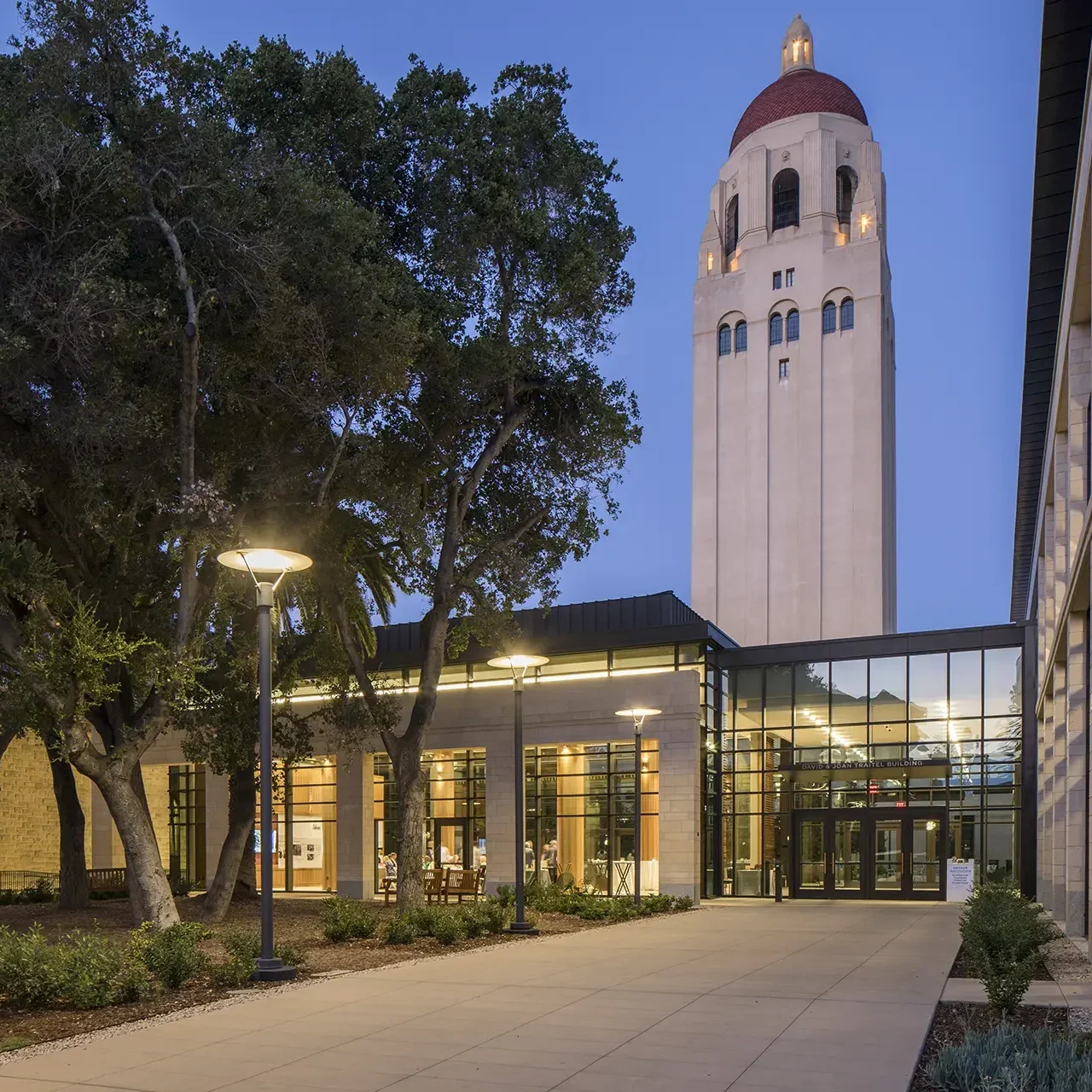
Completed in 2017, the landscape for the new Traitel Building brings the historic character of the Main Quad into the Hoover Institution’s “campus within a campus”, facilitating social connection through outdoor spaces, including a flexible courtyard and a series of pathways and low-water-use planting areas that tie into the adjacent campus. In recent years, SWA continued work at the Hoover Institution, designing a new landscape for the George P. Schultz Building, which is ongoing.
Problems addressed: historic integration, social space enhancement.
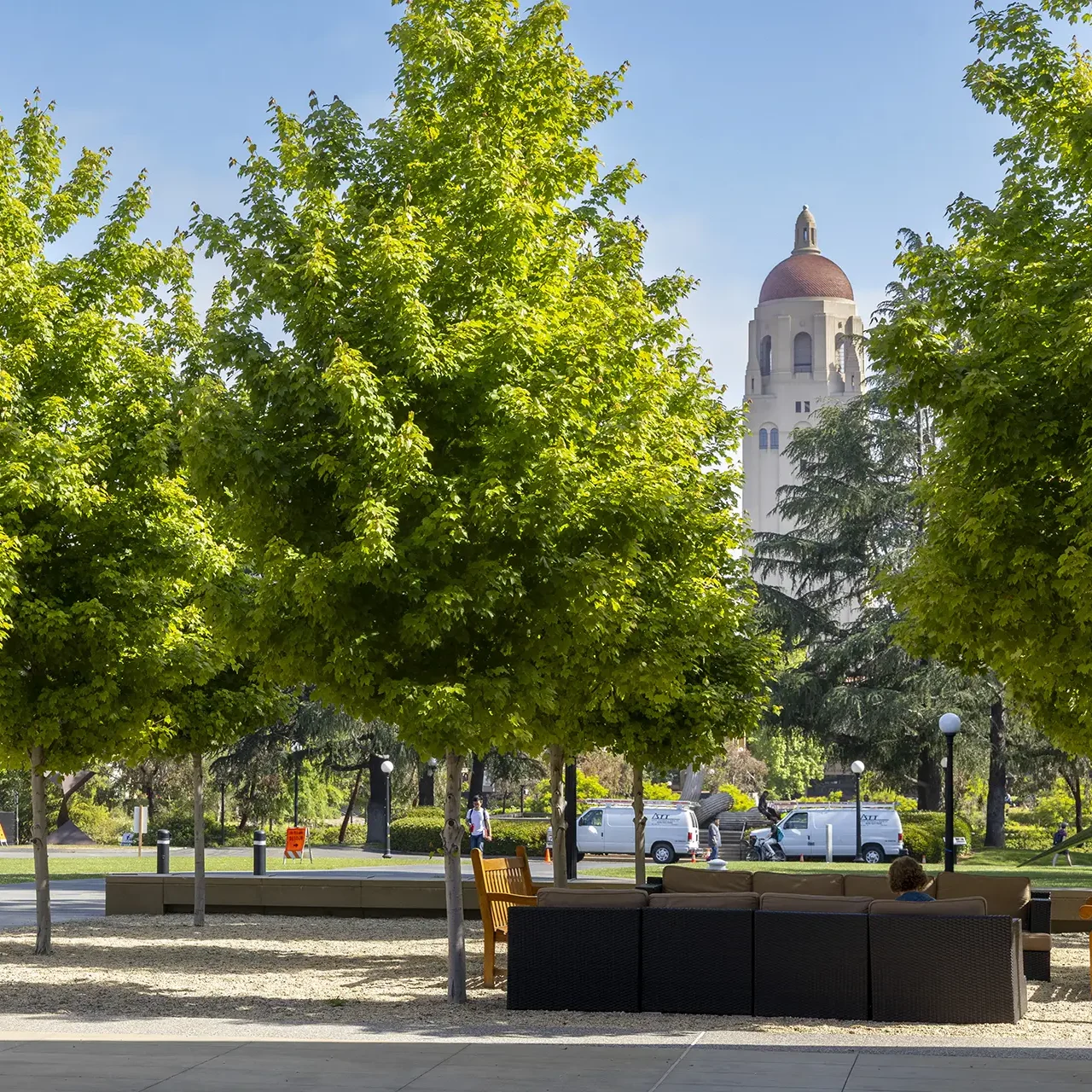
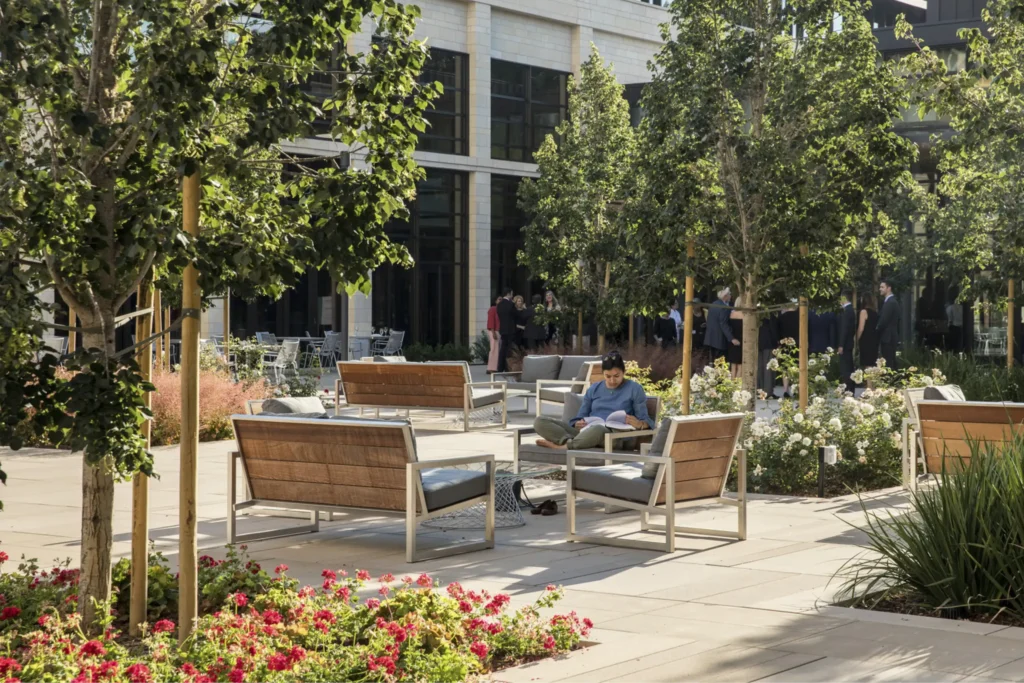
Completed in 2018, SWA’s design for Cooley Court renovates the shared areas around a 1970s SOM-designed brutalist structure, transforming the courtyard into a vibrant outdoor space anchored by two bosques of October Glory red maples. Relocating an iconic Alexander Calder sculpture, Le Facuon, the new plan carves out space for seating, student interaction, and the school’s annual graduation ceremony, framing views to Hoover Tower through the groves.
Problems addressed: adaptive reuse, open space activation, accessibility.
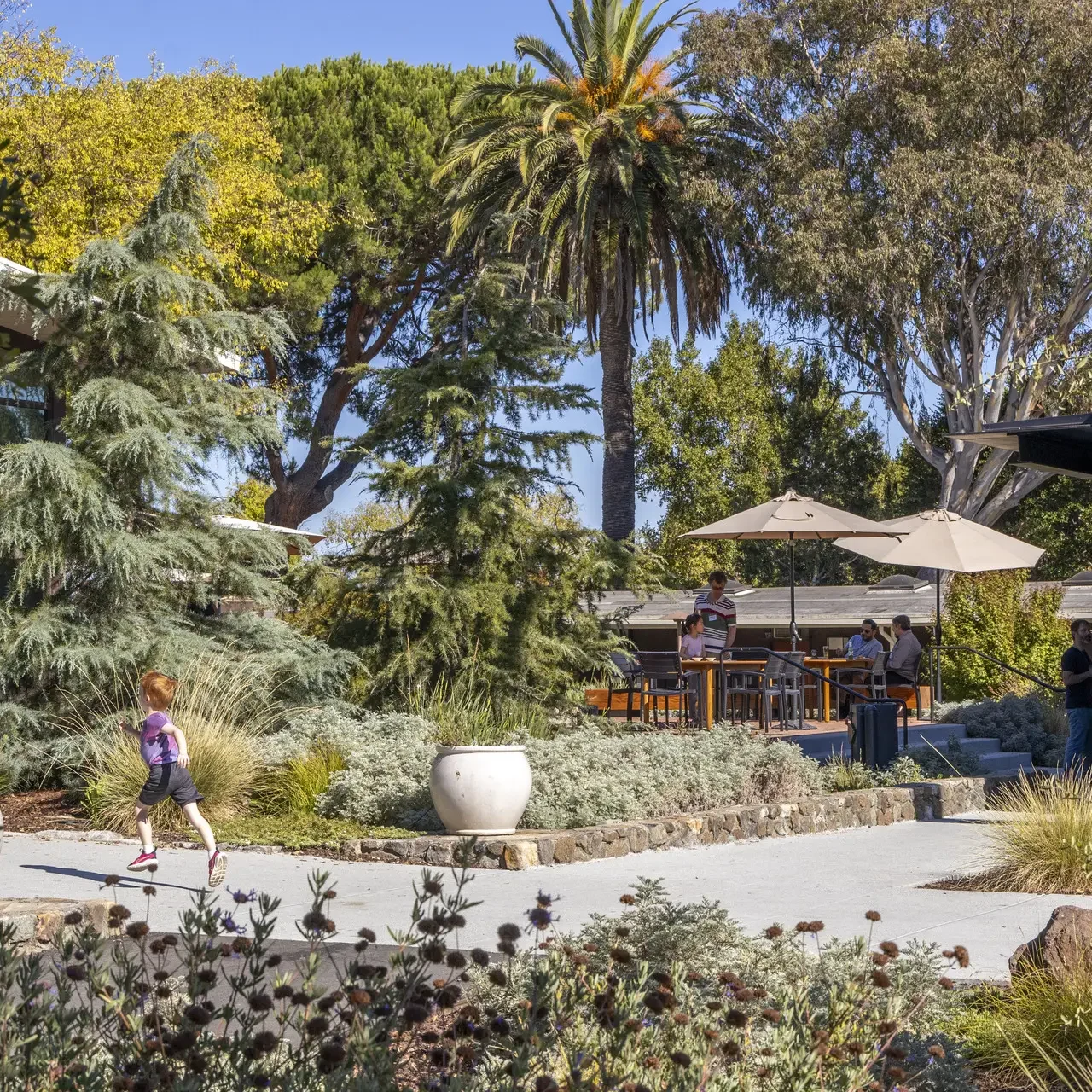
Completed in 2024, a new Olson Kundig-designed building and SWA-designed landscape mark CASBS’ first addition to its campus since its 1954 establishment. Organized around a central courtyard sheltered by native and drought-resistant California species, the new 1,700-square-foot facility is designed to shift from individual to collective research efforts, encouraging socialization, openness, and cross-pollination between study areas.
Problems addressed: climate adaptation, social space activation.
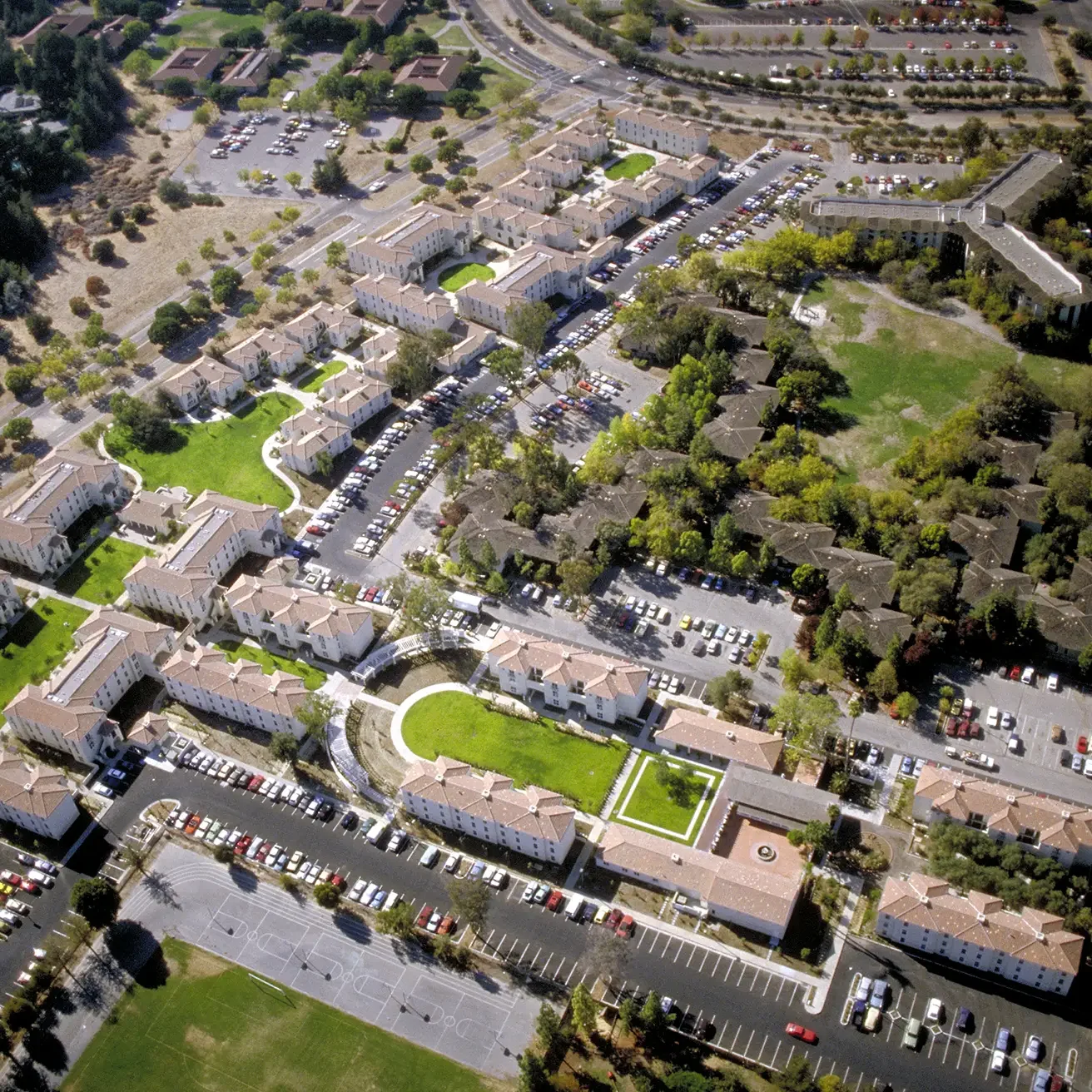
SWA’s collaboration with Stanford has also included longer-term planning strategies to phase redevelopment projects and increase housing capacity, including the Munger Graduate Residence, Manzanita Housing, Lagunita Court Housing, Escondido Village, and other mixed-use residential infill projects.
Problems addressed: housing demand, mobility, accessibility, historic integration.
UC San Diego
2019 – Present
Over the past decade, UC San Diego has undertaken one of the most ambitious campus transformations in the UC system: densifying its footprint, improving mobility, and foregrounding ecological performance in the public realm. SWA has played a central role in shaping this evolution, collaborating with multiple architecture teams to design landscapes that support student housing, interdisciplinary learning, and the university’s broader climate goals. From coastal habitat restoration to multimodal mobility hubs and health research corridors, SWA’s projects across the main and east campuses model a layered approach to integrated, climate-adaptive design.
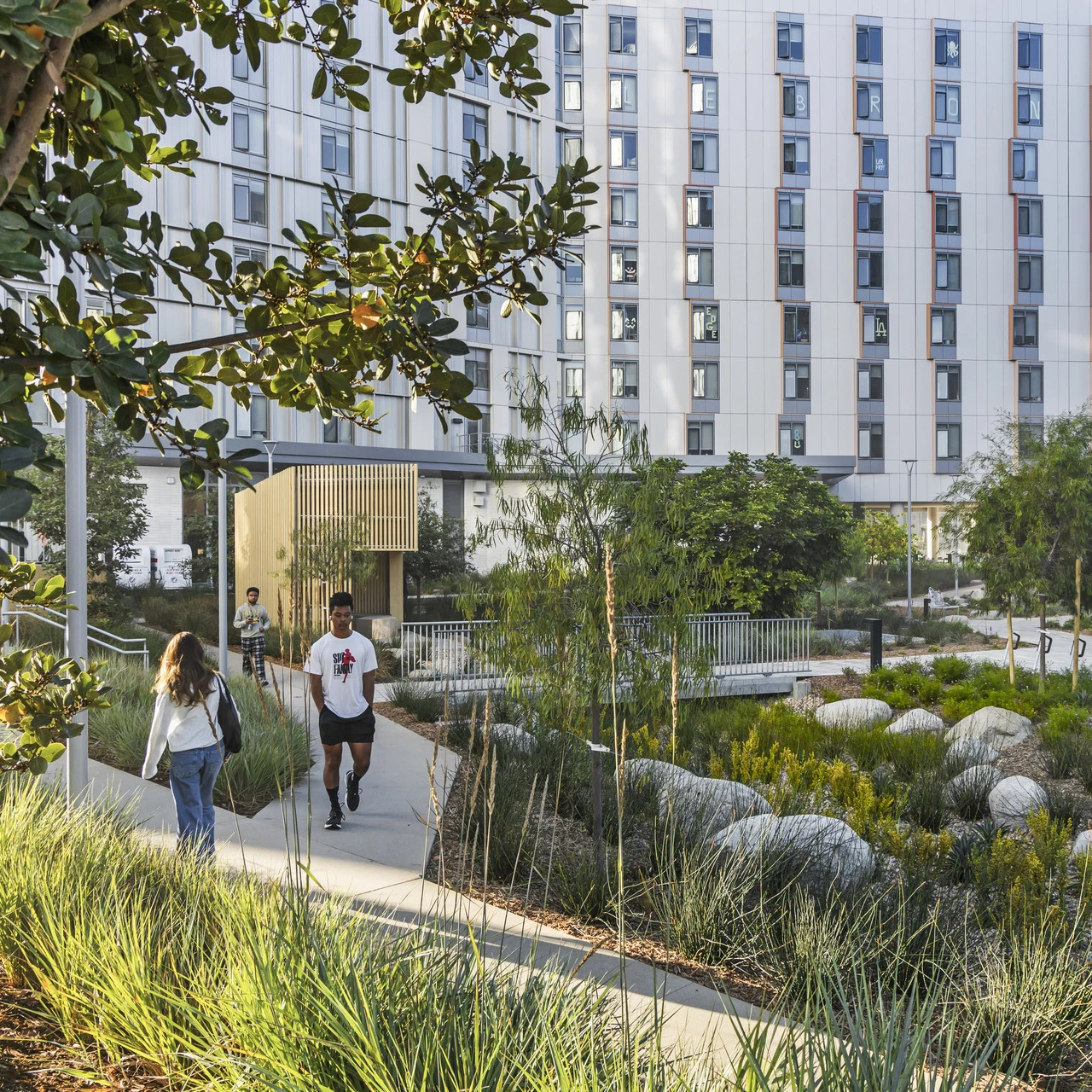
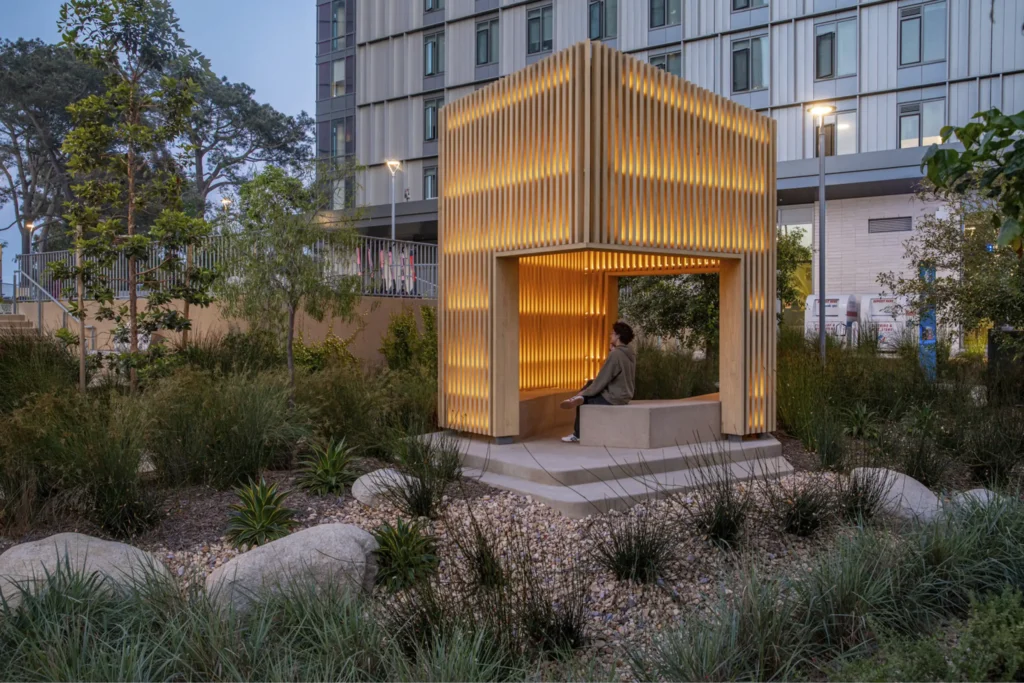
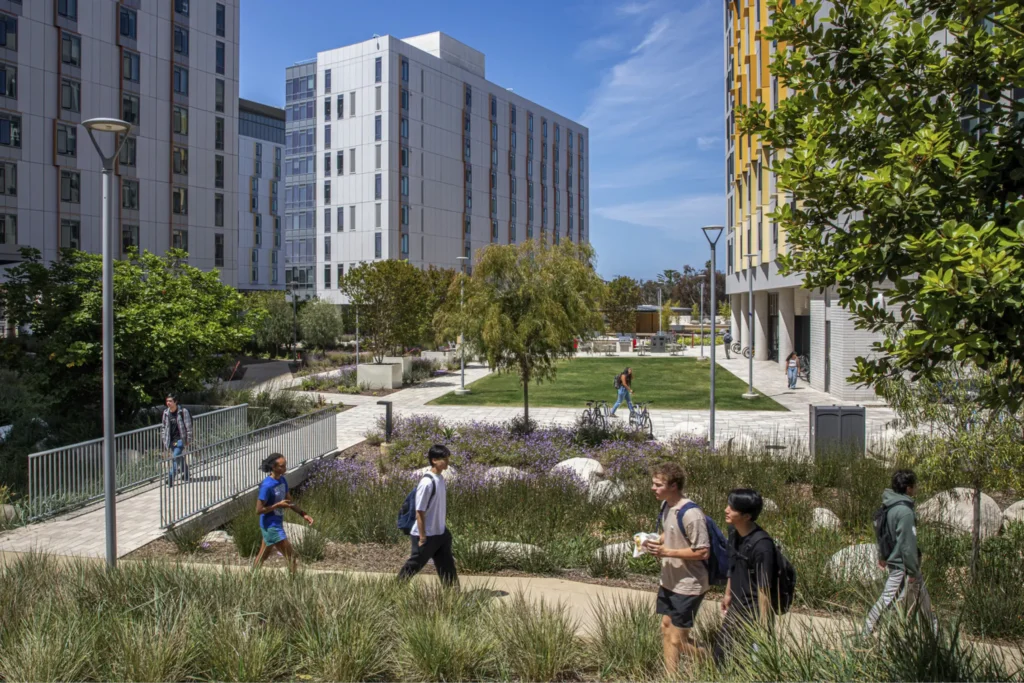
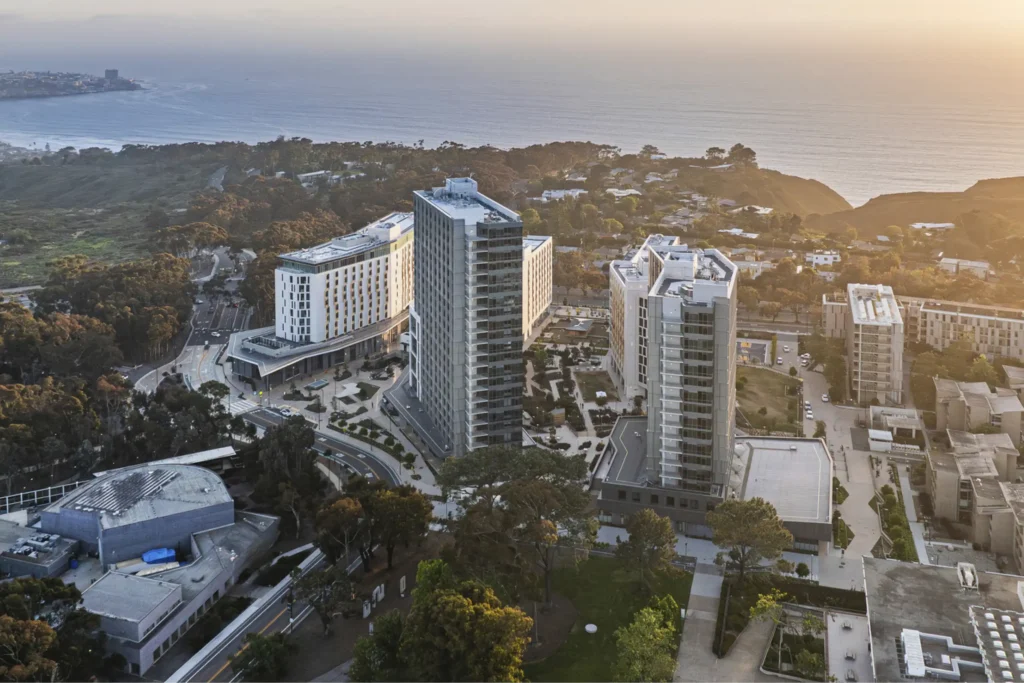
Replacing more than 10 acres of surface parking, the Theatre District Living & Learning Neighborhood brings over 2,000 new student beds to UCSD’s western campus edge. Anchored by five mixed-use buildings and a central green spine known as The Ramble, the project weaves together restored habitat, courtyards, and stormwater basins with new arts venues, dining options, and a mobility hub. The landscape draws from adjacent ecological zones, including the Coastal Sage Scrub Preserve, to restore forest canopy and extend native corridors across the site. The neighborhood is targeting LEED Platinum certification.
Problems addressed: housing expansion, surface parking removal, stormwater management, habitat restoration.
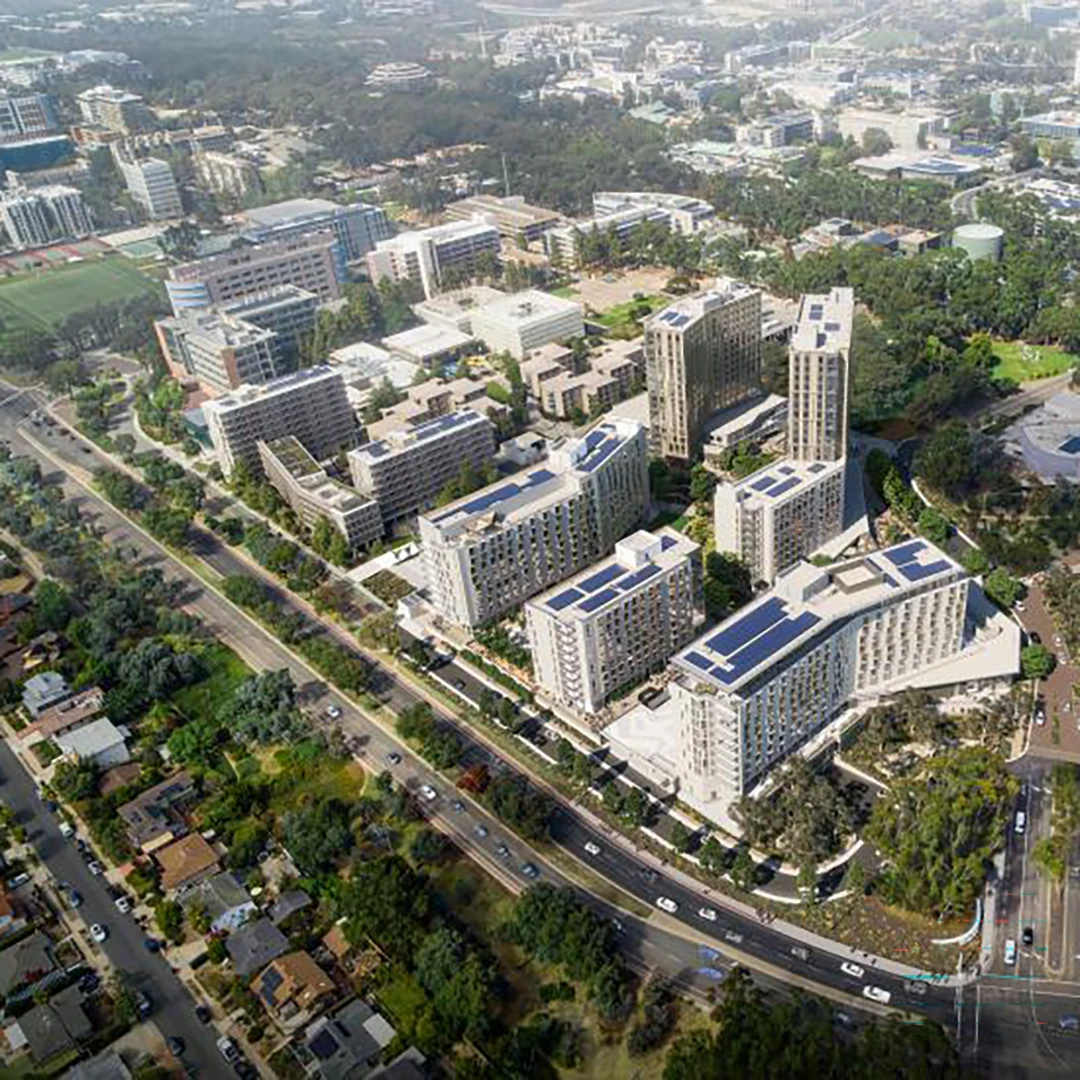
Currently under construction, Ridge Walk North introduces housing for more than 2,400 undergraduate students, alongside academic facilities for Thurgood Marshall College, the School of Global Policy and Strategy, and the Department of Economics. The landscape strategy prioritizes walkability and learning through a network of shaded paths, outdoor classrooms, and native plantings that highlight regional ecology and sustainable water use. Aiming for LEED Gold, the all-electric neighborhood integrates rainwater harvesting, smart irrigation, and low-carbon materials throughout.
Problems addressed: housing capacity, walkability, outdoor learning, water conservation, low-carbon infrastructure.
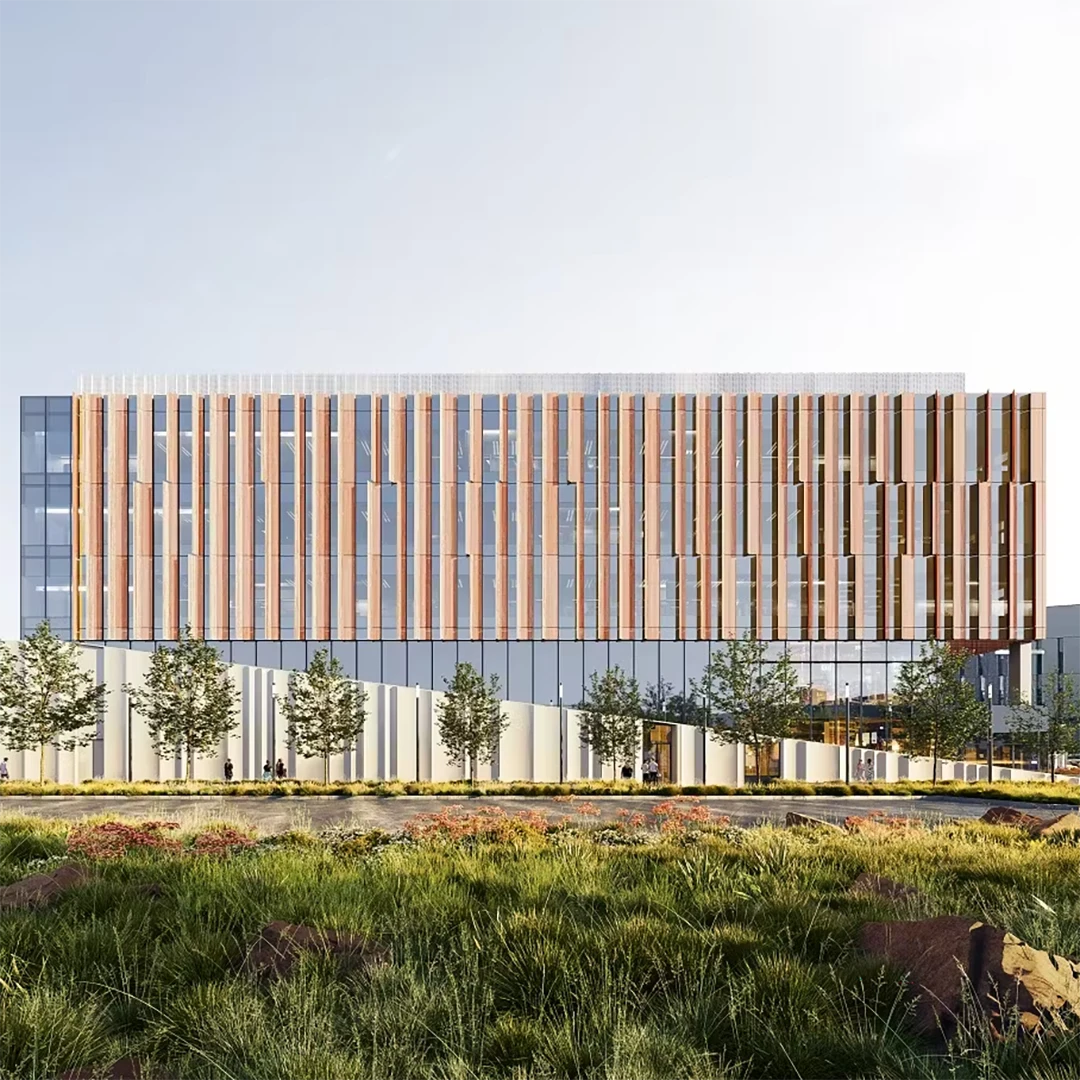
Sited at the eastern gateway of UCSD’s Health Sciences campus, the Viterbi Family Vision Research Center reflects the university’s commitment to accessible and human-centered healthcare environments. Working alongside NBBJ, SWA designed the landscape to emphasize legibility and sensory contrast for people with visual impairments. A pair of parallel pathways—the Viterbi Promenade and Health Sciences Walk—are differentiated through material, color, and planting palette, guiding visitors through native gardens, outdoor seating, and shaded arrival zones connected to the regional LRT station.
Problems addressed: accessibility, sensory design, campus gateway, transit integration.
CSU Long Beach
2010 – Present
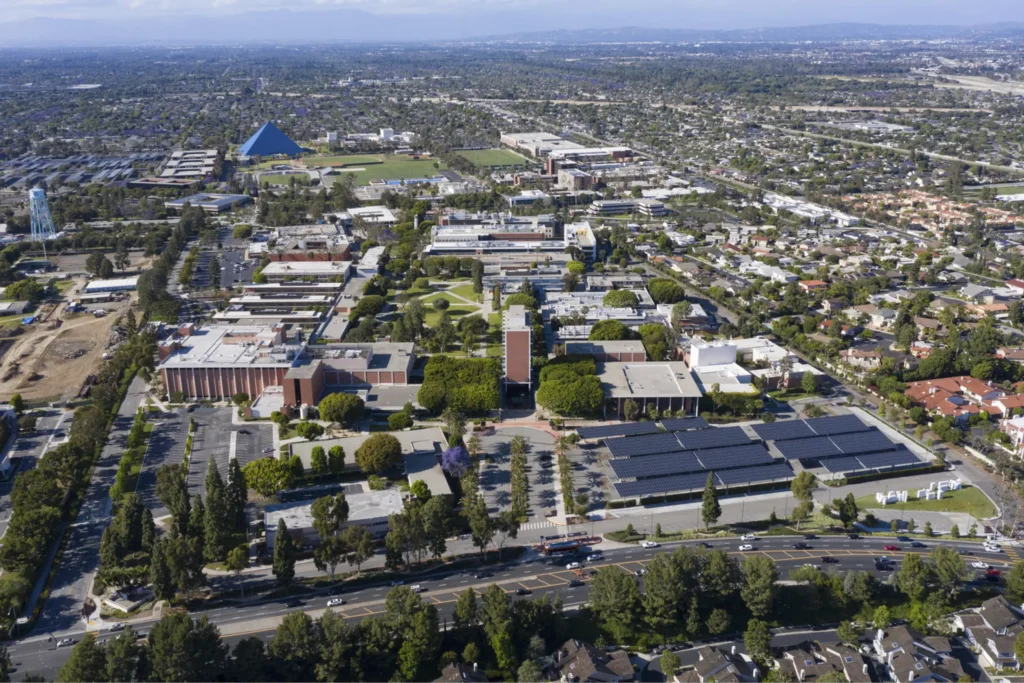
California’s drought-prone climate has long shaped design decisions at CSULB, where landscape interventions are central to the campus’ adaptation strategy. SWA’s work across the 322-acre site reflects a shift away from resource-intensive legacy infrastructure and toward a layered, student-centered public realm that prioritizes water resilience, outdoor learning, and social connectivity. From reimagined courtyards and classroom thresholds to landscape frameworks that foreground sustainability, SWA’s ongoing collaborations with CSULB respond to aging facilities and shifting enrollment needs while reinforcing the university’s “campus in a park” identity.
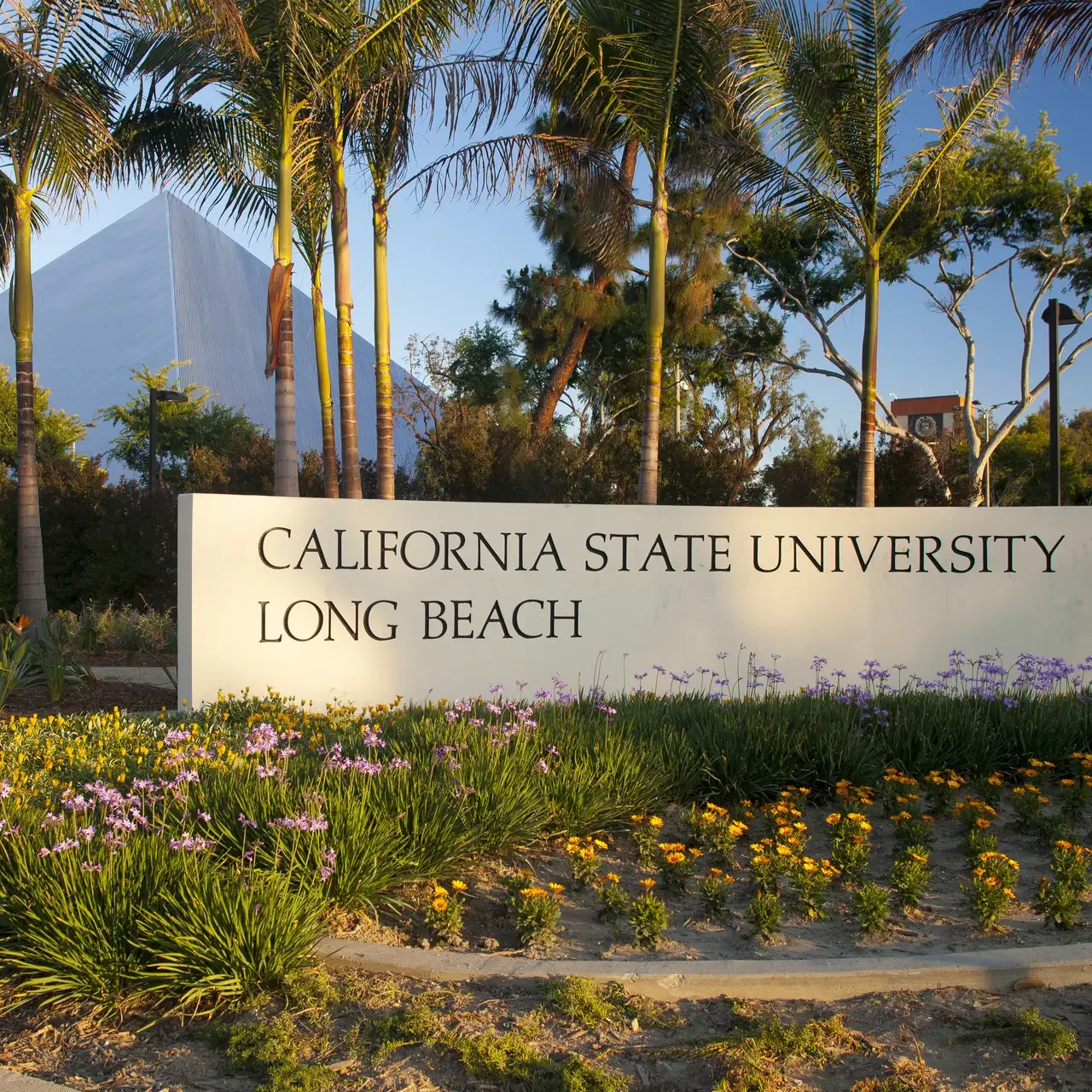
Positioned as a framework for both near- and long-term transformation, the CSULB Landscape Master Plan outlines a resilient campus public realm rooted in comfort, safety, and ecological stewardship. Informed by extensive stakeholder engagement, the plan redefines circulation routes, open spaces, and thresholds between buildings and landscape—emphasizing shade and social function across the commuter campus. SWA’s design reinforces campus gateways, reactivates corridors and plazas, and ties building clusters to their open-space context. Recommendations support equitable access, healthy outdoor environments, and phased retrofit opportunities aligned with infrastructure upgrades.
Problems addressed: aging infrastructure, pedestrian circulation, climate resilience, campus identity.
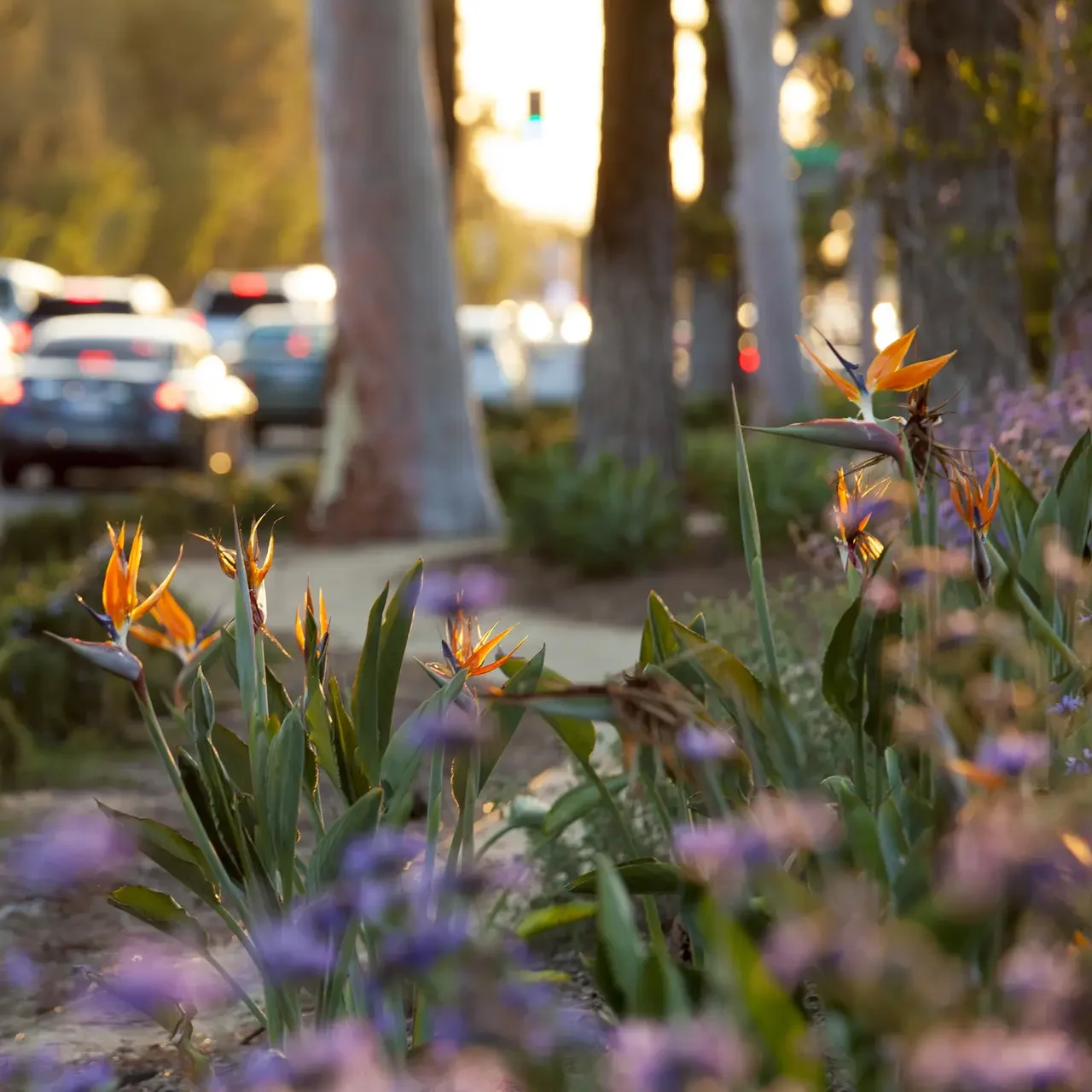
In response California’s drought, CSULB initiated a Water Action Plan that replaced nearly 90,000 square feet of lawn with drought-tolerant plantings— reducing potable irrigation demands by 3.5 million gallons annually. In tandem with the landscape conversion, the campus introduced faucet aerators, low-flow urinals, and high-efficiency toilets, resulting in significant reductions in both water use and associated costs. The pilot sites—often fronting athletic fields, circulation corridors, and large passive lawns—became early models for integrating native planting, hydrozoning, and smart irrigation
into CSULB’s broader sustainability strategy.
Problems addressed: water conservation, drought adaptation, maintenance reduction, cost efficiency.
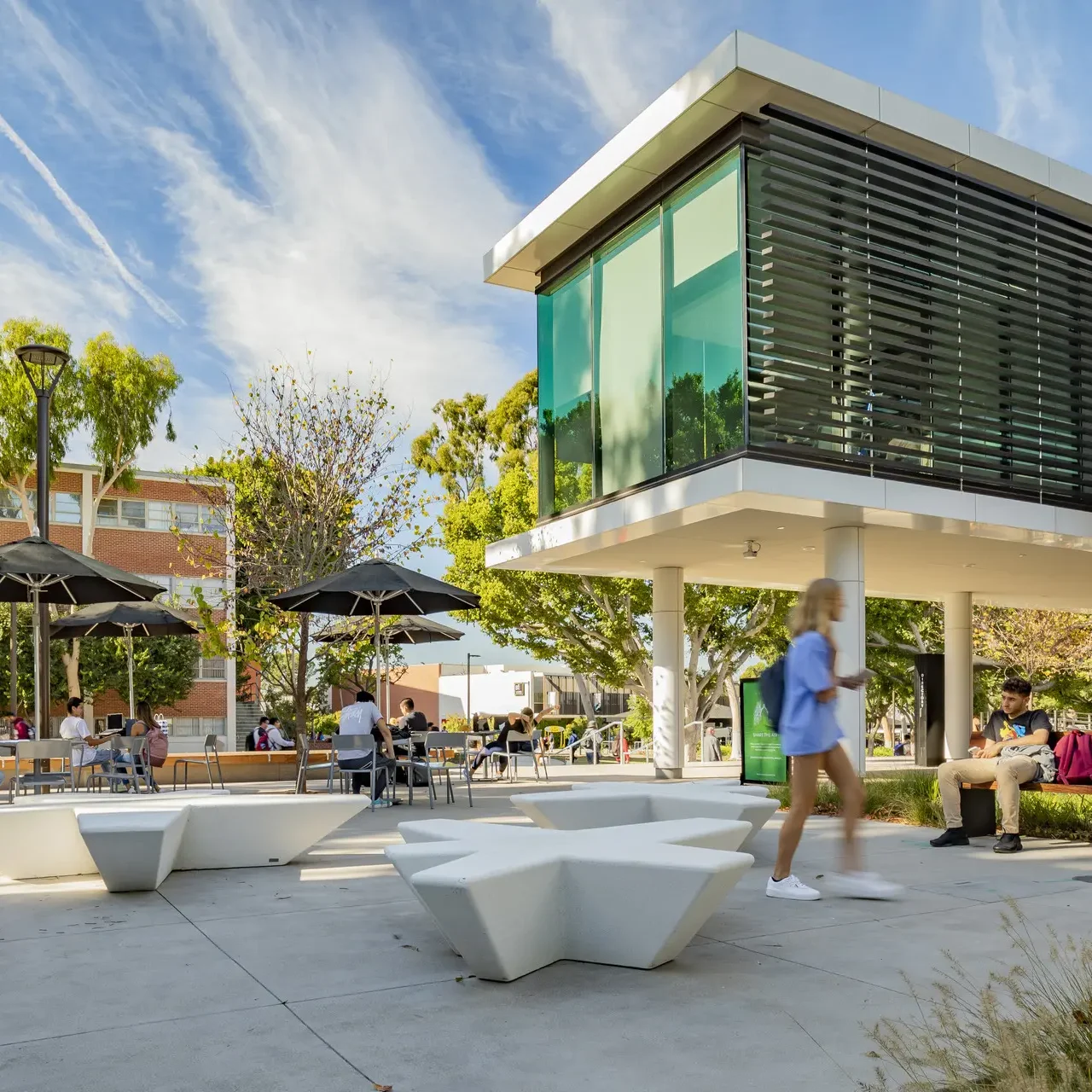
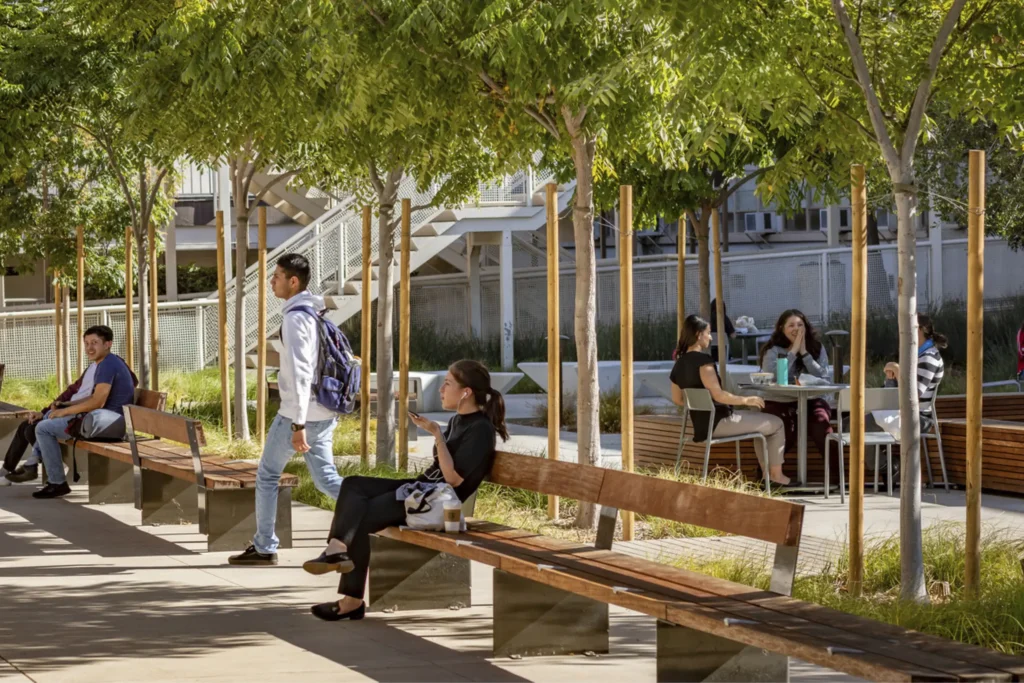
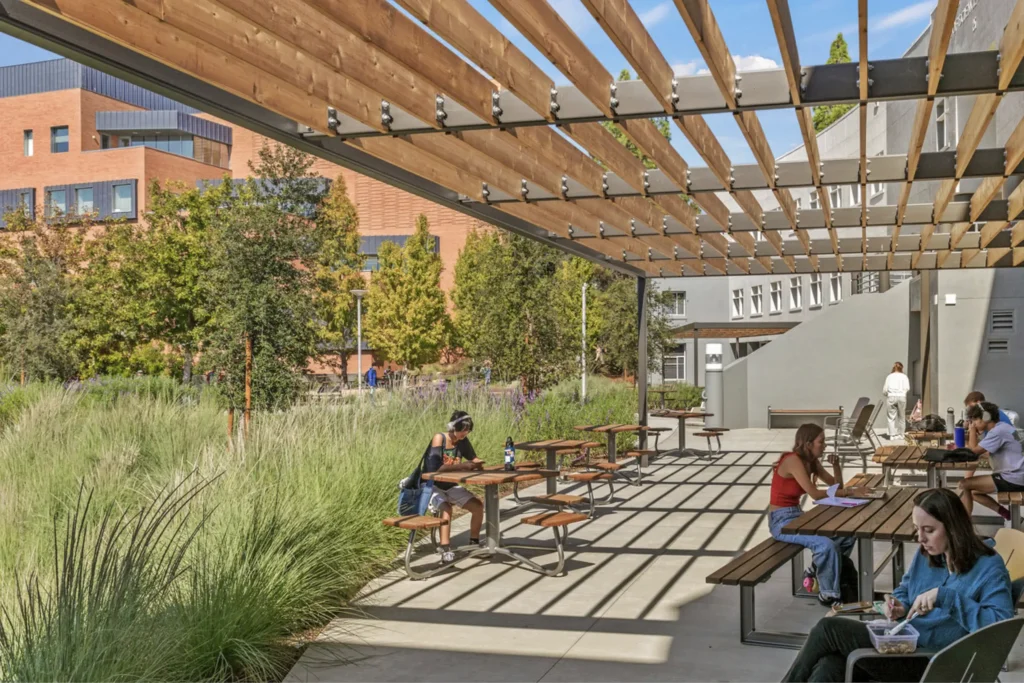
With the renovation of CSULB’s mid-century Peterson Hall complex, SWA introduced a contemporary outdoor learning environment that blends ecological performance with student amenity. Terraced wood seating, bioswales, and drought-tolerant planting define outdoor rooms that accommodate study, lecture spillover, and informal gathering. The seating areas incorporate movable furniture and shaded benches, framed by native plantings selected for both visual appeal and stormwater tolerance. Together, these elements create an adaptable landscape that supports sustainability goals and student life within a constrained footprint.
Problems addressed: outdoor learning, ecological integration, stormwater management, student amenities.
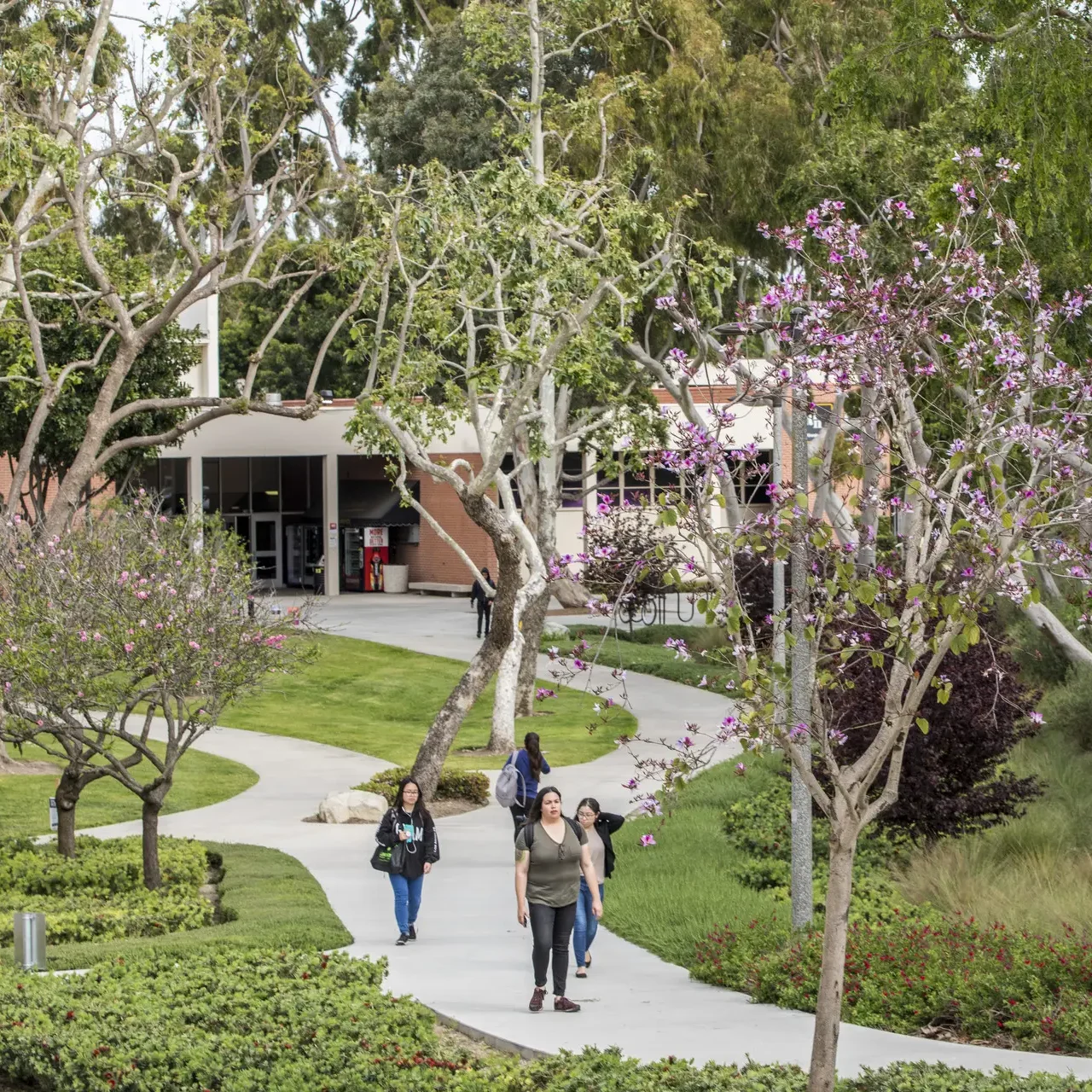
The Horn Center has served many purposes since its construction in 1987 as the University’s North Library. In 1993, the site expanded to include the University Art Museum, while the original structure was converted into a student services center before being renovated to house ten classrooms and two lecture halls. To serve this diverse set of purposes, SWA’s landscape design established new seating areas for students to enjoy between classes and a sculpture garden in the north and south courtyards to complement the museum.
Problems addressed: classroom spillover, flexible use space, outdoor study environment, climate adaptation.
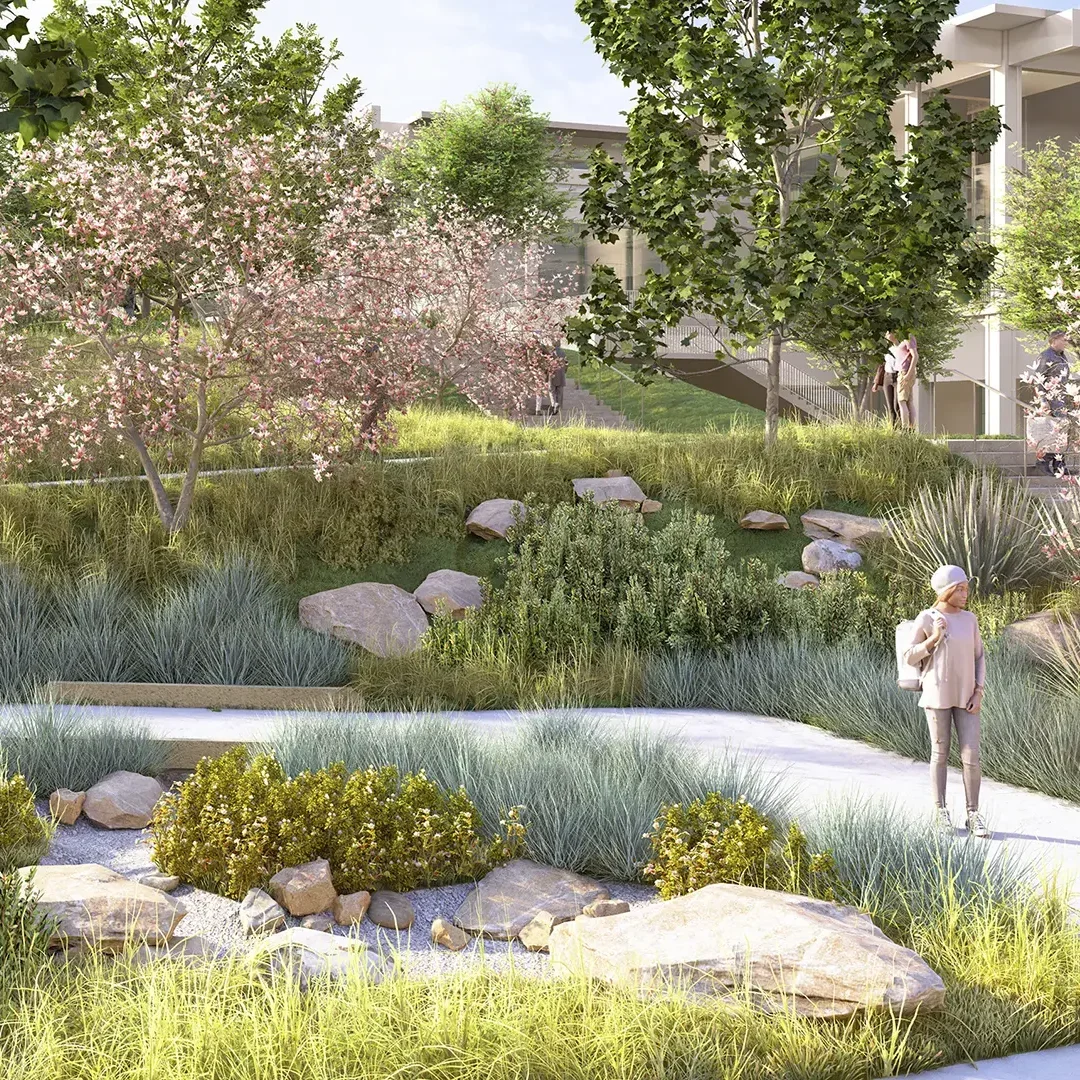
As part of a broader reimagining of the University Student Union (USU), SWA is designing a seamless interface between the campus center and Friendship Walk, a critical pedestrian spine linking the north and south ends of campus. The new landscape integrates flexible seating zones, shaded study areas, and native planting to support year-round use—transforming underutilized hardscape into a dynamic commons for events, gatherings, and everyday campus life. Prioritizing walkability and social connection, the design ties into broader circulation goals laid out in the campus master plan.
Problems addressed: public realm activation, walkability, campus connectivity, social space expansion.
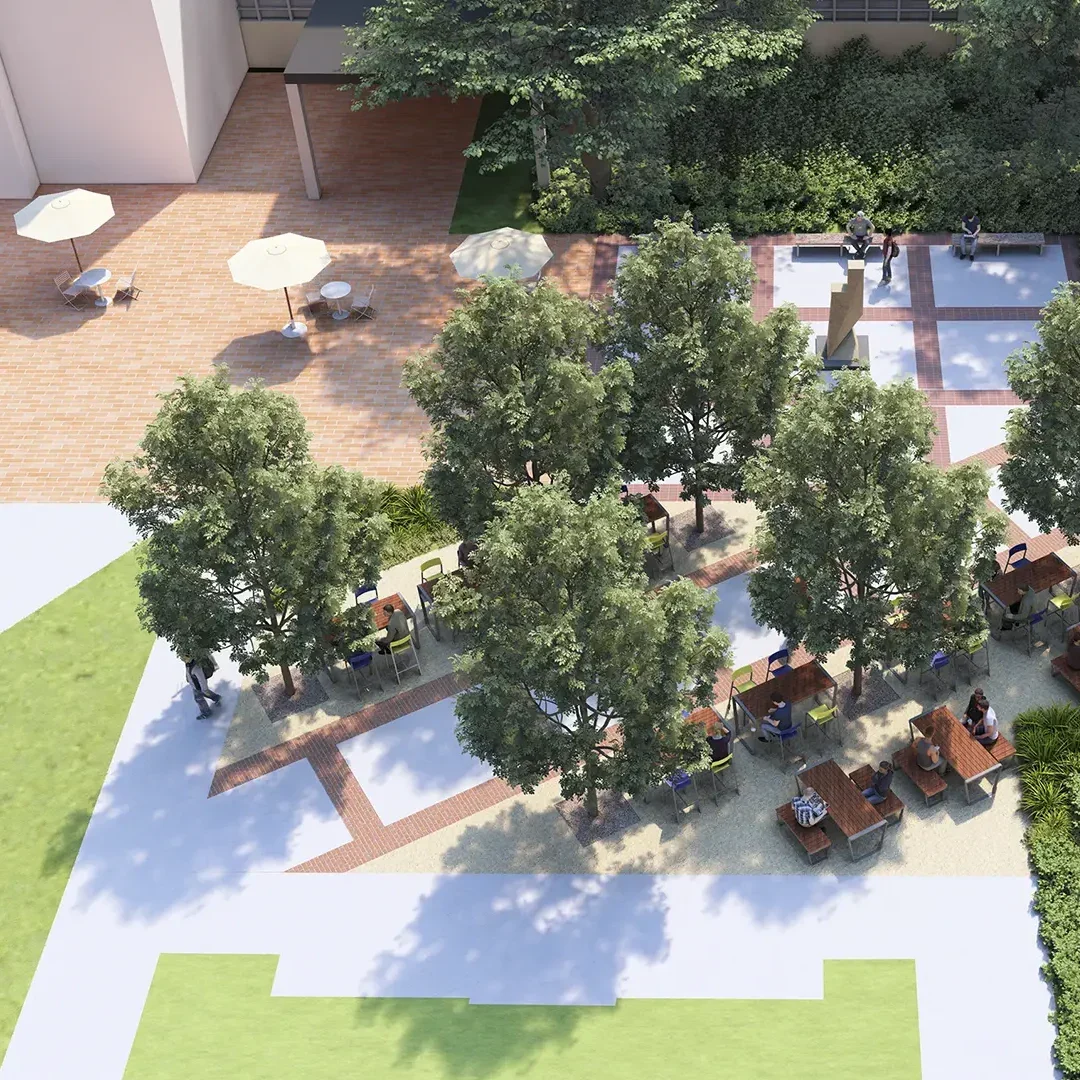
Located just north of the University Library, this formerly sunken courtyard is being transformed into a level, universally accessible plaza. The updated design replaces inaccessible stairs with generous, shaded pathways and seating, encouraging both movement and pause in a high-traffic area between academic buildings. Hardscape and planting selections reflect climate adaptation goals—using a durable, low-maintenance palette and incorporating tree canopy for thermal comfort. The courtyard serves as a new academic threshold, tying together east-west flows through the heart of campus.
Problems addressed: universal accessibility, heat mitigation, east-west campus flow, climate adaptation.
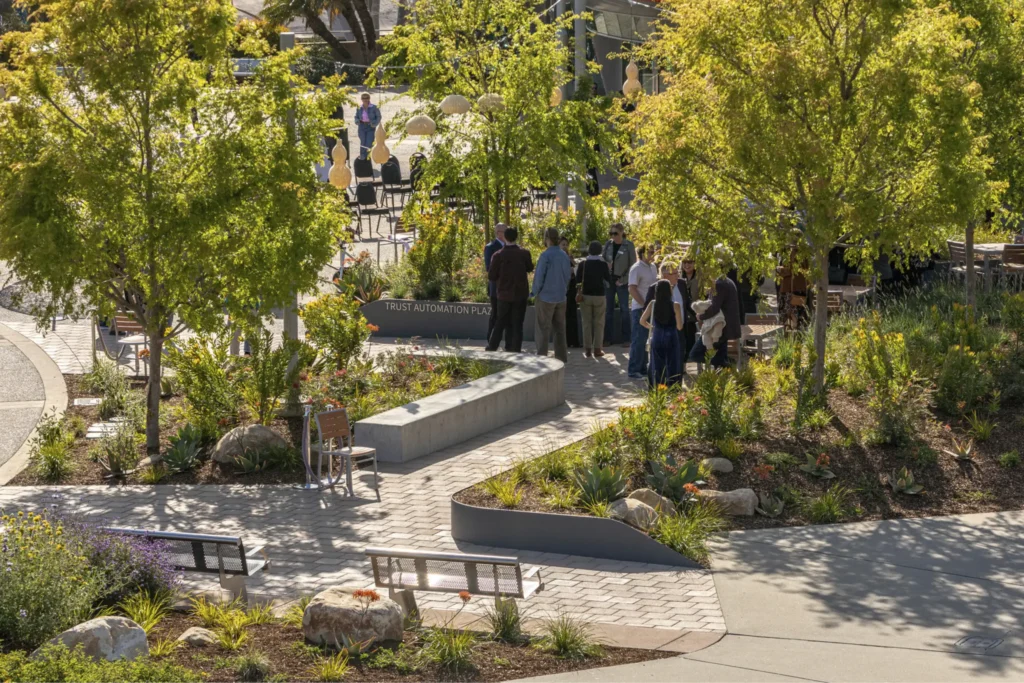
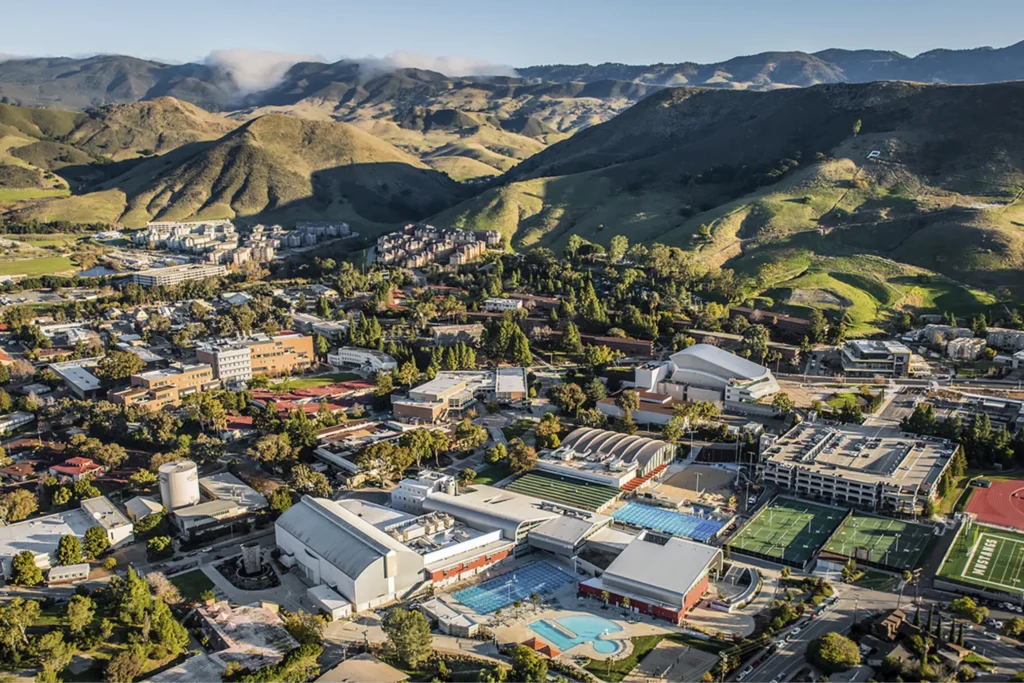
Cal Poly
2022 – Present
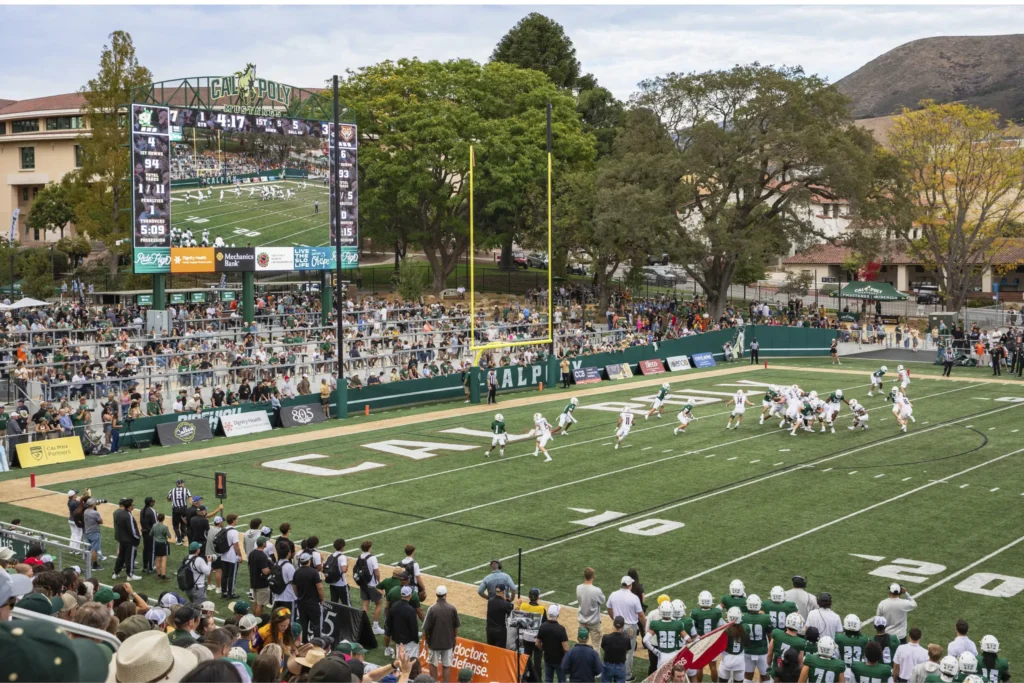
Founded in 1901, Cal Poly San Luis Obispo is the oldest of California’s three polytechnic universities and one of the largest U.S. higher education institutions by land area. With a once-in-a-generation investment aimed at increasing the student body from 22,000 to over 30,000 by 2030, the university engaged SWA to develop a visionary framework for its evolution over the next decade. The master plan seeks to unify more than a century of fragmented development into a vibrant, cohesive campus. This vision encompasses a range of projects, including a new performance center, football building, animal health center, plant lab, library, and nine new housing buildings providing over 1,400 beds. These elements are connected by a network of streetscapes, plazas, and parks that knit the campus together. Phased over several years, the plan is designed to be flexible and responsive to future needs, reinforcing Cal Poly’s dedication to top-tier education that adapts to advances in technology and learning methodologies.
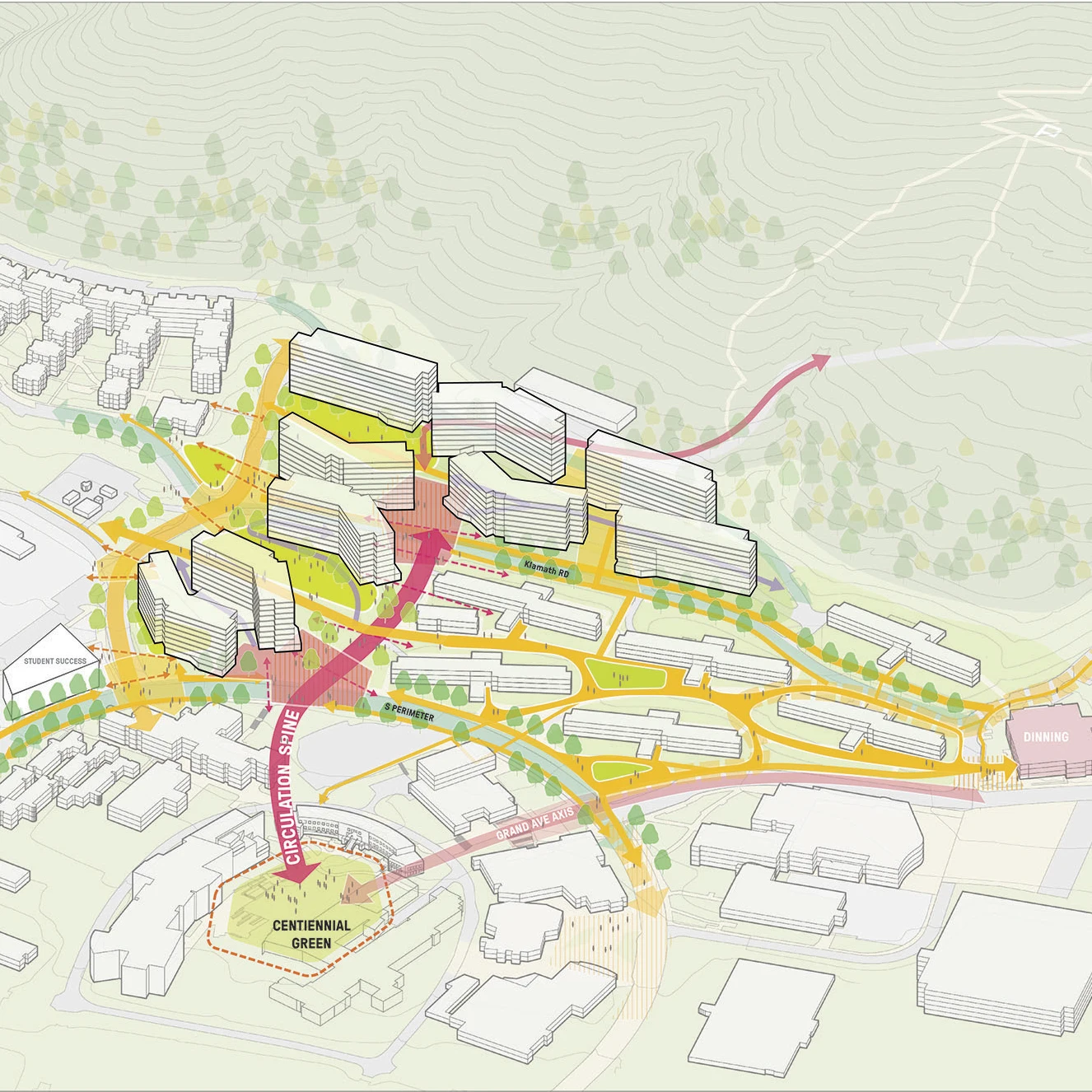
Designed to accommodate the influx of students, the Student Housing Program accomplishes the objectives outlined in the University’s 2035 Campus Master Plan. The program features 4,100 beds across nine strategically positioned buildings, led by project architect Steinberg Hart. The buildings range from eight to nine stories tall, designed to harmonize with local topography and the surrounding landscape, optimize outdoor spaces, and create efficient circulation patterns.
Problems addressed: enrollment growth, housing capacity, campus connectivity, topographic integration.
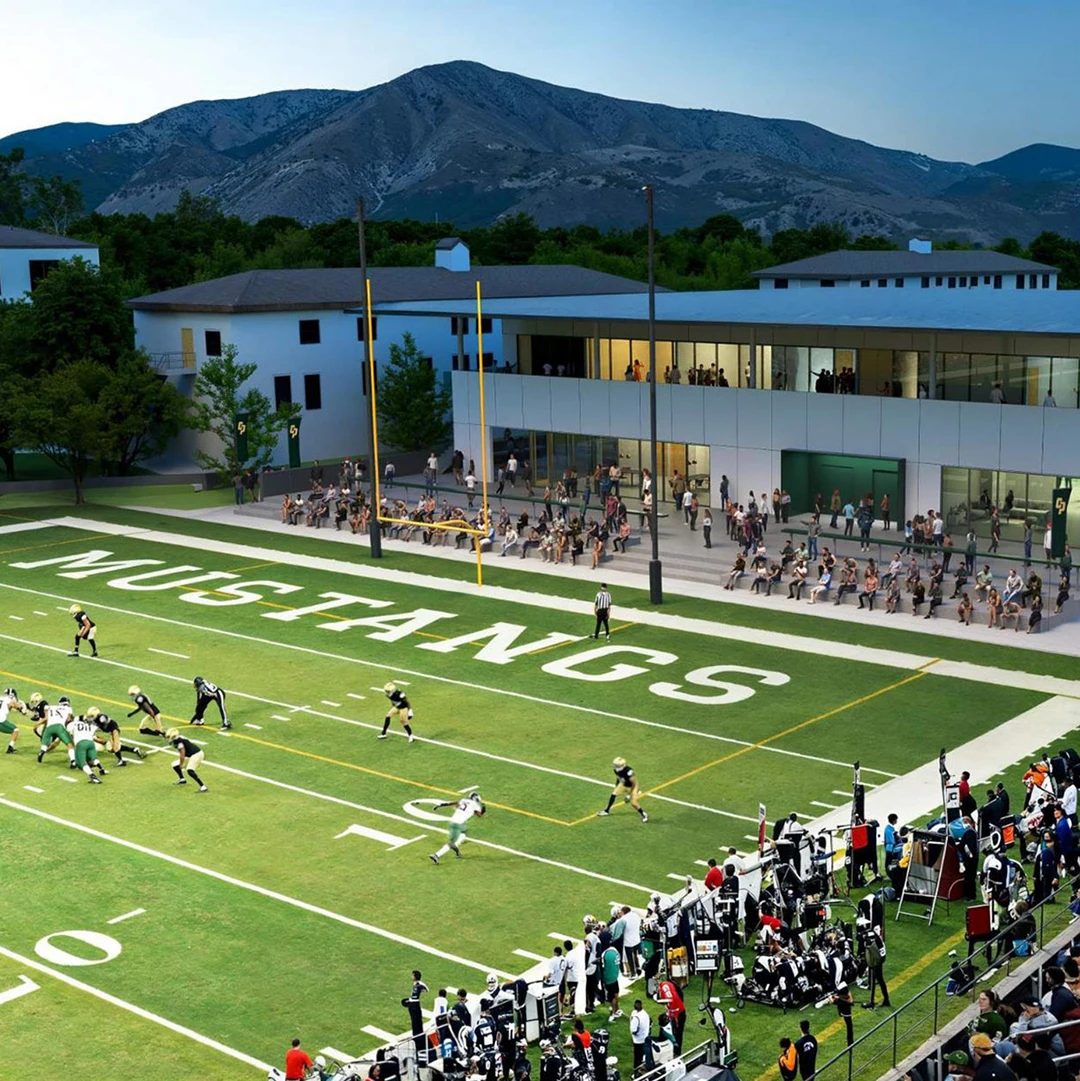
The John Madden Football Center is a premier facility for the university’s football program. SWA’s approach to the facility aligns functional needs with recruitment objectives, ensuring the facility not only meets the daily operational requirements of the football team but also serves as a major draw for recruiting top-tier student-athletes. The project includes a critical $9 million South Campus infrastructure renewal initiative, which includes upgrades to vital utilities such as sewers, storm drainage, and electrical services. This initiative integrates advanced communication technologies, including fiber communication and broadcast streaming capabilities to Spanos Stadium.
Problems addressed: athletic recruitment, infrastructure renewal, utility upgrades, digital modernization.
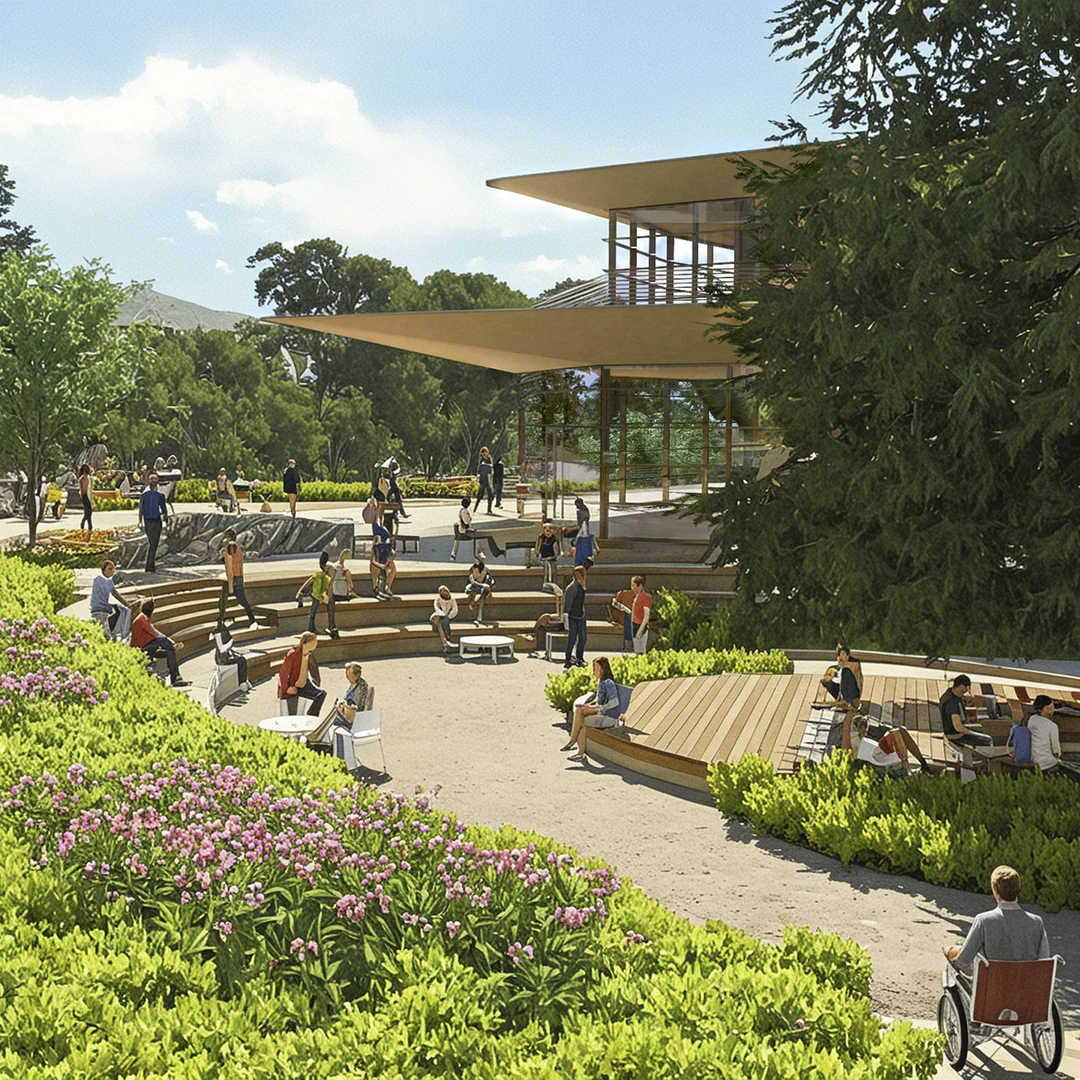
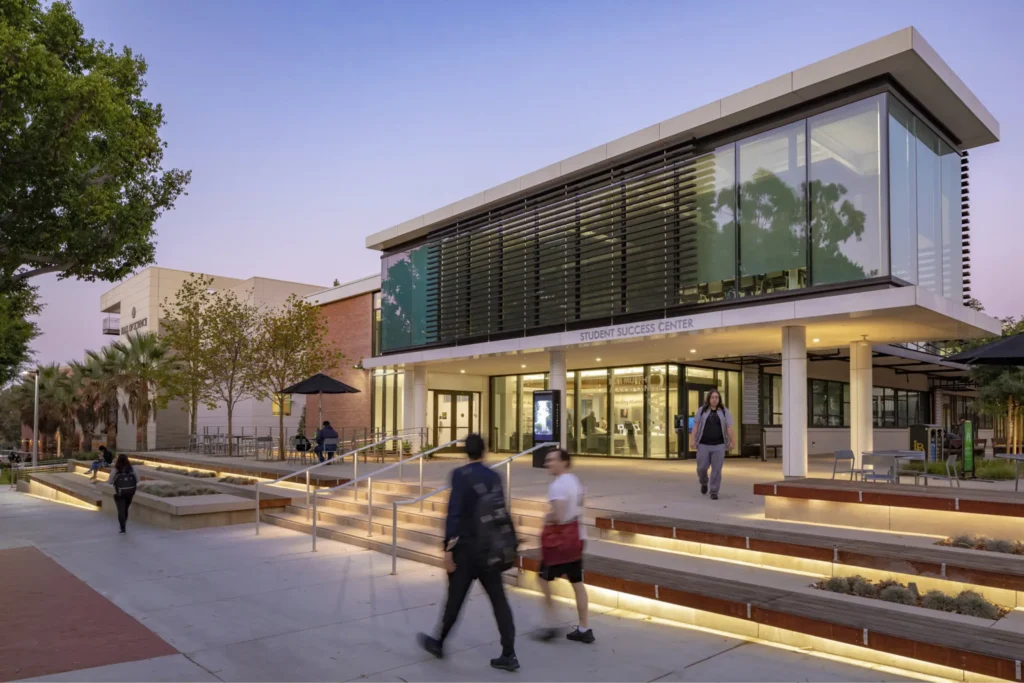
Set into a steep hillside, the landscape for the Student Success Center turns topography into opportunity—creating a series of terraced outdoor spaces that support study, gathering, and informal campus life. Integrated seating, shade, and native planting foster a comfortable, inclusive environment that complements the building’s academic mission. A mature redwood, preserved on site, anchors the design as a living symbol of resilience and
continuity.
Problems addressed: student wellness, informal learning, topographic constraints, campus circulation.
University of Cincinnati
2014 – Present
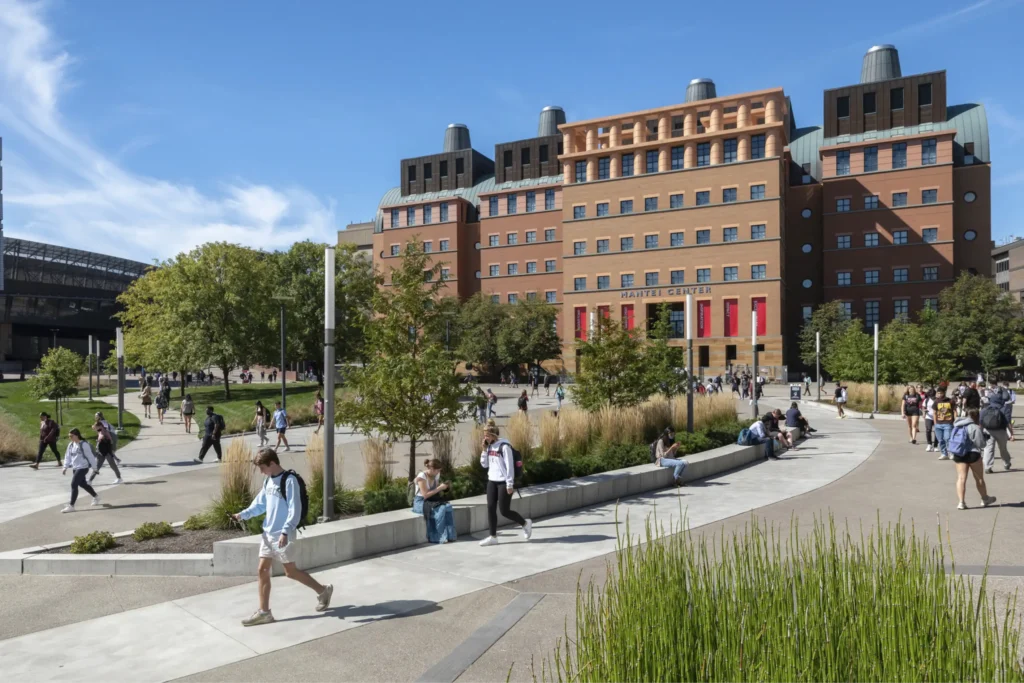
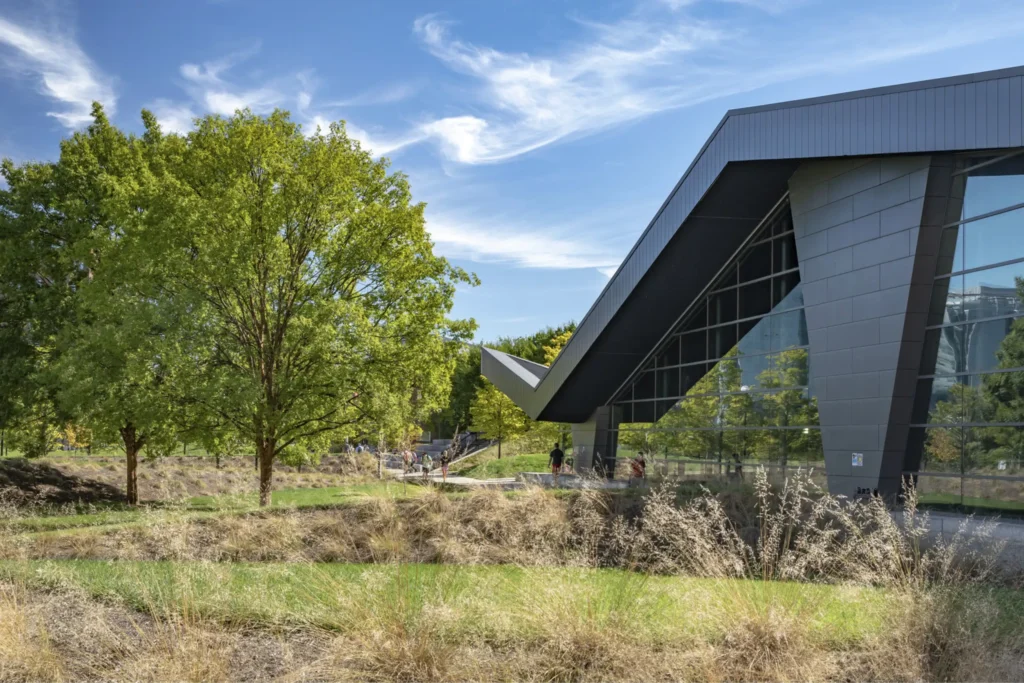
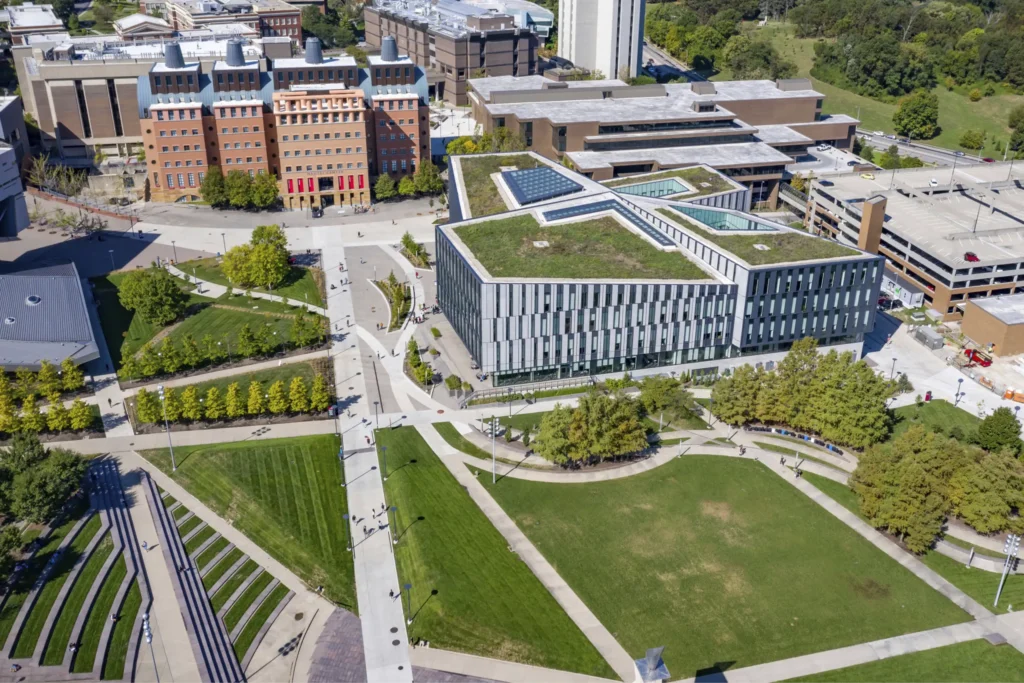
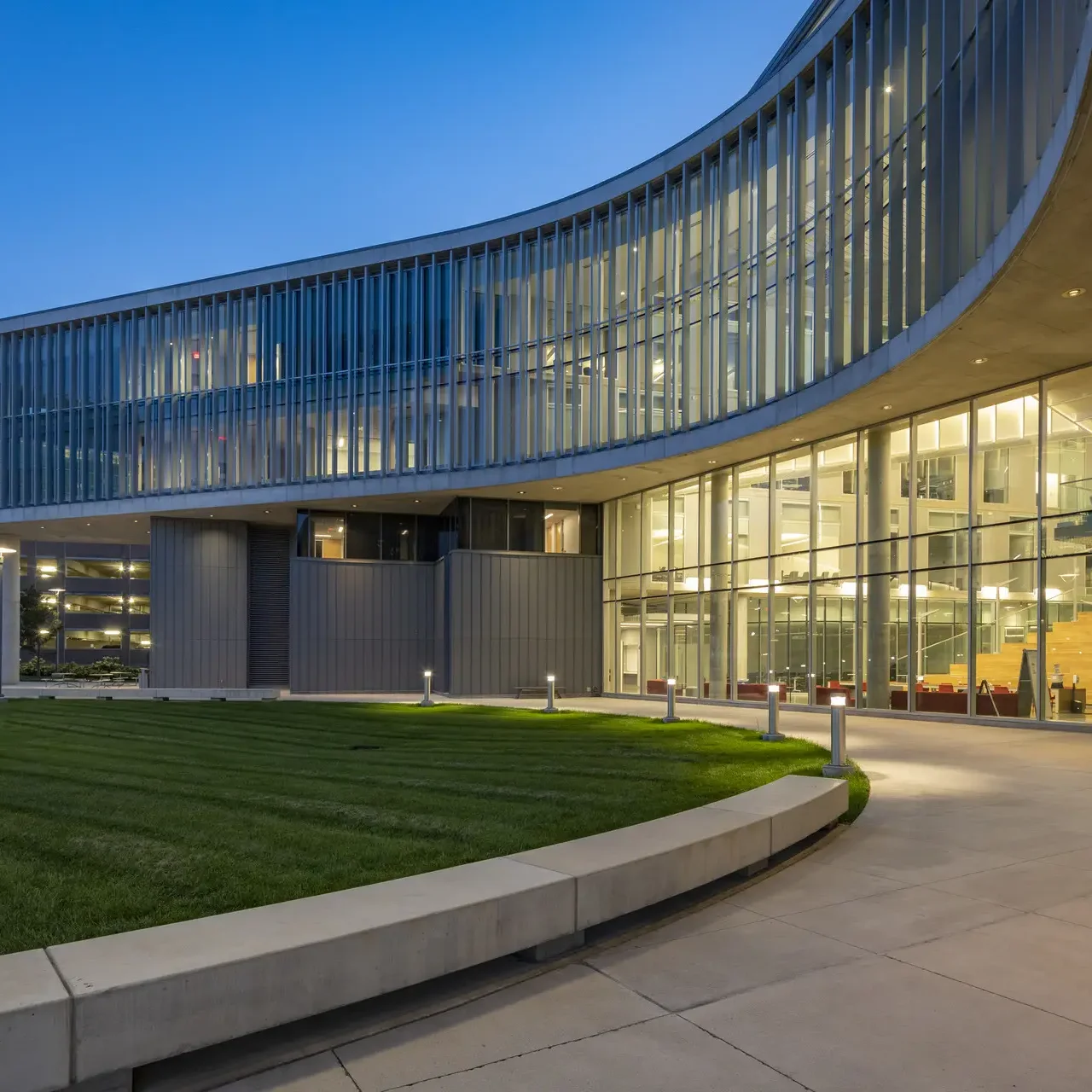
At the University of Cincinnati, SWA has helped guide the transformation of a historically fragmented urban campus into a more connected, student-centered environment. Building on an earlier master plan by Hargreaves Associates, the university sought to unify its East and West Campuses while addressing growing demands for academic space, student housing, and more welcoming public environments. SWA’s role has included district-scale planning studies and early implementation projects that foreground walkability, ecological expression, and a renewed sense of place—particularly within the expanding Medical Campus and a new generation of housing facilities.
Originally shaped by mid-century clinical and research buildings, UC’s East Campus is evolving into a more cohesive medical and academic district. SWA developed a series of planning studies and conceptual designs that reframe the campus around a clear center of gravity, linking it directly to the university’s core while accommodating phased redevelopment, including the new Perkins+Will-designed Health Sciences Building.
Problems addressed: medical district legibility, east-west campus connectivity, facility renewal.
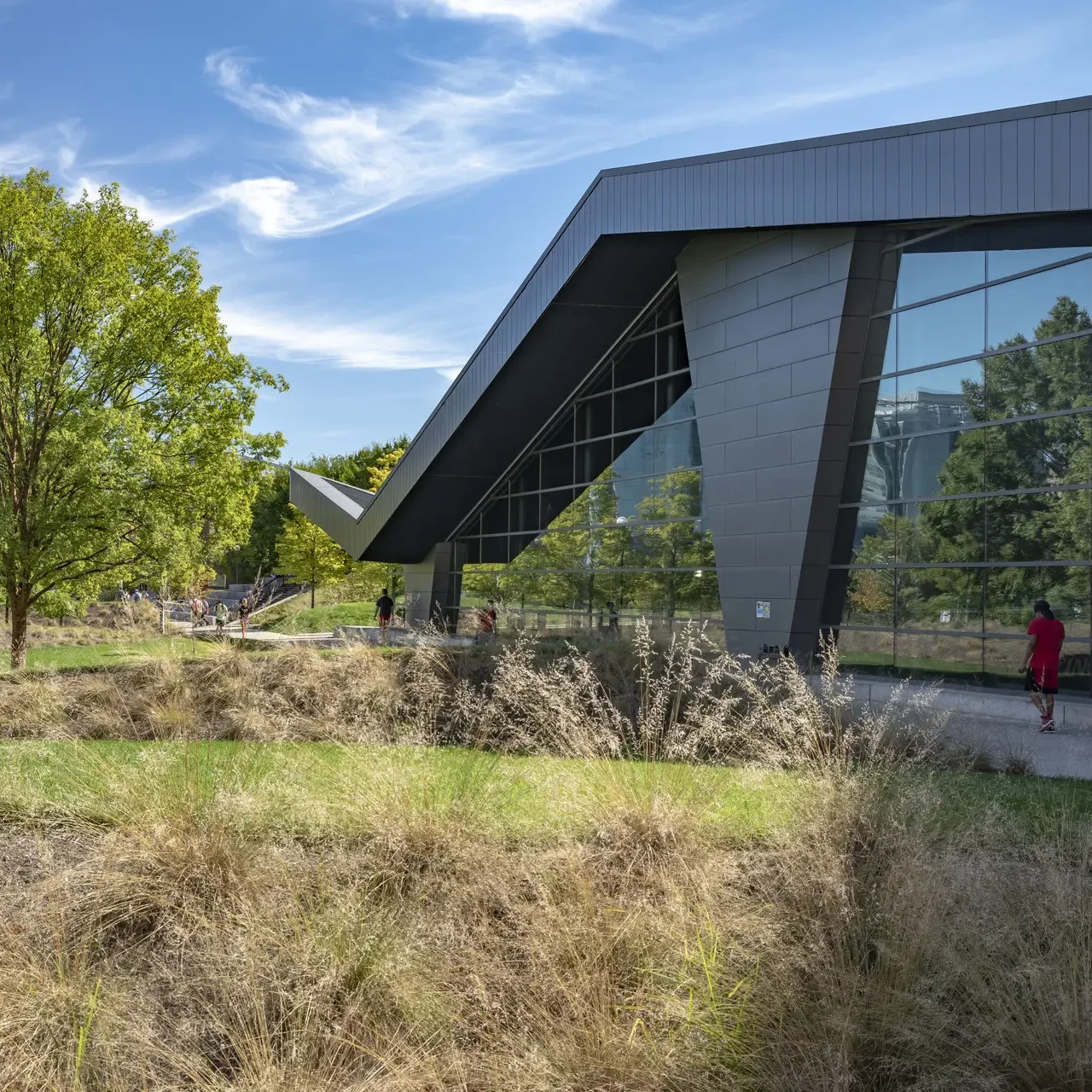
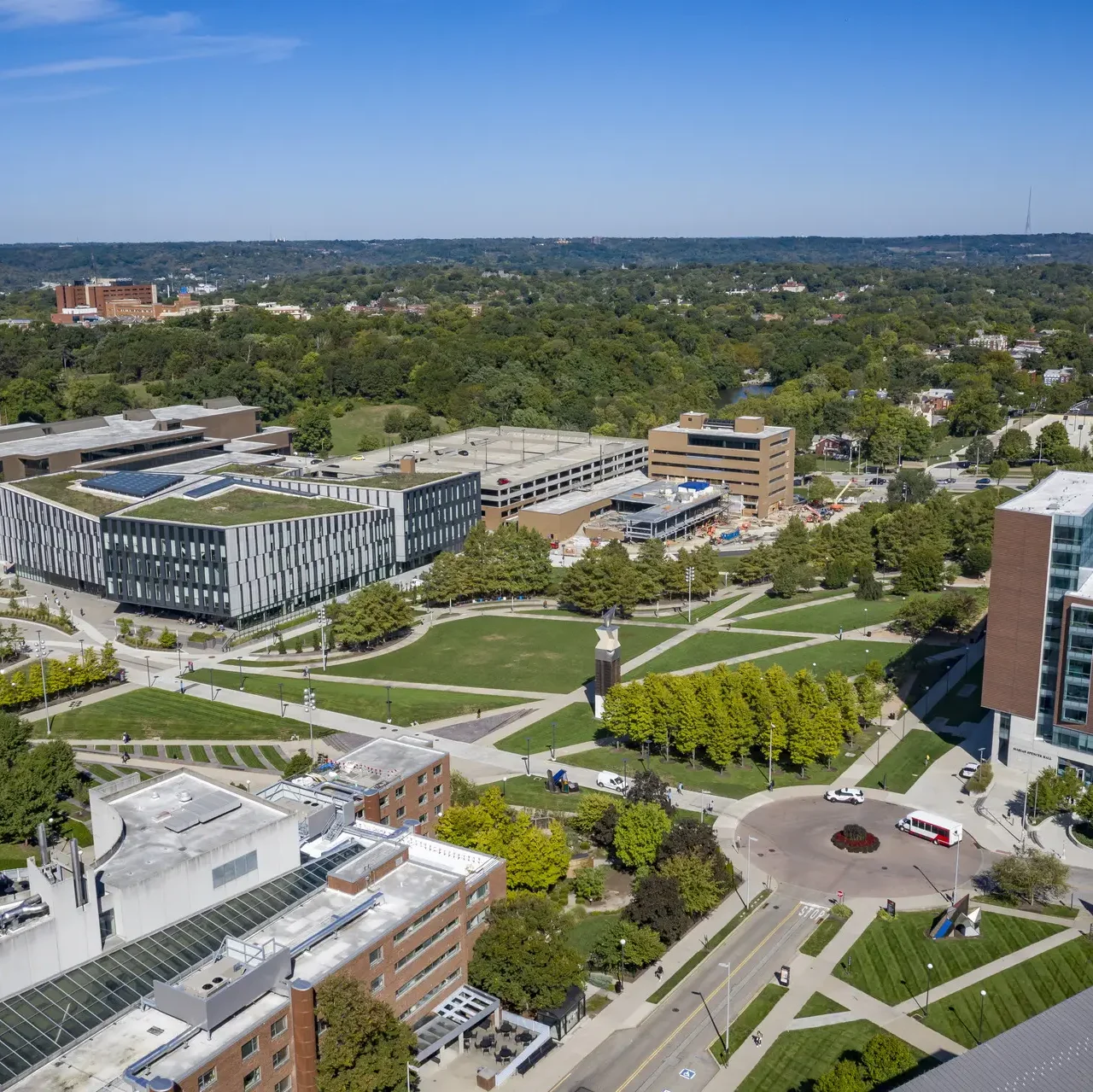
On the main campus, SWA’s master plan repositions circulation routes, gateways, and gathering spaces to improve the experience for students and visitors. Integrating major capital projects—including the Fifth Third Arena renovation, new College of Business, and updated residence halls—the plan establishes a framework for long-term growth rooted in mobility, spatial clarity, and everyday campus life.
Problems addressed: campus cohesion, pedestrian access, multimodal connectivity.
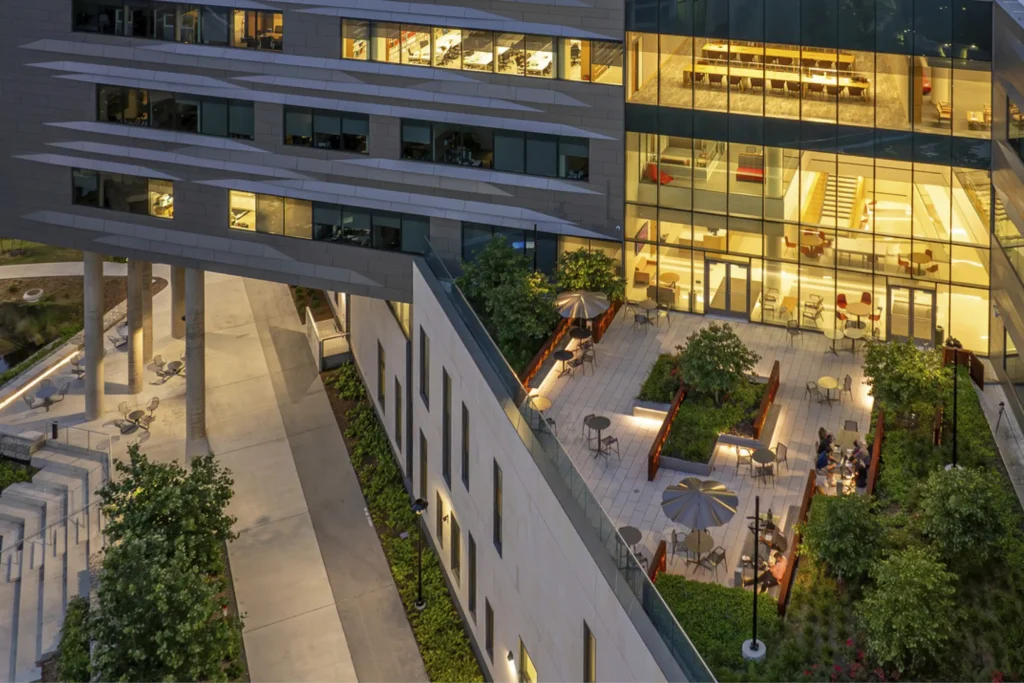
The first project to advance from the updated master plan, the MRMU complex introduces new housing and dining facilities organized around a sequence of human-scaled outdoor rooms. Shaped by topography and transit flows, the site integrates shaded terraces, a native limestone-inspired rain garden, and social courtyards informed by maintenance input and local ecological knowledge.
Problems addressed: housing demand, landscape activation, biodiversity enhancement.
University of Houston
2012 – Present
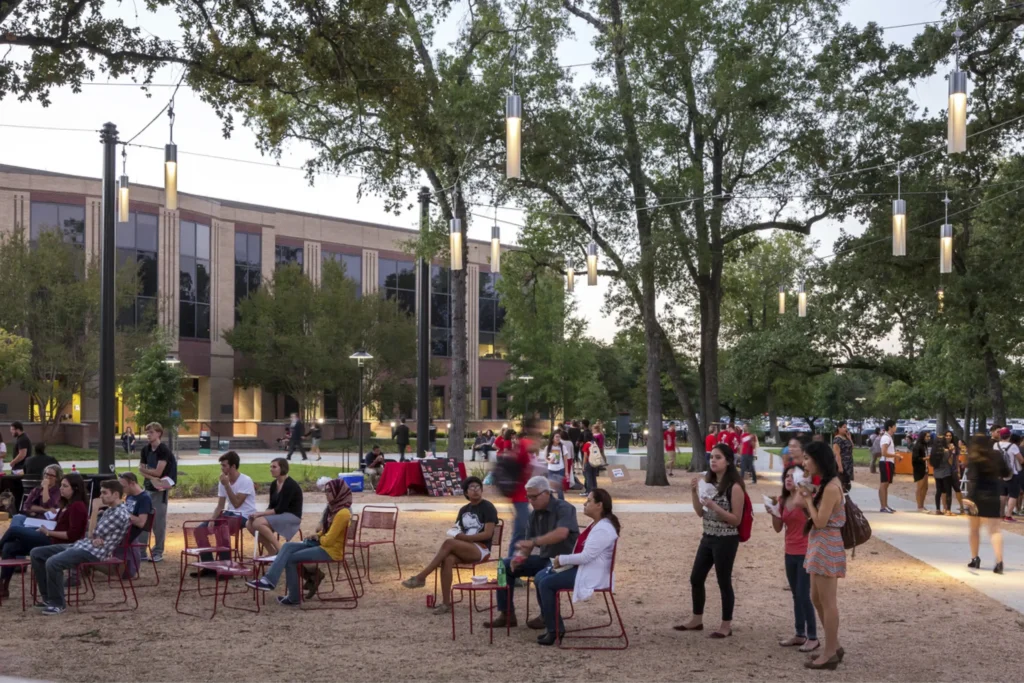
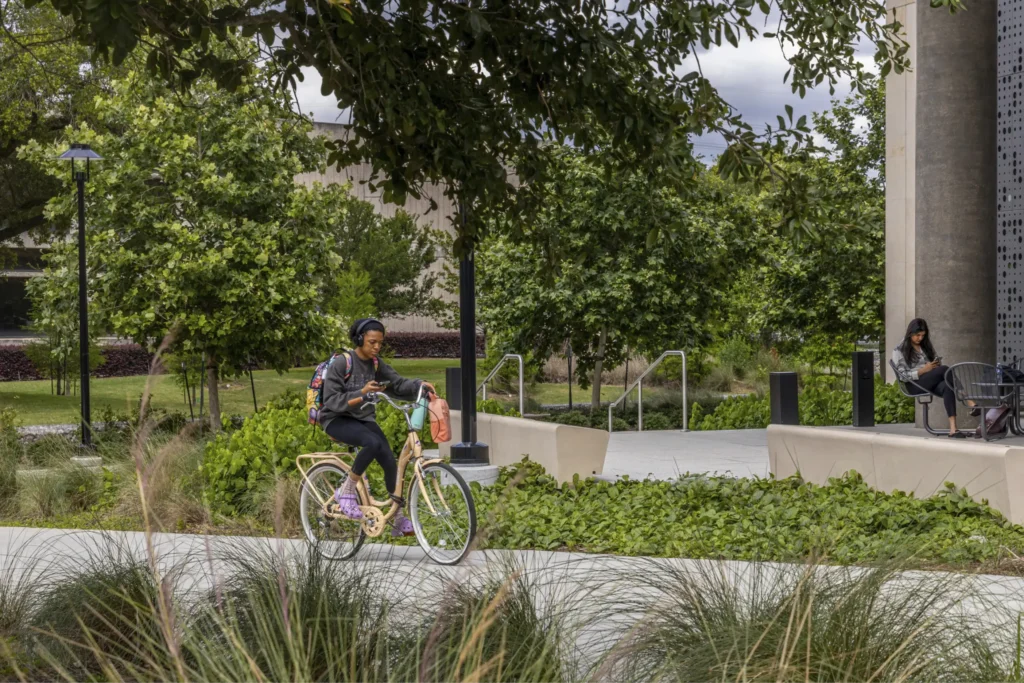
As the University of Houston advances its Centennial Plan 2027, landscape plays a central role in reimagining the public realm across its evolving campus network. From stormwater resilience to student life, SWA’s collaborations with UH reflect the institution’s commitment to adaptive, sustainable growth. The work spans multiple campuses—including UH’s main and downtown sites—and addresses long-standing issues of flooding, fragmented open space, and underutilized gateways. Whether defining civic thresholds or restoring native ecology, each intervention layers practical infrastructure with immersive, socially vibrant landscapes that support student learning and wellbeing.
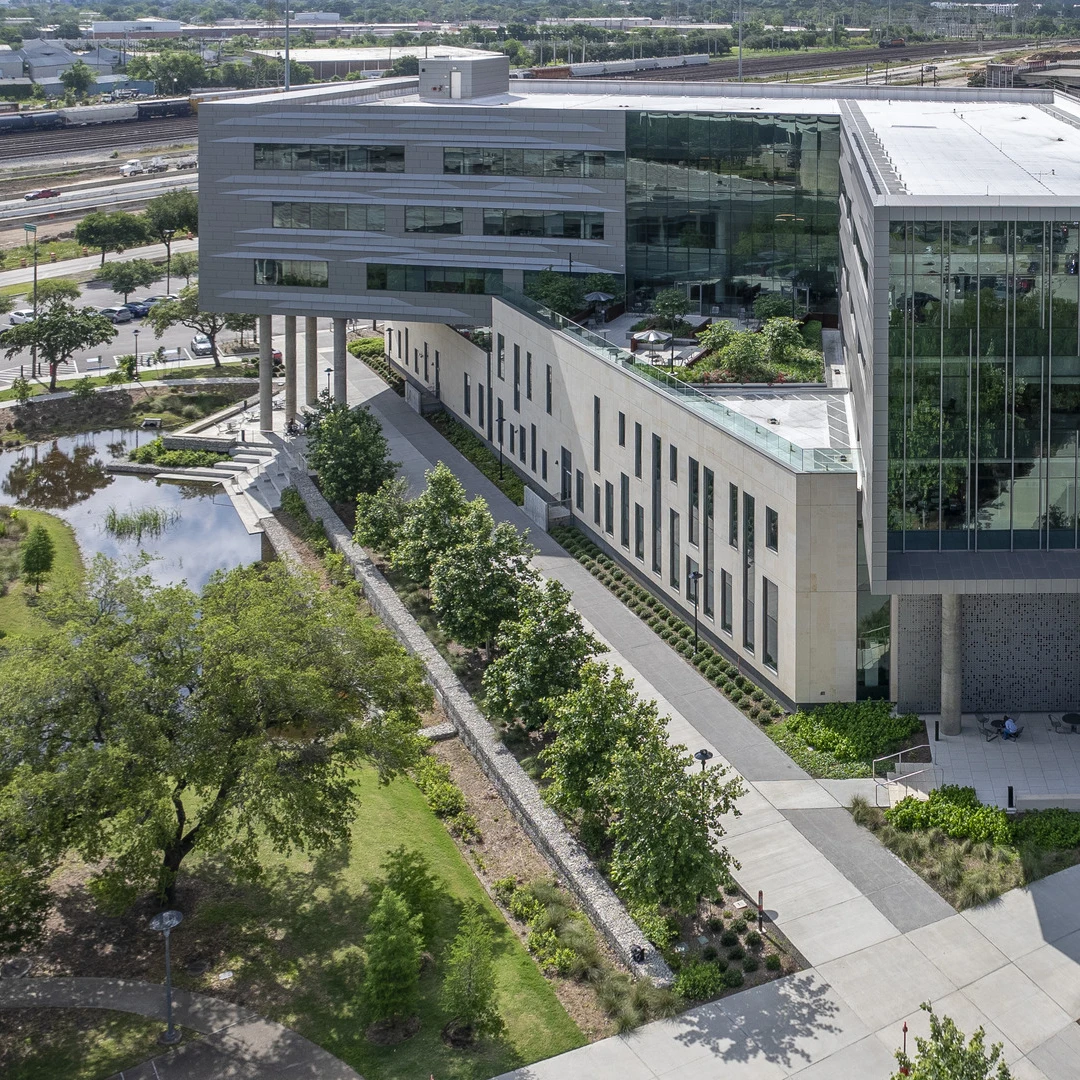
To replace a flood-prone midcentury facility, SWA designed the landscape for a new LEED Silver-certified Law Center that elevates the building above the floodplain and restores stormwater function to a constrained site. A detention meadow, oak canopy grove, and student deck define a sequence of outdoor spaces that support study, circulation, and ecological awareness.
Problems addressed: flooding, indoor-outdoor disconnect, campus integration.
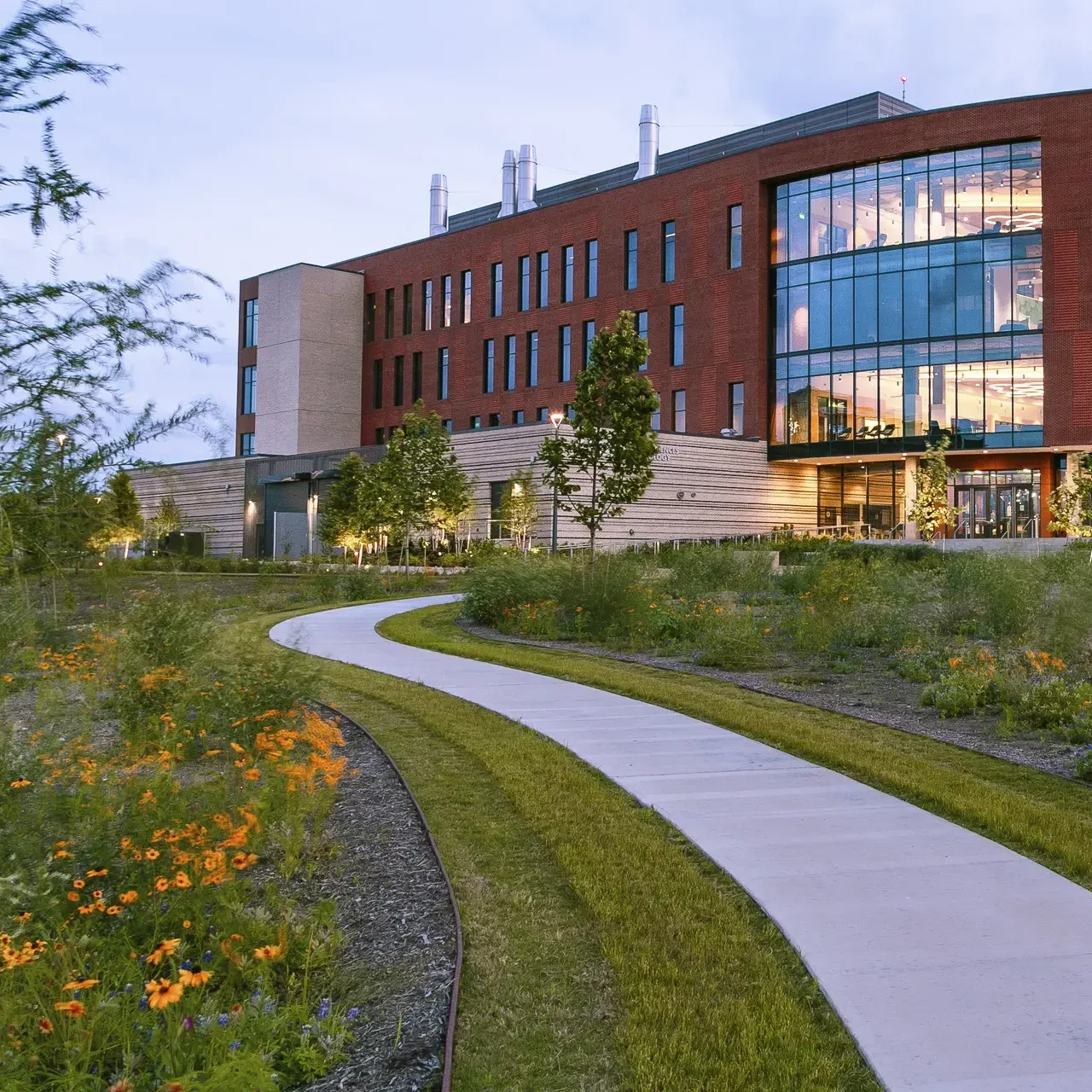
At the confluence of Buffalo and White Oak Bayous, SWA’s landscape for the new STEM building reconciles complex site constraints with bold urban engagement. CAM-driven coordination enabled seamless integration of topography, flood strategy, and program, resulting in a resilient river-edge campus asset that frames views of downtown while restoring native vegetation.
Problems addressed: flood risk, postindustrial site reuse, bayou connectivity.
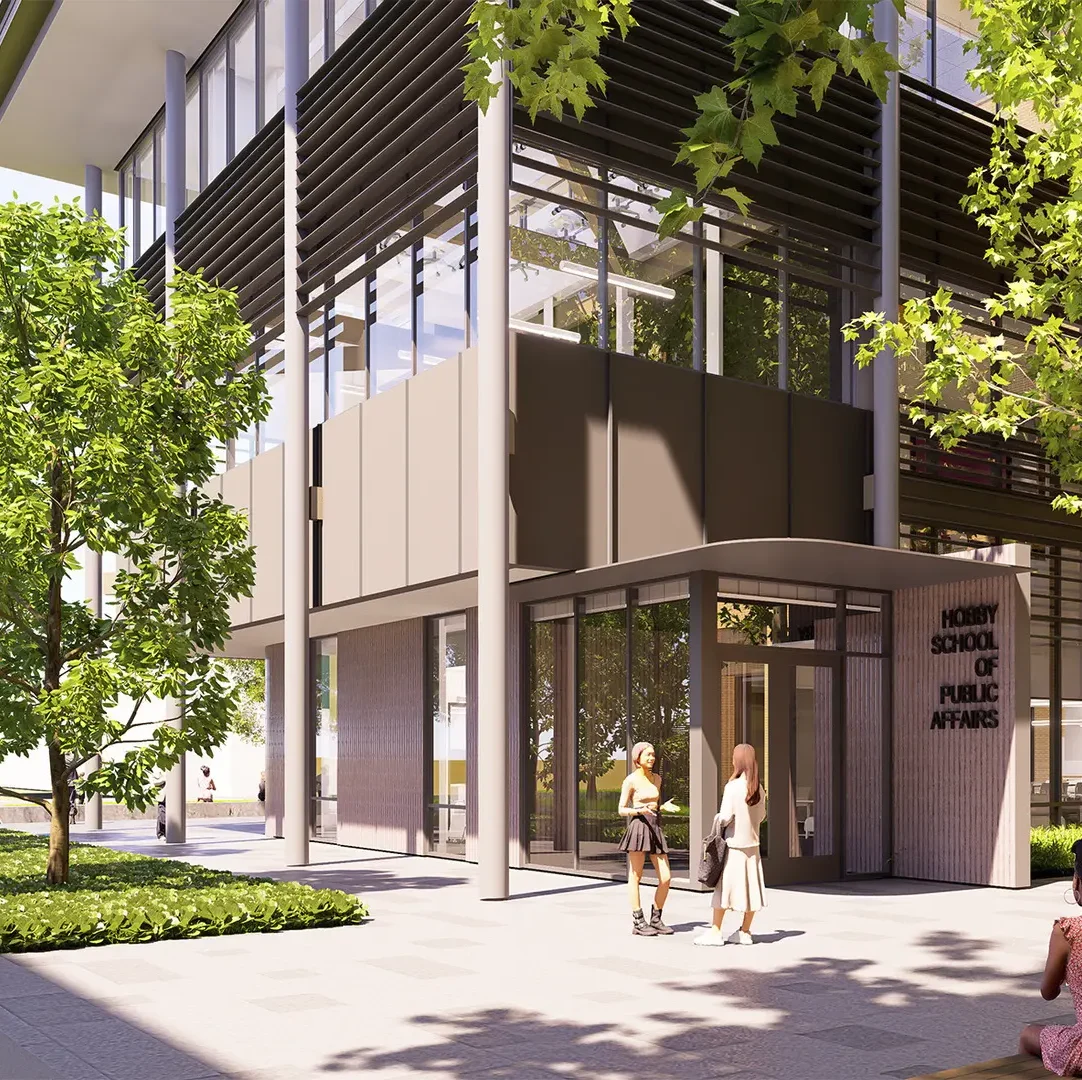
A key anchor at the northwest edge of campus, the Hobby School introduces a flexible landscape that doubles as a social campus commons and institutional gateway. A grand entry axis leads to a shaded plaza designed for daily use and event programming, with integrated seating, lighting, and canopy trees that extend interior space into a lively public setting.
Problems addressed: edge activation, social space deficiency, thermal comfort.
UC Davis
2004 – 2017
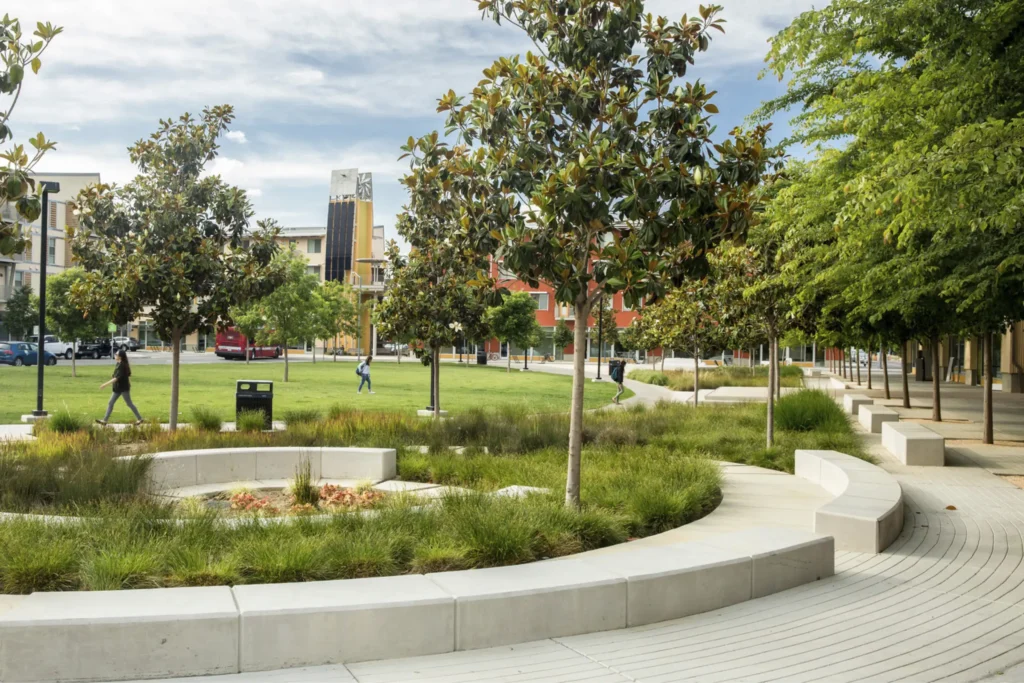
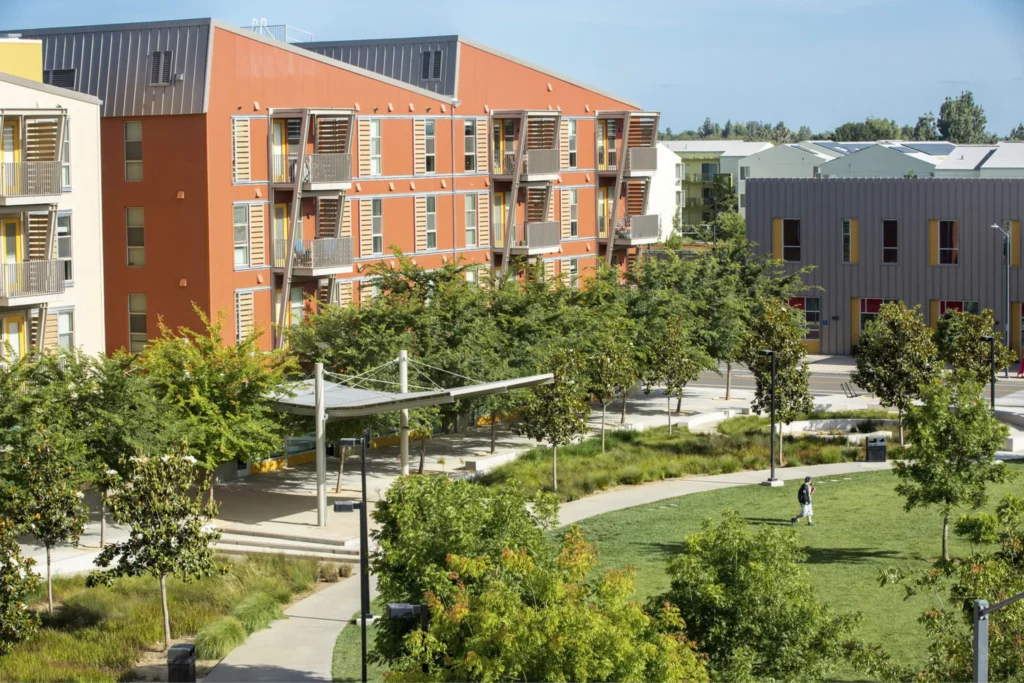
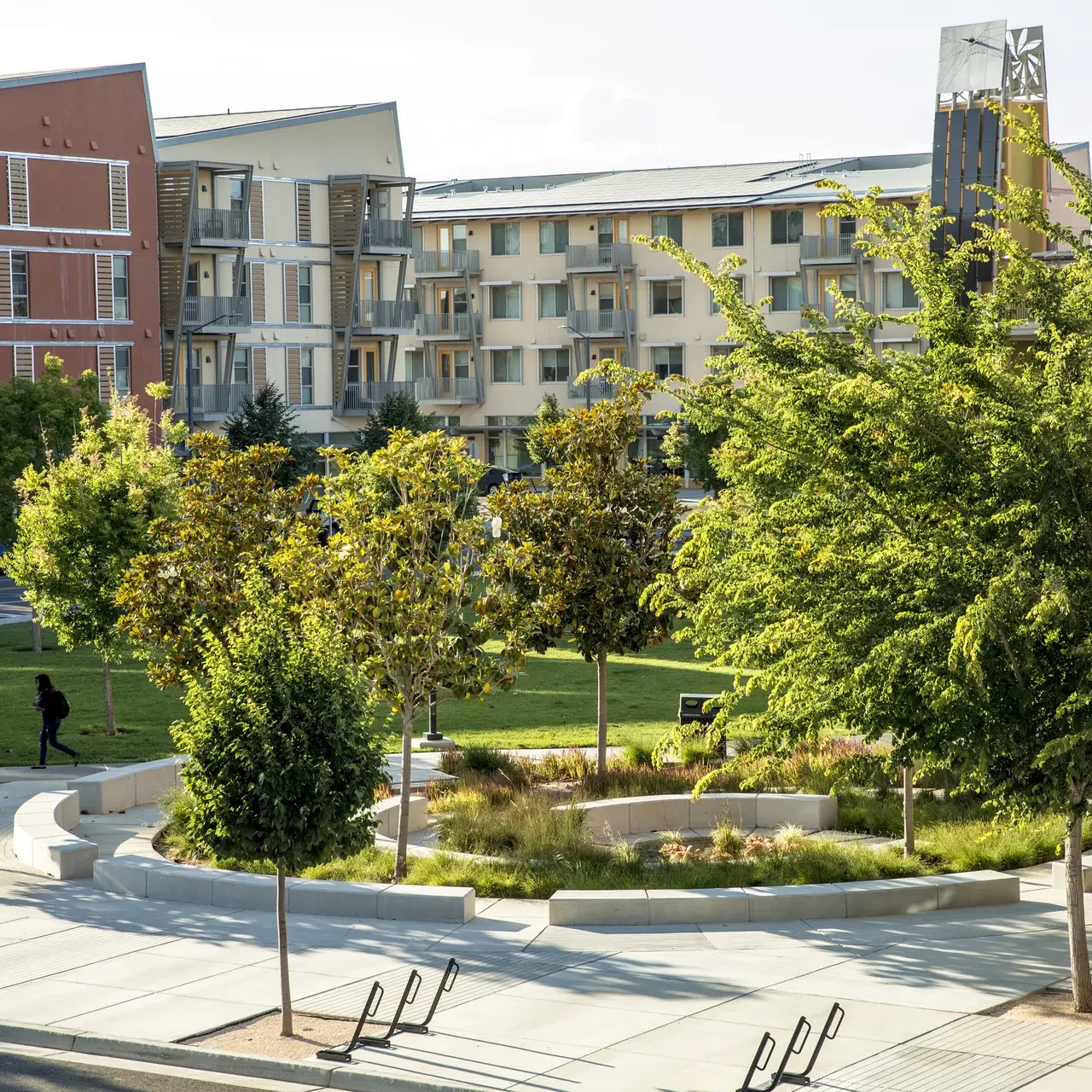
With its roots in agricultural experimentation and environmental science, UC Davis has long emphasized sustainability in both operations and planning. Over the past two decades, SWA has supported that mission through the design of student housing, campus life facilities, and mixed-use residential districts—projects that advance ecological performance, celebrate community life, and improve housing affordability in a region where rising costs have pushed many students and staff off campus. From the largest planned net-zero energy community in the nation to stormwater-integrated plazas and biodiverse student greens, SWA’s work at Davis reflects a long-term commitment to climate-forward design grounded in the Central Valley context.
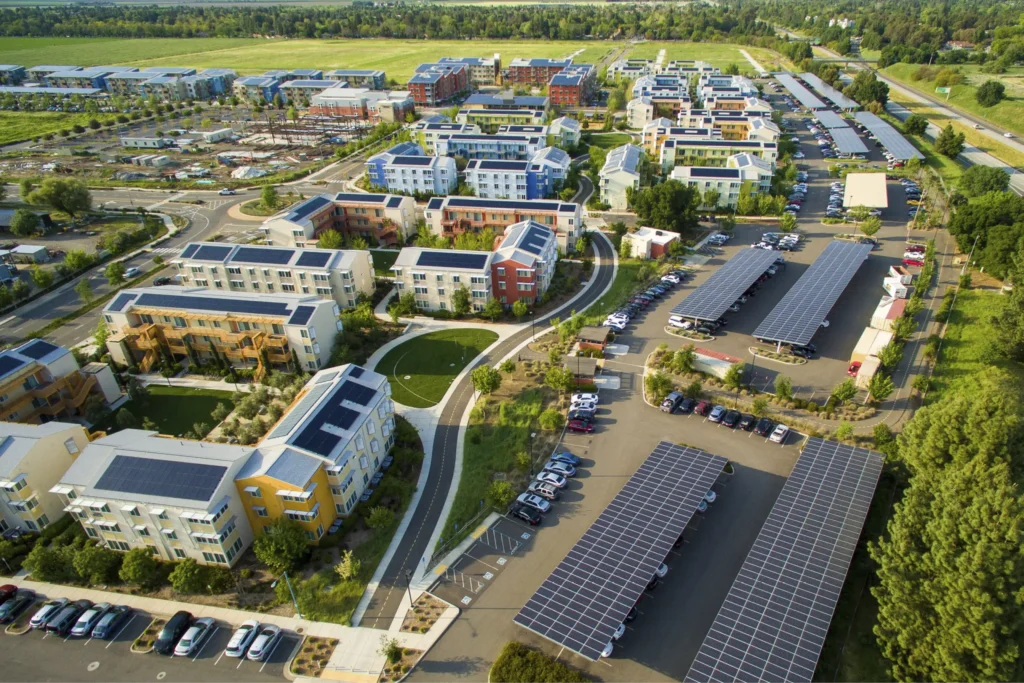
A landmark in sustainable campus planning, West Village is the largest planned Zero Net Energy community in the U.S. Designed to house over 3,000 students and 500 faculty/staff families, the 200-acre district integrates housing, commercial space, schools, recreation fields, and mobility infrastructure into a walkable neighborhood tied directly to the UC Davis core. SWA led the master plan and landscape design, organizing the site around greenbelts, village squares, habitat corridors, and bioswales that manage runoff and foster biodiversity. The project balances affordability, environmental performance, and community cohesion, offering a replicable model for university-led housing.
Problems addressed: student and faculty housing, affordability, net-zero energy performance, habitat.
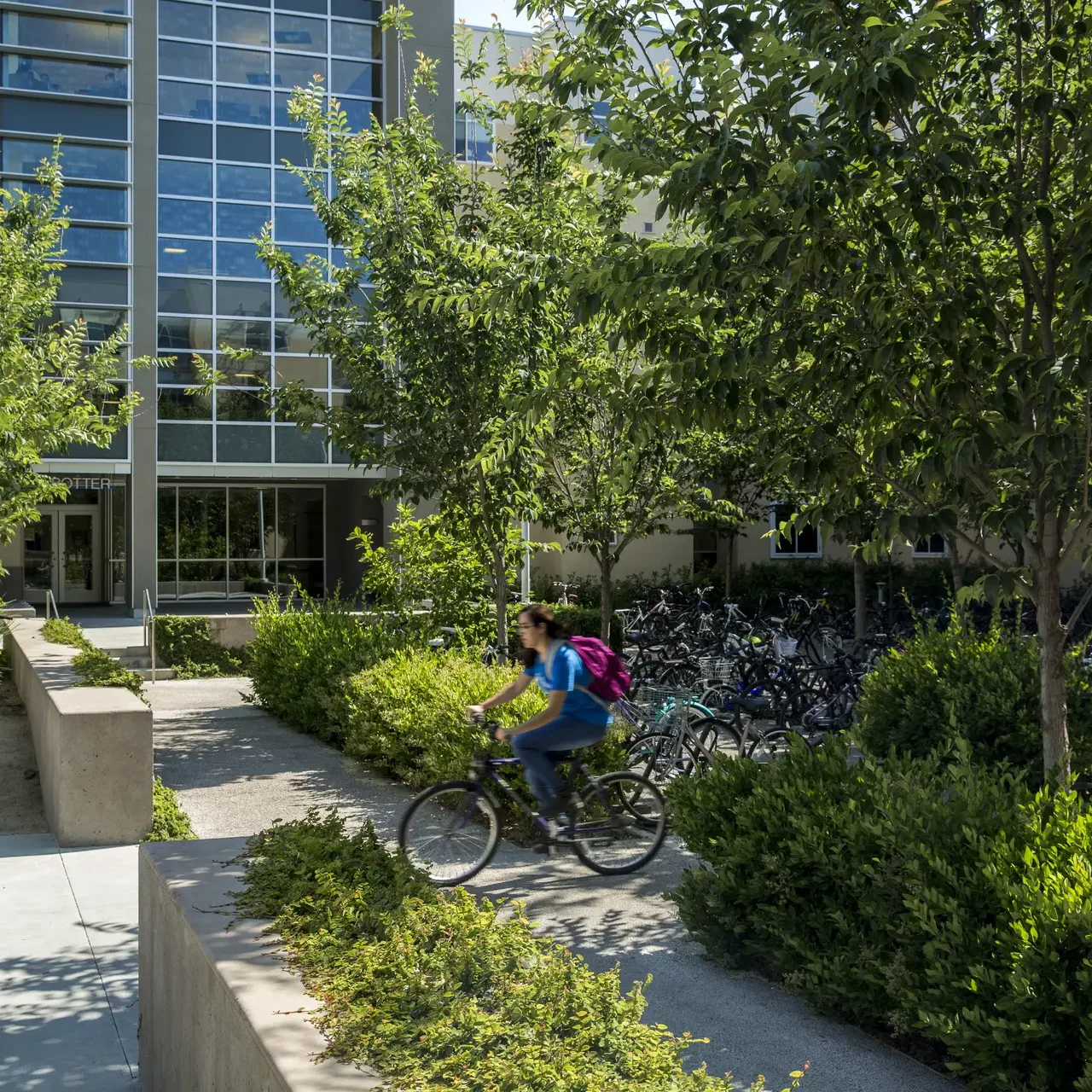
A key addition to UC Davis’s freshman housing inventory, Tercero Phase II added 600 beds across three residence halls arranged around a shared quad and study-oriented open space. SWA’s landscape design emphasized sustainability and outdoor learning, incorporating drought-tolerant plantings, permeable paving, and stormwater gardens along the site’s perimeter. Designed in collaboration with Mogavero Notestine Associates, the project achieved LEED Gold certification.
Problems addressed: housing demand, sustainability, stormwater management, outdoor learning.
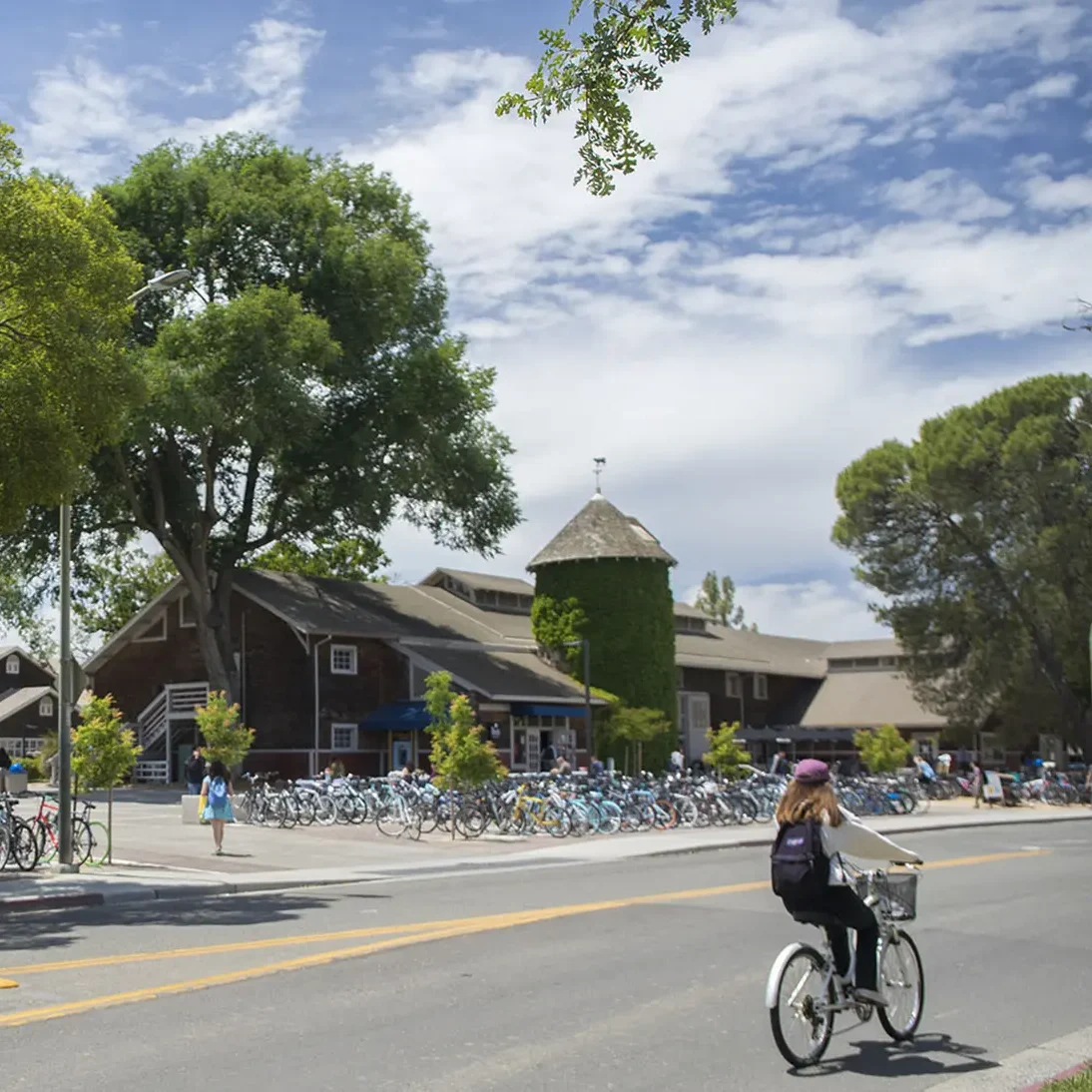
As part of a larger campus core revitalization, the Silo South project reimagined one of UC Davis’s most active dining hubs. The redesign introduced outdoor seating, improved pedestrian circulation, organized food truck access with a shaded service zone, and integrated stormwater management beneath new permeable pavements. The project also expanded bike parking and created clear pedestrian zones—supporting mobility and comfort at a high-traffic campus node.
Problems addressed: pedestrian circulation, dining infrastructure, stormwater integration, traffic management.
Individual Projects
Universidad De Monterrey
Monterrey, Mexico
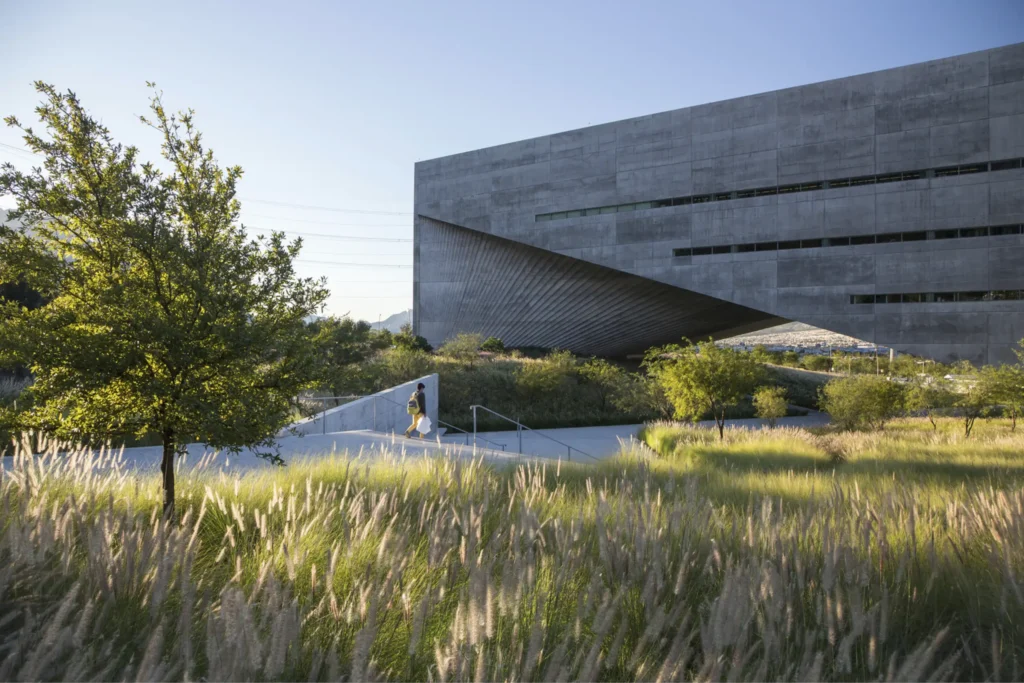
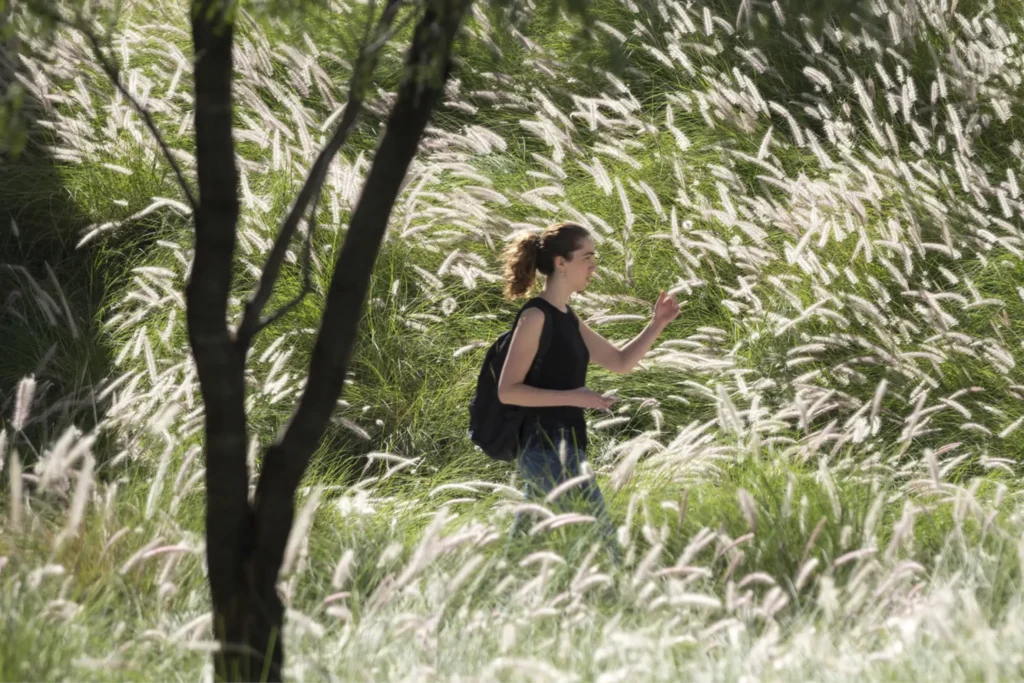
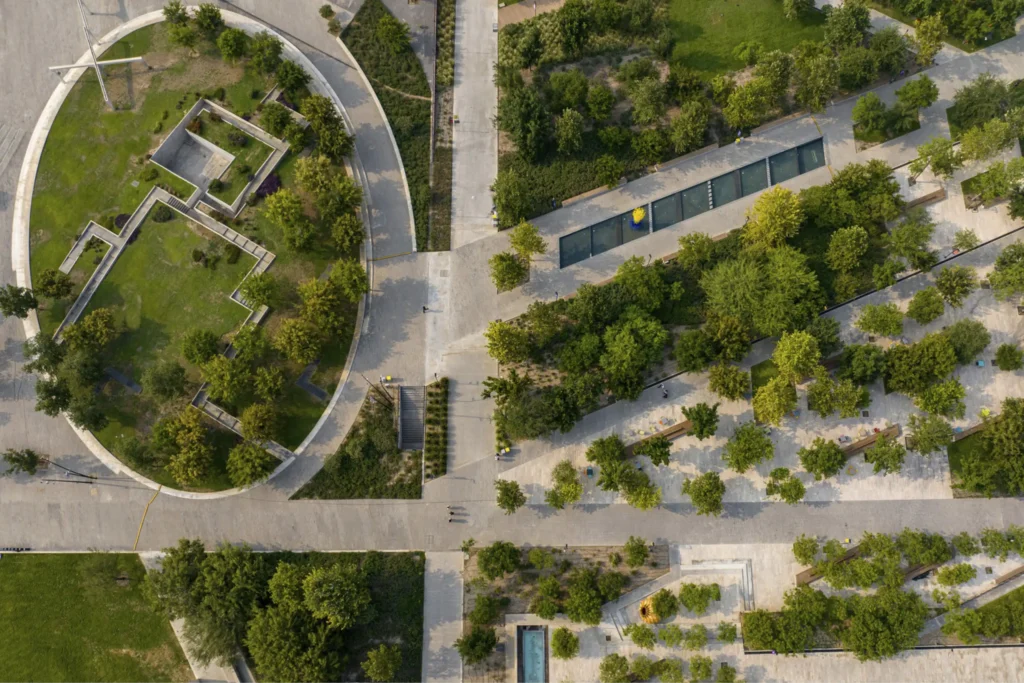
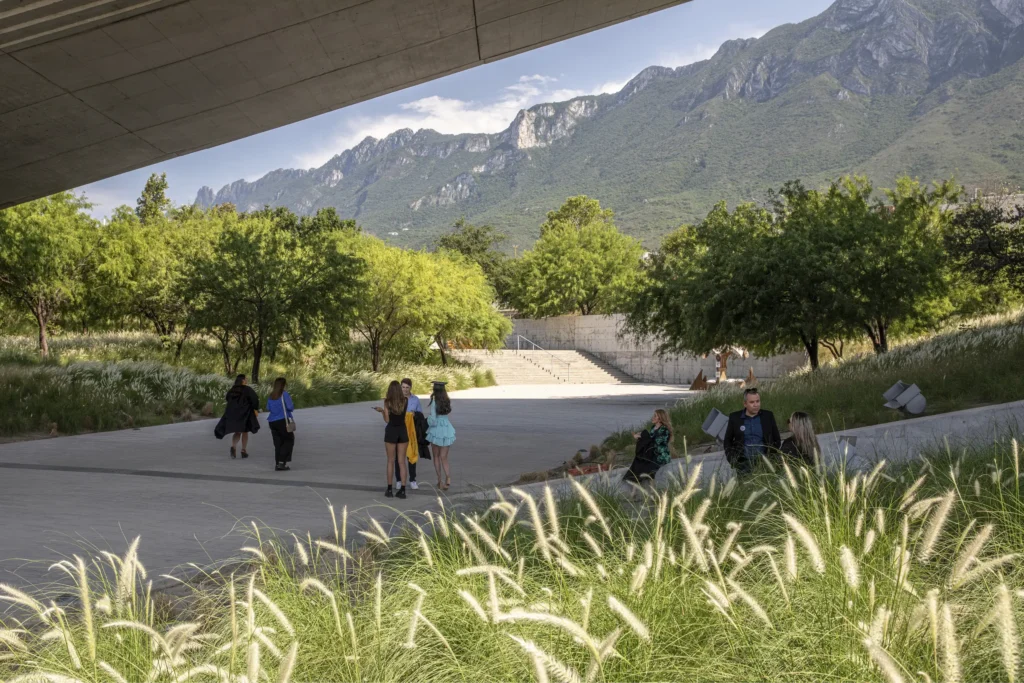
Perched along a steep escarpment overlooking the Sierra Madre, the Centro Roberto Garza Sada anchors a critical junction between UDEM’s upper and lower campuses. Designed by Tadao Ando and completed in 2013, the concrete structure houses the university’s architecture, art, and design programs—offering studios, workshops, and exhibition space within a dramatic geometric frame. SWA’s site design extends Ando’s formal language into the landscape, using clean lines, open plazas, and native plantings to clarify circulation and reinforce the building’s role as a campus gateway. A series of stepped terraces and ramps navigates the site’s 25-meter grade change, improving accessibility while encouraging informal gathering. Xeric vegetation, stone mulch, and permeable paving support water retention in Monterrey’s drought-prone climate and reduce long-term maintenance. The landscape reframes a once car-dominated zone into a pedestrian-focused threshold for creative learning.
Problems addressed: pedestrian connectivity, campus legibility, stormwater management, ecological expression management.
California Academy of Sciences
San Francisco, California
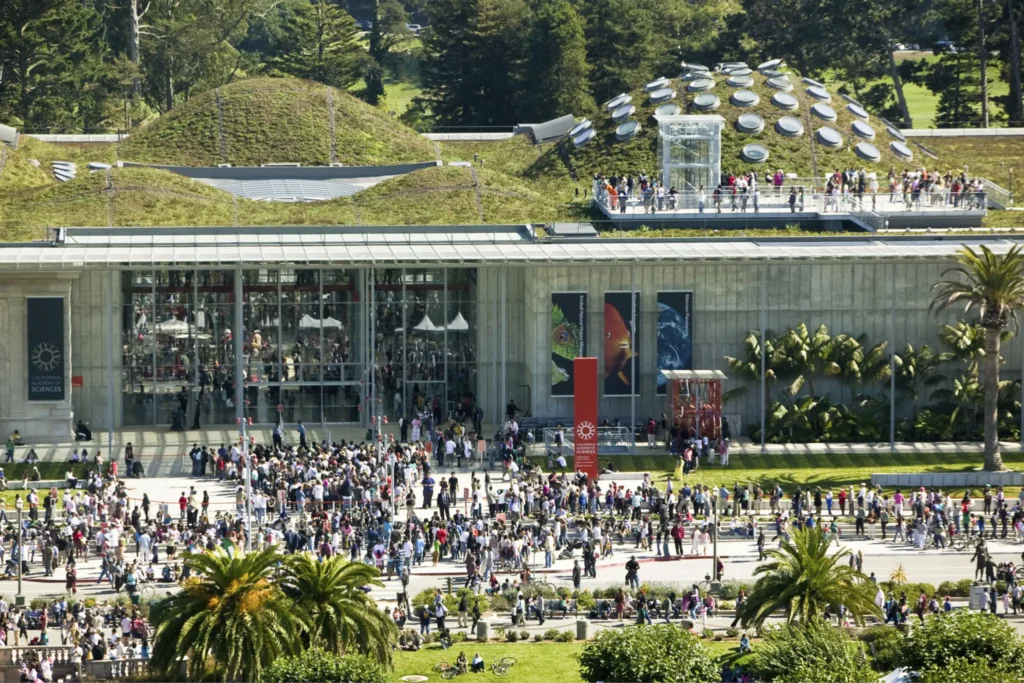
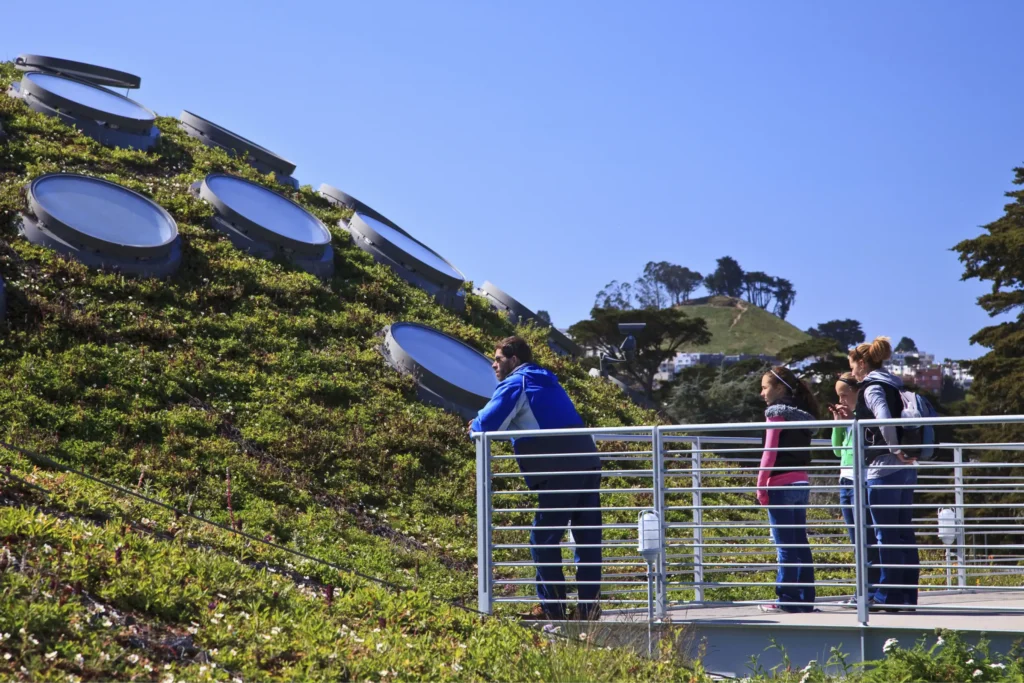
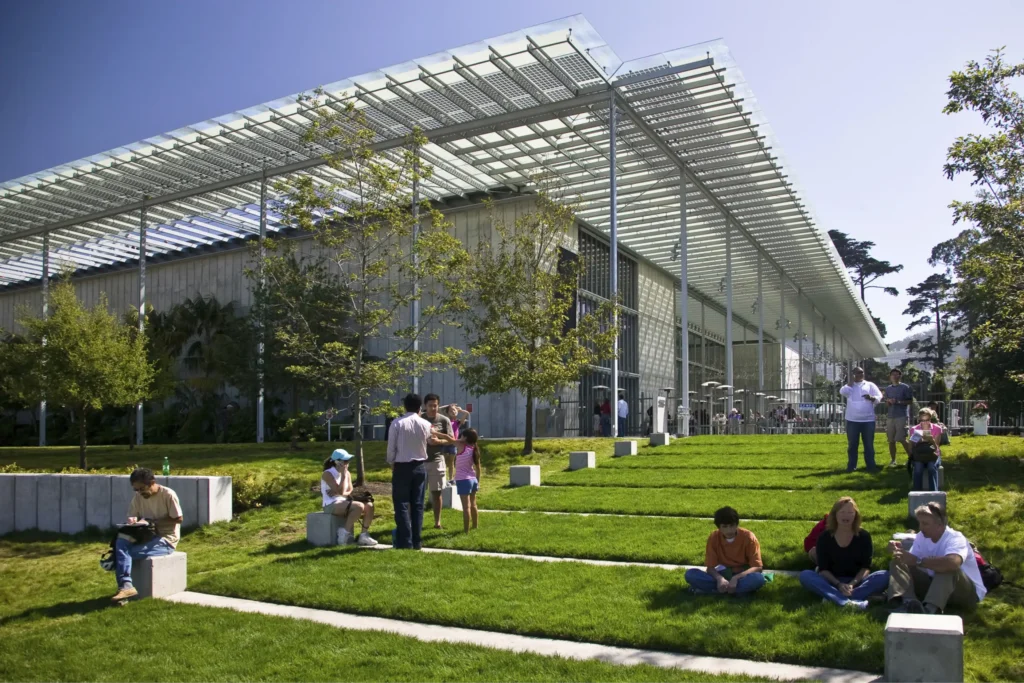
As part of a complete redesign of the California Academy of Sciences in Golden Gate Park, SWA worked alongside architect Renzo Piano and a multidisciplinary team to reimagine one of the city’s most visited cultural institutions as a model for ecological integration. The new building consolidated multiple museum wings—including the Steinhart Aquarium and Morrison Planetarium—into a compact footprint, allowing surrounding parkland to be restored and expanded. SWA led the site’s landscape architecture, designing both ground-level gardens and the museum’s 2.5-acre living roof. Composed of seven sculpted domes that mirror the Academy’s interior programs, the roof supports over 1.7 million native plants and is one of the world’s most studied green roof systems. It captures stormwater, moderates building temperatures, and reintroduces biodiversity to the dense urban setting—earning the Academy dual LEED Platinum certification. At ground level, native gardens, bioswales, and restored pathways connect the institution to its park surroundings, reflecting deep engagement with the public and park advocates throughout the design process.
Problems addressed: habitat restoration, energy and water efficiency, ecological education, parkland reintegration.
Medgar Evers College
Brooklyn, New York
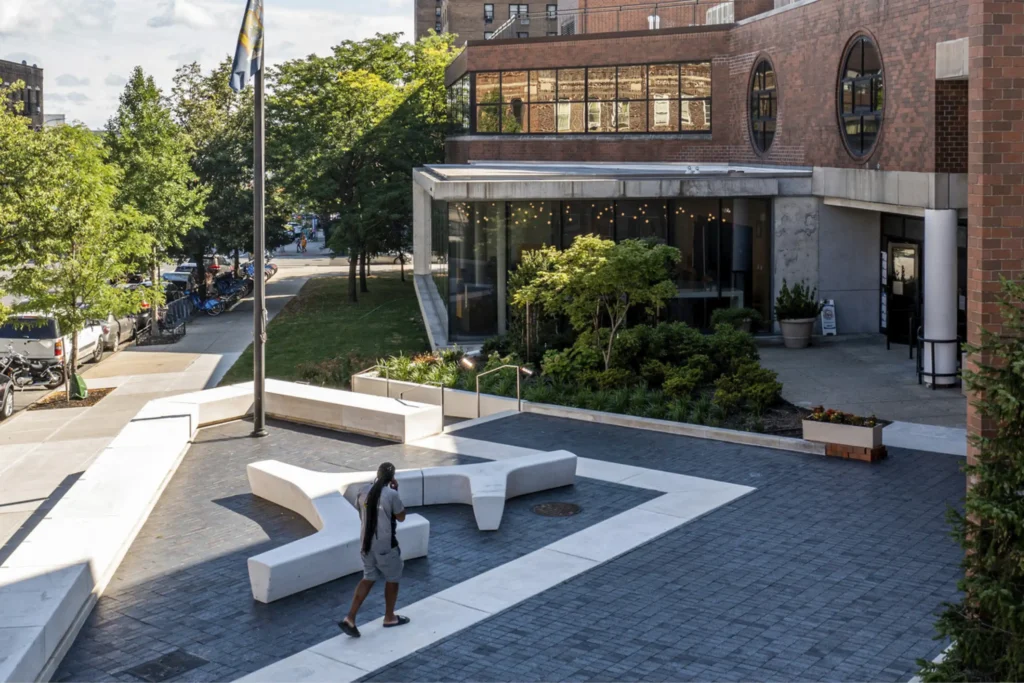
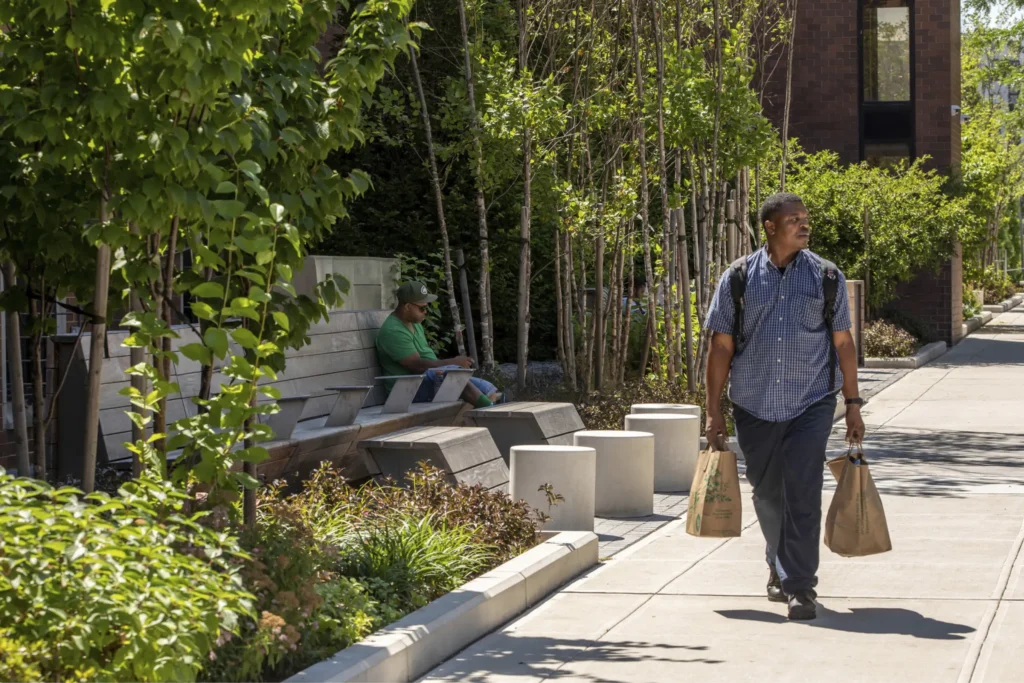
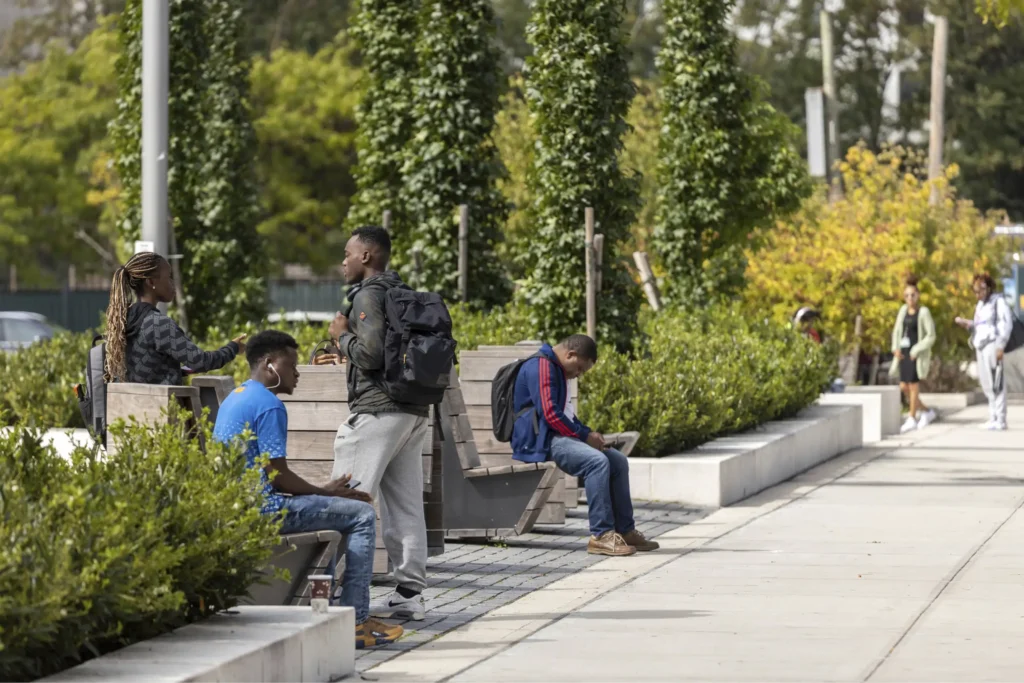
On a campus long divided by surface parking and undefined edges, SWA’s design for a new central quad offers a unifying landscape that connects Bedford and Franklin Avenues while reshaping the heart of Medgar Evers College into a cohesive, student-centered environment. The project transforms former parking lots into a tree-lined promenade flanked by “garden rooms”—flexible outdoor spaces that serve as classrooms, study zones, and gathering places. At its midpoint, the promenade opens onto a central lawn, establishing a much-needed commons for everyday campus life and major events, such as performances and graduation ceremonies. The landscape introduces layered sustainability strategies, from increased canopy cover and permeable paving to native planting and informal stormwater filtration. More than a physical connector, the new quad creates a civic identity for the college, reinforcing its mission as a public institution rooted in place and community.
Problems addressed: campus legibility, heat mitigation, open space deficiency, pedestrian circulation.
Princess Nora Bint Abdulrahman University
Riyadh, Saudi Arabia
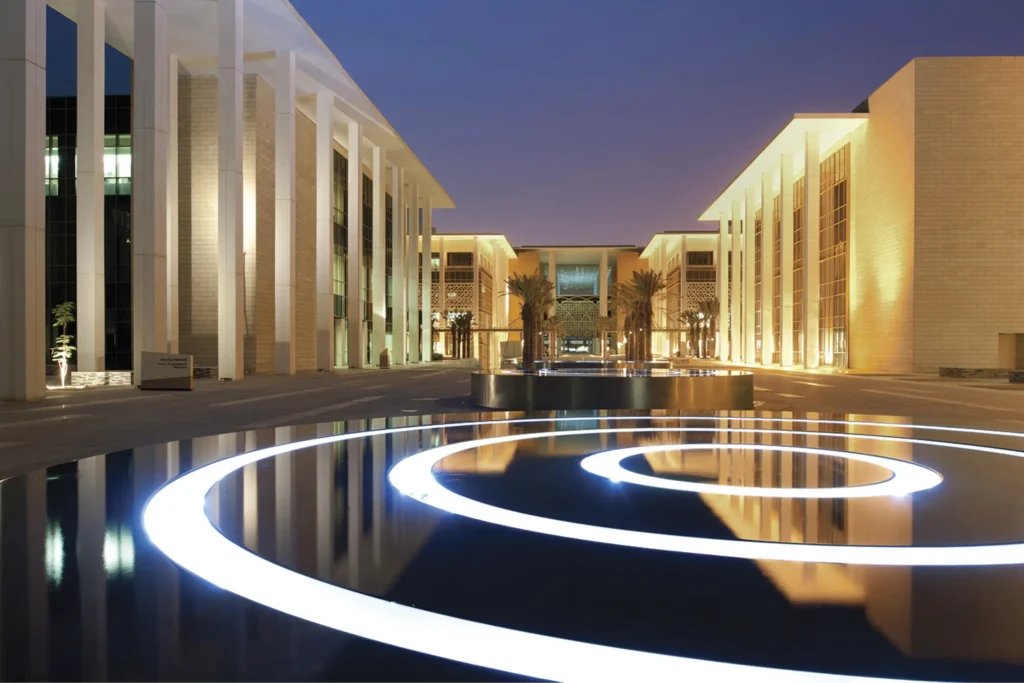
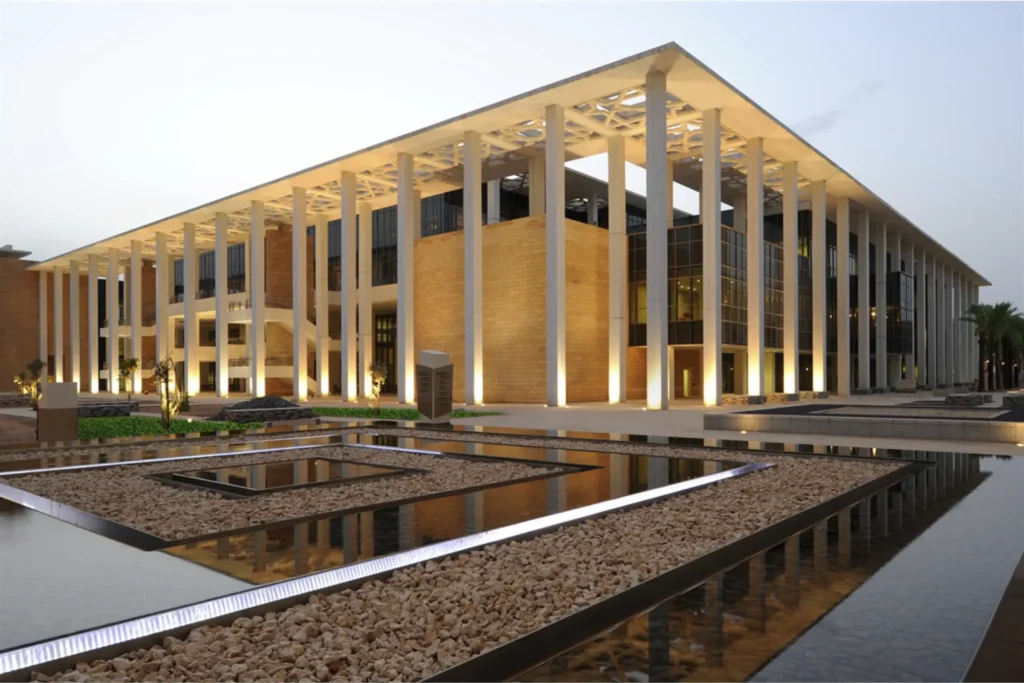
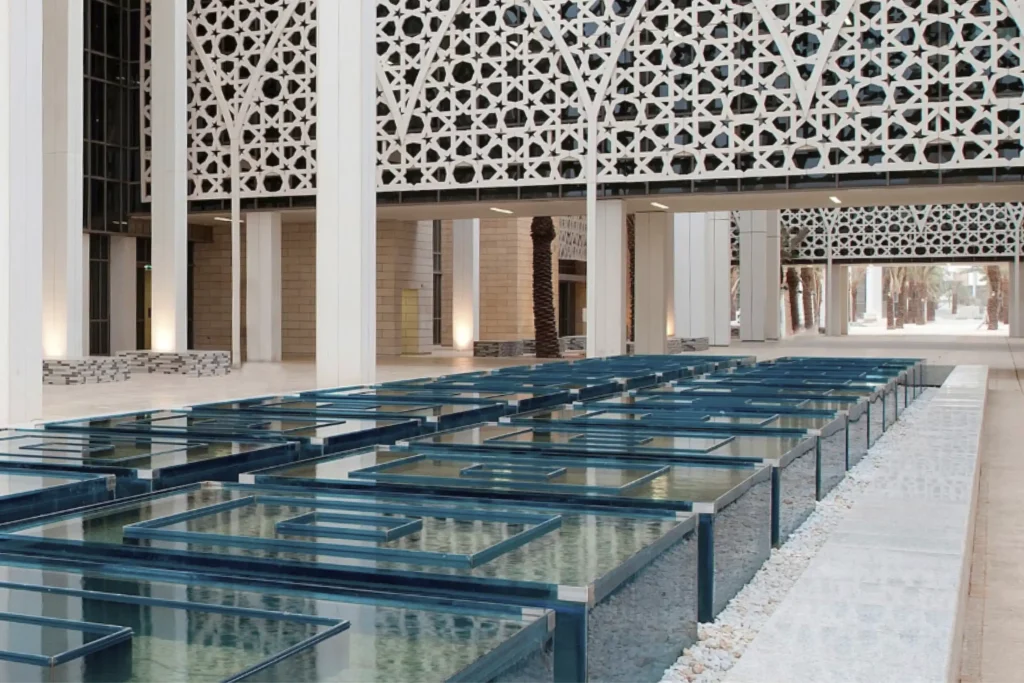
As the world’s largest university exclusively for women, Princess Nora Bint Abdulrahman University brings together over 38 million square feet of academic, residential, and healthcare space on a 2,000-acre site north of Riyadh. Designed by Perkins+Will with Dar Al-Handasah, the campus consolidates 13 colleges and facilities for up to 60,000 students into a unified environment that reflects both contemporary sustainability goals and traditional principles of Islamic landscape design. SWA contributed to the overall vision by shaping pedestrian-oriented open spaces rooted in cultural precedent. A central spine connects academic cores with residential neighborhoods, while shaded courtyards, gardens, and linear water features create moments of respite and orientation across the vast site. The planting strategy emphasizes drought tolerance and spatial hierarchy, organizing the campus around a series of climate-responsive outdoor rooms that support learning, prayer, and gathering. Beyond its scale, the landscape offers a framework for continuity—reinterpreting heritage through a modern lens while reinforcing walkability and comfort in a harsh desert climate.
Problems addressed: campus scale and legibility, pedestrian comfort, cultural integration, water efficiency.
Legacy Projects
Foothill College
Los Altos, California
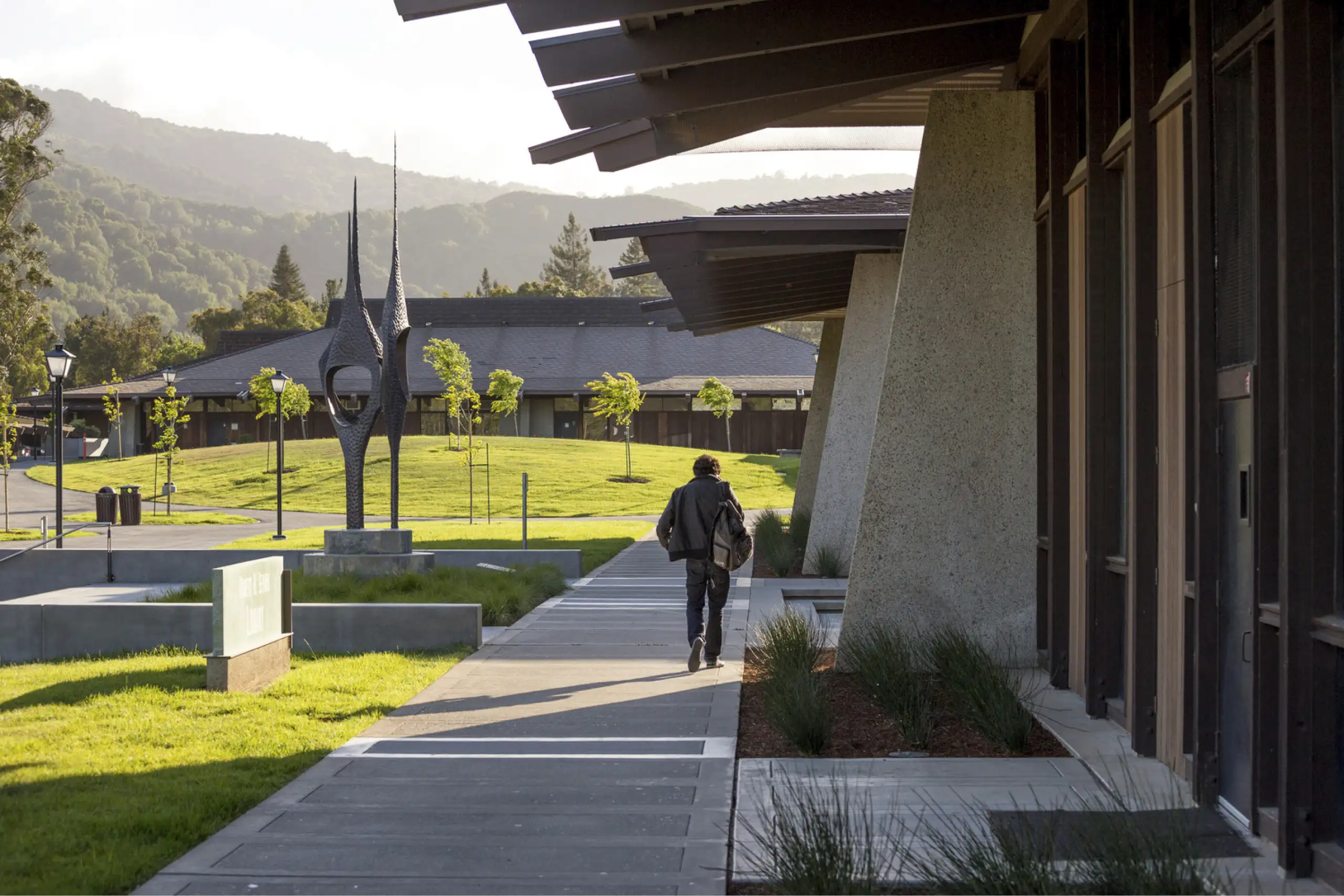
SWA’s work on Foothill College began in the 1950s with founder Peter Walker’s contributions to the original master plan and landscape design. An early adopter of indoor-outdoor classrooms, the team designed an “acropolis” of interrelated buildings and open spaces atop a hill. SWA returned to work on the South Slope in the early 2000s, which included new department buildings, a theater, an arboretum, and a collection of ornamental gardens. Drought-tolerant native grasses and oaks blend in with the surrounding natural foothills, while green roofs blend in with the rolling topography.
Problems addressed: campus identity, drought adaptation, topographic integration.
Soka University
Aliso Viejo, California
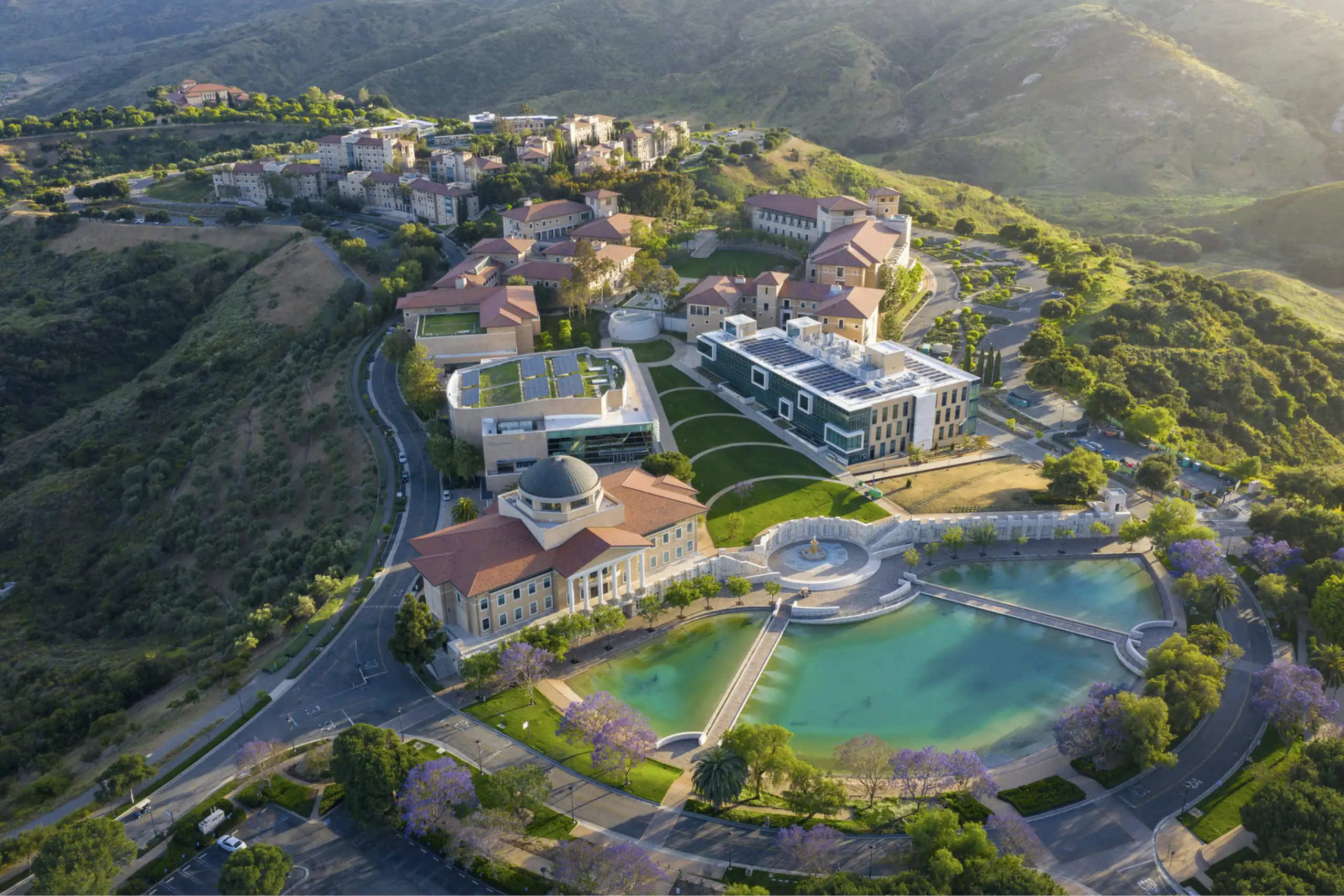
Stemming from the Japanese term meaning “to create value,” Soka University’s campus reflects the school’s philosophy that individuals have the unique ability to create value. Expanding its footprint in California, the university approached SWA to design its Aliso Viejo campus, spanning 102 acres above a pair of canyons. In addition to 20 buildings built to house dorms, dining, academics, and activities, the campus utilizes a series of outdoor plazas and courtyards to encourage students to gather and discuss ideas. The campus begins at the Peace Lake and Fountain, extending into the campus green, and culminating in the Student Bowl, a hub for sports and events.
Problems addressed: academic expansion, flexible use space, pedestrian circulation.
UC Irvine
Irvine, California
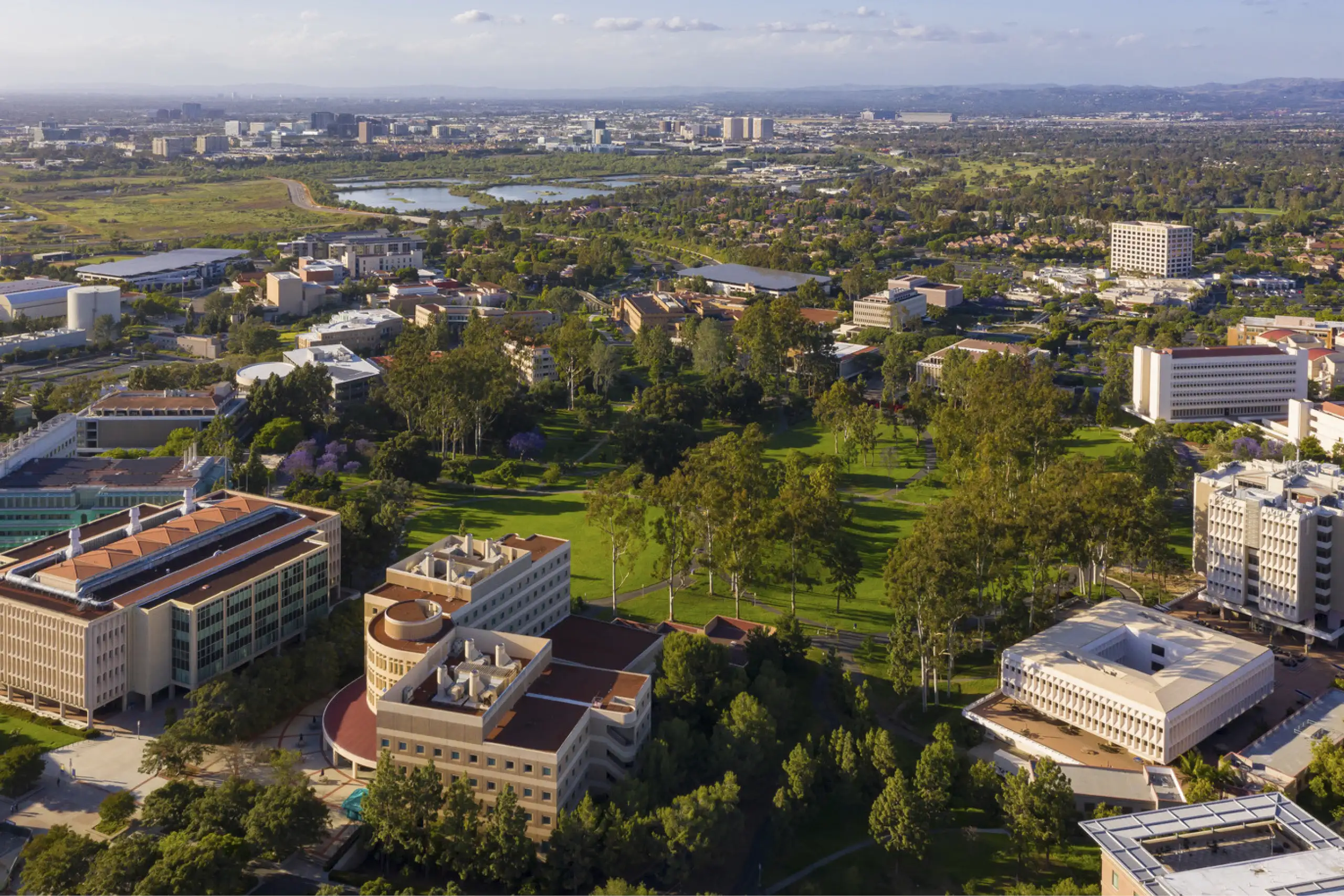
For the university’s Campus Design Framework, SWA worked with the school and LPA Architects on site planning, landscape concepts, and urban design guidelines that support the Long Range Development Plan (LRDP), ensuring the success of campus expansion and academic program initiatives. As Campus Consulting Landscape Architect, SWA designed a clear connection among the greater LRDP and other UC Irvine projects, maintaining a historical perspective to ensure a unified design concept for the campus. SWA’s projects on-site include several department quads, the Donald Bren Events Center, and the Medical Center Master Plan.
Problems addressed: legacy preservation, campus identity, long-range planning.
Tarrant County College
Fort Worth, Texas
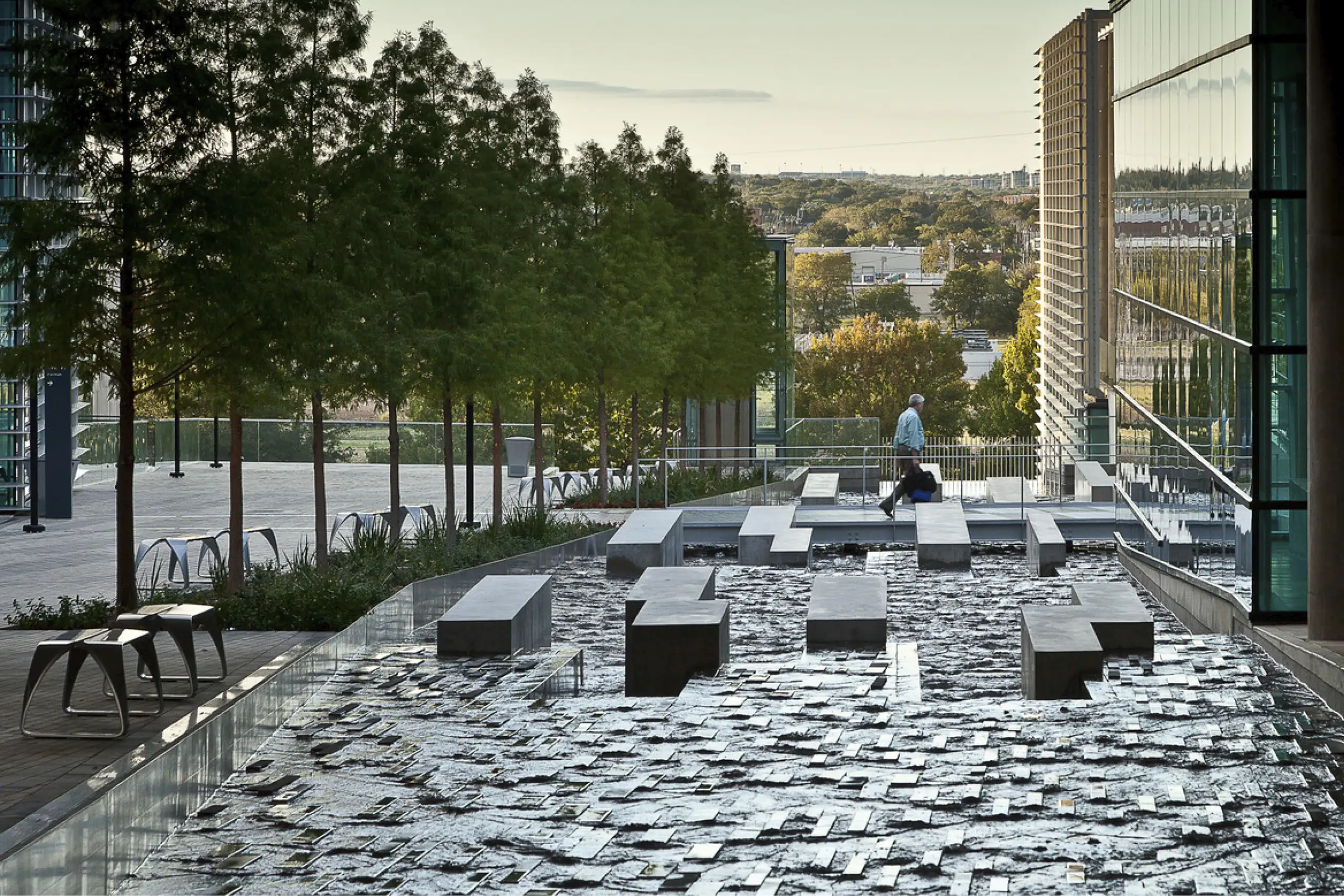
Downtown Fort Worth was selected for the Tarrant County College’s fifth campus to meet the school’s growing student body. SWA’s master plan and landscape design unite the campus site, bisected by the Trinity River, with water features, entry plazas, and roof gardens along the central spine. The design’s streetscape elements with shaded segments and layered seating encourage interaction between students through outdoor gathering hubs.
Problems addressed: enrollment growth, site connection, water efficiency.
Tanner Fountain, Harvard University
Cambridge, Massachusetts
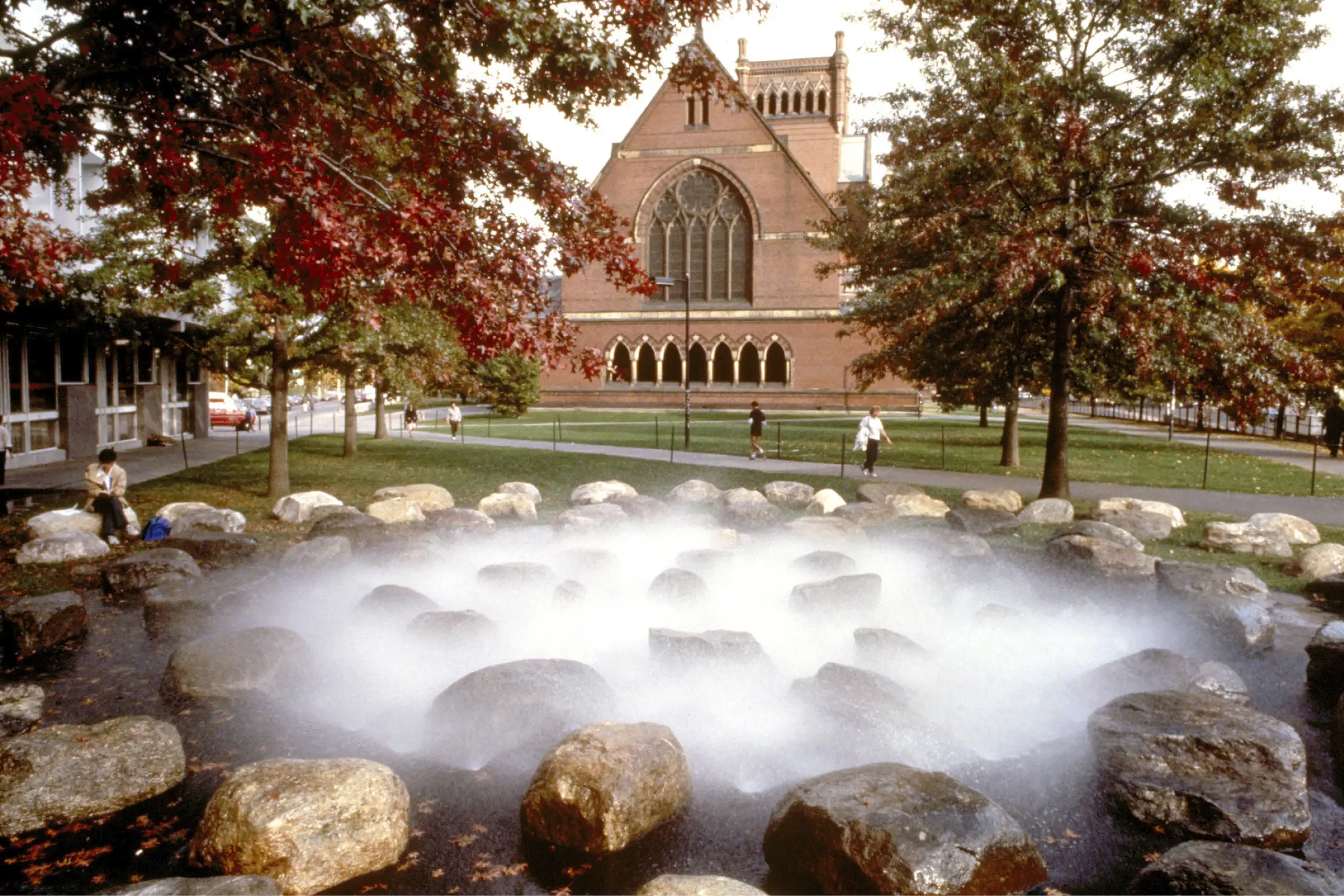
A prominent project in the “Landscape as Art” movement, the granite sculpture designed by SWA is located along a key pedestrian intersection on Harvard University’s campus. The circular structure of Massachusetts granite field stones surrounds a misting fountain of water jets in the warmer months, while steam rises in the winter, a byproduct of Harvard’s central heating system. The fine mist and seat-high field stones invite exploration and quiet contemplation at the fountain.
Problems addressed: academic expansion, flexible use space, pedestrian circulation.