

Atlas of Infrastructure Adaptation
A field guide for reimagining the public space potential of transportation infrastructure.
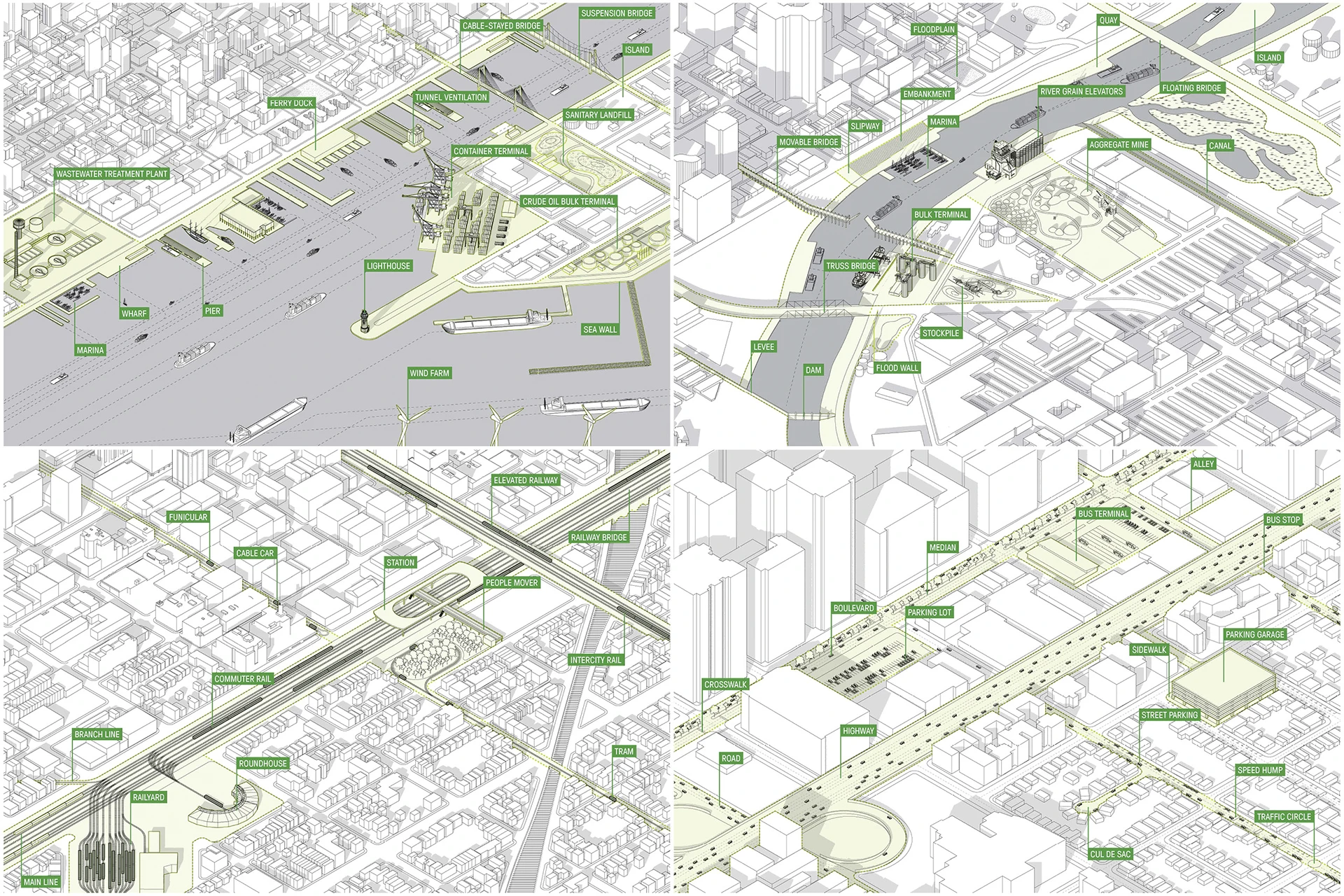
Cities already contain an enormous reserve of public land hidden in plain sight.
Rail corridors, highways, waterfronts, flood channels, and industrial landscapes occupy thousands of acres, shaping how we move through our communities every day. While these systems were built to solve specific engineering and transportation challenges, they also represent one of the greatest opportunities for expanding public space, restoring ecosystems, and reconnecting neighborhoods.
The Atlas of Infrastructure Adaptation explores this emerging opportunity. The field guide documents how cities around the world are transforming transportation infrastructure into parks, ecological networks, civic destinations, and climate-resilient public landscapes.
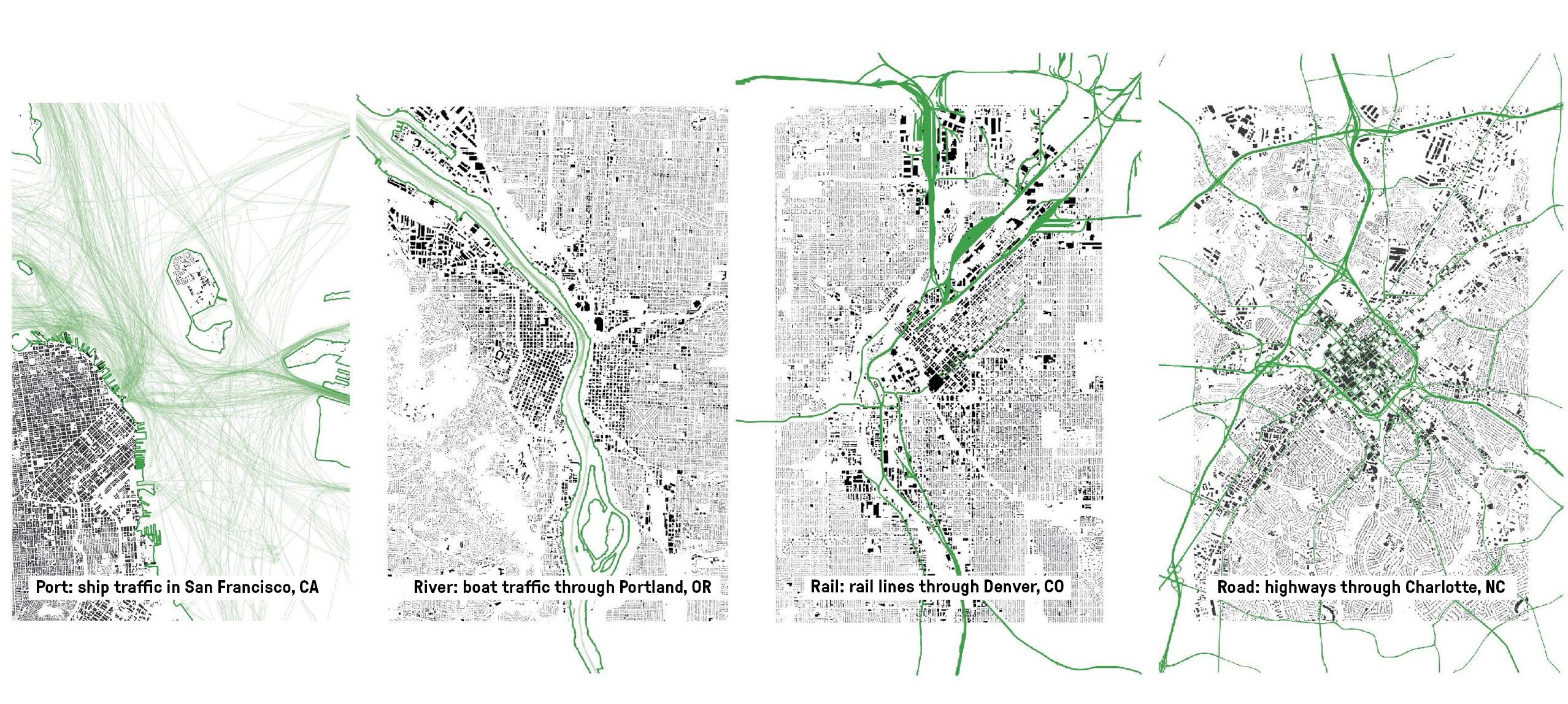
Richly illustrated with original diagrams, maps, and project photography, the Atlas draws from hundreds of precedent projects and features fifteen in-depth case studies organized around four major infrastructure typologies: ports, rivers, railways, and roads. Together, these projects reveal a growing global movement toward infrastructure that delivers ecological, social, and economic benefits simultaneously.
What’s Inside
-
- Fifteen illustrated case studies from North America, Europe, and Asia
- More than 250 global precedent projects
- Design strategies organized around four major infrastructure typologies
- A seven-phase framework for planning and delivering infrastructure adaptation projects
- Lessons learned from designers, planners, public agencies, and community organizations
Rather than presenting a single model, the Atlas identifies recurring strategies that can be adapted to local conditions. Some projects transform abandoned infrastructure into entirely new civic landscapes. Others demonstrate how active transportation systems, flood control facilities, ports, and utility corridors can support public life while continuing to perform their original functions.
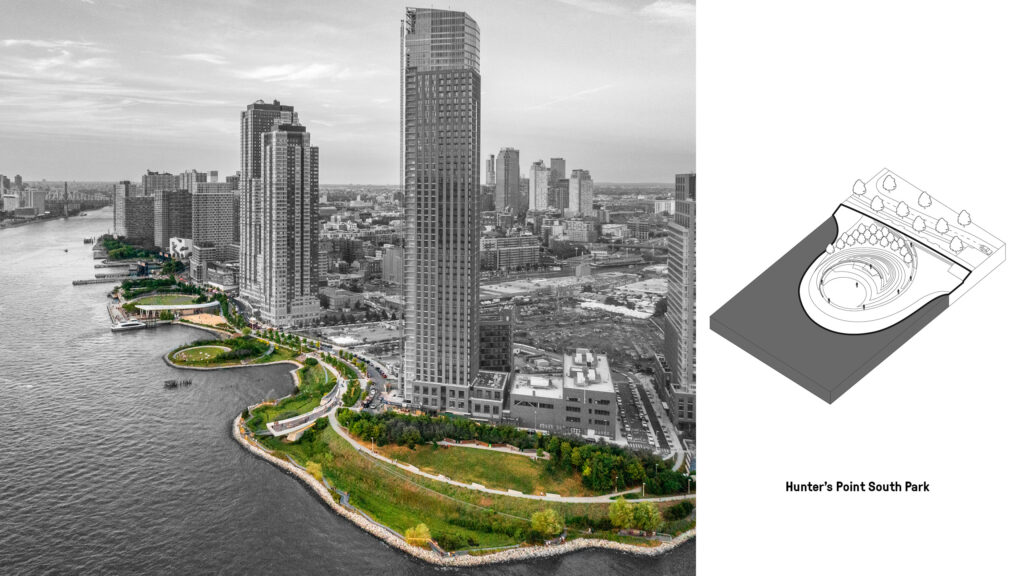
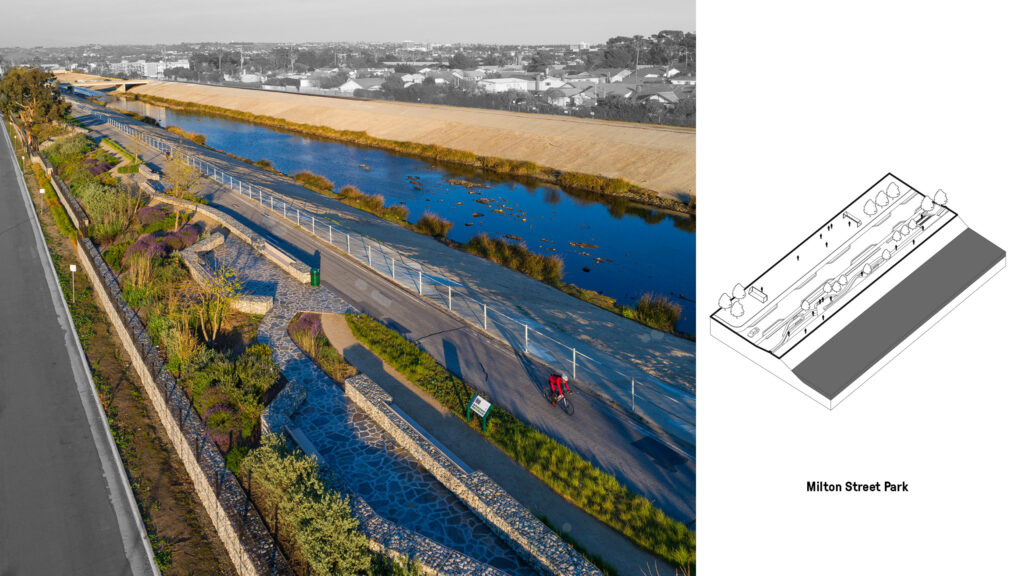
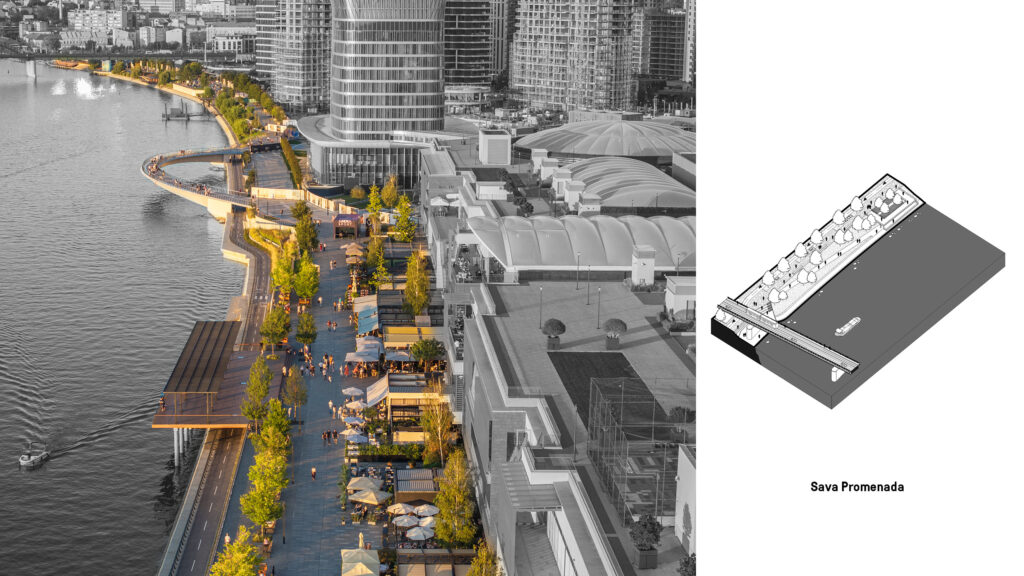
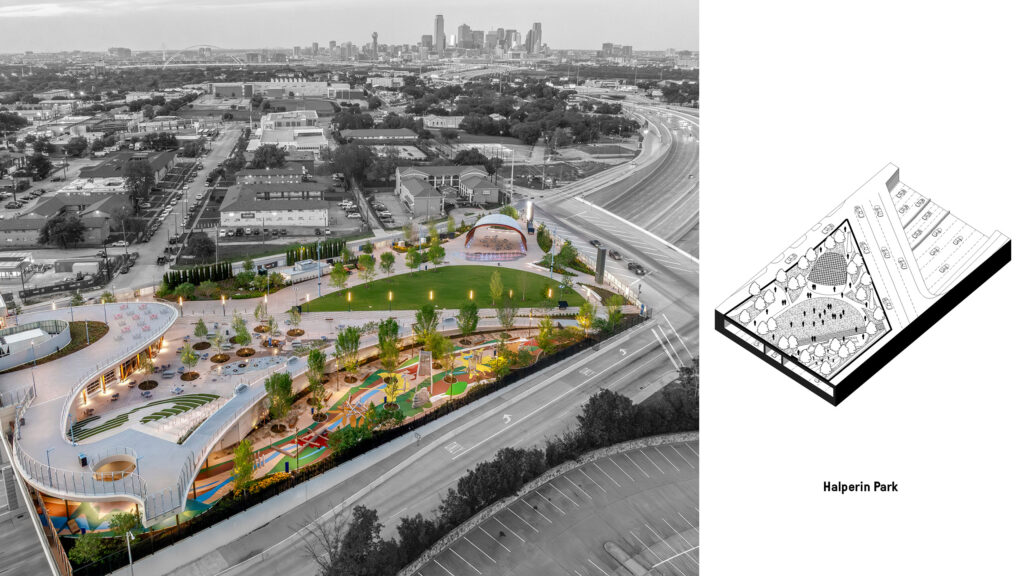
The Atlas also reflects more than a decade of applied research within SWA Group. Building on the firm’s earlier work exploring landscape infrastructure, this new volume documents how the conversation has evolved alongside growing concerns around climate adaptation, biodiversity, public health, and equitable access to open space.
Ultimately, the Atlas asks a simple question: What if the next generation of parks is already there?
As communities continue to invest in transportation systems, waterfronts, and public infrastructure, these landscapes offer an opportunity to create places that do far more than move people and materials—they can strengthen neighborhoods, restore ecosystems, and become the civic spaces that cities increasingly need.
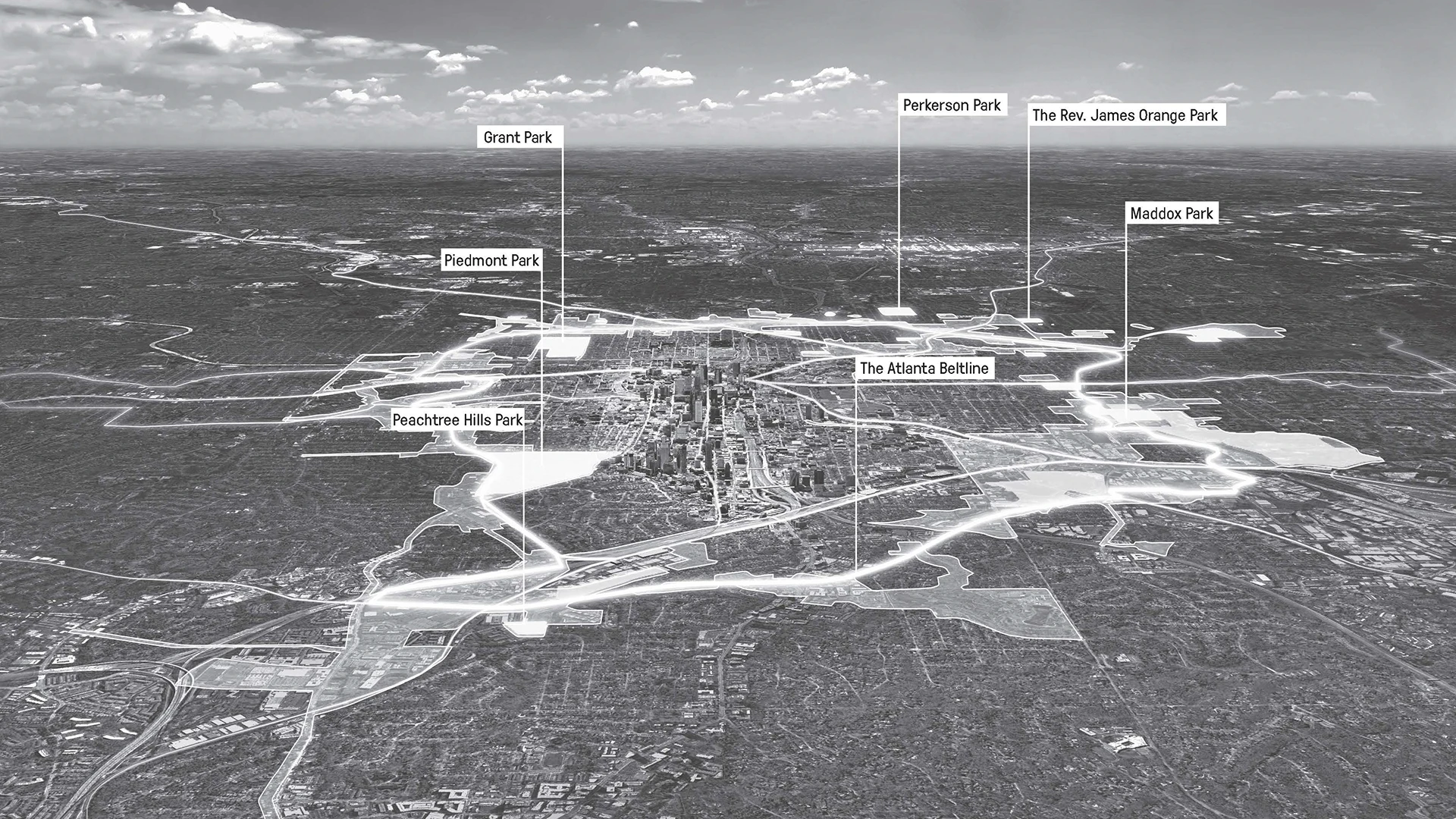
Aerial view of existing landscape infrastructure in Atlanta, Georgia.
Download the Atlas and explore how infrastructure adaptation is reshaping cities around the world.