

Hill at Sims opens in Sunnyside, turning flood infrastructure into a new regional park
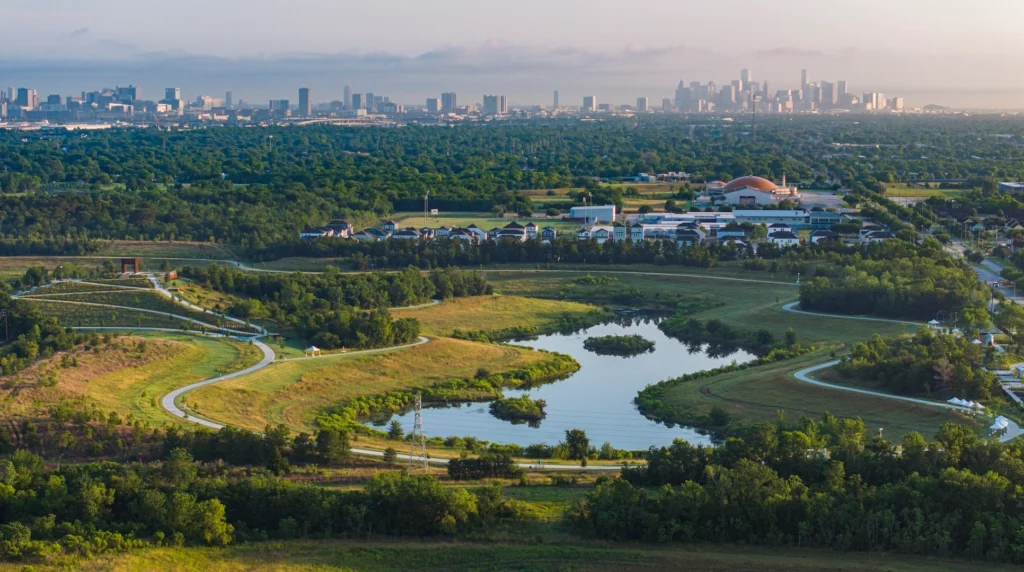
Designed with SWA and a multidisciplinary team, the nearly $30 million project led by Harris County Precinct One and Houston Parks Board brings Sunnyside its first new greenspace in nearly 50 years, adding trail connections, bayou access, public art, and a hilltop overlook within a working stormwater detention basin.
Hill at Sims opened this weekend in South Central Houston, marking a major civic and environmental milestone for Sunnyside, one of Houston’s oldest historically Black communities. Delivered through a public-private partnership led by the Office of Commissioner Rodney Ellis and Houston Parks Board, the 100-acre regional park transforms a working stormwater detention basin along Sims Bayou into a public landscape for recreation, flood resilience, environmental education, and community gathering.
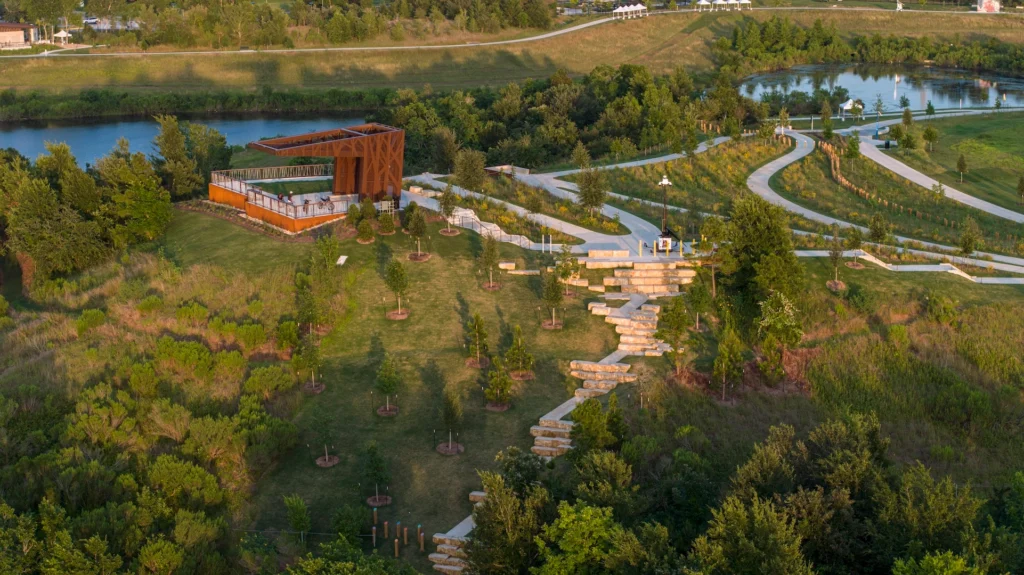
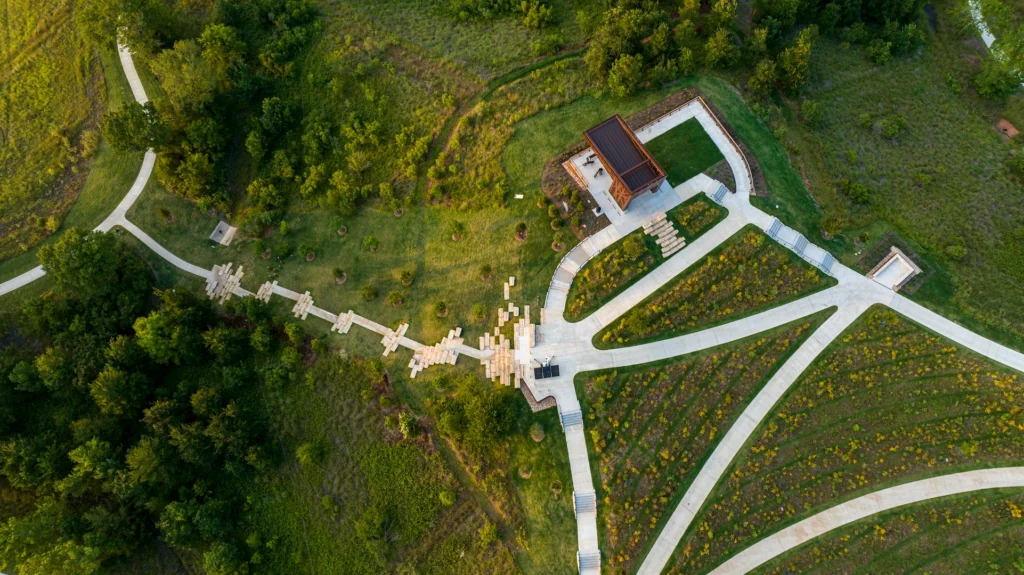
The nearly $30 million project is Sunnyside’s first new greenspace in nearly 50 years. Set within flood-control infrastructure owned by the Harris County Flood Control District, Hill at Sims preserves the basin’s critical stormwater function while layering in nearly 5 miles of paved and dirt hike-and-bike trails, new bayou crossings and overlooks, outdoor classrooms, large-scale murals, water access, restored planting, and a hilltop pavilion with expansive views of Downtown Houston, Uptown, and the Texas Medical Center.
“For too long, communities like Sunnyside—where I grew up—have gone without the parks and greenspaces they deserve. Hill at Sims changes that,” said Commissioner Rodney Ellis of Harris County Precinct One. “At a time when working families face rising costs and shrinking public resources, investments like this matter. Safe, beautiful places to gather and enjoy time outdoors should not be luxuries reserved for the wealthiest neighborhoods.”
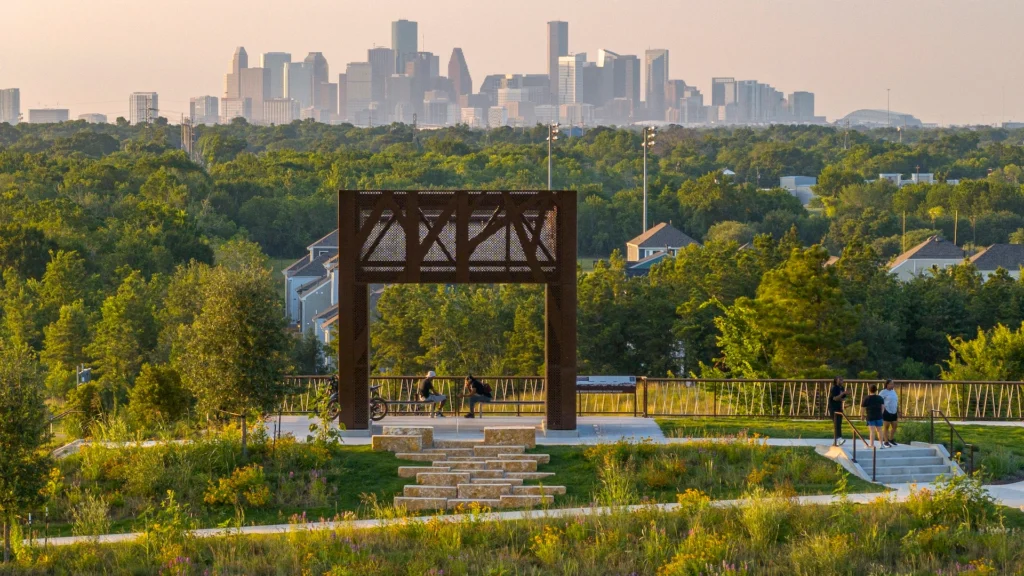
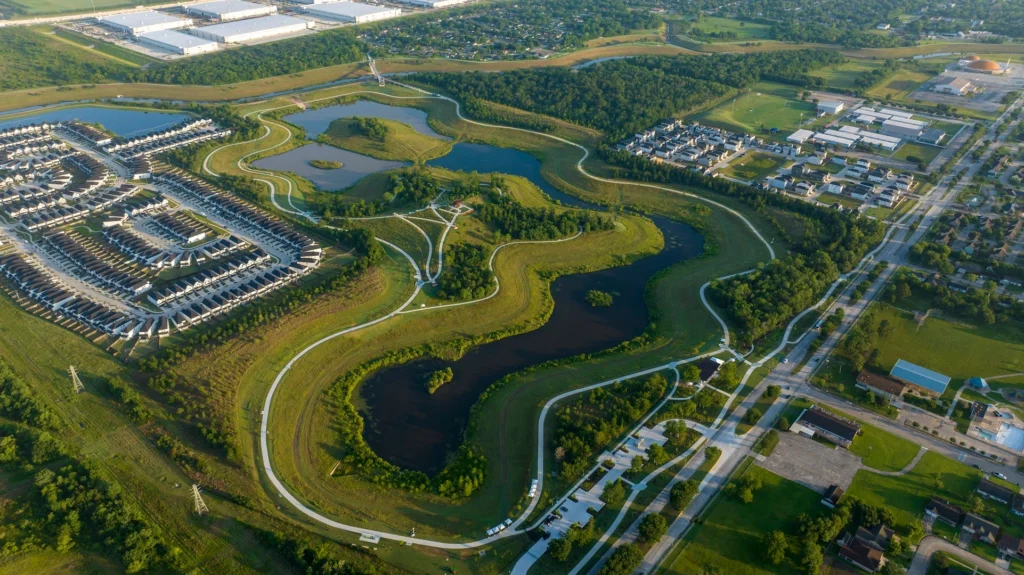
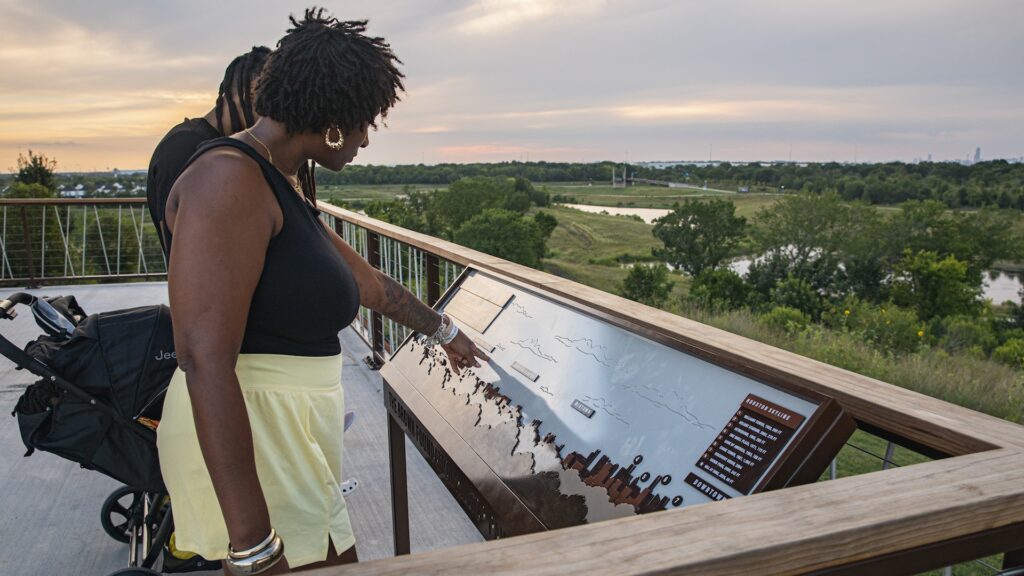
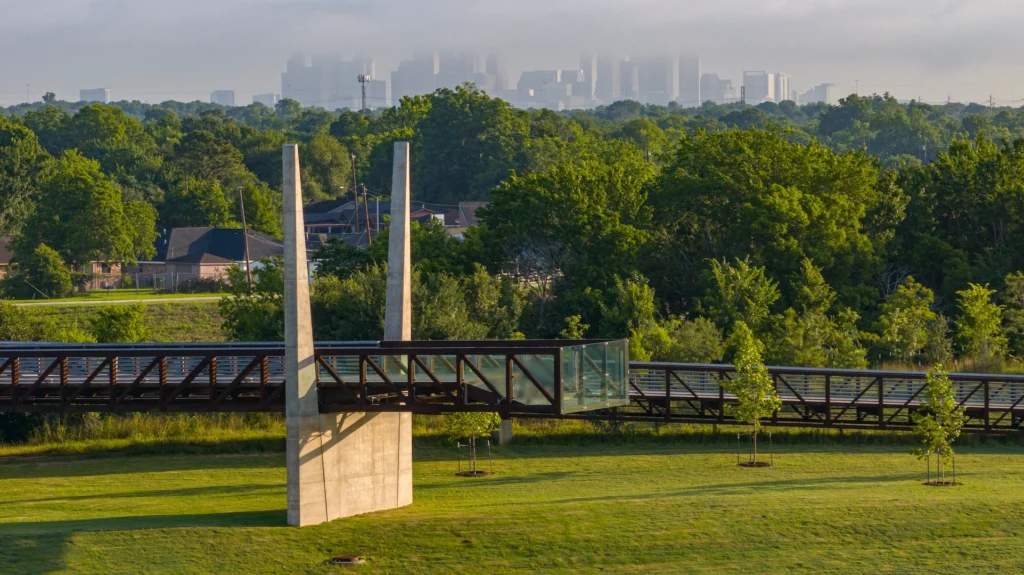
The site’s unusual origin shaped the design approach. The hill was formed in 2005, when the Harris County Flood Control District excavated the surrounding basin for regional stormwater detention. For nearly two decades, the 60-foot mound stood above Sunnyside near a bend in Sims Bayou without public access or civic program. Hill at Sims keeps that flood-control function intact—the basin provides nearly 325 million gallons of stormwater storage capacity—while adapting the landform as a public destination with trails, shade, habitat, overlooks, gathering areas, and skyline views.
The park’s design is organized around four interconnected elements: the hill and basin, the Dr. Alma Allen Bridge, the Scott Street Greenway, and a series of pavilions and overlook structures that turn the former detention landscape into a navigable public realm. At its center, The Brown Foundation Hilltop Pavilion crowns the earthen mound, converting a once-inaccessible piece of flood infrastructure into a shaded civic overlook. Below, trails move through the basin landscape, linking restored habitat areas, gathering spaces, overlooks, and new access points from the surrounding community.
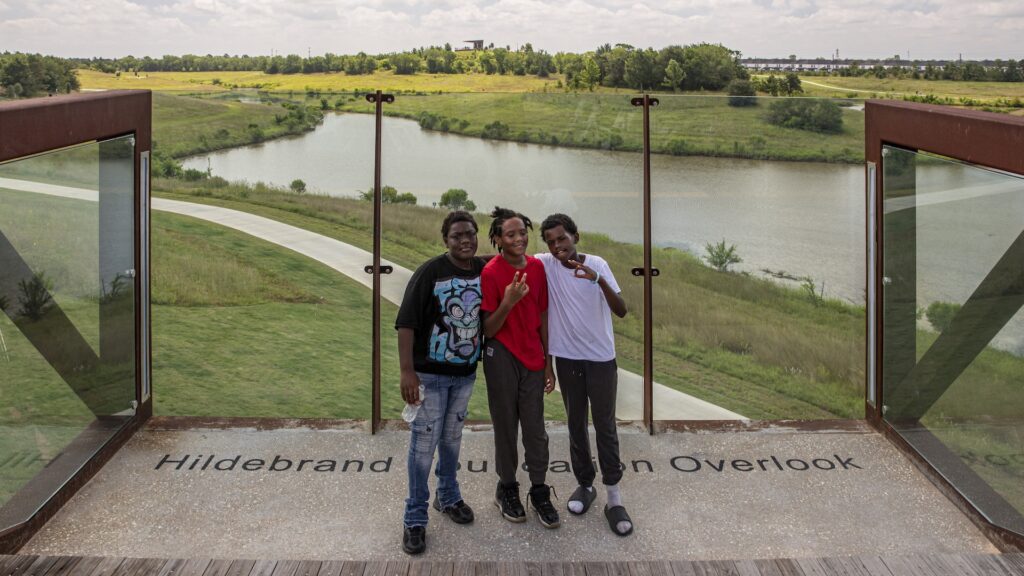
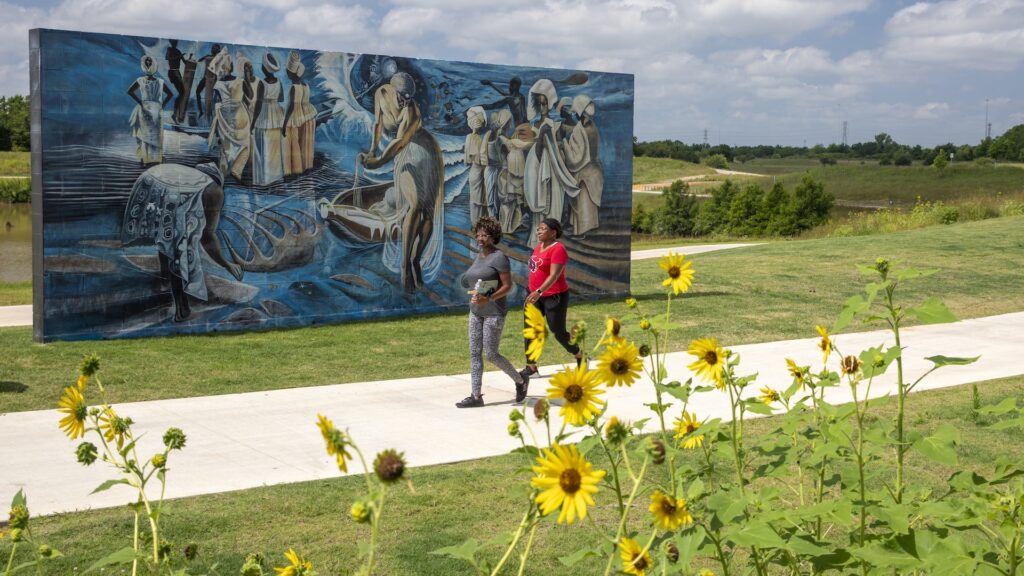
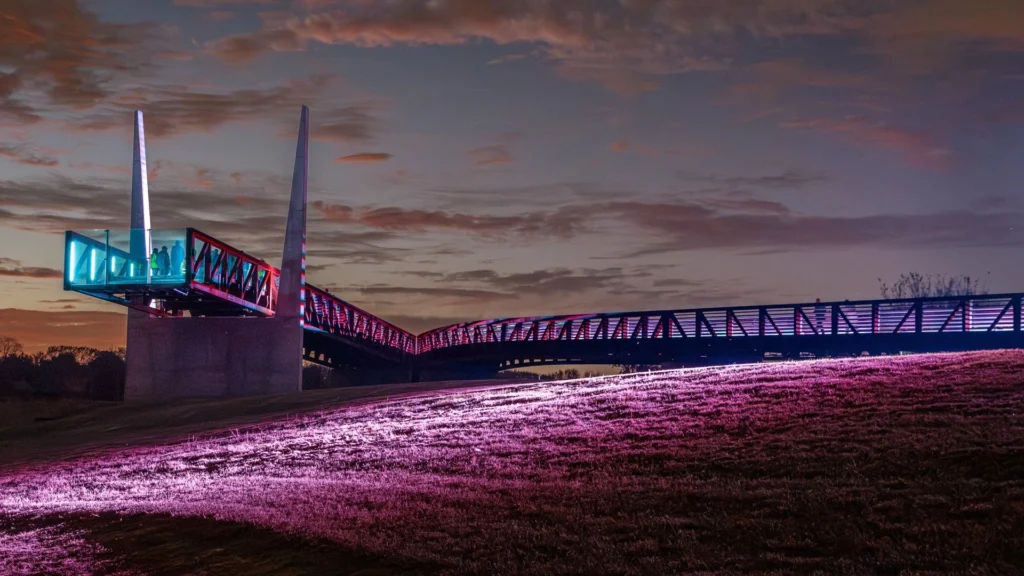
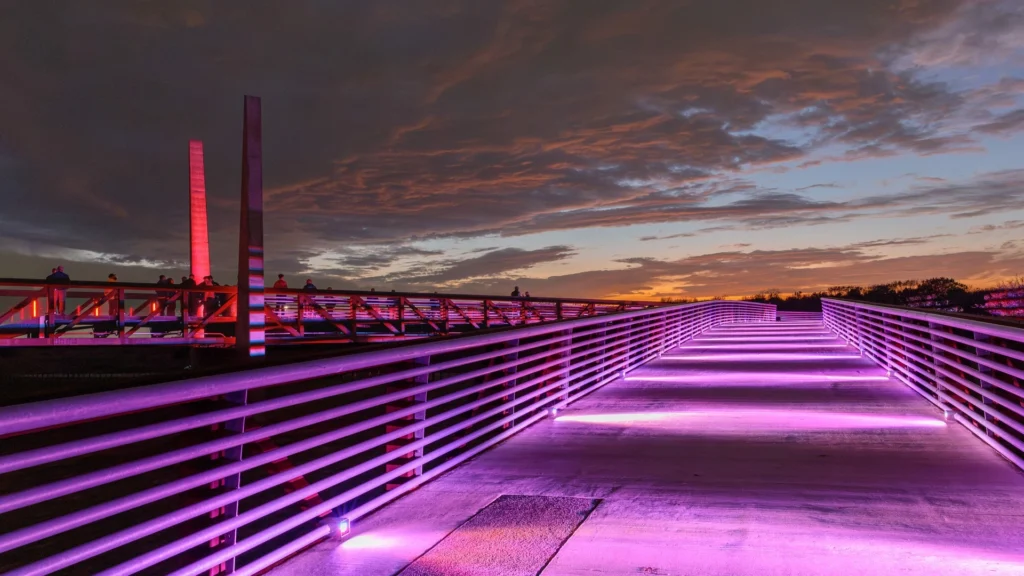
The Dr. Alma Allen Bridge spans Sims Bayou, connecting Hill at Sims to the existing Sims Bayou Greenway and nearly 20 miles of regional trails. The bridge includes the Hildebrand Foundation Overlook, a glass viewing platform with broad views across the park, while the Scott Street Greenway extends the park’s reach north toward neighborhood schools, health facilities, transit corridors, and civic anchors. Additional destinations—including the Beth White Overlook, Anthony W. Hall, Jr. Pier, Congressman Al Green Pavilion, and outdoor classroom areas—create places for fishing, learning, gathering, and everyday use. Six large-scale murals, developed through a partnership with Street Art for Mankind, add a public art program shaped by local and international artists.
“Hill at Sims reflects the kind of forward-thinking design Houston needs as we adapt to a changing climate,” said Justin Schultz, President and CEO of Houston Parks Board. “Through strong public-private partnership and the leadership of Commissioner Ellis, we’ve transformed essential flood infrastructure into a resilient, nature-based park that expands access to greenspace, strengthens community connectivity, and turns a regional challenge into a lasting public benefit.”
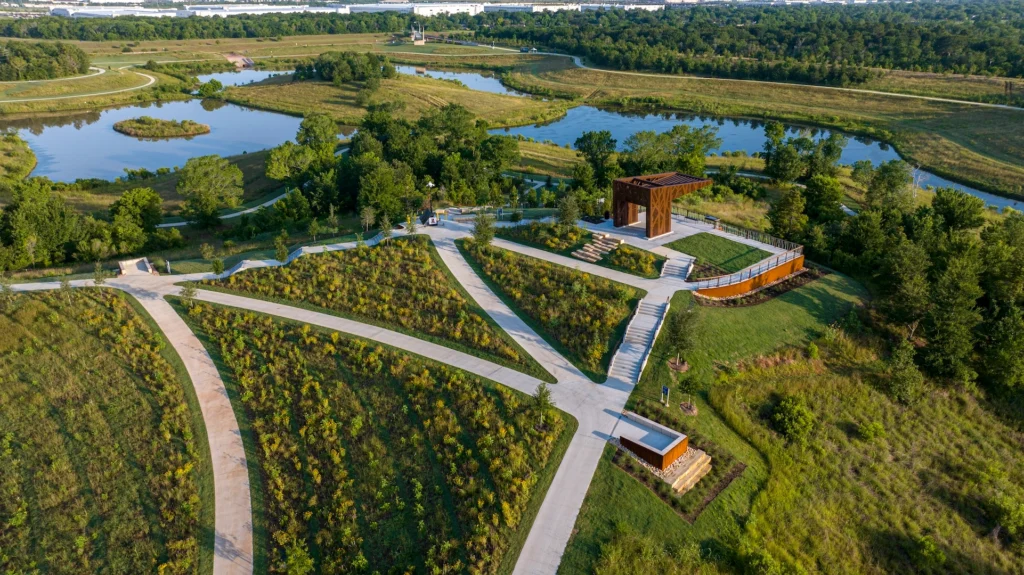
For SWA, the project extends a decades-long body of work along Houston’s bayous, where flood-control channels, detention landscapes, and greenway corridors have increasingly been reimagined as civic and ecological assets. At Hill at Sims, that regional idea becomes highly specific: a single-purpose basin in Sunnyside is transformed into a public landscape for movement, education, flood resilience, and community life.
“The Hill at Sims is a major new chapter in a story Houston has been writing about its bayous for decades,” said Matt Baumgarten and Michael Robinson, Principals at SWA’s Houston studio. “When SWA first began work along the bayou system, the city was asking its residents to see water differently, as a resource rather than a risk. This park makes that case powerfully, and we hope it shows cities across the country that flood infrastructure and high-quality civic greenspace don’t have to be separate investments.”
Community engagement was central to the project’s development, with more than 20 meetings and input from over 700 residents helping shape the vision for the park. The result is a regional destination that serves Sunnyside and surrounding South Houston neighborhoods while strengthening connections to nearby schools, religious institutions, public facilities, health centers, and the broader Bayou Greenways network.
Funding for Hill at Sims reflects the breadth of the partnership behind the project. Public funding totals nearly $22 million from the Office of Commissioner Rodney Ellis, along with federal and state funding secured through the advocacy of State Representative Dr. Alma Allen and Congressman Al Green. Houston Parks Board secured nearly $8 million in private investment from The Brown Foundation, Inc. Additional in-kind contributions supporting the park’s natural features were made possible through partnerships with Texas Parks and Wildlife and Trees for Houston, which supplied more than 670 native trees.
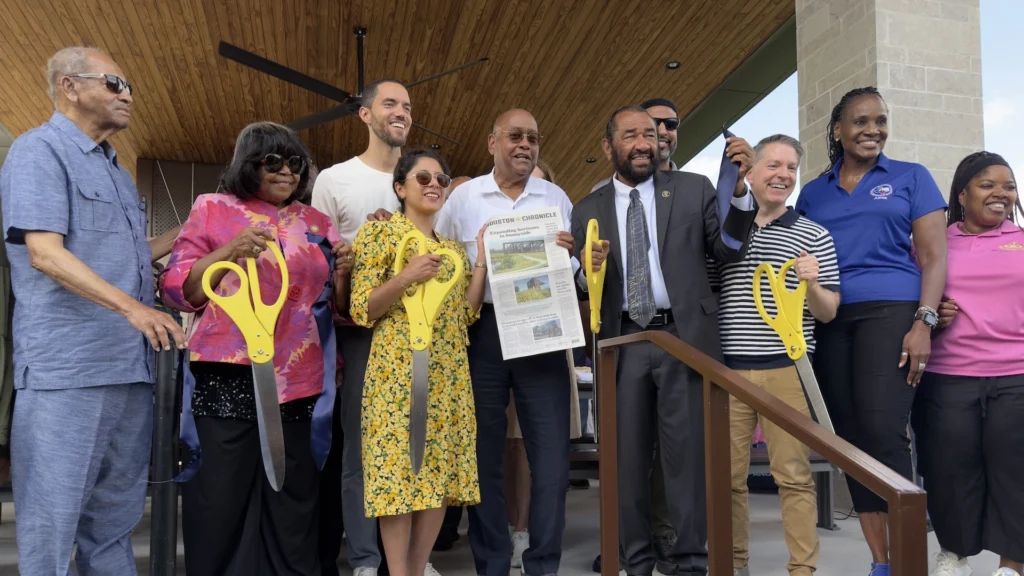
The Hill at Sims celebrated its public grand opening on Saturday, May 30, following the completion of the nearly $30 million regional park.
Learn more: